Tomorrow's Care, Today with Dr. Navdeep Tangri
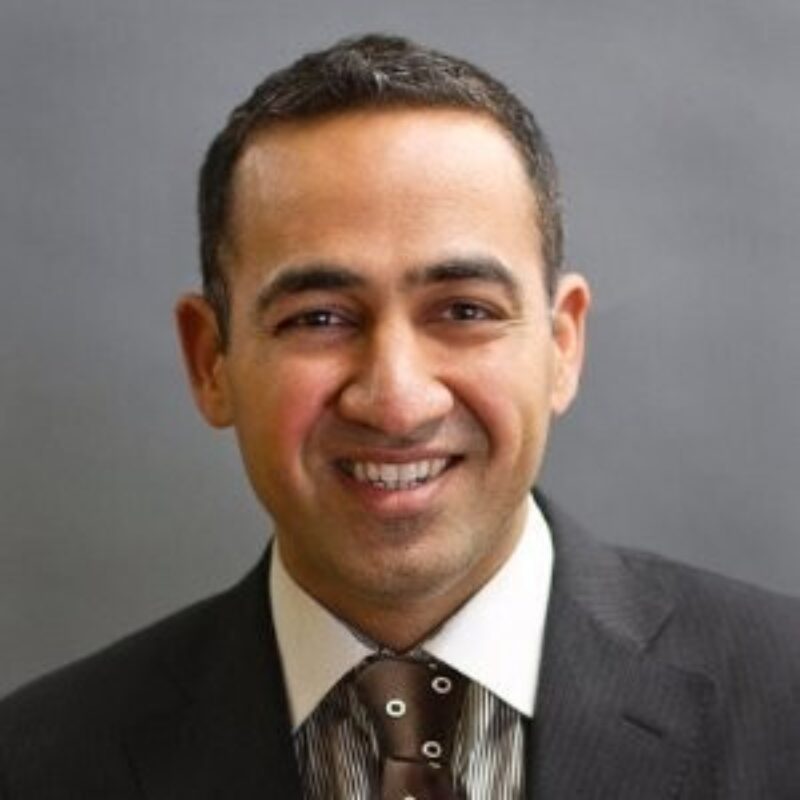
Dr. Navdeep Tangri
Nephrologist and Associate Professor, Department of Medicine and Department of Community Health Sciences, University of Manitoba
In this episode
00:00 Introduction 02:00 Meet Dr. Navdeep Tangri 04:00 A research question from the bedside 06:00 Sponsors and paid research opportunities 08:00 Learning to build models from the experts 10:00 Choosing simple, lab based predictors 13:00 Predicting kidney failure at two and five years 14:00 Developing and validating the model 16:00 Discrimination, calibration and goodness of fit 19:00 Publishing in JAMA and handling pushback 22:00 Validating widely across 30 cohorts 26:00 Local versions and defining kidney failure 28:00 Race and variables in the equation 30:00 From evidence to implementation 32:00 Building the KFRE into lab systems and health records 36:00 A natural experiment in practice 38:00 AI tools and knowing your domain 40:00 Predicting risk in earlier stages of disease 44:00 How new treatments change the future of kidney disease 47:00 Learning to code 50:00 Advice for emerging scholars 52:00 Tomorrow's care, today 54:00 Closing thoughts
Select a timestamp to play the episode from that point.
Dr. McGavock: [00:00:00] As I was reading the main paper that was the centerpiece for today's conversation, there was one detail I just couldn't believe. A model designed to predict kidney failure, a disease caused in large part by diabetes and high blood pressure, didn't include diabetes or high blood pressure in the final model.
Dr. McGavock: Not because they don't matter, they do, but as Dr. Nav Tangri found out, a polymath and clinician scholar early in his career, when developing prediction equations, a variable that you can't measure reliably isn't a variable at all. This concept is so ingrained in the way we think about disease, even his mentor doubted it.
Dr. McGavock: "Everyone calls diabetes something different," he told me. "Someone labeled diabetic in one chart, and you were borderline impaired glucose tolerant. In another chart, you had multiple complications and an A1C of 11." How do you build that into an equation? You don't. [00:01:00] You can't. As counterintuitive as it sounds, predictive epi is not grounded by causes.
Dr. McGavock: It's grounded in what's predictable. In most cases, as my guest shared with me, none of the prediction at the bedside was really grounded in any evidence in any way. And when it was, it was certainly imprecise and variable, almost being entirely driven by gestalt. That insight, arrived at by a math-minded med student in 2001, became one of the most widely used clinical prediction tools in modern nephrology.
Dr. McGavock: Dr. Nav Tangri is my guest today, and this is a story of how he built it, what it took to get the world to use it, and what he thinks comes next. Please stick around for a quintessential story of bringing predictive epi to the bedside, at home and across the globe. This is The Emerging Scholar. Welcome everyone back to the Emerging Scholar Podcast.
Dr. McGavock: My name is Jon McGavock, and with me another colleague. In season two, we have a lot of colleagues from the University of Manitoba, but the reason why Dr. Nav [00:02:00] Tangri is joining us today is because I invited you to help me with a rotation that I was doing for residents on different methods, and we asked you to come in and talk about predictive epi, and I don't know if they appreciated how incredible your work is and how they were getting what should have been a keynote lecture at an international conference as their introduction to predictive epi, and I thought, "We absolutely have to have you on the podcast because your work is unbelievable."
Dr. Tangri: Oh, thank you. You know, I'm never gonna say no to you because we're colleagues and this is just professional courtesy. You gotta do the things for colleagues, and sometimes you gotta do the things for residents. You just have to because mentorship is so important, and I always think that if I'm speaking to ten or twenty or a hundred people, if one or two of them walk out of that room and think, "I'm gonna do research as a part of my career, maybe not my whole career, but maybe just a part of my career," that we would have done the right thing because [00:03:00] there's such a dearth of clinician scientists- Absolutely
Dr. Tangri: uh, in Canada, that we need to do everything we can, all hands on deck, to encourage medical doctors to do research.
Dr. McGavock: Absolutely, and I hope and I pray that you inspired people because it inspired me to do a deeper dive into predictive epi. And so we're into season two. We had an introduction to this from Laura Rosella, who herself has done some amazing work in this space.
Dr. McGavock: And so I thought because it's methods focused, we would start on this twenty eleven paper that you published in JAMA on a risk prediction, and we'll get you to walk us through that. But before we get into the deep methods, let's just set the scene. So you're currently a nephrologist. Back in twenty ten, if you're a nephrologist in the clinic and you had a patient in front of you that had stage three chronic kidney disease, what decisions would you be making and how would you be predicting their long-term health?
Dr. Tangri: So my question and this [00:04:00] research topic was entirely motivated by bedside experience in the clinic. So I was a nephrology fellow in 2000, and a, and a PhD scientist. And what I found was that the patients would be coming to clinic, and they always had the same two leading questions. The first question was, "Why do I have kidney disease?"
Dr. Tangri: Mm. And we almost always had an answer to that, right? Even those, it may not be always the most accurate answer, but generally we could say, "You have diabetes," you know, "You have an immune disease like glomerular disease or lupus." But the second question was always, "Am I going to be on dialysis?" Oh, yeah. This was the number one question for all of the patients that I used to see in clinic.
Dr. McGavock: Okay.
Dr. Tangri: And what I saw was just a mass of variety and so much variability in the response by the physicians, and it almost being entirely driven by gestalt. Some would just look at the data and say, "No, no, you, you probably won't need it." And really that, that what they're really reflecting is what's the GFR or creatinine today.
Dr. Tangri: Half of them were still not even using eGFR regularly in their practice. Really? And [00:05:00] some would say... Yeah, some would say they'll draw a straight flat line in the last two or three years of data and say, "Oh, based on this very simplistic assumption of slope, you will reach it or you won't." But a lot of, none of this is really grounded in evidence, uh, in any way, and certainly was extremely imprecise and variable. I thought this is something that's worth tackling.
Dr. Tangri: And I was very interested in prediction from early on, and that journey for me started in 2001, uh, as a second year medical student, and, and we can dig into that, but that's how I got interested- Yeah ... in prediction and kidney disease.
Dr. McGavock: Were you a math guy?
Dr. Tangri: Was always a math guy. Didn't know if I was gonna do research as a career.
Dr. Tangri: No medical people in the family, no medical role models, and simply in medical school told that, "Hey, research is good. It's good for your CV. Do research."
Dr. McGavock: Okay.
Dr. Tangri: And the University of Manitoba has this brilliant program called the BSc Med program, and they used to have this program called the Med 2 Research program- Yeah.
Dr. McGavock: Yeah ...
Dr. Tangri: where [00:06:00] they'll pay you.
Dr. McGavock: Yes.
Dr. Tangri: They'll pay you to do research, and so your supervisor doesn't even have to pay anything.
Dr. McGavock: So was this 2001? So- Who was your mentor?
Dr. Tangri: My mentor, so I'm originally from Toronto, Ontario, and I was going home for the summer, so I chose a ex-U of M person as a mentor, David Naimark, whose father is Arnold Naimark.
Dr. McGavock: No way.
Dr. Tangri: Wow. Yeah, so David Naimark was my mentor. Wow.
Dr. McGavock: Okay.
Dr. Tangri: David was doing neural nets and machine learning for prediction in 2001.
Dr. McGavock: Wow.
Dr. Tangri: So, you know, now every- everything is AI, like- Yeah ... everything that's even not AI is AI these days. Yeah. But David was doing machine learning AI in 2001, and he had me do a project predicting bad outcomes in dialysis patients.
Dr. Tangri: Hmm. That was sort of my first little project that I did using neural networks, and, and I was like, "This is amazing." You could take data from historical records. If they're well collected, you can make a prediction about the future. I mean, why wouldn't you wanna know the future if you had a [00:07:00] choice? So-
Dr. McGavock: Exactly
Dr. Tangri: He then was such a good sponsor, he then said, "You're gonna present this data, you're gonna present this poster at the American Society of Nephrology meeting."
Dr. Tangri: That was in 2002.
Dr. McGavock: Wow.
Dr. Tangri: And so I, as a med two, went to this meeting, 15,000 people, and just David introduced me to every single person who was a leader in Canadian nephrology in 2002 as like, "This is my med student. He's doing great work." And, and so he essentially sold me, like, to do research in kidney disease, and David Rush, who's another nephrologist in Winnipeg- Mm-hmm
Dr. Tangri: had sold me already on kidney being the most fascinating organ and why to do kidney disease.
Dr. McGavock: Best mentor move ever for anyone listening is to do that for your students, is introduce them to everyone in there and get them fired up about going to conferences.
Dr. Tangri: Absolutely, right? Yeah. Because it's peak joy, right?
Dr. Tangri: Yes. Like, at this stage of my life, it's peak work to go to a conference.
Dr. McGavock: Yeah.
Dr. Tangri: But as a med student- Yeah ... it's peak [00:08:00] joy, so that's exactly what you should do.
Dr. McGavock: Awesome. Yeah. Let's jump into now you're doing your fellowship, you're at Tufts, and-
Dr. Tangri: Yeah ...
Dr. McGavock: patients are coming in, and my understanding is they all know their percent.
Dr. McGavock: They all call it their percent. Yes. My kidney function percent- Yes ... is 30%. So they're doing that- Okay ... and they're saying, "When am I gonna be on dialysis?"
Dr. Tangri: So first, let me take 30 seconds back- Oh, okay ... and say why Tufts.
Dr. McGavock: Yeah,
Dr. Tangri: mm-hmm. It's all part of the journey for me. Why Tufts is because I realized after working on my undergrad stuff, I'm like, "I wanna build models.
Dr. Tangri: I wanna build mathematical models." So what's the most widely used mathematical equation or model in the entire world for kidney disease? I would argue it's that percent that you just mentioned, the estimated GFR equation.
Dr. McGavock: Yeah.
Dr. Tangri: It is probably reported millions of times a day across the labs all the world.
Dr. Tangri: Creatinine is one of the most common tests in the entire world, right?
Dr. McGavock: Yep.
Dr. Tangri: So the person who developed that equation is a wonderful human named Andrew Levey, and it used to be called the Levey formula. Now it's called the [00:09:00] CKD-EPI formula. Uh, before, it was called the MDRD formula. So I said, "If you wanna build models, work with the person whose work has gone globally translated."
Dr. Tangri: So I went to try and work with Andrew Levey. So I became his PhD student, and I came to Andy with two project ideas. I said, "Andy, I wanna do mock prediction. I think we should do either prediction of adverse outcomes in patients on dialysis, or we should try to predict who's going to go on dialysis if they have CKD."
Dr. McGavock: Okay.
Dr. Tangri: And Andy said, "You know, this second one has more legs. Let's do that."
Dr. McGavock: Okay.
Dr. Tangri: So then I went back to Andy. I did a bunch of work, and I went back to Andy and I said, "Andy-" I think it's gotta be entirely lab-based. It cannot have a single clinical variable in it. And he's like, "Oh no, come on. What do you mean it's not gonna have diabetes status?
Dr. Tangri: So how is it not gonna have high blood pressure?" Yeah. Like, "No, Andy, your estimated GFR equation, the reason people use it instead [00:10:00] of Cockcroft-Gault is 'cause it doesn't have weight. It's all lab-based. It's just age, sex, and creatinine. And the lab is simplification. The lab is structured data. So if we want this tool that we're building together to be used worldwide-
Dr. McGavock: Mm-hmm
Dr. Tangri: it's gotta be entirely lab-based."
Dr. McGavock: So tell me what the downside, that you're foreshadowing some of the results here, which is pretty awesome, but you knew it ahead of time. But tell me what the downside of having diabetes and hypertension in that model, in your mind, before you even started the project was.
Dr. Tangri: Yeah. So I had realized and gone through the thought process and realized that everyone calls diabetes something different. Yeah. Just because someone is labeled diabetes in the electronic medical records, they could be somebody with, like, impaired glucose tolerance who had one A1C that was borderline, or they could be somebody who's blind in both eyes and has an A1C of 11.
Dr. Tangri: Yeah. They're just called diabetes. Yeah. So it's completely non-nuanced at all. The second thing is hypertension. Often hypertension, 90% of [00:11:00] people with CKD have hypertension. It's like a meaningless thing to call- Mm-hmm ... somebody hypertension. What you really need is the blood pressure. Now, the blood pressure is problematic because blood pressure in the clinic, what does that really mean?
Dr. Tangri: Is that the right blood pressure this person has at home? Who's measuring it? Did they rest? Was it done in a structured way? Whereas what's generally not a lie is lab data. Lab data is highly structured. It's almost always reproducible in the same way no matter where you are in the world, whether you're in Canada, India, Malaysia, Japan, United States.
Dr. Tangri: Lab data is lab data in nearly all countries. So this is why I was convinced that we had to build models based on lab data, and so this is 2010, and you know, eventually during this podcast, we'll get to 2025, 2026. Yeah. I'm still building models with lab data and just lab data only. Yeah. Because I, I really believe there's a wealth of information in lab data that we miss.
Dr. McGavock: So the math guy turned clinician turns [00:12:00] forecaster, and you saw the world even before it took shape. You saw your study even before it took shape. So
Dr. Tangri: great. Yeah, I mean, yeah, I'd say- So smart ... mid-2020, but you knew it had to be labs- Okay ... in a way. So this is good, right? Like we- Mm-hmm ... get an accurate model. We submit it to JAMA.
Dr. Tangri: They, they accept it, thankfully. And then we also submit it for simultaneous presentation at a meeting- Mm-hmm ... World Congress of Nephrology.
Dr. McGavock: Now before you go into that, let's just go through- Yeah ... like you had the labs. And, and let's just- Yeah ... do a little bit of a dive into that paper. So you had two cohorts, one in Toronto, one in BC, none in the US. Yeah, yeah. EMRs. You had the lab data plus whatever the physicians put in the EMR. You created eight different models.
Dr. McGavock: Mm-hmm. And then you tested them on their accuracy for predicting end-stage renal disease two, three- In the next five
Dr. Tangri: [00:13:00] years ...
Dr. McGavock: yeah, two, three and five years down the road.
Dr. Tangri: Yeah.
Dr. McGavock: And so it all, it all mapped on exactly as you had predicted because that's just how research goes, right?
Dr. Tangri: I wish it was kind of like that, but some things really held true to hypothesis.
Dr. Tangri: And I think-
Dr. McGavock: Yeah ...
Dr. Tangri: intentionally or un- unintentionally, I used lab data to make a prediction in a lab-based disease. This disease, kidney disease, is a lab-based disease. Oh, that's something. This is a disease where lab data tell 90% of the story, so we could be 90% accurate, which is wildly more accurate than any, like, cardiovascular models, for example, which because it's a lab-based disease.
Dr. Tangri: Now what I've learned over my career is that not all diseases are lab-based disease. Like you can't predict stroke using lab data.
Dr. McGavock: No.
Dr. Tangri: But you can predict kidney outcomes. Oh. And that was... Yeah.
Dr. McGavock: Can you, can you just summarize the results for the, for the listeners that are there? The lab-based data you had were what, and then what, which model came out as the best one- Absolutely
Dr. McGavock: and, and what did that look like?
Dr. Tangri: Absolutely. So we looked at, we developed the model in 3,449 people and [00:14:00] something around 386 events, and then we tested it in a completely independent sample, and you need to do that. So if you make a model, you need to make sure that it works in a completely different population in a different geography.
Dr. Tangri: And so we did that in about 5,000 people in British Columbia. And we built several models, and first we demonstrated that a lab-based model using just labs was similar or superior to models that included diabetes or hypertension.
Dr. McGavock: Mm-hmm.
Dr. Tangri: And then we had released kind of two models, a four-variable lab-based model and a eight-variable lab-based model, with the eight-variable one being slightly more accurate than the four-variable one.
Dr. McGavock: Yeah.
Dr. Tangri: And we'll get to the 2016 and what happens later. Yeah,
Dr. McGavock: yeah, yeah. It's coming.
Dr. Tangri: Part of the story is we thought the eight-variable one is slightly more accurate, still just needs labs, that people will use that. But in the end, simplicity won out. The vast majority of the world uses the four-variable model because physicians, care providers, we want simplicity.
Dr. Tangri: Yeah. Yeah. We want [00:15:00] workflow. We don't want complexity.
Dr. McGavock: What were the other four, and then how much of an advantage did those other four give you? And they were all lab-based.
Dr. Tangri: Yeah, they were all lab-based. There was albumin, calcium, phosphate, bicarbonate. So labs that are commonly done in kidney disease- Yep
Dr. Tangri: but not commonly done outside of kidney disease. A- and the advantages are about in the order of taking the precision or discrimination from 89 to 90%, from 90 to 91%, just around the edges for patients who had more advanced disease. But we thought, "Hey, if you have all eight pieces, why wouldn't you use the slightly better model?"
Dr. McGavock: Mm-hmm.
Dr. Tangri: But ease of implementation really wins out in medicine, right? Like- Right ... uh, often in tools that we build, people-- the end user cares much more about is, "Am I gonna be able to use this in my day-to-day practice," than what are the metrics of classification.
Dr. McGavock: Totally. But because we're talking about methods, before we jump to that ASN meeting, ASN has played a big role in your career development, but there was a C statistic that you published, a [00:16:00] calibration, and then a goodness of fit.
Dr. McGavock: And just for the audience who's thinking about predictive epi, let's go through those first, and then maybe you could take us to you presenting this at ASN in 2011.
Dr. Tangri: Yeah. So let's talk a little bit about the metrics of model caliber. So when you make a model, the first thing is, are you gonna build it internally?
Dr. Tangri: You're gonna test it internally, but the metrics you get internally don't matter so much. I mean, in a sense that if your discrimination, which is your C-statistic, or your calibration, which is often visually assessed or assessed using a metric called the Brier score, uh, or other metrics, uh, of model fit, goodness of fit, those should be good internally.
Dr. Tangri: I mean, if they're not good in your own dataset and where you trained, you should just discard the model and- Yes. ... and move on, and pick different variables- Yeah ... that are different question.
Dr. McGavock: Yeah.
Dr. Tangri: But assuming they are good, you still don't have a model that's ready for use. Mm-hmm. You've got to take it to a completely independent dataset and prove that the accuracy is preserved.
Dr. Tangri: Now, I use accuracy as a broad overall [00:17:00] word, right? Yes. Like really what I'm talking about accuracy, I'm talking about AUC, area under the curve or C-statistic-
Dr. McGavock: Yeah ...
Dr. Tangri: which is discrimination. What that means It's if I take 100 randomly selected people and I pick two out of a hat and I say, "One of these progressed, one of these did not progress," can the model find the progressor what percentage of the time?
Dr. McGavock: Mm-hmm.
Dr. Tangri: And of course, if you did a coin flip, it would be 50. Mm-hmm. Most models in the medical literature are in the mid-70s.
Dr. McGavock: Yeah, this is huge.
Dr. Tangri: And the next thing is calibration. Calibration tells us if I tell you that someone's risk is 20%, is their actual event rate 20%? Like how close are you to the absolute number?
Dr. Tangri: Mm-hmm. And that's important because often we don't make decisions in medicine on treatment based on yes or no. We treat somebody-- two people could be high risk, but one is 30% and one is 5%, you're gonna treat the 30% person differently than the 5% person. Yes. So is the model holding [00:18:00] true across the entire gradient of risk?
Dr. McGavock: Mm-hmm.
Dr. Tangri: And goodness of fit is a way to look at the different variables in the model and say, you know, is model overall fit improved? How much of the variability in the outcome are we explaining using the model? And those are some ways to decide which variables should be in and which ones should be out.
Dr. Tangri: A- and finally, I think there are other metrics as well like, you know, do people who are sort of events or cases, are their predicted values really high? And the people who are controls, are they like close to zero? So does your model have a very good discrimination slope? And that's a good way to look at a model.
Dr. Tangri: So for example, in a perfect model, everyone who's as the event will be clustered around 100%, and everyone who doesn't have the event will be clustered around zero. But in reality, that's often not the case. So it's just what's the s- what's the spread? And you want the biggest spread possible.
Dr. McGavock: Nice. And then you validated that in the BC cohort-
Dr. Tangri: Yeah.
Dr. Tangri: And I think we were in the high 80s with good calibration-
Dr. McGavock: Yeah ...
Dr. Tangri: in [00:19:00] BC. And that was-- we felt very good and JAMA editors felt very good that this was enough of an advance that it, it meant a meaningful publication.
Dr. McGavock: Nice. And then so you get invited to present this at ASN?
Dr. Tangri: Yeah, so i- it turns out our timing was fit the World Congress of Nephrology, not ASN- Not ASN.
Dr. Tangri: Okay ... which is a different meeting- Yeah ... in 2011. And it turns out that I submit the paper to JAMA and I submit the abstract to the meeting at the same time.
Dr. McGavock: Mm-hmm.
Dr. Tangri: Now, here's a good tip for trainees, right? When you submit an abstract, the person on the other side who has to make the decision about whether this is a poster, a talk, or a platform, usually is taking about 30 to 60 seconds to make that determination.
Dr. McGavock: Yeah.
Dr. Tangri: Right?
Dr. McGavock: Yeah.
Dr. Tangri: So this paper got simultaneously published with the meeting in JAMA. It was the first ever paper to have a smartphone application incorporating the calculator released on the same day.
Dr. McGavock: Oh.
Dr. Tangri: Uh, but it only got accepted as a poster at the meeting. So I stood there and I presented the poster to a few people.
Dr. Tangri: A- and so that's good because it made me [00:20:00] never get offended in my life, ever, if my talk doesn't get picked for a poster or paper, because who cares?
Dr. McGavock: Didn't really matter 'cause it was coming out in JAMA. And then, yeah, whoever the reviewer was of that abstract must have been shaking their head.
Dr. Tangri: Yeah, exactly.
Dr. Tangri: They did not think it was worthy at the time, in the 30 seconds.
Dr. McGavock: So the advance there was if you move beyond eGFR and you add just a few clinical variables, you get way better prediction. And then so theoretically, everyone should start adopting this in the clinic.
Dr. Tangri: Absolutely.
Dr. McGavock: But, but before they do, they may say, "Well, that'll never work here," or, "I live in this country, that'll never work there."
Dr. McGavock: So you had another battle on your hands, which is can I replicate this across the world?
Dr. Tangri: Yeah.
Dr. McGavock: And so-
Dr. Tangri: So you're absolutely correct. We can make the best tools, but almost everyone will provide you with the same criticisms, right? Mm-hmm. Like, "This doesn't work in my country. My patients are different. My medicine is different," and so on.
Dr. Tangri: So [00:21:00] we had to tackle those questions head-on.
Dr. McGavock: Was that a little frustrating? 'Cause in your JAMA paper, I love this, number one, you had an Excel sheet that people could use- Yeah ... if they didn't have an app, so they can just download the Excel sheet- Yeah ... use it in their clinical practice. Number two, you published the app at the same time- Yeah
Dr. McGavock: so the app was actually in the paper, so you could just download that and use it. So it... You made it so easy. But what did you run into between, like, 2011 to make you do the paper that you ended up publishing in 2016? Where was the friction?
Dr. Tangri: So I think we saw some enthusiasm after our 2011 paper, and we saw a fair bit of enthusiasm in Canada in the nephrology community-
Dr. McGavock: Yeah
Dr. Tangri: because in Ontario and BC, this paper was published and got some traction.
Dr. McGavock: Mm-hmm.
Dr. Tangri: Still a fair amount of resistance, saying it's just two cohorts, just 8,000 people, right? Mm. And then, of course, we saw questions from the US especially, saying that this is non-US patients, so it doesn't really apply in the US healthcare setting.
Dr. McGavock: Okay.
Dr. Tangri: And, and some of it is fair. Some of it is, you know, probably just a bit of clinical inertia, [00:22:00] which plays such a big role in how medicine is practiced. And we had to do a wider validation. So for me, I had a choice, right? At, by that time, I had relocated from Boston to Winnipeg, started work as a faculty at U of M.
Dr. Tangri: So I could either just abandon this, uh, idea and say, "I published a very nice paper. Now let me work on the next thing."
Dr. McGavock: Yep.
Dr. Tangri: Or I could say, you know, "I'm not going to rest until this algorithm, which I think is really helpful for patients and doctors, gets adopted worldwide."
Dr. McGavock: Nice.
Dr. Tangri: And I chose the latter path because I think that anybody who's doing predictive modeling, and maybe this gets down to the methods, right?
Dr. Tangri: If you're doing predictive epi, where you're choosing a framework, whether that's regression or machine learning, to, to make a model and make a prediction-
Dr. McGavock: Yeah ...
Dr. Tangri: uh, that is only the start of the journey. Your paper is only the start of the journey. You've got a long road ahead in implementation.
Dr. McGavock: Mm-hmm.
Dr. Tangri: So the first step for implementation for [00:23:00] us was this, right?
Dr. Tangri: Validate widely. And I connected through my mentor, Andy Levey, I connected with people at an organization called the CKD Prognosis Consortium- Mm-hmm ... or CKDPC. Uh, this was a group out of Hopkins at the time, which was putting together cohorts of people with kidney disease worldwide, and they had four key questions, four important questions which had international backing.
Dr. Tangri: And you got to pitch your idea. So I went and I pitched my idea to validate this, and the 30 cohorts or so all had to say. They had to be in or out of this paper.
Dr. McGavock: How did you pitch the idea? Where was the pitch and how did it go?
Dr. Tangri: So the pitch was at the ASN, so there's annual meetings- Yeah ... for 30 people at ASN.
Dr. Tangri: Yeah. So, you know, I get five minutes. You come up and you say, "I think this should be one of the things we do in 2015." So it was published in 2016, but in 2015 we made the pitch saying, "I think we should do this. It's highly feasible. The cohorts have the data. We think this equation can be done." [00:24:00] And thankfully it was pretty unanimous.
Dr. Tangri: People felt that this was a good idea, this, this was worth pursuing.
Dr. McGavock: You must be a good storyteller though, too.
Dr. Tangri: Like physician scientists? Totally. Oh, maybe more than half our job is storytelling.
Dr. McGavock: Yes.
Dr. Tangri: We, we've got to story tell in a paper, you have to story tell in a grant.
Dr. McGavock: Yep.
Dr. Tangri: And if you become entrepreneurial, you'll story tell in pitches and slide decks and presentations all the time.
Dr. McGavock: Totally.
Dr. Tangri: And so have to be. It's like table stakes as they call it.
Dr. McGavock: Right on. So you nailed that. Now, you didn't name it after yourself. You didn't- Definitely not. Yeah ... you didn't call it the Tangri equation, but
Dr. Tangri: Yeah.
Dr. McGavock: So you got the KFRE. Yeah. You pitch it. They say yes. We just did a podcast actually with someone who was a consortia builder, and shout out to those people.
Dr. McGavock: Like, whoever created that consortium, it's, the value's so high, right? Yeah. It's immeasurable how important it is to have that. So they say yes to your question, and now you're, you're taking your equation and you're mapping it onto 30 different cohorts, and what did you find?
Dr. Tangri: So we found that incredibly accuracy was extremely well preserved across the [00:25:00] 30 cohorts.
Dr. Tangri: In fact, many of the cohorts in other countries, including the US, had higher measures of discrimination, so AUCs of around .9, better than British Columbia. So it just goes to show, you know, to an outside non-Canadian, they're like, "Oh, Ontario, British Columbia, is that really even external validation?" Right.
Dr. Tangri: Right. But we know that as Canadians, right? Mm-hmm. That people who live in Ontario are different than people who live in British Columbia. Yep. But this was really proof that we had very good discrimination. And for calibration, we had some differences between North American and non-North American cohorts, so we had to have almost two versions of the equation out.
Dr. Tangri: We put out a North American version and a non-North American version. And in predictive medicine or using regression, if you use time to event model or a Cox model, what you do is you change something called the baseline hazard.
Dr. McGavock: Okay.
Dr. Tangri: And you can recalibrate a model to different countries. So now, many years later, there's a [00:26:00] KFRE version in the UK that's calibrated to the UK population.
Dr. Tangri: Somebody told me that there's a KFRE Thailand. Oh. Uh, so they've just changed the baseline hazard to calibrate it to their local population. This is absolutely what people should do. Mm-hmm. Right? And, and that's what we did. So we proposed a North American and non-North American version of the same equation.
Dr. McGavock: And so looking at that paper, you did the forest plot for North America and then the other countries. And one of the questions I had for you was there was so much variability within the non-North American cohorts and what was driving that variation? So, and it wasn't huge, but, like, the precision was just, was kind of all over the place depending on the country you're in.
Dr. Tangri: It's really a great question. It, it goes to the outcome. So the outcome of our model was need for dialysis, right? Right. Now, what is need for dialysis? Need for dialysis is not strictly a medical thing.
Dr. McGavock: Mm-hmm.
Dr. Tangri: In a country like Canada, it's a medical thing because everyone has access to dialysis. Mm-hmm. But in [00:27:00] several countries, need for dialysis may not mean kidney failure has just happened.
Dr. Tangri: It may mean kidney failure plus high socioeconomic status plus access to physician, right? So we think that that variability that you saw outside of North America or even within North America and non-North America actually reflects a resource allocation and need for availability of dialysis rather than biology.
Dr. Tangri: Right. And if you reset the outcome to reaching a GFR of 10 instead of need for dialysis- Yeah ... a lot of that variation goes away.
Dr. McGavock: Okay. Great. And so, yes, that would explain the... And we're gonna put a link to that in the show notes. The second question is that I, I'm not a nephrologist. I know that race, for example, is something that has been included in certain equations.
Dr. McGavock: It was a controversial topic in the US, especially in the last few years. Was the American pushback a little bit on the failure to include race in yours or the fact that Canada, the racial makeup of Canada is different than the US, so it's not gonna apply here? [00:28:00]
Dr. Tangri: So that was certainly part of the pushback.
Dr. Tangri: Both of those, you've hit right on the nail there. So African Americans in the US are at high risk for kidney failure.
Dr. McGavock: Mm-hmm.
Dr. Tangri: And we did not include race intentionally in the original model, obviously because there weren't African Americans in Canada. Mm-hmm. And then even in the validation, I was really firm that we're not going to include race as a variable, and rather we'll just demonstrate similar performance in African Americans and non-African Americans because I think this is a very complex social construct.
Dr. Tangri: Yes. And it's the most difficult thing to measure, and I like labs 'cause labs are easy to measure.
Dr. McGavock: Yeah.
Dr. Tangri: There is so much of the world is mixed race, right? Mm-hmm. So what do you call those people? Totally. Where, where do you put them?
Dr. McGavock: Totally.
Dr. Tangri: Yeah. And what about all the people that are Caribbean black Amer- you know?
Dr. Tangri: Mm-hmm. And, and they're not the same as African black. Mm-hmm. And then even within West Africans, they have a different genotype than East Africans- Mm-hmm ... or North Africans. Mm-hmm. Right? So, so I thought that this was really, this is a variable that sh- probably should never be [00:29:00] included. And a- as much as for the political reasons, but also from a scientific reasons, like how can you include a variable in a model that you cannot measure and define in any meaningful way?
Dr. McGavock: Nice. And as a social construct, race is more predictive, let's say, of the environment- Yeah ... that you're in.
Dr. Tangri: Yeah.
Dr. McGavock: And the structures that surround you. So just maybe before we transition into the implementation science piece, can you just remind us what those four variables were that are giving you this ultimate prediction?
Dr. Tangri: Yeah. So it's just your age, your sex, your estimated GFR, and your urine albumin to creatinine ratio. Turns out that's all you need to predict the risk of dialysis in the next five years.
Dr. McGavock: And I, I brought that up 'cause I forgot to ask this question earlier. How come people weren't using urine albumin to creatinine ratio or albuminuria in that equation previously?
Dr. Tangri: It goes to a failure of knowledge translation, right?
Dr. McGavock: Oh.
Dr. Tangri: There's, the literature on urine ACR has been [00:30:00] around for now twenty-five to thirty years, but there's been a failure of knowledge translation, and there are some really practical things I think that prevent it from happening. So let's take the no-brainer use case for urine ACR- Right
Dr. Tangri: which is people with diabetes, right? So people with diabetes have a eighty to ninety percent chance of having a hemoglobin A1C done, but only thirty to fifty to have a urine ACR done, and why is that? Because one is a blood test, right? Mm-hmm. So people go for blood tests. They often don't think to go for urine.
Dr. Tangri: The second thing is, like, even if a lab, even if we could automate a process, and a lab could reflex test. Let's say they find you're diabetic because your A1C is higher. They can now test another thing on the same sample. They can't do that for urine 'cause it's a separate sample. So it's these really small, practical things that often get in the way of good science.
Dr. Tangri: And in many countries, for some historical reason, a urine ACR has just not made it even into diabetes panels or much [00:31:00] the same way as A1C has. So I hope this improves, but that's probably the reason it's implementation, not evidence.
Dr. McGavock: That's perfect because I think we're gonna transition now into the implementation piece.
Dr. McGavock: So my sense from you as a math grounded physician, logic must drive. So knowledge is paramount, and using that knowledge in practice is just common sense. Right. So now you've e-established the model. It works really well. You've validated it across the entire world, and now you have to confront clinical practice guidelines, and then from clinical practice guidelines, you have to bring it into practice.
Dr. McGavock: You've created the app. You've downloaded the Excel sheet. Let's talk about bringing it to the real world. What kind of experiences were you facing there?
Dr. Tangri: Yeah. So it's been a mix of successes and challenges, right? So this is an open source freeware equation that's available everywhere, right?
Dr. McGavock: Mm-hmm.
Dr. Tangri: And so if you think about where is it ideally placed for physicians, it's [00:32:00] ideally placed in the electronic medical record or the lab information system.
Dr. Tangri: So either the lab calculates it automatically and reports it, or the EMR lets you order it or view it- Yeah ... calculate it.
Dr. McGavock: Yeah.
Dr. Tangri: Now, because it's an open source freeware equation, there was no financial incentive for a lab or an EMR to integrate this equation. So what does that require? That requires their customers or other people who are important in the field to ask them to do it,
Dr. McGavock: right?
Dr. McGavock: Yeah.
Dr. Tangri: So I took many calls with leading Canadian EMRs, leading US EMRs, and did a significant amount of volunteer work, let's call it, to do everything we could to get these equations into place. I would say the breakthrough came from Epic, which is the dominant EMR in the world.
Dr. McGavock: Yes.
Dr. Tangri: And it was led by nephrology colleagues at an institution called Geisinger, which is an integrated health system in the US.
Dr. McGavock: Okay.
Dr. Tangri: So Geisinger was a [00:33:00] big Epic customer-
Dr. McGavock: Mm-hmm ...
Dr. Tangri: right? Big health system, asked Epic, say, "We want the kidney failure risk equation built into our EMR." And Geisinger was a big enough customer, and these people, my nephrology colleagues at Geisinger, had enough sway that Epic decided to, you know, put a team on it to, to build this in.
Dr. McGavock: Wow.
Dr. Tangri: Just for Geisinger only. Oh, just for them. And then the Geisinger team involved me in the project because they're like, "Hey, we're doing this. There's this Epic team, and do you wanna help us get this done?" And I said, "Sure, I'm happy to help."
Dr. McGavock: Mm-hmm.
Dr. Tangri: But as discussion started with the Geisinger team, the Epic people on the other end said, "Hey, you know, the evidence for this is pretty strong.
Dr. Tangri: It's been validated 30 countries. It's in Java. It's in this. So why don't we just put it into the base build of Epic? Because we can put it in the Geisinger version-"
Dr. McGavock: Right on ... "
Dr. Tangri: or we could just put it in the base build."
Dr. McGavock: Yeah.
Dr. Tangri: A- a- and thankfully, that led to them putting it in the base build. Um-
Dr. McGavock: So did you
Dr. Tangri: fly
Dr. McGavock: down to Wisconsin to sit down with the team at Epic?
Dr. Tangri: Never got that close, but- No? ... I, there's a [00:34:00] handful of people in Wisconsin who worked on this who I can honestly say even, you know, five, 10 years later, I could email them and they'll answer. Like, if I ask them about something- That's awesome ... somebody else was working on it. It was a great experience.
Dr. McGavock: Uh, a little plug for the Freakonomics podcast.
Dr. McGavock: They just interviewed the CEO of and founder of Epic.
Dr. Tangri: Oh man, Judy, she has a lot of power in healthcare.
Dr. McGavock: Yeah.
Dr. Tangri: Yeah.
Dr. McGavock: It's unbelievable. And so when they get that equation in, it is going- Yeah ... worldwide on their base model because that is the standard right now. That's the EMR standard. It is the standard. So-
Dr. Tangri: Absolutely
Dr. McGavock: congratulations on that.
Dr. Tangri: Oh, thank you. And then lots of work with labs. So finally we got the Ontario Renal Network, which is, which leads kidney care in Ontario, to encourage labs to report.
Dr. McGavock: Mm-hmm.
Dr. Tangri: And that's how we made inroads. And then the same thing happened in the UK. Colleagues of mine developed a KFRE UK.
Dr. Tangri: They then were able to get the leading EMR in the UK, which is EMIS, E-M-I-S, [00:35:00] to also incorporate it in that EMR. So it's all these efforts that were needed. So if you break it out into chunks, right? Like, 2011 is the original paper. Mm-hmm. Next five years, 2016, validation. Next five years, 2021, kind of broadly into EMRs and labs.
Dr. McGavock: And incorporated into clinical practice guidelines because I know you sit on a few-
Dr. Tangri: 2020, '24.
Dr. McGavock: 13 years. Yes. I do remember this from the lecture that you gave to our residents. Yeah. It took 13 years- Yeah ... before that came into clinical practice guidelines.
Dr. Tangri: Practice guidelines, yeah.
Dr. McGavock: Were people asking for a cluster RCT of bringing the equation into practice and seeing what would happen for physicians or centers that
Dr. Tangri: were using it?
Dr. Tangri: Yeah, I think this came up, and, and what I would argue is that by that time we had ample data from the Ontario Renal Network again, which had changed to KFRE or kidney failure risk equation-based thresholds to, to determine costs of care and- Mm-hmm ... and intensity of care. Mm-hmm. And they had found significant cost savings on a program level and [00:36:00] no change in outcomes.
Dr. Tangri: So they had done the natural experiment. They had switched entirely from eGFR to KFRE. So it's almost as good as an RCT if you could do a natural experiment in an entire province.
Dr. McGavock: Yeah.
Dr. Tangri: And so they had already proven it out for us. Oh. So we got lucky in that way.
Dr. McGavock: Nice. Okay. Now-
Dr. Tangri: Yeah ...
Dr. McGavock: let's fast-forward to 2026, and we've got ChatGPT, we've got Claude, we've got a number of different generative AI models that are available to us. You are the host of a podcast on AI and nephrology through the ASN. So let's think about where does AI fit into this? And as nephrology seems to be sort of a math-based, math-focused discipline, a lot of math-friendly people working in that space, and yourself, you've also worked on the other side, and not just providing health, but on the business end, let's say.
Dr. McGavock: Where does AI fit into all of this, a- and where do we see this going?
Dr. Tangri: [00:37:00] So it's a great question and one we think about on a daily basis almost with the American Society of Nephrology work. Let's break down AI into predictive AI and generative AI. Okay. So predictive AI is machine learning and basically doing math, taking information, making a prediction.
Dr. Tangri: And generative AI is generating new content and typically using a large language model, right? And I think one of the things that the AI revolution has done for nephrology and for medicine is that it has made a lot of people open to the idea of using an artificial intelligence model in their workflow.
Dr. Tangri: So a lot of that resistance has dropped, right? And in fact, most people are wanting to see and explore how they can use an AI tool to improve clinical care rather than be completely closed out to it, which may have happened a few years ago. So in a way, the mainstream world has brought that to us.
Dr. McGavock: Definitely.
Dr. Tangri: So that's a plus.
Dr. McGavock: And are they more leaning into or more comfortable with the predictive AI models versus the generative AI models? Or do they even know the difference?
Dr. Tangri: Well, I think people... I'm not sure the [00:38:00] average person, even the average nephrologist, can fully appreciate the differences, right?
Dr. Tangri: And it's a... So I think that there's a lot of education needed there. I like to often tell people that the generative AI models, which are the most models that most people are used to, the ChatGPTs and the Claudes of the world, are amazing assistants for you if you're the domain expert, right?
Dr. McGavock: Yeah.
Dr. Tangri: If you're the human leading the charge, you can get them to do lots of stuff for you-
Dr. McGavock: Mm-hmm
Dr. Tangri: right? And make your work faster. Certainly, like taking a 360 view of whether you're in business or in research and you employ statisticians or software engineers, each one of those people can now work at three times the output or three times the pace because of coding assistance, whether you use Claude or Claude Code or ChatGPT or Cursor or whatever else you use.
Dr. Tangri: So there's, like, big leaps in very specific areas. Now, I think where the risks are are related to [00:39:00] parts where you're not the domain expert. So if you're not the domain expert, you then become vulnerable to the 10% hallucination or the ability of a single word in your prompt to change the response.
Dr. McGavock: Yeah.
Dr. Tangri: And, and so which is why I really love using AI in all the areas where I'm an expert and in all the other areas where I'm not an expert and I'm using AI to learn about a topic, I think of it really as a much better Google search. Like, it's helping me educate me about a topic, but I can't really fully trust it because I'm not the expert in this area.
Dr. McGavock: Now-
Dr. Tangri: Yeah ...
Dr. McGavock: based on my reading of what you've been working on the last little while, I do seem to remember that you did do almost a head-to-head test of an AI-type model versus the KFRE. In 2024? Yep. You wanna walk us through that a little bit, and what did that show? What was the AI model called?
Dr. Tangri: The AI models which we've recently built are called ClinRisk or Kidney ClinRisk.
Dr. McGavock: Okay. '
Dr. Tangri: Cause we founded a company around that. And where we found was that [00:40:00] these models could outperform the KFRE in earlier stages of disease.
Dr. McGavock: Hmm.
Dr. Tangri: Right? Not in later stages of disease, but in earlier stages of disease.
Dr. McGavock: Okay.
Dr. Tangri: Now, the reason we built these models and formed a, a company around it is because the field moved on.
Dr. Tangri: Nephrology as a field moved on to an area with multiple therapeutic options that are highly effective, so all of a sudden it became imperative to act early.
Dr. McGavock: Okay.
Dr. Tangri: And we needed models which could get people outside of thinking about, you know, an abnormal eGFR being the trigger to act. We needed to move them much more upstream.
Dr. Tangri: Uh, and so then we built these models, but the same principle holding, right? Using lab data. So we built lab-based AI models, compared them to the KFRE, and showed that they were useful.
Dr. McGavock: And so those are patients, earlier stages of CKD, so in the first few, I think it was stage three to five, uh, CKD- Yes ... so those, tho- that's where those models applied.
Dr. McGavock: Now we're going further upstream.
Dr. Tangri: Really we're even talking about people who don't even have CKD yet. Oh. So people with diabetes or [00:41:00] hypertension or those with CKD one and two.
Dr. McGavock: Okay.
Dr. Tangri: And what we want to do is we wanna treat people before they develop kidney disease. And because the drugs are so good now, that if they're identified as high risk and treated appropriately, they will never progress.
Dr. Tangri: Kidney disease can now be put into remission, and that's a complete frame shift on how we think about the disease. It is no longer what I learned in med school and what I even learned in residency and fellowship, was that it's a chronic progressive disease that can only be slowed. That's no longer the case.
Dr. McGavock: Wow.
Dr. Tangri: It is now a disease that can be put into remission.
Dr. McGavock: Could you maybe just walk us through what would that look like for me? I come in, I go see my physician, physician takes my clinic data, uses the ClinRisk, and then walk me through all that.
Dr. Tangri: Ah, beautiful. Okay. So let's even think broadly about ClinRisk and tests like ClinRisk- Okay
Dr. Tangri: and what we're trying to do.
Dr. McGavock: Okay.
Dr. Tangri: First, we wanna focus on primary prevention. So I think any clinician can [00:42:00] treat secondary prevention, right? If somebody has a heart attack, you don't need to model. That person's high risk. You need to treat them with everything you have, right? Yeah. If somebody has a stroke, no-brainer.
Dr. Tangri: But the vast majority of people, you want to be acted on, and you want to act on them before they have that event.
Dr. McGavock: Okay.
Dr. Tangri: So what we want people to do is instead of ordering a bunch of blood and urine tests, if they're concerned about kidney disease, we want them to order the ClinRisk panel. Or instead of ordering a bunch of blood tests heterogeneously about heart disease risk, we want them to order a heart disease risk panel.
Dr. McGavock: Mm-hmm.
Dr. Tangri: And then we want that person to go to the lab, and the same lab that they always go to, and drop off blood and urine.
Dr. McGavock: Mm-hmm.
Dr. Tangri: And instead of just the lab results coming back as high, low, normal, high, low, normal to the doctor, we want a detailed report that says, "These are the lab test results. This per- Based on them, this person is low, intermediate, or high risk.
Dr. Tangri: Here's the likelihood of having kidney disease [00:43:00] progression or a heart failure event, and here's all the things you need to do to, to optimize their treatment-" Mm. "... based on their labs." So we wanna close the entire loop of clinical care and eliminate variability in practice, variability in test ordering, variability in test interpretation, and variability in treatment.
Dr. Tangri: Those are the three loops we're trying to close.
Dr. McGavock: So the ClinRisk score would give me a green light, a yellow light, or a red light, let's say.
Dr. Tangri: Yeah.
Dr. McGavock: Based on that, my physician would say, "Okay, well, if you're yellow and your labs say this-" Yeah. "... then we recommend weight loss, exercise, and SGLT2." Yeah. Yeah. If it's red-
Dr. Tangri: Yeah.
Dr. Tangri: Maybe another drug, maybe SGLT2 and a GLP-1 or an SGLT2 and a nonsteroidal MRA.
Dr. McGavock: Okay.
Dr. Tangri: Right? You might need more intensive therapy.
Dr. McGavock: And then what does remission look like when you say we can put people into remission? Let's say I'm in the red zone, but I don't have CKD yet.
Dr. Tangri: Yeah.
Dr. McGavock: How do I get back to the green zone?
Dr. Tangri: So when I think about remission, I think of people who [00:44:00] have kidney disease today. Okay. So let's take a couple of examples. Let's take somebody who in 30 years ago would be destined for dialysis in the next five to seven years.
Dr. McGavock: Mm-hmm.
Dr. Tangri: So the very first trials in kidney disease, in diabetic kidney disease, were published in the early '90s- Okay
Dr. Tangri: and with a drug called captopril. And in those trials, the captopril people progressed or lost 8% of their kidney function every year, and the placebo group lost 10% every year. So if you were diagnosed at, at 50% of kidney function, which is when most people are diagnosed-
Dr. McGavock: Mm-hmm ...
Dr. Tangri: in five years, you'd be on dialysis.
Dr. McGavock: Wow.
Dr. Tangri: So-
Dr. McGavock: And captopril didn't slow it down that much.
Dr. Tangri: No, not that much, and we thought that was a win. Right. Getting from 10 to 8. Right. Huge win, right?
Dr. McGavock: Right.
Dr. Tangri: Early 2000s, now if you look at the trials in the early 2000s, the active treatment group is now losing about four to five mils per minute per year.
Dr. Tangri: You look at the mid-2015, 2016, the SGLT2 inhibitor trials- Mm-hmm ... the average active treatment person is now losing a 2 to 2.5% per [00:45:00] year.
Dr. McGavock: Wow.
Dr. Tangri: And now you add finerenone and semaglutide to that in the late to 2020s, now the average person is losing one and a half mils per minute per year.
Dr. McGavock: Wow.
Dr. Tangri: And normal healthy aging is less than one.
Dr. Tangri: So if the population average is one and a half, that means a third of people- Mm-hmm ... are at normal aging levels with combination therapy. So that's how powerful like kind of treatment is today. Wow. The second case is somebody who's just got a normal GFR or maybe a mildly abnormal GFR and a little bit of albuminuria, so they have microalbuminuria, and they have diabetes, and they're just caught by their family doctor, nowhere near the nephrologist.
Dr. Tangri: You start that person on RAS and SGLT2 today, I've seen many of those people where the GFR and the albuminuria are returned to normal. Wow. So that person no longer even meets criteria for kidney disease.
Dr. McGavock: Okay.
Dr. Tangri: So, you know, that's the optimism and the sense of belief I have in kidney disease treatment that, that why I strongly think remission is the target now, not slowing progression.
Dr. McGavock: And what are some of those things that the [00:46:00] ClinRisk tool is picking up that are really important in the early stages that would trigger those medications, for example?
Dr. Tangri: So I think the tool is accomplishing a few things, right? Like first, by ordering the panel, you're ensuring that all the right tests get done.
Dr. Tangri: So you're, first you're ensuring that albuminuria is getting tested. Mm-hmm. And we know it's not tested half the time.
Dr. McGavock: Mm-hmm.
Dr. Tangri: Then we're picking up clues from the urea or the glucose or the phosphate or the bicarbonate. We're picking up clues from the CBC and the chemistry about other functions of the kidney.
Dr. Tangri: So the kidney just doesn't have one function. It doesn't just clean the blood. It maintains acid-base balance, it maintains calcium phosphate balance, it maintains hemoglobin. So we're picking up clues about other functions of the blood. And finally, we're able to link those same labs that we use to make the prediction to clinical practice guidelines and suggest the right actions or the best course of action for this patient.
Dr. Tangri: Again, I think all three of those things are important, and so we try to replicate that same thing for kidney disease, for heart [00:47:00] failure, and other lab-based diseases.
Dr. McGavock: You shortened that 14-year gap from the KFRE into clinical practice to make sure the implementation happens right away. Fantastic. This is amazing.
Dr. McGavock: We're closing out on time, so I'm just gonna finish with a couple of questions here and then ask if there's anything that we missed. Yeah. So let's say you and I are gonna get emails from BSc Med students today and saying, "Hey, I got a summer ahead of me. I'm looking to do some work in your lab." What would you say to that BSc Med student now if they said, "I'm a math person," just like you were back in 2001.
Dr. Tangri: Yeah. "
Dr. McGavock: I feel like I want to use this, and I kind of like AI." Like, what area would you send that student into?
Dr. Tangri: I would say, "Do you want to code? If you want to code, come work with us."
Dr. McGavock: Yeah. "
Dr. Tangri: We'll get you data, and we're gonna solve big problems." And, you know, that's the appeal of working with data. Data is democratized.
Dr. Tangri: AI tools have democratized coding, right? In Manitoba, we have access to some of the best data in the world at the Manitoba Centre for Health Policy. Totally. So if you [00:48:00] want to code, and nowadays if you just learn how to code, you can code three times faster using an assistant. So get coding and tackle big problems.
Dr. McGavock: What's the biggest problem right now that you think we could start tackling with AI that we could try to solve in our lifetime, let's say?
Dr. Tangri: Ooh, boy. Or- That's a very heavy, that's a very heavy question. I, I feel like-
Dr. McGavock: Sorry, or is there low-hanging fruit that we could tackle right now that's, that's ripe for a student coming into this space?
Dr. Tangri: I think lowest hanging fruit where I see is a missed opportunity- Mm-hmm ... is developing patient education tools for using, using generative AI.
Dr. McGavock: Oh.
Dr. Tangri: I think that's the lowest hanging fruit. I think that we can build using just the library and the plethora of information we have already at our hands. Mm-hmm.
Dr. Tangri: We need to digitize that content, and every patient who's encountering the healthcare system should probably have an AI assistant that is always ready to answer their questions from rigorously vetted content. Right. Yeah. Like, only from that [00:49:00] library of content, but is along them all step of the way, including from, like, how do I get to the third floor to, you know, what does this treatment mean and what are its side effects?
Dr. Tangri: Absolutely. So all of those questions could very much every single person who's seen-- who's encountered the healthcare system could probably use an assistant.
Dr. McGavock: That's amazing. They just did a head-to-head comparison of the Diabetes Prevention Program using chatbots- Yeah ... compared to humans, and it was a tie.
Dr. McGavock: They did equally as good with using the DPP content.
Dr. Tangri: Yeah.
Dr. McGavock: With just guardrails.
Dr. Tangri: And we all have content, right? Each one of us have binders and folders and textbooks- Yep ... that we can restrict these agents to and chatbots to, and we should be using them. Absolutely. I think it's a missed opportunity.
Dr. McGavock: So you've had an amazing career.
Dr. McGavock: Still a young investigator, still mid-career, twenty-five thousand citations, just unbelievable, and that might be intimidating for some of our emerging scholars here. But you picked an amazing question. You used both your math skills and your [00:50:00] clinical awareness to do that. But an emerging scholar who's listening to this today, what kind of advice would you give them about getting into this space now, becoming an emerging scholar, balancing clinical work with research?
Dr. Tangri: Should
Dr. McGavock: they be thinking about?
Dr. Tangri: I think this is such a great question, and particularly really appropriate that we handle it towards the end of the talk because it gives us both the chance to reflect, right? And I think for me, some of the biggest reflection are doing science has been the most rewarding aspect of my career.
Dr. Tangri: I get so much fulfillment from doing good science, and I also get fulfillment from seeing my patients. But I think the variety that science has brought to my day-to-day life, I'm so grateful that I get to do it. The second thing I think is that there's something really exciting about practicing on the cutting edge.
Dr. Tangri: You don't always need to be in deep discovery to be practicing on the cutting edge. Mm-hmm. Let me give you a very simple example, right? Let's say [00:51:00] you decide to become a site for a clinical trial that some company, uh, is developing a drug, right? Now, if it's a phase III trial, you know, it's gonna be three or four years, and by the time that drug is out, it may be another year or two before it's out in Canada.
Dr. Tangri: And you'll get to use that trial, use that drug, see how it works in your patients, learn from it five or six years before it's released into the wild, right? So
Dr. McGavock: great,
Dr. Tangri: yeah. And even that's exciting to me. Sometimes I'm just a site investigator, you know, on a trial- ... that somebody else has developed, but I find that so exciting 'cause I feel like I am practicing on the very leading edge of medicine.
Dr. Tangri: And, you know, as somebody who only does 20% clinical work, I feel like how can I be at the best doctor to my patients, right? Mm-hmm. Because some of my colleagues who are predominantly clinical are excellent physicians. Their patients love them. And I have some other constraints. I have to often travel for work.
Dr. Tangri: Sometimes I have to do other things. I'm only [00:52:00] in the clinic so often. So I decided that my way of being the best doctor for my patients is always making sure that they have the most evidence-based care, 'cause that's what I know the most about, is what's the best evidence out there. Yeah. So I try to always get my patients the best care so that they don't have to face the same 13-year gap from positive trial to clinical practice.
Dr. Tangri: So I make sure they get tomorrow's care today. And as a physician scientist, if you choose to do this for all the trainees who are out there, you will be one of these people. Look at all the physician scientists around you. I bet they all practice very evidence-based.
Dr. McGavock: That's awesome. And that brings me back to the, the interview we had with Norm Rosenblum, another nephrologist, talked about mentoring and- Yeah
Dr. McGavock: the importance of being a clinician scientist and I think you'd be an amazing mentor. So for all of our listeners out there that are looking to get into this space, we'll put your contact info on the webpage. But absolutely, I feel like that is a super exciting part, and I hope for a lot of the clinician scholars [00:53:00] it overwhelms or overcomes the barriers that are involved with research.
Dr. McGavock: That extra time, the slow process of it, sometimes the red tape you have to go through. But the rewards at the end, not just presenting at a conference and meeting a bunch of people and presenting your cool poster, but being at the cutting edge of medicine and doing something that you love in the best way possible.
Dr. Tangri: Yeah. I think what I've learned in life and in sort of medical and non-medical aspects of life is that there's a reason we wanna be mission driven. There's a reason even organizations and corporate entities have missions and visions and values. Life is more fulfilling when we have a mission and a vision and we're not punching the clock.
Dr. Tangri: Um- Awesome. It's all good ... and it's so easy to have a mission and vision when you're a physician scientist. Yeah. I'm sure people who have heard me over the hour you can guess what my vision and mission is, right? Absolutely. And same goes for you, Jon. Yeah. And, and science will allow you to always have a mission and vision.
Dr. Tangri: And that's incredible feeling to carry you and prevent burnout throughout your entire career.
Dr. McGavock: Awesome. You are [00:54:00] doing phenomenal work. I'm so proud that it's being done in Manitoba and Canada. I'm really honored that you took time for us today. And for people that really enjoy this, you could check out Nav's podcast.
Dr. McGavock: It's part of the ASN, right? Yeah. American Society of Nephrology podcast, and it is called AIN. AI- AI in Kidney Health. AI
Dr. Tangri: in Kidney Health. AI in... What do they call it?
Dr. McGavock: I think it's AI in Kidney Health or AI in Nephrology. AI in
Dr. Tangri: Nephrology. So I'm Navdeep Tangri. My host is Karandeep Singh, who's the chief AI officer at UCSD.
Dr. Tangri: Yeah. He's amazing also. We both wanted to call it Deep Learning, but they wouldn't let us, so.
Dr. McGavock: It's really good.
Dr. Tangri: Yeah.
Dr. McGavock: It's really good. Regardless of the name, it's very good. So we'll check that out. Good. And thank you again. I look forward to crossing- Absolutely ... and good luck in the next phase of your journey.
Dr. Tangri: Thank you, Jon. It's been a pleasure.
Dr. McGavock: Predictive epi is not my expertise and it's not where I do my research. But if I were to guess, the math-centered people that dive into predictive epi really want to see their work make it into clinical practice. And think about what Nav Tangri's journey [00:55:00] looked like.
Dr. McGavock: A curiosity sparked during a BSc Med project, a subsequent study, two cohorts, eight variables, a hunch that labs would tell a better story than anything else in the chart, then years of phone calls, negotiations, pitching to consortium leaders at international meetings, volunteering his time with EMR companies, waiting for a health system in Pennsylvania to ask Epic the right question at the right time, an app that he released as a paper, and also a company that emerged after that.
Dr. McGavock: And it wasn't until 13 years later that it finally landed in clinical practice guidelines. He didn't even name it after himself. But did any of that make him weary? Turn him off the slow, grinding pace of science? Turn him off the concept of predictive epi? Not even close. Near the end of our conversation, I asked him why an emerging scholar would choose this path.
Dr. McGavock: Why would you want to get into predictive epi? The long hours, the red tape, the gap between discovery and impact. And here's what he said: "My way of being the best doctor for my patients is always making [00:56:00] sure that they get the most evidence-based care right now. So I make sure that they get tomorrow's care today.
Dr. McGavock: Tomorrow's care today. That's the mission. That's why you become a scholar." If this episode moved you, please reach out at scholar@umfm.com. We'd love to hear from you, your emerging scholar journey, and maybe an idea for an upcoming episode. And join us next week for our Season 2 finale, where award-winning author, Krista Lamb, joins us to talk about scientific communication, how to take the work that matters and make the world care about it.
Dr. McGavock: That's next week right here on The Emerging Scholar. I'm Jon McGavock. We'll see you then. The Emerging Scholar podcast was recorded in the UMFM studios located at the University of Manitoba in Winnipeg, Manitoba, Canada. This is Treaty One territory, the original homeland of the Anishinaabe, the Ininew, and on the national homeland of the Red River Métis.
Dr. McGavock: Manitoba is also [00:57:00] homeland to the Anishininew, the Dakota Oyate, and the Dene peoples. We acknowledge that our water is sourced from Shoal Lake 40 First Nation. As a settler scientist working in health research, I acknowledge TRC Call to Action Number 18, that health inequities between Indigenous and non-Indigenous people are the direct result of colonization.
Dr. McGavock: Winnipeg is the center for reconciliation in Canada, and where we are speaking from today is at the crossroads of Canada's history and Canada's future. We are three kilometers away from one of the most sacred meeting grounds for Indigenous people on the plains and within Turtle Island. We are also several kilometers away from one of the last residential schools in the province.
Dr. McGavock: We are working collectively on reconcili-action with youth, elders, and community leaders to heal from the trauma of colonization, past and present, honor the original treaties, and create a Canada that addresses and eliminates the inequities and injustices of the past and present to create a future for Indigenous [00:58:00] children to live and thrive.
Dr. McGavock: On behalf of the team at the Emerging Scholar Podcast, we wanna thank Osani Balkaran for the great production for our opening and closing themes. We also wanna thank UMFM 101.5, especially our executive producer, Jared McKetiak, for technical assistance and production on this project. We also wanna thank all of our guests for the discussion and the insight that they've provided.
Dr. McGavock: Once again, thank you for listening. Be sure to subscribe to the Emerging Scholar Podcast on Apple Podcasts, Spotify, and umfm.com.
Dr. Navdeep Tangri is a nephrologist and professor at the University of Manitoba whose Kidney Failure Risk Equation is now used around the world. His work began with a question patients kept asking in clinic: will my kidneys fail, and when? He explains why predictive epidemiology is grounded in what predicts an outcome, not in what causes it.
He describes a summer research project as a medical student that took him to his first international meeting, and his PhD with Dr. Andrew Levey, where he chose to build a model using only routine lab values so it could work anywhere. He walks through developing and validating the equation, the difference between discrimination, calibration and goodness of fit, and why the model was then validated in more than 30 cohorts worldwide, with local versions calibrated for different populations.
Dr. Tangri also explains why implementation took more than a decade, from lab systems to electronic health records, how predictive and generative AI differ, and how new tools aim to identify risk earlier now that treatments can halt kidney disease. His advice to trainees: learn to code, get involved in trials, and give patients tomorrow's care today.
The key ideas from this conversation, written up on Substack with links and a question to carry into your own work.
Read on Substack