The Consortium Approach: Why Small Moves Can Matter More Than You Think, with Professor Ulf Ekelund
Professor Ulf Ekelund
Professor, Norwegian School of Sport Sciences; Senior Researcher, Norwegian Institute of Public Health
In this episode
00:00 Introduction 04:00 Meet Professor Ulf Ekelund 05:00 A first study with eight skaters 07:00 Discovering accelerometry 11:00 The European Youth Heart Study 15:00 Who is active, and why weekends matter 18:00 Pooling data across cohorts 20:00 Harmonizing accelerometer data 25:00 Sedentary time versus physical activity 27:00 Challenges of pooling individual participant data 33:00 Sitting time and mortality in adults 39:00 A year in Cambridge that became a career 43:00 Rethinking the 150 minute guideline 48:00 Geoffrey Rose and the population approach 50:00 How a few extra minutes a day could prevent deaths 52:00 Reducing sitting by 30 minutes 56:00 Wearables and the future of measurement 1:04:00 Where new trainees should start 1:09:00 Is Scandinavia really more active? 1:11:00 Learning to share 1:12:00 Closing thoughts
Select a timestamp to play the episode from that point.
Dr. McGavock: [00:00:00] What if the most important skill in science isn't knowing what question to ask, but rather knowing how to find enough people willing to help you answer it? Science, as most of us are trained to practice it, is usually a solo sport or a solo sport with you and a graduate student. You design a study, you recruit your sample, you collect your data, and you and your student write your paper.
Dr. McGavock: Then you move on. The intellectual currency is the idea. The practical currency is the grant, and the sample size is, well, if we're honest, usually whatever you can afford. That model works well for many things. It works less well when the question you're asking is a population level question. When what you actually need to know how human behavior shapes human health across decades is not one study, [00:01:00] but a hundred studies.
Dr. McGavock: Not one cohort, but a consortium. Not one country, but several. Not a few hundred participants, but tens of thousands followed for months and years. That kind of science requires something most researchers are never taught and many find genuinely uncomfortable. The willingness to give something away, your data, your methods, your credit, and I'll be honest with you, your control. It requires, in short, the ability to build something bigger than yourself.
Dr. McGavock: In 1985, a British epidemiologist named Geoffrey Rose published a paper arguing that public health had been solving the wrong problem. Medicine was exquisitely good at identifying sick individuals and treating them. What we couldn't see, because the tools weren't built to see it, was the population level question underneath.
Dr. McGavock: Not, why does this person get sick? But rather, why does this population have this rate of disease? And the difference between those two questions, Rose argued, was not semantic. It was the difference between treating symptoms and understanding how to make the world healthier. That question required a different kind of evidence.[00:02:00]
Dr. McGavock: Not case studies, not even randomized control trials. It required understanding what entire populations actually do with their bodies across entire lifespans, and what happens to them when they do more or less of it. Answering Rose's question with the precision it deserved would take forty years, the invention of an accelerometer, and a kind of collaborative ambition that most scientists dream about but very few achieve.
Dr. McGavock: It took someone like Professor Ulf Ekelund. Professor Ekelund is a professor at the Norwegian School of Sport Sciences in Oslo, and one of the most cited physical activity researchers in the world. But he didn't start there. He started with eight speed skaters at a training camp. That was his first data set.
Dr. McGavock: Eight people, a few days, and a simple research question. But the bigger research question that he was passionate about, and the questions he really wanted to answer, didn't have the resources available to study them at scale. What he built from that starting point with eight Swedish speed skaters was twenty years of relentless collaboration, data sharing, and methodological innovation, and [00:03:00] is now one of the most remarkable research consortia in the history of physical activity science.
Dr. McGavock: His most recent paper, published in The Lancet in January 2026, draws on device measured data from more than 140,000 people followed for the better part of a decade across multiple continents. It asked a question Rose would have recognized immediately. Not what happens if the most sedentary people meet the guidelines, but what happens if the entire population distribution shifts just a little, five minutes, ten minutes, across every risk level, across every age?
Dr. McGavock: The answer changes not only how we think about physical activity and health, but how we leverage that data to shape public health policy. I'm Jon McGavock. I'm a researcher at the University of Manitoba, and I've spent over two decades studying physical activity in children, building my own small consortia, asking my own population level questions, wondering more than once whether the scale was ever going to be large enough to matter.
Dr. McGavock: Now, sitting down with Ulf Ekelund for the Emerging Scholar Podcast on UMFM 101.5 felt like the [00:04:00] conversation I'd been building towards for my entire career, and this is what it sounds like.
Dr. McGavock: Welcome back everyone to the Emerging Scholar Podcast. It is my distinct pleasure to have one of the world's leading physical activity epidemiologists with me here today, Professor Ulf Ekelund from Oslo, from the Norwegian Sports Science Institute.
Dr. McGavock: Welcome.
Professor Ekelund: Thank you very much.
Dr. McGavock: So I've been following the work that you've been doing for a really long time, and I just wanted to start with maybe the very beginning. So the first author paper that I could find from you was published in 2000 and involved eight adolescent speed skaters who were attending a boarding school in Sweden.
Dr. McGavock: You strapped an accelerometer onto them, maybe the precursor for what is the actigraph, and then like 20 years later, you're working with a million people. Yeah. Can you walk us through that journey? Start- What did you learn from those first eight?
Professor Ekelund: Started small and got bigger by time. [00:05:00]
Dr. McGavock: So what inspired that study and what did you learn from that study?
Professor Ekelund: I was teaching at a university in Sweden, and realized if you work at the university, you really need to have a PhD exam. Otherwise, no- nobody's gonna listen to you.
Dr. McGavock: Mm-hmm.
Professor Ekelund: So I had the opportunity to be enrolled with the PhD program at the Karolinska Institute in Stockholm.
Dr. McGavock: Mm-hmm.
Professor Ekelund: Which was quite fortunate, but nevertheless.
Professor Ekelund: And during that time Being trained in exercise science, I have some training in biology. In Sweden, at that point in time, exercise physiology was big topic and very many world famous exercise physiologists.
Dr. McGavock: Mm-hmm.
Professor Ekelund: I suppose I was more interested in, not really in maximal oxygen consumption and the exercise science part, but more on, on physical activity and how could we really measure physical activity.
Professor Ekelund: So I started doing some smaller research with heart rate [00:06:00] monitoring. Mm. But I started doing some research on measuring heart rate, trying to use the heart rate signal to estimate energy expenditure. For this particular study of the speed skaters, we measured total energy expenditure by double-labeled water, measured their heart rate with this type of individual calibrated heart rate method.
Professor Ekelund: So we calibrated the relationship between oxygen consumption and heart rate i- in these skaters, and estimated their energy expenditure, both from heart rate and compared it to the double-labeled water energy expenditure estimates. Accelerometry became a method you could use to measure, not energy expenditure, but I mean, body movement or- Mm-hmm
Professor Ekelund: it picks up the acceleration signal of the body. And I did the double-labeled water study in collaboration with Klaas Westerterp in Maastricht, in the Netherlands, who probably one of the leading [00:07:00] double-labeled water experts in the world, and he also introduced accelerometry to me. So I started doing some work on accelerometry.
Dr. McGavock: How big were those accelerometers that you were putting on those
Professor Ekelund: speed skaters? Uh, and, no, they weren't much bigger than those ones today, but they-
Dr. McGavock: Oh, right
Professor Ekelund: on ... I mean, the difference was how the acceleration signal was measured. I think the, the size was very similar to the, to the size of today, but the memory capacity was quite poor, and- Right
Professor Ekelund: you couldn't collect the data or... You couldn't collect the raw data. You could collect data on probably 10, 20, 30, 40-second epochs.
Dr. McGavock: Yeah.
Professor Ekelund: Uh, if you wanted to go ver- on, on a very short epoch length, then you had to reduce the measurement time probably to a day or two.
Dr. McGavock: Right. Yeah. And the, the finding that, I guess, surprised me, and it sticks with us today, is it worked really well for running, but you [00:08:00] also- Mm
Dr. McGavock: they were skaters, so you measured them while they were skating.
Professor Ekelund: Yeah. And we thought that's gonna be the case, but we wanted to show it basically. So I mean, even if you think- It shouldn't pick up skating. I figured it was important to demonstrate, and there are obviously limitations with accelerometry.
Professor Ekelund: Maybe the combination of heart rate and accelerometry is preferable, which I have been working with a little bit as well.
Dr. McGavock: And sometimes it's nice to have that, you might call it a negative control, to show that it's picking up what it's supposed to, and it's not picking up something it's not supposed to.
Dr. McGavock: Yeah. It was really nice to read that paper. Yeah. And then I guess to jump forward to the study where I saw your name for the first time, because we were doing work in a similar space, was the European Youth Heart Study. So you went from eight to four countries and thousands of children. You studied nine and 15-year-olds.
Dr. McGavock: What was that jump like? Yeah. And were you the one bringing the accelerometer into that study?
Professor Ekelund: Not really. I mean, th- this was also w- when I was doing my PhD. I went to [00:09:00] my first conference, which was the Pediatric Exercise Science Conference, and it was held in Denmark, so it was quite close to Sweden where I live.
Professor Ekelund: And I had started doing some work with, as I said, with heart rate monitoring, and met with a few guys at that conference who were planning the European Youth Heart Study, and they said, "You're doing work on measurement. Maybe you want to be involved in the European Youth Heart Study and contribute." So I did.
Professor Ekelund: O- obviously, I was very keen to be part of it, and we were discussing how should we measure physical activity in that study, because we wanted to go with a device, not self-reports, because we can't really trust self-reporting, especially not in children. And we started planning the study and thought about it for quite a while.
Professor Ekelund: But, uh, these earlier accelerometers came along, and we choose to use a, the accelerometer m- potentially [00:10:00] because it's more feasible compared to if you're gonna use heart rate monitoring. You really need the calibration for each individual. The accelerometer is simple to put on, initialize, and download the data.
Professor Ekelund: So I did quite a lot of that work with the accelerometers, and I was also fortunate during that time to be involved in the development and the validation of the International Physical Activity Questionnaire. So I did all the downloading, data processing of the accelerometer data for that valid- very early validation study.
Dr. McGavock: Okay.
Professor Ekelund: Yeah. I don't remember. I think it was published in the early 2000s, something like that.
Dr. McGavock: Yeah. And when were you developing the EYHS?
Professor Ekelund: So we did the European Youth Heart Study, which was basically a setup to understand both- How physically active kids are at that point in time. We collected quite a lot of data both on blood markers and height and weight and waist circumference and skin folds and tho- [00:11:00] those things.
Professor Ekelund: But we were also interested in understanding the determinants or correlates of physical activity. So we had a pretty broad setup in these countries which were involved in the study.
Dr. McGavock: So the first, I would like to hear more about the determinants of physical activity because that's not something that I think came out first. I think one of the first discoveries from my point of view was this breakdown of light physical activity, moderate intensity physical activity, and vigorous intensity.
Dr. McGavock: You guys published that in The Lancet and looking at cardiometabolic risk factor clustering. Mm-hmm. So do you maybe wanna walk us through that first, and then we can talk about determinants of physical activity?
Professor Ekelund: Yeah. No, th- that's one of the key papers from the European Youth Heart Study where we looked at...
Professor Ekelund: I mean, this was purely cross-sectional data, but we looked at the associations between intensity of physical [00:12:00] activity and the cluster of the cardiometabolic risk, or we combined the metabolic risk factors like blood pressure, fasting insulin, triglycerides, HDL cholesterol And possibly, if I remember correctly, maybe waist circumference as well.
Professor Ekelund: In one risk score and demonstrated that those kids who were more active had a better risk score compared to those ones who were less active.
Dr. McGavock: And you could extend that to children in Denmark, Estonia, Norway, and Portugal. Yeah. A question I've always had is how did those four countries actually get involved in this first large accelerometry study?
Professor Ekelund: Yeah, no, that's a good question. We actually performed the European Youth Heart Study without any external funding. Wow. The, these studies were funded by the countries.
Dr. McGavock: Wow.
Professor Ekelund: So we submitted applications to the European Union. We didn't get any funding, but the, the original plan was to involve as many countries as possible.
Professor Ekelund: But they had to fund the [00:13:00] data collection in each country. We had good colleagues in Estonia and in Portugal, so that was set up, so to say.
Dr. McGavock: Like-minded people with the same passion.
Professor Ekelund: Exactly.
Dr. McGavock: And this was a bit of a foreshadowing maybe for the rest of your career, getting used to harmonizing data collection in four different countries, harmonizing methods, pooling data, which we'll talk about later.
Dr. McGavock: Must have been very challenging, but also maybe inspiring to see that you could actually pull this off.
Professor Ekelund: Yeah. It was really inspiring, and I think it was really novel at that point in time to, to combine data and having ex- exactly the same protocol across the four countries. Translated questionnaires into the- Yeah
Professor Ekelund: different languages. We back translated them into English and then translated them again. We had training sessions across the four countries, those who actually wanna do the actual data collection. We engaged quite a lot of master students at the different sites who [00:14:00] contributed to the data collection.
Professor Ekelund: So yeah, it was a steep learning experience for myself and for all of us. For example, we learned that the accelerometers could drift quite a lot if there was a little bit of moisture in the monitors. The data could be completely off. Okay. So we learned that those early versions, you could actually calibrate them, a very, very tiny, small, little, little screwdriver.
Professor Ekelund: Oh, really? And calibrate them manually. Yeah.
Dr. McGavock: Oh, that's cool. And, and your work- Yeah ... absolutely inspired the analyses we were running at the same time in terms of-
Professor Ekelund: Sure ...
Dr. McGavock: breaking it down to light intensity, moderate intensity, and vigorous intensity, trying to replicate what you had found, but then extend it to a Canadian cohort, for example.
Dr. McGavock: Maybe can we just go back a sec? What did you find in terms of the determinants of physical activity? I'm not as familiar with that work.
Professor Ekelund: Yeah. Really need a prospective study. The European Youth Heart Study was originally only cross-sectional, and then some of the countries did follow-up studies, and we have some follow-ups in Norway.
Professor Ekelund: But a determinant is really needed, or you really need a [00:15:00] prospective study. But we- If I remember correctly, which are the usual suspect, I mean, higher socioeconomic status was associated with higher physical activity in these kids.
Dr. McGavock: Mm-hmm.
Professor Ekelund: Having self-reported parental activity was associated with higher activity in the children.
Professor Ekelund: Obviously, at least cross-sectionally, lower BMI was associated with higher activity. So it wasn't... I mean, it was what you, you would expect.
Dr. McGavock: Yeah, and I think we found the same thing. Two other findings that we have that are probably similar, I would say Norway for sure, self-reported time outside after school-
Professor Ekelund: Yeah
Dr. McGavock: was a big one. And then- Yeah ... the second one was participation in sport.
Professor Ekelund: And we also observed, at least in, in Norway and Estonia, a substantial seasonal variation.
Dr. McGavock: Oh, yes. Yes, yes, yes. The,
Professor Ekelund: the kids were much more active during the summer-
Dr. McGavock: Yes ...
Professor Ekelund: than the winter.
Dr. McGavock: Yeah, yeah. Same, us too. And weekends were horrible- Yeah
Dr. McGavock: in Canada in the winter. [00:16:00] Their daily physical act- MVPA dropped by, like, 50% Saturdays and Sundays.
Professor Ekelund: Yeah, yeah. Yeah. The, and that's quite interesting because, I mean, the data we have now in both children, adolescents, and in, in adults shows a very similar pattern. In youth, activity drops during the weekend. In adults, the adults increase their activity during the weekends when they are free and don't need to go to work and sit down as work all day.
Dr. McGavock: Well, and for us, that was a really important message that we were giving to policymakers was that the schools are already doing a lot, and they're doing great work, and kids are active during school. And even the gender gaps or the sex gaps weren't as prominent during the school hours. But as soon as we went to the weekend, everything dropped.
Dr. McGavock: The sex differences grew. And so the message- Exactly ... to policymaker was we gotta work after school and on the weekends to see how we can- Yeah ... get more kids up to that magical 60 minutes- Yeah ... a day.
Professor Ekelund: Yeah, and I think that's an important finding because if you want to [00:17:00] intervene, weekends are definitely a, a way to, to intervene, at least in, in children and adolescents.
Dr. McGavock: So absolutely, I totally agree, and that gets the parents involved, and it gets the community involved, and I think that's really key in terms of the socio-ecological model of how to get kids more active.
Professor Ekelund: Yeah.
Dr. McGavock: Now, if we turn back to the large consortia, I guess after EYHS, you had a vision maybe for this next level, which was ICAD.
Dr. McGavock: Do we want to transition to that? Or maybe,
Professor Ekelund: maybe it was a mutual vision with Chris Riddoch, who was also involved- Okay ... in the European Youth Heart Study. We presented some results at the American College of Sports Medicine annual conference. We're discussing because there were quite a few studies with the actigraph accelerometer-
Dr. McGavock: Mm-hmm
Professor Ekelund: uh, around the world, or not only the European Youth Heart Study. And we were thinking that would it be possible to pool all this data, and would it be possible to really [00:18:00] harmonize the actual metadata and- Combine it with all the other information we have on these kids. Many were a bit pessimistic because people thought that everybody should be very keen to their own data and not share our data.
Professor Ekelund: But- Yes ... we managed to set up the ICAD or the International Children's Accelerometry Database 2007, '8 or something like that. And we got some funding from the UK,
Professor Ekelund: from the, uh, NIHR something, National Institute of Health Research, or something like that, so we could employ a PhD student and a post-doc to start doing the work with what we call the ICAD 1 to pool the, reanalyze all the accelerometer data, all the individual data we gathered, I think in total in about 18,000 children.
Professor Ekelund: And then also combine the physiological [00:19:00] biomarker data, the anthropometry, and if there were data on self-report, like sports participation, smoking, diet, alcohol consumption, all those things.
Dr. McGavock: And we've kinda touched on what an accelerometer is, but I think when you're starting to pool all of this data, it might be important for us to explain to the audience maybe that does epi but doesn't really know an accelerometer, sort of that- Mm
Dr. McGavock: raw data. And the advantage here is it's an objective measure that allows us to estimate duration of physical activity and intensity of physical activity. And we'll just- Yeah ... leave it at that for now. But maybe just explain- Mm ... like what's coming out of that raw measurement, and then maybe we'll get into what it's like pooling all that information.
Professor Ekelund: Early on, the information coming out, you could set up your predefined epoch length, whether you wanted to collect data in, as I said, in five-second epochs or 10 seconds. But to really measure physical activity for a week, which was our aim in the European [00:20:00] Youth Heart Study, in many other studies, at least from, from the beginning and due to the memory size, you needed to have a 60-second epoch.
Professor Ekelund: And what you get is simply a numerical value, which is called a count- Mm-hmm ... from the manufacturer.
Dr. McGavock: Yep.
Professor Ekelund: And it's different between different brands.
Dr. McGavock: Yep.
Professor Ekelund: But that count can then be, as you say, translated into time spent in different intensity levels based on laboratory-based or, or semi-laboratory-based studies looking at the relationship between these count values and, for example, energy expenditure.
Dr. McGavock: Right. So if, if a child's going for a run or if they're at soccer practice and they're wearing this device, they're gonna get a lot of counts in a minute. If they're sitting down at school, at their desk doing work, they're gonna get next to no counts a minute. Okay. I was a bit of a fidgety kid. I might have a couple of counts i- in a minute.
Dr. McGavock: Yeah. So they know that I'm not sleeping but it's definitely not- A-
Professor Ekelund: and, and- Yeah, go ahead ... anecdotic- anecdotally, there [00:21:00] w- there was one child in the European Youth Heart Study from one of the countries, I don't remember which one, uh, who had an enormous amount of physical activity. I mean, it was insane.
Professor Ekelund: And it, it looked, it looked, it looked nice. It looked perfectly fine. Yeah. But there were some, some periods during the day w- when he was extremely active. And so they went back to this guy and, or this g- this, this kid, and he said, "Yeah. Well, I actually placed it on my dog, and we were playing." In a minute.
Professor Ekelund: So it was, it, it has been used in animal research as well. Not only in this case, but you have animal research.
Dr. McGavock: Oh, man. That, everyone, every time I presented that data, that was the first question they asked: "How do you know the kids are not putting it on their dog?" And I said- Yeah, yeah ... "What, what is the likelihood?"
Dr. McGavock: But I guess there was one kid. Yeah. There was there was one out there.[00:22:00]
Dr. McGavock: So the epoch length is important because one of the essential aspects of this is you needed seven days of data. Right? Capturing one day of data or two days of data doesn't really reflect, and even seven days, you could argue, doesn't really reflect the seasonal changes or things that are going on in a child's life.
Dr. McGavock: But 60-second epochs allows you the memory length to be able to collect the seven days of data. Every cohort, all these fragmented cohorts across the world, were collecting them for different reasons. So some people maybe had 15-second epochs, others had 30, others had 60. Some people wore it for four days, some people wore it for 14 days.
Dr. McGavock: So when that raw data is coming in, what was that like for you and Chris to try to make decisions around how are we gonna pool all this data so that it's something we could use?
Professor Ekelund: And you can always, if, if you collect the data with a 15-second epoch, you can always interpolate it to a 60-second epoch, [00:23:00] because that's simply just summing four 15-second epochs.
Professor Ekelund: Some studies suggested that at least four days is needed in, in children to have an intraclass correlation of, I think it was .75 or .8- Mm-hmm ... something like that. I think it's a little bit different depending on your research question as well. If you are only interested in, let's say, in a surveillance study, if you're interested in population levels of physical activity and how many people are meeting the WHO recommendation for physical activity, it might be okay to include everybody with just a single valid day.
Dr. McGavock: So just to summarize, if you're interested in a descriptive question about subpopulations and how active they are or how they're not, or maybe changes in activity over time in a population, one day of data is maybe enough to make those comparisons. Yeah. Yeah. However-
Professor Ekelund: That was ...
Dr. McGavock: if you're interested in physical [00:24:00] activity as an exposure variable, as either something that predicts or causes cardiometabolic risk, you want a much more reliable, much more valid estimate of that daily physical activity dose.
Dr. McGavock: So thinking about the ICAD and movement into this space, in my opinion, and I'm biased because I was studying in this space and working in this space at the same time, this was one of the first individual level meta-analysis done in pediatrics, where studies from multiple cohorts from all over the world were coming together, agreeing that they could pool data, and analyzing it as a uniform, and saying, "Here's the power of the sample size and the power of maybe the diversity of all these samples."
Dr. McGavock: Would you agree that it was one of the first attempts to make that happen?
Professor Ekelund: Yeah, I think it was. And obviously it required quite a bit of admin work as well. We needed data sharing agreements- Yeah ... and, you know, all these things. But y- yeah, when you have the data, when you have analyzed data [00:25:00] and drafted some papers, you really Forget about those
Dr. McGavock: Yeah.
Dr. McGavock: When the light at the tunnel is just a pinhole, but you know that- Yeah ... if you can get through that, it's gonna be brilliant on the other side. Our audience is mostly trainees, so we don't wanna worry about the darkness of the administrative side of it. If you can get through it- Sure ... there's gold there.
Dr. McGavock: So maybe just tell us some of the early findings about ICAD, because I think that forecasted the next few studies in your career.
Professor Ekelund: It did, indeed. And we published a paper in JAMA in, I think in 2012.
Dr. McGavock: Yeah.
Professor Ekelund: Where we looked at, again, it, it was a cross-sectional ana- analysis, but we looked at the combined associations between physical activity or moderate and vigorous physical activity and sedentary time with the cardiometabolic risk mar- markers.
Professor Ekelund: We found was that if you were active, if you belonged to the highest tertile of moderate and vigorous physical activity, you had a much [00:26:00] better metabolic profile compared to the other tertiles, regardless of your sedentary time. So I mean, we concluded that sedentary time probably didn't influence the cardiometabolic risk profile if you are physically active.
Dr. McGavock: Oh, and this drives me crazy, but the term that came across my desk that I saw all the time, and I'm so glad you published this paper, was that sedentary time is the next smoking.
Professor Ekelund: Yeah. Right? Sitting is the next smoking. When I give talks about this, I still put up those media headlines. That was one. Uh, that was actually one, I think, in New York Times.
Dr. McGavock: Yeah. "
Professor Ekelund: Sitting is killing you even if you're exercising vigorously," or something like that.
Dr. McGavock: Yeah. It is true that it's not great, but the appetite for catching on to the next thing is so strong that we lose sight of the main message. And then you replicate it later in 2016 in adults, which maybe we'll talk about.
Professor Ekelund: I mean, it was cross-sectional, [00:27:00] so there are limitations, and we are actually right now working on a prospective meta-analysis with individual participant data in children and adolescents with one of my, two of my colleagues, where we are using the ICAD database, but also did a systematic literature review to find other studies with the same sort of information, same sort of data, and looking at the prospective association be- between physical activity and sedentary time with these cardiometabolic risk markers.
Professor Ekelund: And I hope we are in the process of submitting that paper, so I hope it's gonna be published later.
Dr. McGavock: In preparation for this interview, you published, uh, something yesterday in, uh, British Journal of Sports Medicine, I think with I-Min Lee. Oh, yeah. So it was hard for me to catch up, but maybe this is a good point to actually talk about, as exciting as this is, there are some scientific constraints to this approach.
Dr. McGavock: So you talked about the early work was cross-sectional, but what are some of the things that you can and can't do, or what are some of the inferences you cannot make [00:28:00] when you're pooling this individual participant data? And the thing that I think about the most is that all of these studies were designed for different purposes.
Dr. McGavock: And so that's very different than, than the European Youth Heart Study where it might have been one of the main exposures. And in our work with the Healthy Heart Study, it was the main thing. And so that's very different in terms of a study design feature. So with all these different study design features, what are some of the drawbacks when you're trying to pool all that data?
Professor Ekelund: I mean, one of the limitations is obviously that the harmonization. Harmonizing the acceleration data as we discussed, we needed to do, say, 60 sec- second epochs. Ideally, you would have a shorter epoch time because that provides you with a higher resolution of the data. More information is always good- Yes
Professor Ekelund: if you're working with data. It's always difficult to harmonize [00:29:00] other variables measured slightly different, measured by obviously very completely different persons. And you may measure skin folds in one way in one country and slightly different in another country. You have different laboratories to analyze your blood samples, et cetera.
Professor Ekelund: There's always that limitations. Having said that, you try to adjust for cohort or adjust for study i- in the analysis, but there are limitations, and I think especially when you're harmonizing, let's say, a variable like socioeconomic position. How do you define socioeconomic position? Do you define it as education?
Professor Ekelund: Which many do in many cohort studies. Mm-hmm. You ask over the, the highest education.
Dr. McGavock: Mm-hmm.
Professor Ekelund: But highest education might not be equal to highest income, and socioeconomic position-
Dr. McGavock: Mm-hmm ...
Professor Ekelund: is determined by many other factors, not only your income or your education. [00:30:00] So, and then you need to boil it down. So you may end up with three categories for socioeconomic position.
Professor Ekelund: Some cohorts may have asked, "Do you smoke? Yes or no." Others, other cohorts may have pack years of smoking, which is much more detailed, and then you have to go down to the least common deno- denominator, yes or no, which you lose information.
Dr. McGavock: And that's just the nature of the beast.
Professor Ekelund: You need to upfront say how have you harmonized the data, and you have to discuss that as a limitation in, in your study.
Professor Ekelund: I do think the size of these harmonized approaches are... I mean, if you really want to understand, let's say, dose-response associations between physical activity and health outcome, you really need a lar- pretty large sample size. And then if you want to do some stratified analysis or sub-analysis in, in different [00:31:00] age groups or men and women and stuff like that, I think the size is quite key.
Professor Ekelund: I mean, you get rid of all information biases associated with self-report. Mm-hmm.
Dr. McGavock: Unfortunately, it doesn't pick up cycling, and we get a lot of comments about, what about the kids who are riding their bikes all the time?
Professor Ekelund: Yeah. No, that's, that is true,
Dr. McGavock: especially not if you place
Professor Ekelund: the monitor on. We did some analysis in a Norwegian data set.
Professor Ekelund: We do a national survey with actually Norway, and we also ask questions about those ones who regularly cycle to and from work, and for pleasure, and for exercise. And for when we looked at that, it was a very small proportion. And when we then compared their activity levels from the accelerometer to the others, I mean, those ones who reported they regularly used their bike for commuting and exercise, cyclists were more active if we had been able to measure it.
Professor Ekelund: It wasn't a very large proportion of the population who, who actually [00:32:00] regularly used their bikes. And, but that's, yeah, that's one limitation then. Mm-hmm. There are others as well. We discussed skate, skating earlier on.
Dr. McGavock: Yeah. Skating is another one, which we have a little study on skating that we can talk about later.
Dr. McGavock: But the only group, I guess, that would be very active on the bike and then not active at all would be cyclists in the pro peloton who train for six hours a day and then sit the rest of the time.
Dr. McGavock: So before we get into the paper that you published in January this year, which I thought just really advanced, I think the policy implications and our understanding of physical activity and health, there were some papers early on, one in 2016 in The Lancet, another in 2019 in BMJ. And The Lancet paper, I think, emerged from that ICAD analysis, where you tried to determine whether or not moderate to vigorous physical activity could attenuate or eliminate the effects of [00:33:00] sedentary time.
Dr. McGavock: And-
Professor Ekelund: Yeah ...
Dr. McGavock: in this case, you went from a sample size of eight in Sweden to a sample size of a million in The Lancet.
Professor Ekelund: We did a Lancet series on physical activity in 2012, which was published ahead of the O- Olympics in London in 2012. We repeated that one in 2016. And when we were planning the series in 2016, there was, as I alluded to previously, there was a pretty large interest in sedentary behaviors and sedentary time in the research community.
Dr. McGavock: Mm-hmm.
Professor Ekelund: And some people, there were papers coming out claiming that sedentary time increases your risk for death and cardiovascular disease, et cetera, et cetera, independent of physical activity.
Dr. McGavock: Mm-hmm.
Professor Ekelund: And that was also where the headlines came. If you, even if you exercise, if you sit too much, you will die prematurely.
Dr. McGavock: Mm-hmm.
Professor Ekelund: And I was a [00:34:00] little bit skeptical to those studies, and basically what they did was that they, primarily they run the analysis on sedentary time or sitting time or TV viewing time, and let's say risk for mortality, and statistically adjusted for physical activity in the model.
Dr. McGavock: Mm-hmm.
Professor Ekelund: Everybody are basically equal for physical activity.
Professor Ekelund: But that's not really... I mean, in real life, you vary both in your sedentary behavior, your sitting time, and in your physical activity. Mm-hmm. And so what we were planning initially for that 2016 paper was that we should do a systematic review and see what's, what's out there. And then ahead of that, or when we were planning it, there was a large systematic review coming out.
Professor Ekelund: So we said, "We can't do another one. That won't fly with The Lancet. They won't take it." And then we thought, "Okay, how are we gonna do this?" We knew there were papers or published [00:35:00] papers, cohort data with both physical activity and sitting time presenting the, the data.
Dr. McGavock: Mm-hmm.
Professor Ekelund: So we did a systematic review. I think we found 16 papers, self-reported data, all of them.
Professor Ekelund: And we contacted the original authors from these 16 cohort studies and asked them whether they wanted to contribute to this harmonized meta-analysis. And I was really surprised. I think 13 of the 16 cohorts- Nice ... contributed with data. So we set up a protocol, so we had a harmonized protocol. We asked them to reanalyze the data and send the summary data to us- Oh
Professor Ekelund: so we can meta, meta analyze the summary data.
Dr. McGavock: Okay. Can I- And- Can I ask a question? Did they know ahead of time that you were trying to disprove the landmark finding that they had made using their
Professor Ekelund: data? We gave them the an- analysis plan. So we said we're gonna look at the joint associations and the stratified associations.[00:36:00]
Professor Ekelund: So they knew what we were gonna... I mean, nobody knew the results.
Dr. McGavock: Right.
Professor Ekelund: But that was what we were set out to do. But, but basically what we found in that paper was that those ones in the highest quartile for moderate and vigorous physical activity Had no increased risk of all-cause mortality, nor CVD mortality or cancer mortality, even if they sat for more than eight hours per day.
Dr. McGavock: Yes.
Professor Ekelund: So that, uh, so we-- I mean, we combined four groups of sitting time with four groups of physical activity into 16 mutually exclusive groups.
Dr. McGavock: Mm-hmm.
Professor Ekelund: And, and then looked at the associations with all-cause mortality. So we-- I think we actually were pretty bold in the conclusion with-- but we said that moderate to vigorous physical activity equivalent to about 60 to 70 minutes per day Eliminate the association between s- sitting time and risk of mortality, [00:37:00] which was a bit controversial when we published it.
Professor Ekelund: Mm-hmm. But I think many have changed their mind about the danger of sitting too much if you are physically active.
Dr. McGavock: Yeah. And I... If I recall, I think we'll summarize this in a minute, but the methodological innovation that was made was to stratify based on your level of MVPA. So if you're, like you said, if you're in the highest level of MVPA, it doesn't really matter- Right
Dr. McGavock: if you're sitting eight hours a day. If you're in the lowest level of physical activity, however, it does matter. Mm-hmm. And in individuals- Exactly ... who are only getting 20 minutes of MVPA, if they are sitting for eight hours a day, there is an additional risk, so a bit of a moderating effect.
Professor Ekelund: Mm-hmm.
Dr. McGavock: Yeah.
Professor Ekelund: Of this.
Professor Ekelund: True. Yeah. Correct. And I mean, the critics of that paper said that, "Okay, but nobody is active 60 to 70 minutes of moderate intensity." Well, I said, "This is what they have reported." And it was actually 250,000 [00:38:00] individuals- ... who actually reported that amount of physical activity. I know self-report, people overestimate.
Professor Ekelund: Yeah. People probably report more activity, but the fact is that one quarter of those one million people actually reported that amount of activity. So even if the cor- the absolute time might not be correct-
Dr. McGavock: Mm-hmm ...
Professor Ekelund: I think the associations are very much there.
Dr. McGavock: And I think the other important advance here, or decision that your group made, was to not do the meta-analysis of published work, because if everyone had just adjusted for MVPA, you would've come up with the same result.
Professor Ekelund: And that's why we wanted to do this, I mean, joint, because it's, it's a different question.
Dr. McGavock: Mm-hmm.
Professor Ekelund: Because you can combine physical activity and sitting time differently across the day, and people do that. So it's more like, I think it's maybe reflecting real life a little bit more than just statistically adjusting for physical activity, [00:39:00] those models, yeah.
Dr. McGavock: And then the transition from ICAD to this paper that we're gonna talk about next was the outcome of interest, which was now mortality. So we're moving from- Sure ... male ca- cardiometabolic risk factors in teenagers and continuous measures of things that predict hard outcomes, but now we have the hardest outcome.
Dr. McGavock: Mm-hmm. And we're showing sitting is not smoking.
Professor Ekelund: Right. That's true.
Dr. McGavock: And as an athlete yourself in this space- Mm ... and you know the physiological changes that happen when you're active, and the physiological, let's say, de-adaptation that happens when you're sitting on the couch, those two things are wildly different.
Dr. McGavock: Mm. And to think that sitting could outweigh going for a run during the day, I could not make sense of it. I did not believe any of those headlines.
Professor Ekelund: No, no, I fully agree with you. When I finished my PhD, as I said, I did some heart rate monitoring and learned to know [00:40:00] Nick Wareham in Cambridge.
Dr. McGavock: Yeah.
Professor Ekelund: And he was also doing heart rate monitoring with this flex heart rate method, and asked me whether I would like to come and join him for a postdoc in Cambridge.
Professor Ekelund: And so I was supposed to be there for a year. It ended up being nine years. And during that time, I mean, that's where I learned all my epidemiology. Mm. Being in an, an epidemiology unit at the university in Cambridge was just such an enormous learning experience. It was ridiculous. But we also had that in common, that we wanted to measure physical activity precisely in cohort studies.
Professor Ekelund: So that was probably a stepping stone in from the children's studies into these more large scale studies I've been doing in, in adults.
Dr. McGavock: What was it about either Nick or about that culture in that institute that kept you there that was really exciting? [00:41:00]
Professor Ekelund: Well, as I said, I was supposed to be there for a year.
Professor Ekelund: I had my family back in Sweden.
Dr. McGavock: Oh.
Professor Ekelund: If I commuted every second week back and forth, and they were supposed to join me, but our kids at that time, they had their friends, they had their sports. They didn't want to move to Cambridge, and my wife was a bit reluctant. So we... And also the first year, Nick got the opportunity because he got quite a lot of funding from the Medical Research Council to set up a unit, and he asked me whether I wanted to stay and lead a research program in physical activity epidemiology.
Dr. McGavock: Wow.
Professor Ekelund: And, yeah, I did. I suppose it wasn't supposed to be for nine years, but that's where it ended up. But it's quite interesting because when I started in that group, we were about 12, 13 people in the group, in the research group, and when I left, it was about 200 people employed in the unit.
Dr. McGavock: Wow.
Professor Ekelund: So it was just an exponential increase in the output in [00:42:00] science and people working, and it was, as I said, it was an enormous learning experience for me also.
Dr. McGavock: Awesome. Did your family move to Cambridge after a while, or did-
Professor Ekelund: No, I continued commuting.
Dr. McGavock: Wow.
Professor Ekelund: And I still have the same family, so I'm happy with that.
Dr. McGavock: They had faith.
Professor Ekelund: Yeah. No, I think so.
Dr. McGavock: So maybe we could move to this wonderful paper that started the invitation for this podcast here that was published in The Lancet in 2026. Mm-hmm. And the arc, I think we've seen this passion for the epidemiology of physical activity, for understanding at a high residual level what is it about physical activity, and the intensity or the different levels of physical activity that are important for health in populations.
Dr. McGavock: What was the question that drove this new paper in 2026?
Professor Ekelund: I think it was, as I s- I [00:43:00] mentioned earlier, the first Lancet series on physical activity in 2012. Lee published a landmark paper in that series on the population attributable fraction, which is basically a measure. So if you remove a risk factor from the population, how many deaths could be averted if you remove that risk factor?
Professor Ekelund: So she calculated that if everybody globally to... Did not meet the physical activity recommendations of 150 minutes of moderate intensity per week, if they were made to meet the recommended levels, how many deaths could potentially be averted? And the figure was about 8 or 9%, meaning that a substantial amount of deaths globally could potentially be averted by being physically active according to recommendation.
Professor Ekelund: Meaning if everybody became active. But that is a little bit of a crude [00:44:00] measure. First of all, I mean, you treat individuals, let's say you do 140 minutes to get over the bar of 150 minutes equal to those ones who do two or three minutes to get over that bar. And that's a pretty big leap going from, let's say, five minutes per week to 150 minutes per week compared to going from 145 to 150.
Professor Ekelund: But that's weighted pretty equally because you dichotomize the data. The other thing is that we know both from self-report data and from data with devices that the dose response curve is, I mean, it's curvilinear.
Dr. McGavock: Mm-hmm.
Professor Ekelund: You have a really great payoff effect if you go from very little ac- activity and increases a, a little bit.
Professor Ekelund: But if you are highly active, there is not much advantage of increasing your activity even more.
Dr. McGavock: Mm-hmm.
Professor Ekelund: So that's nonlinear dose response association. The [00:45:00] first idea came about in 2018 or something like that, but I didn't know how to analyze it. And then discussed it with my colleagues and one of our statisticians in Norway, and he came up together with one of my very clever colleagues with this measure, which is called the potential impact fraction, which takes into account the lo- nonlinear dose response association between physical activity and, and mortality, and can look at- Very small changes in physical activity.
Professor Ekelund: So we had all, already in 2017 set up this adult accelerometer consortium, which more or less was based on what has been done in children. Yeah. I contacted colleagues around the world I knew had accelerometer data and mortality data or register data on mortality, that would ask them if they were keen to come together to set up a consortium.
Professor Ekelund: And as you said, we published one, our first paper in BMJ in 2019, where we looked at the dose-response associations between [00:46:00] sedentary time, light, moderate, and vigorous intensity, and risk for mortality. And then we followed up with a few other papers, and now in 2026, we managed to pull this one off on more or less the same cohorts.
Professor Ekelund: We also analyzed the UK Biobank data in this most recent Lan- Lancet paper.
Dr. McGavock: And so just to summarize, you've done two things that I think are critical from a policy standpoint and from an epidemiological standpoint. The first one from a policy standpoint goes back to the I-Min Lee paper, and the population attributable fraction is very, very challenging for a policymaker to even fathom, which is let's take the whole population and make them phy- physically active enough to be healthy.
Dr. McGavock: And like you said, it's also unrealistic to think someone who's just below the [00:47:00] guideline is, has a very easy chance to get over the hundred and fifty minutes a week. But someone who is wildly below that, it's gonna take far more public health dollars and effort and resources to bring them up to that one fifty.
Dr. McGavock: So from a policymaker standpoint, that's challenging. What if we nudge the entire population just a little bit further towards that guideline, five minutes at a time, ten minutes at a time? And now people can maybe see that. And I wanna tie this back to the series that was recently published in Nature Medicine, which you're a part of, which leverages healthy cities as- Mm
Dr. McGavock: a potential way for us to nudge people to that five or ten minutes. Mm. So I think that's the first really important distinction that I don't think anyone's made in physical activity epidemiology up to this point, which is what is the potential impact of just these small nudges? Which I think was lan- landmark and really important for policymakers to understand.
Dr. McGavock: [00:48:00] And that ties into the second real important advancement, which is Geoffrey Rose's landmark paper in 2001. So before we get into the results, could you maybe talk a little bit about Geoffrey Rose? Because it is an anchor for this paper and it's an anchor for the analysis. Could you talk a little bit about what that is and why that was important here?
Professor Ekelund: Yeah. If I remember correctly, his, I mean, his first paper was on sick populations.
Dr. McGavock: Yes.
Professor Ekelund: In the International Journal of Epidemiology in 1985, it discussed A population-based approach compared to a higher risk approach. And whether you should aim to shift the entire population a little bit, let's say by lowering their blood pressure or, or whether you should focus on those ones with hypertension-
Dr. McGavock: Mm-hmm
Professor Ekelund: and try to intervene heavily on those ones and to lower their blood pre- pressure. And what's the impact on population health? I think that [00:49:00] was basically what he discussed in that paper. And that, exactly as you said, we were inspired by his reasoning, and we wanted to both analyze small changes in the entire population or accept the 20% most active, because I don't think we need to bother about those ones who are really active.
Dr. McGavock: Mm-hmm.
Professor Ekelund: So we looked at the changes in 80% of the population, and then we had this, what we call the high-risk approach, where we looked at the small changes, let's say five minutes increase in moderate and vigorous physical activity in the 20% least active.
Dr. McGavock: Beautiful. And I love the theoretical underpinnings being translated into a practical, meaningful, actionable result in the paper.
Dr. McGavock: So do you wanna just walk us through what you actually found? If we say, let's take the five minutes a day that the journalists were talking about. From the population approach, you saw that for an extra five [00:50:00] minutes a day of MVPA, 10% of deaths were averted.
Professor Ekelund: And then if we only looked at the 20% least active, we could potentially have a 6% of the total number of deaths.
Professor Ekelund: Basically meaning that the 60% of the population are not in the lowest 20%, not those ones who are in the highest 20%, in the middle. If they increased by five minutes, that's about 4%, 10% minus 6%. So it seems to be more bang for the buck if you increase in the least active, which is what the dose-response curve tells us.
Professor Ekelund: On the other hand, if we think about it from the public health perspective, it's probably more difficult to intervene in this group and get them more active.
Dr. McGavock: And it's very difficult to get them up to 150 minutes a day. The message being, if you can [00:51:00] get five minutes per day or 10 extra minutes per day of MVPA- Yeah
Dr. McGavock: there are meaningful benefits to- Yeah ... that movement. And, and realistically, and I think this is an important observation, is that it gets saturated when you get to people who meet the guidelines. So for individuals that are 30 minutes above, the extra five minutes doesn't have the same impact. But for that large number of people that are below those guidelines, just a tiny shift, not saying you have to get to 150, you just have to move yourself a little toward- Yeah.
Professor Ekelund: And then I, I think for individuals, I mean, if you don't do anything, start small and try to gradually build it up to the, oh, let's say 20 minutes per day, whatever it is, and then you are close to the 150 minutes a week-
Dr. McGavock: Mm-hmm ...
Professor Ekelund: which is the, the, the guideline.
Dr. McGavock: Now, you also looked at sitting time or sedentary time.
Dr. McGavock: Yeah. What was the finding there?
Professor Ekelund: The finding was that if you reduced sitting time by 30 minutes, because we looked at 30 minutes because I think the average sitting time was about [00:52:00] eight, nine hours at least. Mm-hmm. So we, we thought about 30 minutes, that's half an hour. Reducing sitting time by 30 minutes would theoretically prevent 3% of all deaths in this high-risk approach, looking at the 20%.
Dr. McGavock: So again, small shifts-
Professor Ekelund: Yeah, small shifts ...
Dr. McGavock: in lar- in large populations leading to benefits which basically validated the Geoffrey Rose theoretical approach from 1985, and then later revisited- Yeah ... in 2001. So in this paper and in some of your other papers, can you talk maybe about some of the major impacts that these papers have had, not only in just our understanding of epidemiology, but some of the practical outcomes that have come from either The Lancet series, this paper, your 2016 paper in The Lancet?
Professor Ekelund: Yeah. The Lancet paper for 2016 has some influence on both the US guidelines from [00:53:00] 2018 and the WHO guidelines from 2020. Because that was the first time sedentary time was included in the guidelines. So they said both, both the US guidelines and the WHO guidelines said that try to limit sedentary time, and if you have to sit a lot, try to be physically active at the higher end.
Professor Ekelund: And I know that study influenced the guidelines quite a lot because there was a stronger focus on physical activity compared to sedentary time. That sedentary time or sitting time could be harmful, but could also be circumvented by being physically active.
Dr. McGavock: Mm-hmm.
Professor Ekelund: So I think that's one of the key findings.
Professor Ekelund: We'll see, because I think the Americans are currently updating their guidelines. We will see if this paper gonna get some influence. Mm-hmm. And I think the 150-minute guideline fits quite nicely with what we see in studies with accelerometer data. We [00:54:00] saw that in the BMJ paper, i- in more or less the same cohorts as in this latest paper.
Professor Ekelund: We saw that the maximal risk reduction was obtained at about 23, 24 minutes o- of moderate intensity per day.
Dr. McGavock: Mm-hmm.
Professor Ekelund: That's slightly more than 150 minutes. I think it's about 170 minutes. So it's very close to the lower limit of the guidelines, and that's probably where we want to aim the population to be active at.
Dr. McGavock: Yeah. And I think it essentially validates the current guidelines.
Professor Ekelund: Yeah. Yeah.
Dr. McGavock: And then it gives policymakers- Yes ... something to lean into. And I think- Mm ... the follow-up, that series in Nature Health and in Nature Medicine, talking about w- the challenges we currently face and the role of cities and the role of physical activity promotion and climate change advocacy combining to shift populations to that five minutes or to reducing- Yes
Dr. McGavock: sitting time [00:55:00] by 30 minutes. I think those are all coming together now into a shift- Yeah ... in how we interpret this, and then how we employ policies to achieve these goals.
Dr. McGavock: Something we have not talked about, and I'm going to argue that your work has potentially been instrumental in the reason why we have Apple Watches, the reason why we have Garmins, the reason why we have Fitbits, even maybe Strava as an extension of that, is that people care a lot about how much activity they're getting or how much sitting they're doing, and that has come from your work.
Professor Ekelund: No, I, I'm not sure about that. Okay.
Dr. McGavock: That's very kind of you. But the large body of work that has informed this is in our consciousness now, and I think this epidemiology really does resonate, especially when journalists pick it up. [00:56:00] And we should have mentioned this earlier, the reason we had accelerometers, and we still need them because they're objective, very good scientific tools to measure physical activity, is because we didn't have these tools.
Dr. McGavock: Like we didn't have- Right ... any of these things. Right. And so thinking back to 2012 or 2016, people were not on a regular basis monitoring their activity with their watch or with their phone. Right. But now, hundreds of millions of people are wearing devices continuously. So this revolution in the accessible wearable data is being leveraged by many scientists.
Dr. McGavock: What do you see as the strengths and maybe the drawbacks of incorporating some of this data into our physical activity epidemiology?
Professor Ekelund: But yeah, no, that's a really good question. I think definitely the strength is the size There has been some papers on... I think [00:57:00] the people have access to the Apple data.
Professor Ekelund: Mm-hmm. And that's done some really interesting, uh, analysis on... Wasn't the latest paper on whether physical activity changed when people moved from urban areas to rural areas or the other way around? Mm-hmm. And there was, I think, one paper on data from Apple Watches during the COVID pandemic and how activity changed.
Professor Ekelund: And so I think that's, the, the, the size and the, is obviously one thing. If there are any limitations, I suppose one of the limitations is that even if many people are using smartwatches, I think it's a selected group in the population as a whole. I don't think we can, we can really get a true picture of the levels of physical activity in a population by using commercial v- wearables.
Professor Ekelund: And I'm involved in WHO's work [00:58:00] on surveillance, and they are planning to start using some sort of a device for measuring physical activity in populations. Mm-hmm. Not only self-report, but to replace the self-report by devices. And we have had discussions about trying to get access to commercial we- wearables, but it's probably too selective part of the population who really uses wearables.
Professor Ekelund: They are health conscious, they are keen about knowing about their activities, are probably exercising quite a lot more than the general population.
Dr. McGavock: And they can afford a $300 watch.
Professor Ekelund: Exactly. Um- Yeah. And it's probably difficult to do that in Malawi or in Tanzania or in wherever you're interested in measuring physical activity.
Dr. McGavock: Exactly. And many of us are blessed with the ability and the resources to have our phones connected. Mm-hmm. And to be able to connect our watch to our phone and our phone connected [00:59:00] to a satellite and, and integrating all this, where in many parts of the world you do not have that. However, the All of Us cohort in the US is starting to leverage this, and I see a dichotomy in this design in that they want a more diverse representative sample, but at the same time, they're measuring physical activity with devices.
Dr. McGavock: And so I'm not sure, as you said, whether or not any of the physical activity information coming from that will achieve the diversity goal. But how do you feel about data? Because All of Us is starting to publish data on physical activity and different health outcomes. They're leveraging UK Biobank as well, which has objective measures-
Professor Ekelund: Mm.
Dr. McGavock: And trying to get to-
Professor Ekelund: The other, the other ad- advantage with All of Us is obviously that they have continuous data for years, and whether that outweighs the, the limitations with Potentially a, a non-representative sample. It might do, and I think it also depends on the research question. I mean, are we interested in [01:00:00] associations between data we can get from the device and health outcomes?
Professor Ekelund: I would assume that the variability in the exposure is the important thing, and I think you, you will get that variability even if it, it's a selected sample. Whether it's generalizable to other populations, that might be a tr- tricky question.
Dr. McGavock: Mm-hmm.
Professor Ekelund: But you could potentially get the shape of the dose-response relationship between your exposure of physical activity and the health outcome you're interested in.
Professor Ekelund: And you, if you have, as they have, data for years in these individuals-
Dr. McGavock: Mm-hmm ...
Professor Ekelund: you can, repeated measures is obviously what we are lacking in, in, in physical activity epidemiology with devices currently. Mm-hmm. So there are definitely potential and, but also limitations. I mean, we have been using the UK Biobank data a bit, and, and it's obvious [01:01:00] that is a very selective sample.
Dr. McGavock: Mm-hmm.
Professor Ekelund: I mean, in the entire cohort, the UK Biobank is about 500,000 individuals. That's only less than 10% of those ones who were invited to take part in the Biobank. So that accelerometer sample is definitely selected, but you still see the dose-response association between the physical activity data and health outcomes.
Dr. McGavock: Mm-hmm. Yeah. And it doesn't always have to translate to the entire population.
Professor Ekelund: No. No.
Dr. McGavock: And a, a lot of these data are, are from older populations. They're not gonna translate to 20-year-olds or 25-year-olds.
Professor Ekelund: No. No. And then there is something we haven't really touched on, upon, but the wearables, the commercial wearables, and the data from the UK Biobank is wrist-worn placement.
Dr. McGavock: Yes.
Professor Ekelund: But the bulk of evidence from research-graded devices are placed on the hip.
Dr. McGavock: Mm-hmm.
Professor Ekelund: And there are differences between placements, [01:02:00] and it's really difficult to compare data coming from the hip and coming from the wrist. If I gotta speculate, I think the next generation of physical activity recommendations, I think they will include a recommendation on steps.
Dr. McGavock: Okay.
Professor Ekelund: And there was a large systematic review and meta-analysis on steps and health outcomes coming out last year in Lancet Public Health, which suggested that the optimal, optimal number of steps is around 7,000, 7 to, maybe 7 to 8,000 steps per day. But that was entirely based on accelerometer data from the hip.
Professor Ekelund: We know that steps data from a wrist-worn monitor is probably 2, 3, 4,000 steps higher-
Dr. McGavock: Mm-hmm ...
Professor Ekelund: than, than the hip monitor. So that's gonna make it difficult to provide recommendations.
Dr. McGavock: Yes. Uh, [01:03:00] we live on a farm just outside of town, and I was driving home the other day on a bumpy road, and my watch told me I met the current step goal for the day.
Dr. McGavock: Even though I was sitting there, but my wrist was bumping on the steering wheel, and it was counting every step because- Yeah. Yeah ... most people don't appreciate that a wrist-worn device is vastly overestimating physical activity-
Professor Ekelund: Yeah. Right ...
Dr. McGavock: compared to what we would be capturing on a waist-worn device.
Professor Ekelund: Mm-hmm. Great.
Dr. McGavock: Maybe just to follow up with, in this era of AI and machine learning, is it possible that AI will help us with either these wearable devices or with the large pool of accelerometer data that you have to try to understand some latent aspects of physical activity? A paper came out in Nature Medicine last week looking at, in a specific population of people with heart failure, that you can pick up incidence of, of disease using these wearable devices, that AI is kinda picking up things that our eyes can't see.
Dr. McGavock: W- where do you see the AI jumping [01:04:00] into this, into this field, and how's that gonna advance our understanding of physical activity and health?
Professor Ekelund: I think for accelerometry, I mean, we have three signals in the three different planes.
Dr. McGavock: Mm-hmm.
Professor Ekelund: And we have the raw acceleration signal, which is possible to measure nowadays with, with the more mo- modern accelerometers.
Professor Ekelund: I think machine learning, which is one sort of AI, definitely can help to-
Professor Ekelund: Translate the acceleration signal into different movement patterns and types of activities. Mm-hmm. I think the key limitation so far is that we don't have very good annotated data sets. I mean, you really need a very good annotated data set and physical activity. I mean, free-living physical activity, it's a re- extremely complex behavior.
Dr. McGavock: Mm-hmm.
Professor Ekelund: And you will get a, I [01:05:00] mean, a complex sing- signal from a wrist-worn monitor, but you need to have data on, let's say, photography on, on people doing, or preferably a rolling video mounted on the body- Yes ... of the individual. Yes. And then someone needs to annotate that data. Okay, now that person is sitting, now it's standing, now it's walking slowly, et cetera, et cetera.
Professor Ekelund: And then relate that to ac- to the acceleration signal to really learn from it.
Dr. McGavock: To train the model.
Professor Ekelund: Yeah, to train the model.
Dr. McGavock: That brings me up to another funny set of questions we got from the youth in the Healthy Hearts cohort we were studying. The older kids, when we asked them to wear the device, they asked us if it had a GPS signal on it because they were worried their parents would know where they were going on the weekends- Yeah
Dr. McGavock: or the evenings. And maybe just to close, things have advanced a great deal from studying speed skaters in Sweden to- Yes ... a million people, and really reshaping our understanding of physical activity and health. [01:06:00] As a grad student coming in now Thinking about where they would wanna start their projects, what are some recommendations you're giving to grad students, residents, others entering this field that are exciting opportunities for them to get involved with or some really important questions that they should be thinking about as they're starting their own career as an emerging scholar?
Professor Ekelund: I think the most important thing is that they should use-- study something they're really interested in. You need to be passionate about what you're doing, and especially if you're gonna go into a PhD program, you need to be passionate.
Dr. McGavock: Mm-hmm.
Professor Ekelund: I do think we are probably only in the beginning of understanding the acceleration signal and the combination of, I mean, X, Y, and Z signals from monitors and how that can translate into activity patterns.
Professor Ekelund: And we could potentially learn quite a lot from exploring that further and understand not only the intensity of activity [01:07:00] and how that relates to health outcomes, but also how different types of activities relate to health outcomes. Now, we only have self-reported data, so I think that would be one, one important thing.
Professor Ekelund: We also briefly discussed determinants of physical activity, and I'm quite puzzled that we don't know much, even if people have tried to identify genetic markers for physical activity. There are very few so far identified genetic markers for physical activity, and they explain pr- probably not more than 1% or 2% of the variability in, in physical activity.
Dr. McGavock: Mm-hmm.
Professor Ekelund: It's really int-- really puzzling me because I would assume there are quite strong biological drivers of physical activity and our movement. And I think the concept of not only genetics, but metabolomics and how different [01:08:00] proteins are expressed and stuff like that, and that it could be combined to try to understand physical activity and why some people are inherently active and others are not.
Dr. McGavock: Mm-hmm.
Professor Ekelund: And finally, the, uh, I suppose the $10,000 question is: how do we really motivate people to be active?
Dr. McGavock: Yes.
Professor Ekelund: Probably different or it is different between different individuals, but we do have a society where many people sit too much and are, have too little physical activity. How do we reshape our society, our built environment, et cetera, to make it more activity friendly?
Dr. McGavock: Mm-hmm.
Professor Ekelund: There's some big questions, but-
Dr. McGavock: Those are good. Anyone who's dived into Mendelian randomization, people have tried to create a genetic risk score for physical activity- Mm-hmm ... and it is very poor. Yeah. But it's also very correlated with weight and obesity.
Professor Ekelund: Yeah.
Dr. McGavock: And so it- Yeah ... it's a [01:09:00] challenge. And that is interesting.
Dr. McGavock: If we went to an epidemia- if we had two epidemiology conferences side by side in Chicago, and we had all the physical activity, if we had ACSM conference- Yeah ... one conference hall, and then we had just a standard epidemiology conference in the other, you would think that there would be genetic differences.
Dr. McGavock: There, this one group of physical activity scientists, we love physical activity. It is ingrained- Mm-hmm ... in who we are, and you would think it's genetic, but maybe it's social. Something drove us- Yeah ... into this space. I would say it's deeply embedded in who I see myself as, and I would attribute it to my genes in some way, but maybe- Mm
Dr. McGavock: it, it's just the way I grew up. And I would have to say that you're in Norway, and I'm in Winnipeg, and I would say the challenges we face are maybe a little bit different. There is something social and structural happening in Scandinavian countries generally, I think, that is changing the way people look at physical activity, and we need to learn from that a great deal.
Professor Ekelund: No, I think you're right. And we, but we are also concerned about [01:10:00] people not being active enough, so.
Dr. McGavock: It's not, it's not the golden goose in the Scandinavian countries either. There are still some public health challenges, let's say. Oh,
Professor Ekelund: indeed.
Dr. McGavock: I can't thank you enough for this, and look forward to seeing what is coming up next through this amazing work that you do.
Professor Ekelund: Thank you very much. It's my pleasure.
Dr. McGavock: Eight skaters. That's where it all started: a training camp, a research question, a scientist at the beginning of his career with almost nothing to work with except large curiosity and a conviction to do science very well. Where it ended up was 140,000 people followed for a decade. The arc from N equals eight to N equals 140,000 is not just a story about sample size.
Dr. McGavock: It's a story about what is possible when you decide early and deliberately that the question is bigger than any single study, any single lab, any single country, that the only way to answer a population level question is to build a population level sample and the infrastructure to study it, and that the price of doing that [01:11:00] is learning to share, learning to share your data, your methods, your authorship, your credit with many people you may not have met yet in countries you may have never visited on questions you may have not even considered.
Dr. McGavock: Ekelund calls it building consortia. I call it the hardest thing in science that nobody teaches you how to do. In our conversation today, what struck me most was not the statistics or the effect sizes, though they were very impressive. It was the philosophy underneath. The idea that dreaming big is not enough, that you have to dream big and build big.
Dr. McGavock: That ambition in the scientific question has to be matched by the ambition in the scientific infrastructure. And that payoff, if you stay the course, is the ability to say something true about entire populations that no single study ever could. The finding that shook us, the five-minute daily increase in moderate to vigorous physical activity, and the six to ten percent reduction in preventable deaths, is a small shift in entire population that justifies the question that Geoffrey Rose posed forty years ago about radical change in public health.
Dr. McGavock: How do you nudge populations? It might start with [01:12:00] just eight skaters. Every large answer starts somewhere small. Every consortium starts with one person deciding to share their data. Every population insight starts with someone asking whether the question is big enough, and then refusing to let the tools or the issues or the drama get in the way of them asking that question.
Dr. McGavock: If you're early in your career and you're listening to this and you have a question that feels too big for your current resources, that's great. That's the right kind of question you need to be asking. Find your collaborators, harmonize your methods, give things away. Build slowly and deliberately towards the scale the question deserves.
Dr. McGavock: Dream big, build big, and answer questions that actually matter. Ulf Ekelund's paper, Deaths Potentially Averted by Small Changes in Physical Activity and Sedentary Time, was published in The Lancet in January 2026. All the references that we talked about and all the papers we discussed today, and the links to those are available in the show notes down below.
Dr. McGavock: I hope you liked this episode as much as we did. If you have questions, comments, ideas for future speakers or future topics, please email us [01:13:00] at scholar@umfm.com. We're about to wrap up season two. Next week, we're going to take a break. We have one more episode to drop. It will be coming in the next few weeks.
Dr. McGavock: We look forward to seeing you then. This has been The Emerging Scholar podcast on UMFM 101.5. I'm Jon McGavock. Thanks for listening.
Dr. McGavock: The Emerging Scholar podcast was recorded in the UMFM studios located at the University of Manitoba in Winnipeg, Manitoba, Canada. This is Treaty 1 territory, the original homeland of the Anishinaabe, the Ininew, and on the national homeland of the Red River Métis.
Dr. McGavock: Manitoba is also homeland to the Anishininew, the Dakota Oyate, and the Dene peoples. We acknowledge that our water is sourced from Shoal Lake 40 First Nation. As a settler scientist working in health research, I acknowledge TRC Call to Action number 18, that health inequities between Indigenous and non-Indigenous people are the direct result of colonization.
Dr. McGavock: Winnipeg is [01:14:00] the center for reconciliation in Canada, and where we are speaking from today is at the crossroads of Canada's history and Canada's future. We are three kilometers away from one of the most sacred meeting grounds for Indigenous people on the plains and within Turtle Island. We are also several kilometers away from one of the last residential schools in the province.
Dr. McGavock: We are working collectively on reconcili-action with youth, elders, and community leaders to heal from the trauma of colonization, past and present, honor the original treaties, and create a Canada that addresses and eliminates the inequities and injustices of the past and present to create a future for Indigenous children to live and thrive.
Dr. McGavock: On behalf of the team at the Emerging Scholar podcast, we wanna thank Osani Balkaran for the great production for our opening and closing themes. We also wanna thank UMFM 101.5, especially our executive producer, Jared McKetiak, for technical assistance and production on this project. We [01:15:00] also wanna thank all of our guests for the discussion and the insight that they've provided.
Dr. McGavock: Once again, thank you for listening. Be sure to subscribe to the Emerging Scholar podcast on Apple Podcasts, Spotify, and umfm.com.
Professor Ulf Ekelund is a physical activity epidemiologist at the Norwegian School of Sport Sciences whose career began with a study of just eight speed skaters in Sweden. He describes learning to measure energy expenditure with heart rate monitors and doubly labelled water, discovering accelerometry, and the European Youth Heart Study, which linked activity to clustered cardiometabolic risk in children.
He explains how the International Children's Accelerometry Database pooled data from cohorts around the world, and what it takes to harmonize data collected for different purposes, from epoch length and wear time to differently measured confounders. A later meta analysis of more than a million adults showed that high levels of physical activity appear to offset the mortality risk linked to long sitting time.
Inspired by Geoffrey Rose's population approach to prevention, Professor Ekelund's 2026 Lancet paper estimated that modest shifts, such as five to ten more minutes of moderate to vigorous activity a day or 30 fewer minutes of sitting, could avert a meaningful share of deaths. He closes with the promise and limits of wearables, open questions for trainees, and why the key skill in consortium science is learning to share.
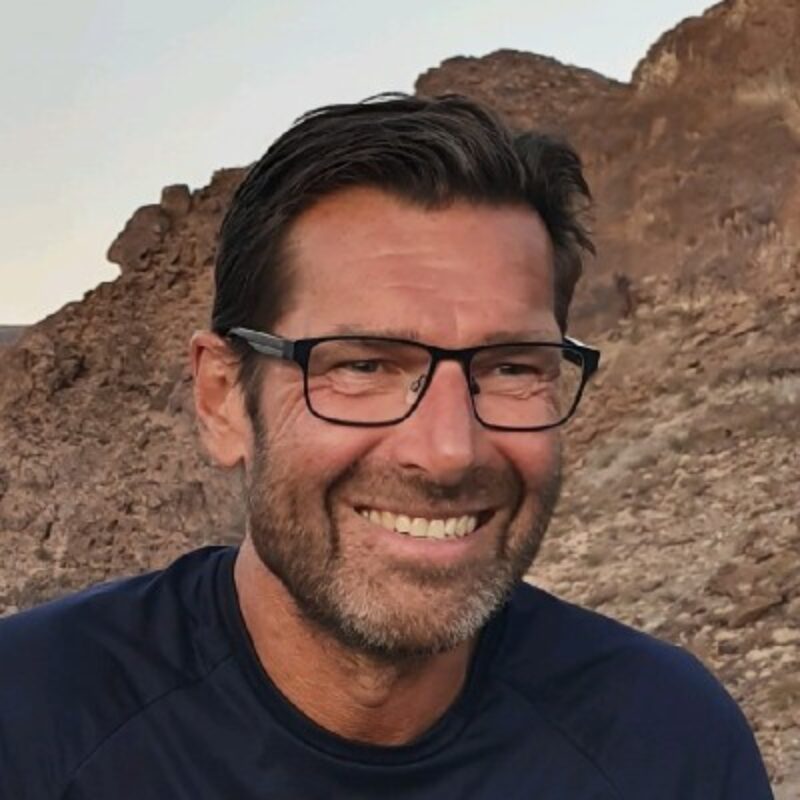
The key ideas from this conversation, written up on Substack with links and a question to carry into your own work.
Read on Substack