Designing Clinical Trials That Matter with Dr. Lauren Kelly
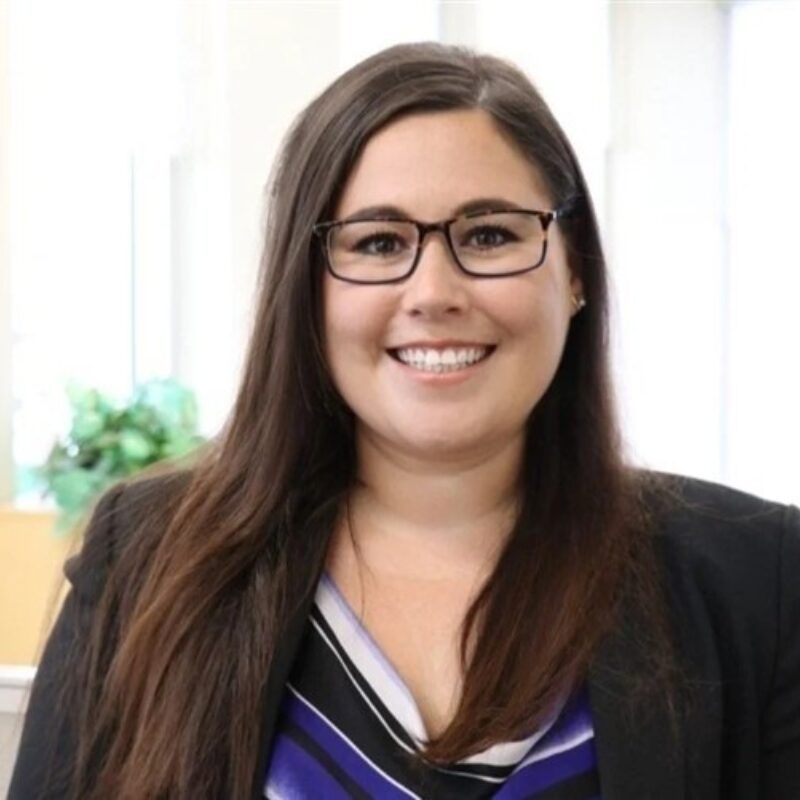
Dr. Lauren Kelly
Associate Professor of Pharmacology and Therapeutics, University of Manitoba; Scientist, Children's Hospital Research Institute of Manitoba
In this episode
00:00 Welcome to season two 03:30 Meet Dr. Lauren Kelly 04:00 A first trial as a graduate student 05:30 Why there are so few pediatric trials 08:00 What makes a good trial 12:00 Where to start: gaps, equipoise and patient partners 14:00 Trial registries and outcome reporting bias 16:30 Core outcomes that matter to families 20:00 Randomization and allocation concealment 25:00 Adaptive and platform trials 33:00 The IMPaCT training network 37:30 How trainees can get involved 38:30 A favourite trial: placebo for coughing kids
Select a timestamp to play the episode from that point.
Dr. McGavock: [00:00:00] Welcome back to the Emerging Scholar Podcast. I'm your host, Dr. Jon McGavock from the University of Manitoba, and I'm thrilled to have you back for season two. Last season, we took you on a journey through your first year of research training, covering everything from crafting great research questions to understanding the foundations of both quantitative and qualitative methods.
Dr. McGavock: We met incredible scholars, explored fundamental concepts, and built a roadmap to help you navigate your early research career. This season, we're going deeper. If season one was about laying the foundation, season two is about mastering the craft. We're taking those methods we introduced and really unpacking them, diving into the nuances, the challenges, and exciting new possibilities that each method has to offer.
Dr. McGavock: Throughout this season, you'll meet a remarkable team of both established and emerging scholars with expertise across a diverse array of approaches, from natural experiments that reveal causal insights into real-world [00:01:00] settings, to qualitative inquiry grounded in social justice, the complexities of implementation science, and yes, my personal favorite, causal inference.
Dr. McGavock: Each episode will introduce you to researchers who are pushing the boundaries, asking bold questions, and making novel and important scientific discoveries. First, we're celebrating Canadian research excellence, showcasing incredible work happening right here at home. Second, we're emphasizing the critical importance of patient engagement in shaping research that truly matters across a range of scientific methods.
Dr. McGavock: And finally, we're championing curiosity, the essential spark that drives all great science and keeps us asking what if and why. Whether you're designing your first research study, wrestling with methodological challenges, or simply passionate about rigorous and meaningful research, this season is for you.
Dr. McGavock: So let's dive in, stay curious, and continue building the skills that will shape your own scientific journey. Welcome everyone to the next episode of the Emerging Scholar Podcast. We are fortunate today to have one of my [00:02:00] colleagues from the University of Manitoba, Dr. Lauren Kelly, who's an assistant professor in the Department of Pharmacology and Therapeutics, and also a scientist at my own research institute, the Children's Hospital Research Institute of Manitoba.
Dr. McGavock: Dr. Kelly leads a program in the clinical pharmacology lab, which conducts research on pediatric and perinatal therapeutics, including cannabinoid use in children and opioid exposures during pregnancy. She serves as a scientific director for the Canadian Collaborative for Childhood Cannabinoid Therapeutics, C4T, and she's the director of the Pan-Canadian IMPaCT Network, increasing capacity for maternal and pediatric clinical trials, a Pan-Canadian clinical trials platform within the larger ACT clinical trial platform.
Dr. McGavock: Dr. Kelly was invited today because we've had the pleasure of working with many clinician scientists who lead and run randomized controlled trials. Dr. Kelly is an emerging scholar in this field, has an array of experiences and expertise in emerging clinical trial methods, speaks in a way that inspires people to do some of the hardest type of research out there, that is [00:03:00] designing, implementing, and executing randomized controlled trials.
Dr. McGavock: I'm really excited to ask a few questions about these emerging methods that I'm not as familiar with and learning a little bit more about the super exciting work that Dr. Kelly's doing around cannabinoid use in children and cannabinoid use in pregnancy. Let's take a listen
Dr. McGavock: Okay. Welcome everyone to the Emerging Scholar podcast, and we are here today with Lauren Kelly, a colleague of mine at the University of Manitoba. Thanks for coming in.
Dr. Kelly: Thanks for having me, Jon.
Dr. McGavock: Can you introduce yourself to residents across Canada, please?
Dr. Kelly: Sure. So my name's Lauren. I'm an associate professor in the Department of Pharmacology and Therapeutics here at U of M, and the director for the Increasing Capacity for Maternal and Pediatric Clinical Trials, or the IMPaCT Clinical Trial Training Platform.
Dr. McGavock: And you're a provincial and national leader and expert in pediatric clinical trials- Yeah ... which is why we have you here today. So [00:04:00] first off, you're a pharmacologist?
Dr. Kelly: Yes, sure am.
Dr. McGavock: So maybe tell us a little bit about how you got into the space of clinical trials.
Dr. Kelly: Yeah, that's a really interesting question.
Dr. Kelly: So as a pharmacologist or someone who studies drugs and how they work, I always knew I was really interested in the clinical side of things. So I got bit once by a mouse, and I think that was enough for me to know that I was really interested in the human side of drug research. And so as a p- PhD student, I actually sought out a clinical post-graduate program and wrote my first clinical trial actually in a course.
Dr. Kelly: That was a requirement. We had to write a grant for the graduate course. And then my supervisor really liked it, and we thought, "Well, let's see if it gets funded," and it did. Wow. Uh, so then I had a trial to design, and it was really a learn by fire moment for me, someone who was a new graduate student who had never done a clinical trial before.
Dr. Kelly: That kind of led me to where I am today, which is- ... designing a training program to better prepare those early career folk.
Dr. McGavock: That is amazing. So a graduate student [00:05:00] course, come up with an idea, write a trial, and all of a sudden you're like, "Wait a second, I think we could-
Dr. Kelly: And then it got- "... we, we should do this"
Dr. Kelly: stopped by the data safety monitoring board.
Dr. McGavock: Whoa. Yeah. So you actually got funded and- Oh, yeah ... you started to roll it out- Oh ... and it was stopped because it was too good?
Dr. Kelly: Yeah. No. Unfortunately, we had a safety event, and we actually showed that the interventions that we were comparing, there was one that had a better safety profile, and so the DSMB actually stopped our trial about three-quarters of the way through.
Dr. Kelly: So talk about an experience for a grad student. I bet.
Dr. McGavock: And it didn't deter you?
Dr. Kelly: No,
Dr. McGavock: not at all. Kept you going. So maybe we'll get back to that, too, about the importance of data safety and monitoring boards and committees, and how do you actually get those set up. But I'm gonna start with, as someone who does s- kind of behavioral interventions, and I've done a couple of behavioral trials, when I take a look at the clinical trial space for pediatrics, there aren't a lot of trials.
Dr. McGavock: You know, you read New England Journal or The Lancet or JAMA, and it's so many adult trials. What's your algorithm for how a good trial is designed? And then can you maybe explain what are we missing in pediatrics? Why don't we have more [00:06:00] pediatric trials?
Dr. Kelly: Maybe I'll start with the second question first, 'cause I think there's a lot of different reasons why there's not as many pediatric trials.
Dr. Kelly: The first being, at least in Canada, we don't have any incentives for industry to do those trials. So in places like Europe and the US, a company will actually get what's called an extension of their patent if they have a pediatric indication, and so we don't have those incentives here in Canada yet. But also, thankfully, kids are sick a lot less frequently than adults and so that means because of the rareness of these conditions, we have to work across multiple sites.
Dr. Kelly: So almost none of the children's hospitals have enough patients to be able to power a clinical trial, and we have to ensure that we're gathering enough data to answer our question, otherwise it's not really ethical to do a study if we're not gonna be able to answer the question with the number of patients that we have.
Dr. Kelly: And so it means that we have to have these multi-site studies, which cost a lot of money, because then we have to have a coordinator everywhere and a pharmacy rep everywhere. And so that can be a challenge, the lack of funding, but also just in general, a lack of [00:07:00] expertise. So there just hasn't been a dedicated clinical trial training infrastructure for pediatrics.
Dr. Kelly: It's not something that's commonly taught in detail in residency or in medical school. And so I'm not sure, maybe the pediatricians, hopefully will see this as more of a research avenue, but I think to date, it's just fallen off the radar a little bit.
Dr. McGavock: So does that mean that we're making a lot of decisions about child health or maternal child health without actual clinical trial data?
Dr. Kelly: Absolutely. Most of the drugs that we give to kids aren't actually approved for use in kids.
Dr. McGavock: So there's a huge need for us to get more people into the pipeline so that we can do better and larger trials.
Dr. Kelly: And keep them there, because hopefully your first trial won't scare you away.
Dr. McGavock: Right.
Dr. Kelly: We need people who want to stay in clinical trials and see them through.
Dr. Kelly: These are really long processes and as you know, Jon, they take years to get started, years to gather data, and then years to finish, and so it really is a long haul. So I think we need people who want to not only start trials, but see them all the way through. And then translate [00:08:00] that into the next trial and the next question and carry that forward.
Dr. McGavock: Absolutely. And so my understanding of this space, and we're super biased here in Manitoba 'cause we have Terry Klassen as our research director at CHRIM, and he helped co-develop something called the Pediatric Emergency Networks of Canada or PERC, Pediatric Emergency Research. And so I see a lot of great trials coming out of emergency medicine in pediatrics, and if I were to just brush over what I think the algorithm is, you need a large population of kids, hence you need a network of emergency departments.
Dr. McGavock: You need those kids to have some kind of condition that you can treat. You need something that you can treat them with or compare different treatment options that's pretty easy to deliver and that can be delivered uniformly. And then you need outcomes that are gonna be common, an improvement in respiratory function or time to discharge or whether or not you [00:09:00] came back to the emergency department, something like that And so the emergency department seems like the best place to do this kind of work.
Dr. McGavock: Is that the right algorithm? What am I missing
Dr. Kelly: there ? A couple of things about the outcomes. You said s- about collecting lots of outcomes. That is important, but the real thing is that we need to collect the outcomes that matter. So it's not just about collecting as much data as possible, it's really about what is the question that we wanna answer, because how many people we have to study depends on that question and what we're measuring.
Dr. Kelly: 'Cause that difference between the two groups and the outcome, as you said, is gonna be what tells us if this is successful or not and if someone's gonna pay to implement this intervention or not, because that's the other question, is at the end of the line, anything that we're testing is only going to improve outcomes if people are using it.
Dr. Kelly: And so we have to make sure that the outcomes that we're collecting are important from a systems perspective, a payer's perspective, but most importantly, to the patients and families, right? These are the folks that we're gonna be asking to give up their time, to fill in extra questionnaires, to come back for extra appointments, to do extra sampling.[00:10:00]
Dr. Kelly: And so it's most important that really it's the folks who are affected by the disease that are selecting what is the most important outcome. And the reason I say this is 'cause oftentimes we see, in the emergency department, they may care about the oxygen saturation levels and how fast were they back at 94%, but a parent maybe only cares about how fast they're getting home or how long are they in hospital.
Dr. Kelly: And so there's often a discrepancy between what we in the healthcare and researcher side of things think is important and what's actually important to families. And so this is where it's can get complicated to design trials because you have to pick one to power your trial, right? Yeah. You can only power your trial based on one question, and that's gonna determine how big your study is, and that has a- also a lot of factors, right?
Dr. Kelly: Are you looking at one emergency department? Here in Manitoba, is our population only 500 kids a year or 5,000 kids a year that come through ED, versus something across a network like PERC, which maybe has a lot more sites, a lot more children. You could maybe look at an outcome that's rare. So it's this balancing act about what's important to the clinicians, what's important from a decision-making perspective, but also what's [00:11:00] feasible
Dr. Kelly: And I think this is something that we were talking about with some of the vaccine trials, is that they didn't see kids coming into hospital. This was a really rare outcome that they didn't see in children, so that made it really hard for them to m- show any differences because it was really rare in both groups.
Dr. Kelly: And so- Yeah ... like I said, all those kind of considerations, but then you also have to think about the environment that the families are in. So the emergency department is a very stressful place. Everyone is generally coming in, coming out. There's not these established relationships like with family medicine or like a cardiology.
Dr. Kelly: If you have a cardiologist that you see a couple times a year, you have that relationship. You know the nursing staff. You could ask them questions. The ED is a little bit more of controlled chaos, if you will, and so it's- Yeah ... different staff and you're not gonna see the same folks twice. And so there's lots of recruitment challenges.
Dr. Kelly: And under those stressful conditions, how do you really explain to parents And ensure that they're a- informed when they're making that decision. There's some advantages in the ED, I think, in terms of the quick turnaround Mm-hmm ... but, uh, some different challenges from the- Yeah ... [00:12:00] operations side of things.
Dr. McGavock: Like, your child's got croup, and they're in respiratory distress, and you're freaking out, and someone comes to you with a consent form, like, "Hey"- I'm
Dr. Kelly: gonna sign anything that's in front of me. I'll do it ...
Dr. McGavock: absolutely. So where do you start, then? Patient partners are really important as part of the work that you do, and I think the future of clinical trials, but do you start with that outcome, or do you start with, "Is this actually gonna be feasible in that space?"
Dr. Kelly: Yeah, so I would think the first thing to do when you're thinking about a clinical trial is you have to come up with a question. And so the first thing is surveying the literature, making sure, you know, that this is actually a gap, not just something that you don't know about because you haven't looked.
Dr. Kelly: Right. And a global gap as well, right? 'Cause there's lots of great work that happens outside of Canada. And so once you have a question, what I usually recommend to folks who are thinking about this is actually just discuss it with your colleagues first to see what the community equipoise is. 'Cause if everyone thinks that you're crazy, they're not gonna recruit or help you with your trials.
Dr. Kelly: Yeah. So the first thing is really to take it to the community and just gauge, "Am I the only one with this question, or is this something that patients have been asking?" And so [00:13:00] the second thing I would say is getting patients involved as early as possible, and families and caregivers. This can look different depending on the indication, so sometimes this is if you're studying something in pregnancy.
Dr. Kelly: There's lots of parent alliances and parent groups out there. Not just at the end where they are looking at a consent form and you ask them, "Can you read this, yes or no? Is this good?" You know, really at the beginning of, "Is this the right trial that we should be designing, and what questions do you have?"
Dr. Kelly: And that way you can incorporate it at the beginning, as opposed to it being a kind of afterthought a- at the end of your trial when you're trying to say, "We've gotta communicate this. Now we have all this great data and we wanna share it with people." That's also a great perspective to have from parents and families, too.
Dr. Kelly: So I think really involving them throughout the whole journey, like, not just the design, but communication. And when they're involved from the beginning, they are more likely to want to stay involved. Mm-hmm. And I think that's what we've found, is that having them really, like, with decision-making power is really a game changer.
Dr. Kelly: And so getting started, I think those are really the three things, is input from clinicians, input from the literature identifying that it's a gap, [00:14:00] input from your clinical colleagues that they want to do this trial with you- Yeah ... that they're on board. You're going to have to have some kind of steering committee and oversight committee, so you're going to need your clinical and your other experts on there.
Dr. Kelly: And then the patient and family engagement, so checking and making sure that this is a question that's relevant and important to them. And then, of course, the next step is you gotta get some money -
Dr. McGavock: Yeah ...
Dr. Kelly: to do it.
Dr. McGavock: Yeah, so you have to also sell it to reviewers. In that search, one of the things you have to do once you've developed the whole thing is register your trial.
Dr. McGavock: So do you also go into these registries where- Ideally, everyone who's doing this kind of clinical trial work is putting their hypothesis and their methods and their team, their sites, and the outcomes that they wanna measure. They're putting that in a repository to say, "When I'm done the tri- with this trial, you can come back and look at it."
Dr. McGavock: Do you also scan the clinical trial registration landscape?
Dr. Kelly: Yeah. So it really depends why I'm reading the trial. But when I'm looking at the outcomes, I think that's always my first question is, "You're reporting these really [00:15:00] significant, sexy outcomes in your New England Journal paper. Were these because these were the ones that were significant, or because this was what you actually planned to measure five years ago when you designed this trial?"
Dr. Kelly: So that's a really good way, actually, for residents and really for anyone to check what we call outcome reporting bias. You know, if you measure pain at 10 time points, and it's not different at any time point except seven days, and all you say is that at seven days pain was different, that's what we would call outcome reporting bias.
Dr. Kelly: And so by checking the registry, they do have to document all the changes in a registry so that it automatically keeps a record. So a company or an investigator like you or I can't go in and make those changes without it not being recorded. It is a good way for folks to really see what's being reported in this publication, and is it complete?
Dr. Kelly: Publications, you know, we're always trying to keep word counts down and trying to meet journal requirements, and that's where it gets a little bit Of a toss-up between you wanna provide lots of methods, but you also have lots of results, and how do you balance what [00:16:00] the readers are looking for, and peer reviewers and all that.
Dr. Kelly: So yeah, registries are a great resource for extra information that doesn't necessarily fit into- Mm-hmm ... the end publication, for sure.
Dr. McGavock: Maybe can help you with the design of your trial as well.
Dr. Kelly: Yeah, and it's a great place to look and see what other trials are planned. So you can have, you register a trial when it's in the planning stages, so you can see if there's anyone who has similar ideas in other jurisdictions, and the WHO has a huge repository of all the different national registries.
Dr. Kelly: Mm-hmm. I believe Health Canada's actually working on a new one themselves.
Dr. McGavock: Yeah, and we'll have to get in that. And one thing that I've noticed as I'm submitting grants is that when you get the funding, you have to register. So the governing bodies are really doing a great job. But to step back a little bit, we ran into this really interesting situation in the last trial that we designed, where we had a list that was published from young people living with Type 1 diabetes, and they said, "These are the outcomes that matter to me.
Dr. McGavock: I'm more than my blood sugar." So my quality of life, my diabetes-related distress, [00:17:00] a number of psychosocial factors that were high priorities for patients. Clinicians and even the funders, they're like, "Wait a second, we need to measure these physiological variables that predict long-term outcomes." Have you been in that situation where you're trying to find that outcome that's gonna work, and then now you're balancing out what a patient's priority is versus clinician's priorities?
Dr. Kelly: I actually have a perfect example, 'cause we just... I say just, but it was published in 2020, so I guess that's not just anymore. So we actually had this come up in neonatal opioid withdrawal. So these are babies who experience withdrawal 'cause they're exposed to opioids all pregnancy, and then that exposure is discontinued when they're born.
Dr. Kelly: So much like adults, when you discontinue an opioid exposure, they can withdraw. And so no one had ever asked parents what was important to them. So we actually did a whole core outcome set, reviewed the literature. There was, like, 119 different outcomes. We did the open-ended Delphi with the clinicians, and we did patient interviews.
Dr. Kelly: One of the residents, actually, and this is a great plug for a resident research project, 'cause this work was done by a fabulous resident here at U of M. Oh, yeah. And she did interviews with family members and l- asked them, [00:18:00] like, five questions and really, like, "How do you know your child's getting better?
Dr. Kelly: What's important to you?" All seven of the parents said the same thing, which was the time to when they settle. Like, when they're having seizures or when they're agitated, how fast can they... 'Cause the anxiety's high, it's postpartum. Every single parent said the same thing in a different way. Mm. And that had been measured in no literature.
Dr. Kelly: That was not brought up by a single clinician. That was something that never made it onto our radar. And so what we actually did is we brought all of our patient outcomes to the consensus meeting. So we decided not to let them go into the Delphi, where they could get lost, because there's a lot of different people, and they may not know- Right
Dr. Kelly: where it's coming from. And so we brought them all to the consensus meeting. So we actually had a consensus meeting with industry partners, with the FDA, with Health Canada, with- A whole bunch of the folks from the steering committee and presented it as such, and we actually incorporated it into the final core outcome set, that top outcome.
Dr. Kelly: So that was a way where it may not be the primary outcome in a clinical trial, 'cause it's something that's difficult to measure and the- it's not something that has necessarily a valid scale [00:19:00] behind it. So that's where the compromise comes in, is that we can still measure these things and report them, but it may not be what we power the trial with as our primary outcome.
Dr. Kelly: Right. And so that's why core outcome sets have been developed, right? They're not out there to tell you, you have to only do this. They're out there to say, please do these things because everyone thinks they're important. And that really helps down the line when folks are looking at 10 clinical trials and wanna compare them.
Dr. Kelly: If everyone's measuring different things, that becomes really challenging, right? Really good advantages long-term to using these kinds of consensus-based outcome selection processes.
Dr. McGavock: And I feel like that probably helps you and the patient partners you work with translate the evidence back to parents, right?
Dr. Kelly: For sure.
Dr. McGavock: When you're like, "If we do this, this thing that you're really concerned about, right, is whatever it is, how agitated your child was, or how long it takes for them to relax and be under control, is reduced by this amount," versus whatever the other clinical endpoint was that we selected for the trial.
Dr. Kelly: Yeah, exactly. It helps with communicating things that matter to them [00:20:00] and help them make informed decisions, right? There's lots of push for patient and sharing decision-making, and you can only really do that when they have the information that they want and need to make those decisions.
Dr. McGavock: Right. So not to get into some of the weeds a little bit, but just because it's a clinical trial doesn't mean it's good, right?
Dr. Kelly: Correct.
Dr. McGavock: And I've seen people who are... who would say, like, "Oh, we don't need a randomized trial," 'cause we could say, "Well, patients will go to this clinic, and that's different than patients who go to this clinic, and that's kind of random, so we don't actually need to randomize. We could just compare clinics or compare doctors or compare days of the
Dr. Kelly: week."
Dr. McGavock: Yeah. Obviously, that's not fair, right?
Dr. Kelly: Well, it's not really random, right? There you go. You can't necessarily, if I live in one neighborhood and I don't have a car, I can't exactly attend a clinic on the other side of town. And if I don't have childcare on a Tuesday, it's not random. I don't have an equal likelihood of coming to that clinic.
Dr. Kelly: So randomization is literally a coin flip, an equal likelihood of being allocated to either arm. And so, you know, clinic days or clinic locations, none of [00:21:00] that considers... Obviously, no one, you, you know, have random access to who's gonna provide care for you. And so I would say that that is not what we would consider an appropriate allocation.
Dr. McGavock: So how do we actually do this? And if you're reading a paper, how do you know it's done in a really good way? I remember this TV show, uh, where they were emergency or surgical trainees And it was this popular show, and this patient was gonna be involved in a randomized trial, and the doctor opened the envelope to make sure that the patient got the drug and not the placebo, right?
Dr. McGavock: And I was like, "
Dr. Kelly: What?
Dr. McGavock: You can't do that." So there's all these steps, right? Like, you have to randomize in a good way. You have to do it so that people are blinded, and there's all these things. But how do you make sure that that's actually done the right way? 'Cause that could totally bias your study-
Dr. Kelly: Yeah ...
Dr. McGavock: if, if you screw up at any stage.
Dr. Kelly: So what, it's called... Well, I'll just go say the trial nerds, but, you know, s- s- We're- ... 'cause that's what we are. So what we call allocation concealment. So allocation concealment means that the randomization list, like you, Jon, if you're meeting [00:22:00] patients in the ED to tell them about your new study, you don't know if they're going to be r- randomized to what arm.
Dr. Kelly: And so that sequence of, like, AB, BBA, AAB, BBA, or whatever your sequence looks like, is it known to the people who are going to be blinded? And so opening that envelope, so sometimes it can actually be done with o- little opaque envelopes. But the main thing is that the people who are enrolling and sending participants to the physicians, and the participants themselves, don't know what they're going to get allocated to.
Dr. Kelly: And why that's important is because everyone has their own internal biases, right? We'd like to think people don't have favorites and least favorite patients, but they absolutely do. Mm-hmm. And so if you knew, as a physician, that your next patient was going to get intervention, you might not have that discussion with a patient that you didn't maybe think would benefit or you didn't really want to benefit or whatever that subconscious part of your brain is.
Dr. Kelly: Like, you're just feeling too busy, and so you don't discuss it with this patient because you know that the next patient coming is, like, your favorite patient, and they're gonna get the good drug. Right. And so we want to avoid that in clinical trials. We want [00:23:00] to avoid any of that allocation or selection bias- Mm-hmm
Dr. Kelly: by having physicians sort of pick and choose who's going into each arm. And so that's really important, is that the randomization sequence is, well, first of all, actually random- Mm-hmm ... not just clinic days or days of the week, but also that that sequence is concealed so that it's appropriate. This can be done lots of different ways.
Dr. Kelly: Mostly this is done through pharmacies for drug trials, right? Like, the pharmacists wouldn't tell any of the operational teams what they're dispensing, and so there are lots of easy ways to keep that concealed. So it's really just a matter of care at that point.
Dr. McGavock: And so that's- Not done with envelopes anymore as frequently, right?
Dr. McGavock: The
Dr. Kelly: opaque envelopes. The opaque envelopes, right. There is the examples of people holding up the envelopes to the light. To the light.
Dr. McGavock: Exactly.
Dr. Kelly: I think we use a little bit more technology these days. Right. So I know we do all of our randomization in REDCap.
Dr. McGavock: Right.
Dr. Kelly: There, there's no need for I don't think for the envelope method anymore.
Dr. McGavock: And what about across different sites? 'Cause a really popular trial in my space, we discovered later on [00:24:00] that a few of the sites in this large international trial actually somehow screwed up the randomization process. So how do we make sure that each site is doing things the right way, and how are people centralizing that, especially for- Yeah
Dr. McGavock: a research network like PERC?
Dr. Kelly: Yeah. So I think centrally, if possible, but again, that also depends on the infrastructure that's set up among the teams, right? So like a network like PERC, they do lots of different trials, and they have not all the same sites and not the same trials, and so I... they have a really centralized component, but they also have a centralized data coordinating center.
Dr. Kelly: And so that's what we use for our trials as well. Coordinating center that does the randomization process, and so there's not a way for our sites to change that. Mm-hmm. So we know that they're not gonna know that because it's done centrally. I mean, I won't even know. Right. So that's the benefit of some of the...
Dr. Kelly: Setting up networks like PERC or, or like our trial network, it... because we then have those established relationships and we can use those centralized re- sort of resources that we can monitor better. 'Cause you're right, in a [00:25:00] different country it might look very different, but there's no reason that couldn't be randomized centrally from here- Mm-hmm
Dr. Kelly: in Canada.
Dr. McGavock: And Canada's got a few centers of expertise where they've done this quite a bit, and so I think we have some capacity to make sure this happens.
Dr. Kelly: Yeah. I hope so.
Dr. McGavock: And with this new consortium that's coming out Hopefully, we can make that a little bit better. So I guess we know that clinical trials are important.
Dr. McGavock: They should be guiding our decision-making. What's new and emerging that residents should be looking for in the clinical trial space that you think is exciting, that you're maybe doing, that we should be learning a little bit more about?
Dr. Kelly: Yeah. There's a couple of things I can think of, but for sure, more innovative methods, and I hesitate to get into that because I think even just learning about trials that run in a traditional sense- Yeah
Dr. Kelly: you know, we're gonna recruit 300 people, and 2- 150 get this, 150 get that, and we'll follow them s- the same amount of time, is complicated enough. But we're seeing a huge push for more adaptive and Bayesian trials. So these are trials where you have predetermined rules to follow. So [00:26:00] let's say after 10 patients, you're gonna look at the data, and you might, in each arm, and you might...
Dr. Kelly: There is, like, zero, or there's 5% l- probability that this is gonna be effective, so maybe you stop recruiting in that arm. And so by adding in all of these extra... And this is where it gets really complicated, but it can increase efficiency dramatically. And in a space like pediatrics, where we need more trials but have limited resources- Mm-hmm
Dr. Kelly: exposing kids to drugs that don't work, that as well is important. I think some of these newer designs that, uh, promote efficiency are going to take off. An example I can think of is platform trials. So platform trials are a master protocol where you can evaluate different drugs in the same infrastructure.
Dr. Kelly: This was really big in COVID. A lot of the adult trials that we saw, like the REMAP-CAP, were able to adjust their existing platform infrastructure to roll in new medications for COVID 'cause they were already enrolling in the ICU. They already had all this great infrastructure, and so they were easily able to adapt and add new therapeutics for new indications.
Dr. Kelly: I think in pediatrics, we're really missing this [00:27:00] opportunity, and I hope to see us really build some infrastructure for some of these rare diseases, especially where it's going to take every single children's hospital here in Canada to participate. In some of these platform trials, the efficiencies are ginormous, but the challenges are also unique.
Dr. Kelly: You've gotta get a lot of different companies and players to agree on what you're measuring and how you're gonna do things and funding all these different arms that stop at different times. Like, our system is just not set up for that. If you or I go to CIHR, to the RCT panel, we're getting three or five years of funding.
Dr. Kelly: That's it. Right, right. There's no, "Oh, we stopped early, so we're gonna give you the money back," or, "Oh, we actually need 310 instead of 300, so we need more money to get that." There's not that sort of dynamic funding for some of the adaptive trials, so I do hope that there's some discussions and some better processes developed for that.
Dr. Kelly: In terms of, like, what's new in trials, I think seeing a lot more of these platform designs and a lot more of these adaptive trials that are [00:28:00] Coming up.
Dr. McGavock: So I wanna hear a little bit more about a platform trial, and then I have some questions about the adaptive model. But my reading of it is that you have all of these centers, and let's say you have patients being hospitalized for COVID.
Dr. McGavock: They automatically get randomized, right? So they... Okay, go ahead.
Dr. Kelly: So no. So in a platform, like, they still have to consent. Okay. There's still, like, the whole enrollment and consent process. Right. But they get randomized to different things. So, like, they'll get randomized which antibiotics. So they might get randomized to a five-day course or a 10-day course.
Dr. Kelly: Then they'll also get their antivirals randomized. They might get antiviral one, antiviral two, antiviral three. Then they'll also get a different heparin dose, and so the heparin dose is also randomized. So there's, like, buckets that get randomized within. So you could get any combination of things.
Dr. McGavock: Right.
Dr. McGavock: So we're not saying you can't... You always have to consent someone before they enter a trial. But yes For each clinical decision, there's a randomization process that's happening. So that one person could effectively be involved in answering five different questions-
Dr. Kelly: Absolutely ...
Dr. McGavock: [00:29:00] based on, "We gotta do this and we gotta do that."
Dr. McGavock: And so each time we have to make that decision, there's an opaque envelope that we have to open.
Dr. Kelly: I mean, the computer system does it,
Dr. McGavock: but- Obviously, yeah. But yeah. Yeah.
Dr. Kelly: No, exactly. Wow. That's exactly it. And so you're contributing to answering questions about antibiotic course length, about antibiotic choice, about antiviral choice.
Dr. Kelly: And so in pediatrics, there's actually a great example in Duchenne muscular dystrophy, where there's been, like, a few new drugs, but there's not enough patients for them all to test these drugs independently. If they work on a platform, they can share a control group.
Dr. McGavock: Awesome.
Dr. Kelly: Which is the best part because it means that more kids are gonna get access to potentially beneficial therapies because they can share that control group.
Dr. Kelly: So it just makes more efficiencies in the data that they can generate, as long as they can all agree to play in the same sandbox, if you will.
Dr. McGavock: Right. So is this also somewhere where, let's say you have children coming in with complex conditions that require multiple therapies, and we really only have data in adults.
Dr. McGavock: Would this be a space where you could say, "Okay, let's get all the pediatric centers across Canada who are [00:30:00] doing all PICUs in Canada who are dealing with whatever," and as a child comes in and the parent consents, as we make decisions about their complexity, we're gonna test three different questions?
Dr. Kelly: You could, for sure.
Dr. McGavock: Okay.
Dr. Kelly: There's no reason that a platform trial couldn't also function in pediatrics.
Dr. McGavock: Cool.
Dr. Kelly: We just don't have that infrastructure set up.
Dr. McGavock: Right. Maybe one day. Someday. With people like yourself. Yeah. So for an adaptive trial, I've read about it, and what piques my interest in the behavior change space is, and please correct me if I'm going down the wrong path, but we might say to a group of individuals, "We wanna prevent your blood pressure from going up, and we're gonna randomize you to one of these three lifestyle things."
Dr. McGavock: And you realize right away that this lifestyle thing that you've asked teenagers to do is no one's adhering to it, right? In an adaptive model, could we then say, "Okay, forget it. Trying to get teenagers to go to bed at 9:00 is not working. Yeah. So now we're gonna pull you out of that arm and then re-randomize you to the other two arms," which could [00:31:00] be- Reducing sodium intake or increasing your physical activity
Dr. Kelly: Yeah, so I can't say that I've seen it done where you would withdraw and re-randomize them, but certainly you would stop randomizing to that arm if it wasn't performing.
Dr. Kelly: It just would depend on how you set up all these decisions at the beginning. So this is where these kinds of trials take a lot of time in the design phase 'cause essentially you model out and simulate all of these parameters that could happen to help you make those decision rules. So if your rule in your trial was if less than 10% of teenagers go to bed at 9:00 PM, we're gonna drop that arm because we know it's not feasible- Mm-hmm
Dr. Kelly: then you would drop that arm. So that's the kind of nice part about adaptive trials is all these rules are pre-specified, so you don't have to go back to your ethics board or Health Canada every time you follow a rule. You don't have to go and change all your ethics and all your contracts to say, "We're not doing this arm anymore."
Dr. Kelly: You just let your coordinators know and they know when they're consenting people that arm is no longer an option. And you- You build in that to the process ...
Dr. McGavock: you wouldn't necessarily re-randomize. So that arm gets dropped, that group is done, and now [00:32:00] you're maximizing every other person coming in and saying- Yeah
Dr. McGavock: "Okay, here are the two arms that we have," and then someone centrally just gets rid of that randomization. It just
Dr. Kelly: becomes not an option anymore. Cool. Exactly. Uh- As simple as turning it off.
Dr. McGavock: Okay.
Dr. Kelly: Yeah.
Dr. McGavock: And who's doing this in this space in Canada right now that we should be looking at? Or is there anyone?
Dr. Kelly: You know
Dr. Kelly: I can't think of anyone great here in Canada. I mean, the REMAP platform trial is led by some Canadian investigators, but in the pediatric space, I can't think of any particularly exciting examples. For sure, like some of the pediatric trials are looking at using a Bayesian adaptive design, which is really like a statistically different way to design adaptive trials, trying to make, take more value out of like prior information.
Dr. Kelly: Those aren't out yet, but they should be available in the next few years.
Dr. McGavock: Do we wanna go down that path? I'm sure we could have a whole episode on what a Bayesian adaptive model is, but is that too far to go for this intro to- I
Dr. Kelly: think that might be for next time. All right. But yeah, that might be a little [00:33:00] too intense.
Dr. McGavock: Yeah. So- You're leading a new consortium.
Dr. Kelly: I am.
Dr. McGavock: And for residents that are interested, and we were speaking earlier, and neither of us recommend it. As a resident, you should not take on a clinical trial as part of your residency. That is way too big.
Dr. Kelly: For sure.
Dr. McGavock: But what is your consortium doing for people who wanna learn more about getting into this space?
Dr. Kelly: Yeah. So the first caveat is you should get involved in clinical trials, but don't think you can do your own, because the commitment is huge. But getting involved with things like developing core outcome sets or developing protocols, reviewing literature, doing even clinician surveys to design trials, lots of space for residents to get involved for sure.
Dr. Kelly: IMPaCT. Yes, IMPaCT. Yeah. That was the first part of the question. So IMPaCT is newly funded. We just got funding last December. It's a clinical trial training platform. So it's funded by CIHR, and we really are gonna do three things. The first is we'll have an open access platform. So it's actually, it's the my.riselms.ca, and that will [00:34:00] have all of our educational modules.
Dr. Kelly: We have specific content for pregnancy and for pediatrics. Those are our two main populations that we focus on. These will be free and accessible to anyone. So residents, you know, neighbors, aunts, uncles, cousins, whomever, will be able to take those modules and just learn a little bit about sort of the introduction and what are clinical trials and all those sort of the rules behind them.
Dr. Kelly: The second is salary awards. So for residents who do secure faculty positions, we have salary awards for early career researchers. We have 18 early career awards. And then we have our summit. We do have an annual meeting. Canada is really pushing for a PAS style of these combined meeting of the minds, if you will.
Dr. Kelly: Awesome. And so we haven't really had that here in Canada, that opportunity to bring all of the different research groups together. I'm really excited to see that starting to form. It is happening in Halifax in a few weeks- Yeah ... and will happen in Vancouver the 3rd to 6th of June next year. And so there are some travel awards.
Dr. Kelly: So like our network has travel awards that could be open for residents to, to attend. And so if you are a part of some of those [00:35:00] networks, there, there could be some opportunities to participate in the in-person event as well.
Dr. McGavock: Cool. Yeah. And so we're broadcasting as part of EnRICH, so we'll link that in. And EnRICH is this training platform for pediatric trainees, healthcare providers, graduate students.
Dr. McGavock: Anyone working in pediatric research will be linked to EnRICH. And residents, we often don't see you as part of this, so we really wanna get more residents involved in EnRICH, and all those training modules are gonna be put on this platform called RISE. Can you explain that a little bit?
Dr. Kelly: Yeah. So RISE is great.
Dr. Kelly: It's a Moodle-based platform, so anyone can actually upload content as well. So that's really great 'cause for IMPaCT, what we want is a community space where all the trials that are ongoing can come together, share their learnings, share their resources, because there are some groups that are doing this really well here in Canada, and so we wanna kind of capitalize on their learnings.
Dr. Kelly: And so it will be open access. It will have also... So we also are building, like, discussion forums, so I asked for sort of a Slack channel-like function where people could respond quickly. So these grant calls have been [00:36:00] coming fast and furious, and so getting a trial together in five weeks means- Yeah ... you need to have somewhere to start, right?
Dr. Kelly: You need a team. You need someone who can answer questions about, "How do I budget for a research coordinator in Saskatoon?" "Well, I'm not sure how much that costs." And so- Right ... just being able to better connect folks for sustained mentorship. And so RISE will have learning modules. It'll also have lots of hot topics.
Dr. Kelly: So another thing that we're offering will- w- which will be open to anyone are, are webinars, and so these will be... We have some really great speakers that are gonna share, um, about their trials, but also some more specific topics, so things like, how do we collect breast milk in clinical trials? Where does it get stored?
Dr. Kelly: What do we look at? Are we looking at the drug transfer in milk? Are we looking at the quality of milk? Are we looking at the amount of milk? You know, all of those kinds of things. How do we quantify the amount of milk that an infant is feeding, and those kinds of things. And so there'll be some really specific topics, but there'll also be some general topics on there as well that will be introductory.
Dr. Kelly: And so there will also be a really good opportunity for networking and mentorship there as well. So if you [00:37:00] are in, in a particular disease area, and there are clinical trials happening in that area and you want to get more involved, then we would be a great place to start.
Dr. McGavock: Awesome, and I love the sound of all trials in Canada harmonizing some outcomes so that we have the ability to capitalize on all this investment and all these different studies so that we can maximize- Yeah
Dr. McGavock: power and get to better answers. My intro to this was being mentored by someone who had already funded a trial. So maybe just to close out, if you're a resident and you're like, "I really wanna get into this space"- You're not gonna start your own trial, but at what level do you enter in? Do you go to someone who's already doing a trial and say, "I'm a resident, I wanna help out in some way," and then you get a feel for how it's actually done?
Dr. Kelly: Yeah. I think that's a great way to get started. So we often see residents or junior faculty start as co-investigators on clinical trials, so actually they can be involved. You can be involved in recruiting patients. You can be involved in data collection. You can be involved in contracting if you really want.
Dr. Kelly: There's lots [00:38:00] of hands needed at the table and so I think, I can't speak for every PI, but I know if a resident was interested in g- helping support my trials, the answer would be a resounding, "Yes, please." So I think it's just about asking, but then also knowing what's happening in the space. And so that's where IMPaCT, we have a Meet the Trialist series that we're launching.
Dr. Kelly: You'll be able to find out who are the trialists in this space and maybe connect with them for mentorship 'cause, you know, at smaller sites, if you're out in the community hospitals or some of the not as big centers, then it can- Mm-hmm ... be hard to find some trialists. So again, drawing some attention to that too.
Dr. McGavock: That's awesome. And you can carve out a little niche for yourself, work in that space, and then you get to know who's doing this because most of the time we're just reading it five years after it was actually done. Yeah. Thank you so much for putting all this together. It's incredible. To just to close out, either a trial that we should all read 'cause it's really inspiring and someone just did an amazing job, or, or something that you'd just like to share with us.
Dr. Kelly: Yeah. I will share my favorite trial, which is a trial in coughing kids. I have two toddlers, and I know you've got some toddlers too. Yeah. And it [00:39:00] looks at agave syrup, it looks at placebo, and it looks at nothing. And it looks at parent-reported cough. And of course, you know, parent-reported cough is not exactly the most robust- That's true
Dr. Kelly: uh, outcome measure- Yeah ... especially if you're up all night with a sick child. And they actually found that placebo actually performed as well as honey, and they both outperformed the no treatment arm. And I think it was... It's just it's an old trial. I think it's from 2004 in BMJ, and it really is one of those great examples of why we need placebos and the whole idea of spontaneous improvement and- Yeah
Dr. Kelly: outcome reporting. It just really is a great example of why we design trials the way that we do and why this trial needed a placebo arm and what that meant for parents- Nice ... in reporting. And so I think that's kind of one of my favorite trials just from the way it's designed and what they found. Yeah.
Dr. McGavock: Okay. We'll link it into the chat. Will do. Was that part of a BMJ Christmas, or was that just a regular BMJ? I
Dr. Kelly: think it's just a regular.
Dr. McGavock: I love it. But- I love... BMJ publishes so many really great things like that. This
Dr. Kelly: is an [00:40:00] oldie. Yeah. I think, like I said, it's like a 2004. I'll dig it up- Okay ... and we'll post it.
Dr. McGavock: For some of us, 2004 is not oldie, but
Dr. Kelly: I won't tell you where I was in 2004.
Dr. McGavock: Well, for me, it doesn't feel like it was that long ago. Anyways, thank you so much. That was awesome. We're really inspired by the work that you do, and hopefully we have more residents connecting with you and learning from you, and being part of the platform, and doing these really important clinical trials that we need a lot more of in Canada.
Dr. Kelly: Awesome. Thanks for having me, and I'm happy to come back and talk about a little more nerd talk later.
Dr. McGavock: Yeah, we're gonna do... The next one will be just for nerds.
Dr. Kelly: Sounds
Dr. McGavock: good. Clinical trial nerds only. All right, thank you very much. Take care. That was a fascinating talk and introduction to the concept of clinical trials, and Dr.
Dr. McGavock: Kelly is a younger clinician scientist paving her way, has accomplished so much in such a short period of time in this space, rapidly emerging as one of Canada's leaders in clinical trial design, and in an area that [00:41:00] is absolutely fascinating, which is cannabinoid use in children and opioid exposures during pregnancy.
Dr. McGavock: This was educating for me, someone who was trained 20, 25 years ago in clinical trials. I learned a ton. The opportunities right now for you as a clinician scientist are enormous in terms of getting training through the IMPaCT Network, being trained by some of the leading randomized control trial experts in the Canadian landscape right now.
Dr. McGavock: I hope that what this does for you, as it did for me, is make the clinical trials landscape a little more approachable, something that you feel comfortable with, something that you can dive into, an area that maybe you thought was meant for later in your career. But I think with the network and the infrastructure that Dr.
Dr. McGavock: Kelly set up with the expertise that's out there right now, randomized control trials are definitely something that are feasible, approachable, and exciting for you to think about as you start your emerging scholar journey.
Dr. Kelly: The Emerging Scholar Podcast was recorded in the UMFM studios located
Dr. McGavock: at the University of Manitoba in Winnipeg, [00:42:00] Manitoba, Canada.
Dr. McGavock: This is Treaty 1 territory, the original homeland of the Anishinaabe, the Ininew, and on the national homeland of the Red River Métis. Manitoba is also homeland to the Anishininew, the Dakota Oyate, and the Dene peoples. We acknowledge that our water is sourced from Shoal Lake 40 First Nation. As a settler scientist working in health research, I acknowledge TRC Call to Action number 18, that health inequities between Indigenous and non-Indigenous people are the direct result of colonization.
Dr. McGavock: Winnipeg is the center for reconciliation in Canada, and where we are speaking from today is at the crossroads of Canada's history and Canada's future. We are three kilometers away from one of the most sacred meeting grounds for Indigenous people on the plains and within Turtle Island. We are also several kilometers away from one of the last residential schools in the province.
Dr. McGavock: We are working collectively on reconcili-action with youth, elders, and community leaders to heal from the trauma of [00:43:00] colonization, past and present, honor the original treaties, and create a Canada that addresses and eliminates the inequities and injustices of the past and present to create a future for Indigenous children to live and thrive.
Dr. McGavock: On behalf of the team at the Emerging Scholar Podcast, we wanna thank Osani Balkaran for the great production for our opening and closing themes. We also wanna thank UMFM 101.5, especially our executive producer, Jared McKetiak, for technical assistance and production on this project. We also wanna thank all of our guests for the discussion and the insight that they've provided.
Dr. McGavock: Once again, thank you for listening. Be sure to subscribe to the Emerging Scholar Podcast on Apple Podcasts, Spotify, and umfm.com.
Dr. Lauren Kelly is a clinical pharmacologist at the University of Manitoba and the Children's Hospital Research Institute of Manitoba, scientific director of the Canadian Collaborative for Childhood Cannabinoid Therapeutics (C4T), and director of the IMPaCT clinical trials training network. She ran her first trial as a graduate student, and it was stopped early by its data safety monitoring board.
She explains why so few trials include children, why most drugs given to kids are not approved for them, and where to start when designing a trial: confirm the gap, test community equipoise with colleagues, and involve patients and families from the beginning. Using a core outcome set for neonatal opioid withdrawal as an example, she shows how parents identified an outcome no clinician had measured.
Jon and Dr. Kelly also cover trial registries and outcome reporting bias, true randomization and allocation concealment, adaptive and platform designs, and how IMPaCT's free training, awards and mentorship can help trainees get involved early.
The key ideas from this conversation, written up on Substack with links and a question to carry into your own work.
Read on Substack