Select a timestamp to play the episode from that point.
Dr. McGavock: [00:00:00] Welcome back to the Emerging Scholar Podcast. I'm your host, Dr. Jon McGavock from the University of Manitoba, and I'm thrilled to have you back for season two. Last season, we took you on a journey through your first year of research training, covering everything from crafting great research questions to understanding the foundations of both quantitative and qualitative methods.
Dr. McGavock: We met incredible scholars, explored fundamental concepts, and built a roadmap to help you navigate your early research career. This season, we're going deeper. If season one was about laying the foundation, season two is about mastering the craft. We're taking those methods we introduced and really unpacking them, diving into the nuances, the challenges, and exciting new possibilities that each method has to offer.
Dr. McGavock: Throughout this season, you'll meet a remarkable team of both established and emerging scholars with expertise across a diverse array of approaches, from natural experiments that reveal causal insights into real world [00:01:00] settings, to qualitative inquiry grounded in social justice, the complexities of implementation science, and yes, my personal favorite, causal inference.
Dr. McGavock: Each episode will introduce you to researchers who are pushing the boundaries, asking bold questions, and making novel and important scientific discoveries. First, we're celebrating Canadian research excellence, showcasing incredible work happening right here at home. Second, we're emphasizing the critical importance of patient engagement in shaping research that truly matters across a range of scientific methods.
Dr. McGavock: And finally, we're championing curiosity, the essential spark that drives all great science and keeps us asking what if and why. Whether you're designing your first research study, wrestling with methodological challenges, or simply passionate about rigorous and meaningful research, this season is for you.
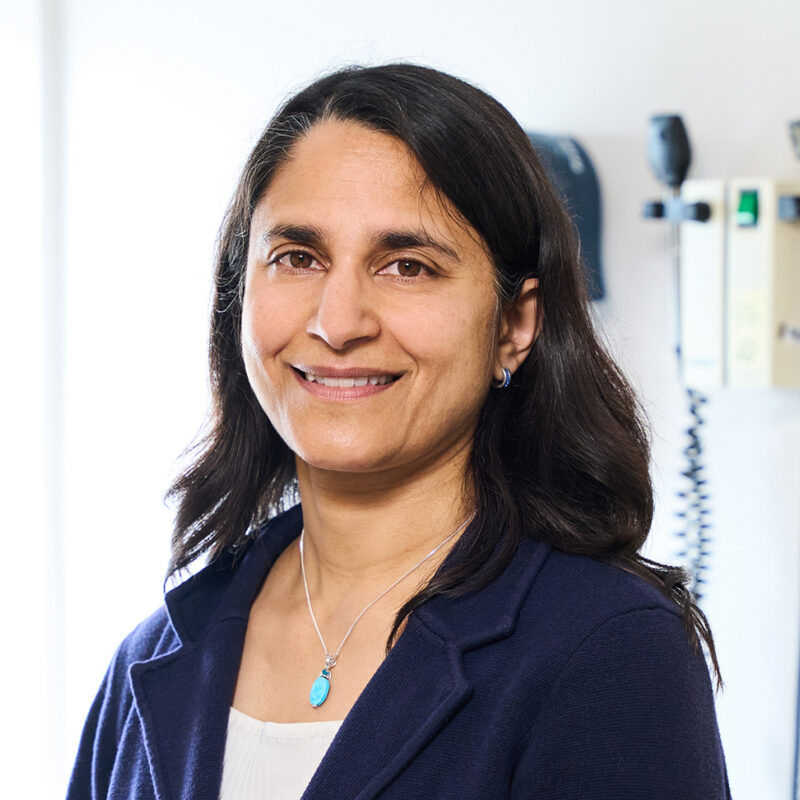
Dr. McGavock: So let's dive in, stay curious, and continue building the skills that will shape your own scientific journey Welcome back everyone to the Emerging Scholar Podcast. Today, I have the distinct pleasure of speaking with someone I truly [00:02:00] admire in population health research, Dr. Sonia Anand. Dr. Anand is a professor of medicine and epidemiology at McMaster University.
Dr. McGavock: She's also the director of the Chanchlani Research Centre, which focuses on health equity research. Dr. Anand is a senior scientist at the very famous Population Health Research Institute at McMaster University, and also serves as McMaster's Associate Vice President for Global Health. Dr. Anand is a world leader in cohort study design and implementation, with decades of experience building and leading some of the most influential global health research initiatives in Canada.
Dr. McGavock: She has been instrumental in major studies, including the INTERHEART study, which examined heart attack risk factors across dozens of countries. The PURE cohort, which continues to track cardiovascular outcomes and chronic diseases in urban and rural populations worldwide. Her work also includes seminal discoveries within the SHARE cohort, as well as starting and making discoveries in maternal child health areas with the ABC and START birth cohorts, which are advancing our understanding of the early life determinants of [00:03:00] health and health inequities.
Dr. McGavock: Throughout her career, Dr. Anand has centered racial and ethnic health inequities in her research, examining how cardiovascular risk varies across populations and working to address disparities in health outcomes. She brings a unique expertise, not only in the science of cohort design, but also in building and managing the large international research teams necessary to do this groundbreaking work.
Dr. McGavock: Today, we're diving into the world of cohort studies, building on what we learned with Dr. McEachan and the Born in Bradford study. What is a cohort study? Why do they matter? And how Dr. Anand and her team at McMaster University has helped shape this essential research methodology to advance global health equity worldwide.
Dr. McGavock: Welcome, everyone. I can't tell you how excited I am to have someone that I have looked up to in the two decades that I've been doing this the number of papers that this person has published that have come through my desk and informed the work that I do and how inspiring the [00:04:00] evolution of your work has been, Dr.
Dr. McGavock: Anand, in terms of massive impact, huge breakthroughs, and then community engagement. It's such an honor to have you here. Thank you so much for joining us.
Dr. Anand: No, it's my pleasure, Jon.
Dr. McGavock: What is in the water in Hamilton, Ontario that's leading to so many amazing scholars forging the way through clinical epidemiology?
Dr. Anand: I'm not sure who you've spoken with, but I will say one of the reasons I've stayed at McMaster is the culture. We like to say the culture is very collaborative. It's a pretty small town, so it doesn't matter if you're across the city in a never- different hospital. If you have a good idea and you wanna collaborate with someone with that expertise, you just do a quick drive across the city, have a meeting, and get started.
Dr. Anand: And so over the years when I've been considering going outside of Hamilton, I would say it was the culture, and for me, the mentorship that really [00:05:00] kept me in McMaster.
Dr. McGavock: That's what I think others have said as they have been interviewed for this podcast. Mm-hmm. Let's take the mentorship angle and go back to your very first project, which-
Dr. Anand: Sure
Dr. McGavock: I had to go back a really long way. You've published almost 600 papers. Mm-hmm. So I had to go all the way into the deeper dives of PubMed to find a paper that has two authors on it. Yourself- Mm ... a very famous ep- clinical epidemiologist, Salim Yusuf. So can you tell us- Yes ... about that study?
Dr. Anand: So I was very interested as a medical student in starting a career in international health, as it was called at that time.
Dr. Anand: And that was based on, I had traveled a fair bit, and I had gone to India the summer before I started medical school. And in India you see the extremes of poverty and wealth. At that stage of my life I was really committed to trying to improve health conditions for people. And [00:06:00] so I thought international health would be the pathway, and I knocked on a number of doors.
Dr. Anand: And we had an international health office at that time run by Vic Neufeld, so I talked with him, talked to David Sackett.
Dr. McGavock: Oh,
Dr. Anand: wow. And a few of them said, "You know, there's this new guy in town who's just come up from the NIH. His name's Salim Yusuf. Why don't you go meet with him?" And this will s- Wow ... tell you my age.
Dr. Anand: This is before the email days. So I wrote a note to Salim, and he wishes he kept this note because apparently what I said is, "If you wanna give back to your country," he originates from India- He, he really- "... to work with you on that." So it's kind of bold. I'm surprised- You
Dr. McGavock: really
Dr. Anand: sold it ... at that time. And he responded, "Let's have a meeting."
Dr. Anand: So I went into his office. And we talked about I was interested in research. I was now an internal medicine resident, and he suggested, "Okay, why don't we start with a chart review of practice patterns for acute MI?" And I was very keen to do something in India. [00:07:00] We co-designed this project, and I went back to his medical school, actually, St. John's Medical College in Bangalore. Okay. And I did a chart review of consecutive acute MI cases, and I did the same chart review at the Hamilton General Hospital, and we compared it. And you might think right off the top, well, Canadian healthcare system is better, but we were better in some aspects of AMI care.
Dr. Anand: Pe- people could get via ambulance to hospital faster than at that time to their streptokinase. So door-to-needle time was short due to the ambulance time. Versus in Bangalore, no ambulance service. But once patients in Bangalore got to hospital, they got their thrombolytic therapy much faster than in Hamilton.
Dr. Anand: So it kind of opened my eyes to not only contextual country differences, but systems differences. And actually, uh, at St. John's they had excellent MI care once you got to hospital.
Dr. McGavock: Right. So my understanding of the medical [00:08:00] system Is if you can get access to it in India, it's exceptional. Yeah.
Dr. Anand: That was what I observed and that led to our writing a paper.
Dr. Anand: I think I presented my first abstract at the Canadian Cardiovascular Society on that basis. And so the whole research process from designing a case record form to doing the analysis to submitting an abstract and then writing a paper I did under the mentorship of Salim. That led to a number of other questions we had.
Dr. Anand: I had looked at the literature around the world that suggested South Asians or people who originate from India have high rates of coronary artery disease, and that was data mostly from England. So we asked the question, "Is this true in Canada?" So that first chart review study led to a study we ran in Canada, which was the first study of ethnic variations in cardiovascular risk factors called SHARE, the Study of Health [00:09:00] Assessment and Risk in Ethnic groups.
Dr. Anand: And I was initially interested in South Asians versus white Europeans. That was how I thought we should proceed. But Salim was saying, "You know, what about other ethnic groups?" And the second largest non-white ethnic group were people of Chinese origin. Mm-hmm. So we included the Chinese population. And then I thought we could do it in Hamilton, J- in Toronto, but Salim always thinks big.
Dr. Anand: Yeah. And he said, "Well, how about expanding to Alberta?" So we included Edmonton. And then I was giving a talk early into the development of that project, and someone in the audience actually said, "What about indigenous people in Canada?" Hmm. "Don't you know the Six Nations Reserve is so close to McMaster?"
Dr. Anand: Which I didn't know because I grew up in Nova Scotia, not Ontario. Right. So it was a different way of building a relationship, but through some mentorship in that regard, I went out and met the director of health services and we included the indigenous community as well. SHARE ended up with the four [00:10:00] different groups and we learned quite a lot about risk factor distribution, subclinical atherosclerosis and prevalent CVD.
Dr. Anand: The value of SHARE was we took great pains to randomly recruit people from the population, which as you know is challenging. It's easier to take a convenience sample, but we managed to figure out a way for each one of the ethnic groups and that makes the data much more valuable and representative.
Dr. McGavock: And that methodological theme in reading the work that you published at that time in the INTERHEART study, in the PURE study- Mm-hmm
Dr. McGavock: in this study, that methodological strength of starting from recruiting in the best way possible, enrolling in the best way possible Was so valuable long term in understanding that. But if we could just go a step back, one of the themes that came up in our first season is the importance of a research question.
Dr. McGavock: And you've been involved in multiple [00:11:00] high impact, big discovery cohort studies, observational studies. You don't always come in with a specific question, do we, when we design these kind of studies? So was there something, a sort of an aha moment for you to say, "We really need to focus on the South Asian population"?
Dr. McGavock: You had an interest in India obviously, but was there something happening in McMaster? Did you see something in McMaster that really turned on the question, or was it that experience that you had in India that opened your eyes to certain groups that weren't being studied as much?
Dr. Anand: Recalling back then, I was, as I mentioned, interested in global health initially, so I read a number of the pivotal studies of ethnic variations.
Dr. Anand: And at that time, the South Asian group, the diaspora, if you will, in England, in Fiji, in South Africa, and everywhere South Asians migrated, there was a few papers written about why did South Asians [00:12:00] suffer early acute MI. Mm. So I was very intrigued by that question, and I actually recently published a book for the general population.
Dr. Anand: It's called Reclaiming Our Hearts: Why South Asians Are at Increased Risk of Diabetes and MI. I started off by my maternal grandfather's story, and that kind of story lived with me as I grew up. He died at age 57 of an MI the very weekend my mother and father emigrated to Canada. So it was Labor Day weekend, 1965.
Dr. Anand: Oh, no. They arrive in Nova Scotia, and then my mom got a telegram to go back to East Africa because her father had passed away, and he was only 57. And shortly after, his younger brother died at age 47 while dancing at a wedding. Oh, no. So I kind of had this strong family lore as well, and I was very intrigued because my great-grandparents on my mom's [00:13:00] side had lived well into their 80s.
Dr. Anand: So why in a single generation did, you know, one group live to their 80s and the other die suddenly at age 57? So I was very intrigued by the gene environment factors that may account for this.
Dr. McGavock: Wow, that is a heartbreaking way to get into this. Yeah. We will put links for sure to that book. Um- Mm-hmm ... and I look forward to reading it.
Dr. Anand: Mm-hmm.
Dr. McGavock: And the question must have been very broad going in.
Dr. Anand: Mm-hmm.
Dr. McGavock: And from my recollection of reading those papers, what I found fascinating, and there was a group doing this when I was at UT Southwestern-
Dr. Anand: Mm-hmm ...
Dr. McGavock: that was finding very similar things, that-
Dr. Anand: Mm-hmm ...
Dr. McGavock: the MI rates were high or, or the stroke rates high as well Or inequitably higher semi No, no,
Dr. Anand: it's a really interesting distribution and in today in the PURE study, which we'll get to, where we can look at global variations, we see South Asians continue to have a higher [00:14:00] incidence of coronary artery disease compared to other groups.
Dr. Anand: And if you look at the re- relative proportions of CAD to stroke, it's 80/20- Oh ... CAD to stroke for South Asians, but it's flipped in the Chinese. Oh, wow. So it, there are intriguing ethnic variations.
Dr. McGavock: I was not aware of that. The variation that struck me, and when we were at Southwestern, they were very interested in the higher rates of diabetes, type 2 diabetes, and gestational diabetes, was that the overall risk profile seemed to be lower even though the outcomes were higher Was that something that you had seen in SHARE as well, that if we apply the North American guidelines, let's say, that you would see what seemed to be a lower risk profile?
Dr. McGavock: Am I getting that wrong? Yeah. Or what were the main findings of SHARE?
Dr. Anand: It, it's interesting because I remember back when I went to the Lake Tahoe two-week course in cardiovascular epidemiology in 1996.
Dr. McGavock: Wow.
Dr. Anand: The question with David Goff-
Dr. McGavock: I went to the one in, uh, 2006.
Dr. Anand: Okay. [00:15:00] Yeah. So there you go, 10 years later.
Dr. Anand: Um-
Dr. McGavock: And David
Dr. Anand: Goff was
Dr. McGavock: teaching there too. Yeah.
Dr. Anand: Yeah. And there, at that time, it was what protects Hispanics from CHD in spite of having diabetes. Hmm. From the perspective of did South Asians have lower risk factors, I think depending on what was measured, they might have had less hypertension. But when we expanded the type of risk factors we measured in the SHARE study beyond Framingham, for example, then we saw that South Asians had equivalent, if not in some cases higher rates of certain factors.
Dr. Anand: Essentially, South Asians and indigenous people and Chinese individuals who gain weight gain central adiposity. Right. And central adiposity plus the associated cardiometabolic risk factors are kind of the cluster of factors that develop earlier on in South Asians compared to other groups. Why do South Asians get diabetes, abdominal [00:16:00] obesity, visceral adipose tissue at higher rates than other groups?
Dr. Anand: We know that lipoprotein little a, which is an atherogenic lipoprotein, is also more common in South Asians. And actually, in SHARE, what we saw is the prevalence of the metabolic syndrome as we defined it was about 25% in the South Asian group. Mm-hmm. Slightly higher in the indigenous population. And when we looked at carotid IMT, which is a measure of atherosclerosis, for the same given level of atherosclerosis, South Asians had more clinical events.
Dr. Anand: So we knew it was not only atherosclerosis, there was something else.
Dr. McGavock: Right.
Dr. Anand: And there are a whole host of hypothesis from smaller arteries to impaired fibrinolysis to elevated LP little a. But SHARE left us with the risk factors are common across the different ethnic groups, but the rate of disease differs.
Dr. Anand: And at that time, people really thought [00:17:00] that- People of different ethnicities or races, and the terms were being confused all the time-
Dr. McGavock: Mm-hmm ...
Dr. Anand: had different genetics and therefore different risk factors. And that's why we went from SHARE, which was a descriptive study, to INTERHEART, where we said we have to go beyond one country.
Dr. Anand: We have to do a global study, and we really have to determine if different ethnic groups have different cardiovascular risk factors. And as you know from INTERHEART, we showed the same nine modifiable risk factors account for over 90% of the acute MI burden in all populations. So the prevalence of the risk factor could differ, but the risk factors themselves are the same.
Dr. McGavock: That was the Highlight moment for me listening to Dr. Yusuf give a keynote at- Mm-hmm ... either an AHA meeting- AHA or something. Something like that, where he just resonated with me that-- [00:18:00] And this was early. He said, "Why are we worrying about genetics and epigenetics when the population attributable risk is-" That's right
Dr. McGavock: over 90% on these-" Mm-hmm "... very easy to measure modifiable factors." We've interviewed a few people for season two from ICES or from MCHP, where we have electronic medical records. The value, I think, of SHARE and INTERHEART and PURE, and many of the cohort studies, is that high resolution measurement. So in SHARE you did, it was- Carotid IMT.
Dr. McGavock: Carotid IMT. Mm-hmm. So in the '90s or late '90s, early 2000s, that was- Yep ... state-of-the-art.
Dr. Anand: Yeah.
Dr. McGavock: When I was at UT Southwestern, we were measuring coronary artery calcium, and we were measuring fat in the liver, and that was novel. These cohort studies allow us to that deeper insight into that pathophysiology.
Dr. Anand: That's right. That's right. And also with the individual person data, you can adjust for potential confounders, whereas in the health admin datasets you may [00:19:00] not have BMI in an individual. You may not have smoking. So you can look at associations, but you can't explain them, and you still have that lingering doubt.
Dr. Anand: Is there some confounding- Mm-hmm ... that I couldn't account for here?
Dr. McGavock: Mm-hmm. Agreed. So maybe we can move into INTERHEART, which was a case-control study.
Dr. Anand: That's right.
Dr. McGavock: Which when I'm teaching undergrads about case-control studies, you often say you start with a rare condition because it's hard to study. Mm-hmm.
Dr. McGavock: You were studying MI.
Dr. Anand: Yeah. Well, it, like-
Dr. McGavock: It's a beautiful example.
Dr. Anand: It is. And choosing the study design, as you know, it, you have to take some time and debate it because there's pros and cons of different designs. And, you know, we always say cohort studies are great because you can measure all kinds of different outcomes, and you're not restricted to one outcome.
Dr. Anand: But they're labor intensive, and you need long-term funding, and follow-up rates have to be high.
Dr. McGavock: Mm-hmm.
Dr. Anand: And so for the INTERHEART decision, it was more [00:20:00] about we know AMI, acute MI's common in all populations. We figured out a way, we struggled for a while, figured out a way to recruit controls at each center in each country, and it would be a very efficient way to just determine if those risk factors that Framingham had identified apply to all populations in the world.
Dr. Anand: So there were multiple considerations. One of them was efficiency in getting a global answer. So I think that was the reason we went with the case control.
Dr. McGavock: And the way that you distinguish cases from controls for AMI was one of the most elegant epidemiological decisions I've ever seen. Mm-hmm. So I bring it up t-teaching all the time.
Dr. McGavock: Can you explain that?
Dr. Anand: Yeah, sure. We took first acute MI and so why not second? Because i- if you've already had one, you change all your health behaviors and you're [00:21:00] on medication. So it had to be incident MIs matched to controls, and controls could be matched at the center or a clinic, you know, could be a clinic near the center, and those individuals had to have a different reason for coming to see the doctor and no history of cardiovascular disease.
Dr. Anand: And the different reason we've struggled a lot with where do we choose the patients from to be controls, and so we would choose things that had no relationship to the cardiovascular outcome of AMI, such as a fracture clinic. So we could recruit controls from a fracture clinic, and we would ask the same questions of the controls.
Dr. Anand: And so a case controls study ends up being a relative comparison of the proportion of the risk factors of interest. Mm. And through that you calculate the odds ratio. So that was how we did it, and then we [00:22:00] did have to think about the measurement of blood samples, and in particular I remember spending a lot of time discussing what happens to cholesterol in an acute MI setting because it drops.
Dr. Anand: And so if we measured it on day one of the acute MI, we might underestimate the association of cholesterol. So we collaborated with a number of experts in lipids, Alan Sniderman from McGill- Oh, wow ... um, if- Yeah ... you may know— Yeah ... um, was very keen on ApoB and ApoA. Mm-hmm. And at the time we thought of the ApoB like poor man's LDL and ApoA is poor man or woman's HDL.
Dr. Anand: Mm-hmm. But we knew they wouldn't be affected by the acute MI injury, so we went with that measurement, and as you know from the primary papers, it's the ApoB to ApoA ratio- Mm-hmm ... that we use as the measure of cholesterol. So that's an example of some of the challenges we had to overcome. [00:23:00] Same with glucose, that can change acutely.
Dr. Anand: Mm-hmm. So we did have to rely on self-reported diabetes.
Dr. McGavock: Right.
Dr. Anand: So when we wrote many grants to get this funded, we'd always have various grant reviewers saying, "Well, self-report could be biased." But the whole kind of mantra of Salim Yusuf and his mentors that kind of trickle down to everyone at McMaster who work with him is ask a good question and answer it reliably.
Dr. McGavock: Yes.
Dr. Anand: And answering it reliably is determined by the sample size and statistical power, so that's why INTERHEART was 27,000 people. We had to power it in every ethnic group region in order to be confident about the answer.
Dr. McGavock: And one of the comments that I remember from Salim giving that keynote lecture is that no one wanted to fund it
Dr. Anand: No one, you know, it was conducted in 52 countries with 54 funding sources.
Dr. Anand: For sure. [00:24:00] And there were mu- I still have the number of grants we wrote on my computer and were rejected from our Canadian funding bodies. Eventually Heart and Stroke funded some of it, but so many rejections for both INTERHEART and PURE from our own funding bodies.
Dr. McGavock: And then they end up making these just landmark discoveries.
Dr. McGavock: So-
Dr. Anand: Yes.
Dr. McGavock: Mm-hmm ... if you have a great idea and you've developed the methods in a really rigorous way, it's important to stick with it. Persistence.
Dr. Anand: Persistence. Passion, patience, persistence, I say. The three Ps.
Dr. McGavock: The three Ps. Could I add another one?
Dr. Anand: Yep.
Dr. McGavock: I don't know if I can find a- I
Dr. Anand: guess ...
Dr. McGavock: a, a P word in there.
Dr. McGavock: It's maybe I'll say the privilege of working with a huge team of- Yeah ... extraordinary scholars. And when I look at- Yes ... that list that is on your team, they're all top of the game. So can you talk a little bit about that?
Dr. Anand: Sure. I'd love to because, you know, it looks like a network on paper but [00:25:00] it's really very strong network of friends.
Dr. McGavock: Oh, nice.
Dr. Anand: And so I think Salim really carried over what he had experienced in the ISIS trials as they were called one and two, streptokinase aspirin in acute MI in Oxford. He carried over that approach which was, you know, form collegial relationships with key people in different countries, have a good scientific question and align your colleagues behind that vision.
Dr. McGavock: Mm-hmm.
Dr. Anand: And if they're all committed to the vision, even when you're not funded, they'll keep going. Right. So it's a really different mindset from a clinical research organization that's set up to just get physicians to recruit patients, and the first question physicians in those networks ask is, "How much are you gonna pay me?"
Dr. McGavock: Yep.
Dr. Anand: In the networks that Salim initiated, it was around a good scientific question and based a lot on friendship. And so [00:26:00] what we would do is we had to struggle to fund all of these and write so many grants. So many grants my mother suggested I name my youngest son Grant. That's our family joke. I love it.
Dr. Anand: 'Cause I'm always talking about grants.
Dr. McGavock: I love
Dr. Anand: it. We would meet all over the world to have these discussions. So I remember when you talked about the case control methodology, I remember the meeting in Atlanta probably alongside ACC. A day after the meeting we went out to some resort and we hammered through the INTERHEART protocol and how do you measure stress?
Dr. Anand: Half of the room didn't believe you could measure stress, and we managed to work in locus of control and psychological stress in there, and they were predictive in the end. Those networks were really important, and we carry them from the epi over to the large clinical trials too. And so-
Dr. McGavock: Mm-hmm ...
Dr. Anand: actually last November We celebrated the 25th anniversary of the Population Health Research Institute Mm-hmm And Salim was retiring from that role, and [00:27:00] so many of his old friends and colleagues came for that celebration and reflected the extensive network that he really relied on.
Dr. McGavock: Nice. You must have an incredible skill set in managing not only big egos S- smart people with very passionate interests. I spoke to Katherine Morrison earlier today and I said that we were gonna have a conversation, and she said, "Sonia is the best leader of a meeting that I have ever seen."
Dr. Anand: Oh, that's super nice of her.
Dr. McGavock: So there is something- Oh, n- ... special that you have also-
Dr. Anand: Oh, well, maybe ...
Dr. McGavock: in leading
Dr. Anand: teams Um, that's really nice of Katherine. And I do find myself these days, Jon, getting impatient about the same things Salim used to get impatient
Dr. McGavock: about.
Dr. Anand: And probably scaring some people like I was scared.
Dr. McGavock: Right.
Dr. Anand: You know, I learned a, a ton from him, and there are all kinds of personalities in academia, and [00:28:00] sometimes it gets difficult.
Dr. Anand: But again, around those three Ps, I think if you have a good question, you work nights and weekends, and you make sacrifices to make it happen. It was great. It was like boot camp for me working on those studies. And I think my authentic self, 'cause I'm the youngest of three kids, was more like, "Two ethnic groups will be enough, and we'll do a pretty nice study."
Dr. Anand: But Salim was always pushing, like, "Let's add in another ethnic group, and let's add in ultrasound." And I was like, "But I've already written the protocol in my mind." Right. "So now I have to change the protocol." But he's always pushing those boundaries, and it was for good reason, to make the science better.
Dr. Anand: So I adopted many of those principles.
Dr. McGavock: Nice. The other boundary I think that you're pushing now, if we could just transition a moment, is the boundary from adult cardiologist to life course epidemiologist.
Dr. Anand: Mm-hmm.
Dr. McGavock: And something that sticks out to me as someone who works in peds, [00:29:00] and all of my colleagues are in peds, is how challenging it could be to enter that world.
Dr. McGavock: And it, it- Yeah ... it goes without saying you've done an amazing job, so another P of personality is
Dr. Anand: that you're able to- Well, I'll just add that some people think I am a cardiologist, but I'm actually a vascular medicine specialist. So one of the things is I'm a little bit different than a cardiologist. I did general internal medicine, an academic internist program where I had the privilege of having Dave Sackett and Deborah Cook as our fourth year master's supervisors.
Dr. Anand: Hmm. So that was an amazing experience. I started working with Salim, and he was division director of cardiology at that time. And he said, "You know what? We don't have anyone here with expertise in peripheral artery disease, and I'm gonna send you to Boston." So I went to the Brigham and Women's and did a vascular medicine fellowship.
Dr. McGavock: Hmm.
Dr. Anand: So PAD's my clinical area with thrombosis. Came back, I'm in the division of cardiology, but I'm vascular medicine. So I always have been a little [00:30:00] on the Generalist mindset
Dr. McGavock: Okay
Dr. Anand: And it was really following the questions. So when we finished INTERHEART and then looked at, you might have seen a couple papers, we've published one women's specific, one South Asian specific.
Dr. Anand: We noticed in the South Asians that we were seeing early onset diabetes in the control subjects by decade. Mm. So if you compare INTERHEART controls from different ethnic groups, we would see more type 2 diabetes at age 30 in the South Asians than the other groups. Hmm. So that, along with the Barker hypothesis coming along at that time, raised the question about early onset risk factors and early determinants, so both genetics and, you know, life course approaches, so what happens in pregnancy.
Dr. Anand: So in 2010, I think I-- I'll tell you the truth, I submitted the [00:31:00] EpiDREAM grant six times and it never got funded. Wow. And that was a cohort study, and every time CIHR review was like, "It's not interesting enough. It's another cohort of type 2 diabetes." In spite of it being 21 countries, 21,000 people, they said like, "Could you jazz it up?"
Dr. Anand: So I took a sabbatical year in genetics- Oh, wow ... and resubmitted it with a genomics focus, and it got funded. Wow. So that was one thing. I kind of had to retool. And then the second thing, Katherine will tell you this, we were all thinking about the developmental origins of health and disease, DOHaD approaches, and when we saw the INTERHEART data of early onset type 2 diabetes, the questions were just pointing us to like genetics and early life determinants, what's happening there, and that's really what led us and led me to develop, alongside of the FAMILY birth cohort, which was predominantly white European- Mm
Dr. Anand: the South Asian birth [00:32:00] cohort and the Indigenous birth cohort. Mm. And then as it happened, the CHILD birth cohort was based at McMaster, so together we had 5,500 mom-baby dyads- Mm ... with significant ethnic variation. And so after some harmonization of the different measures, we were able to do some joint analyses.
Dr. McGavock: I think the thing that stuck out to me the most when I was going through your CV and, and through the publications, is your staunch commitment to and research passion for studying inequities. And then when I saw that you are also now exploring genetics And life course. And I thought to myself, "Are you worried about where this could go?"
Dr. McGavock: Knowing that race is a social construct and some of the ethnic variation is about racism and structural factors and having access. Mm-hmm. Mm-hmm. So what kind of questions were you asking yourself, and were you struggling sometimes with those questions that you were asking, knowing they could yield some important [00:33:00] discoveries, but they could also be misinterpreted?
Dr. Anand: Yeah. I think it's ... You're right that it ... I felt that without understanding genetics And I do feel there are silos of investigators where as soon as we sequence the human genome, we'll be able to cure all diseases. Yeah. I remember hearing all this. I'm sure you did too, right? Yeah. Yeah. I did, yeah. It hasn't happened.
Dr. Anand: No. On the other hand, the simple nine modifiable inherent risk factors, if we could actually achieve a reduction in mean levels of waist circumference, lipids, blood pressure by making population level changes, we would prevent more AMIs than studying genes intensively. Yet the funding goes towards the new exciting tools.
Dr. McGavock: Right.
Dr. Anand: So I understand both worlds. And then when it comes to ethnicity and race, race is a social construct. Racism is real. We see it and we [00:34:00] see the effects play out. But then on the other hand, there are ethnic differences that I have observed in my own study. Mm-hmm. So, you know, the South Asian question, why do South Asians for the same given BMI have greater proportion of body fat to lean mass, whereas that's not seen in white European origin people?
Dr. Anand: So some of those are explainable by genetics. Polygenic risk scores are predictive of type 2 diabetes. The most interesting example of how these worlds intersect would be when you look at the prevalence of type 2 diabetes in South Asians, and look at the history of South Asians in India. A, a really informative paper by Priya Moorjani and colleagues demonstrated that actually it was the caste system, which is a social construct in India, which basically uprooted random mating.
Dr. Anand: So before the caste system, you could be from North [00:35:00] India, South India, and migrate, mix. It was a perfect Hardy-Weinberg scenario.
Dr. McGavock: Right.
Dr. Anand: But then with the caste system, which kind of from a social perspective mandated that Brahmins marry Brahmins, and the warrior class marries the warrior class, the caste system created genetic bottlenecks.
Dr. Anand: Mm-hmm. And that led to an increased prevalence of recessive alleles for some conditions, one of which is type 2 diabetes. Hmm. So that's interesting. A social construct being the underlying cause of genetic predisposition, it kind of brings both worlds together, and I really do think one should realize the difference between the social construct and then also the importance of an ethnic difference.
Dr. Anand: Hmm. Which can reflect differences in diet and also can reflect a greater prevalence of certain Genetic variants. So one of the papers we published [00:36:00] with Clara Lu as a first author is a paper that goes through when to use what term- Okay ... in health research. And I wrote the first iteration as part of my PhD thesis.
Dr. Anand: Wow. And 25 years later, this updated version, now that we've learned so much about genomics. But in recent times, you can read a single paper and you see investigators are using race, ethnicity, ancestry interchangeably, like not stopping to think about what each term means. So we wrote- Mm-hmm ... the m- more recent paper to help provide guidance.
Dr. Anand: And you get naysayers on both sides, right? There's people who say, "Don't talk about genes."
Dr. McGavock: Yeah. "
Dr. Anand: It's all social."
Dr. McGavock: Yeah.
Dr. Anand: And then you have people saying, "It's all genetics. There's no social, and there's no racism in our healthcare system."
Dr. McGavock: Mm-hmm.
Dr. Anand: Neither is true.
Dr. McGavock: Mm-hmm.
Dr. Anand: It's somewhere in the middle.
Dr. McGavock: And with the movement towards precision medicine, the arguments are very strong, and people are very passionate about it.
Dr. Anand: I straddle both [00:37:00] worlds, public health and, you know, genomics and omics, but far more resources are invested in the omics than- Mm-hmm ... public health strategies to reduce risk factors.
Dr. McGavock: And it's debatable whether or not we're getting the same yield on that investment.
Dr. Anand: And we don't measure the impact of our investments.
Dr. McGavock: The questions that you were asking about ethnicity in the life course. Yeah. I'd like to know what those questions were because I think they inform some really important discoveries that you made about ethnic differences in, I think it was rates of gestational diabetes and offspring outcomes. So what were some of the ethnic specific questions that you were interested in when you were creating these different cohort studies?
Dr. Anand: Birth cohorts. Yeah. So we were really interested. I mentioned the South Asian excess body fat or greater proportion of body fat. So if you measure an adult like myself, for the same given BMI as, let's say Katherine Morrison and I have the same BMI- Okay ... I will have [00:38:00] more body fat. So part of my question was why and when.
Dr. Anand: Mm-hmm. And so we created the South Asian birth cohort, and we measured all the cardiometabolic risk factors, and all pregnant moms had a 75 gram OGTT in pregnancy. And so using various criteria, South Asian women always have a greater incidence of gestational diabetes. And then We measured in the offspring using the calipers percent body fat of the newborn baby, and we can do the same types of calculations, and we see that thin fat phenotype that South Asian adults have is present at birth amongst South Asian newborns.
Dr. Anand: So it starts at birth. So then we say, what's happening in utero? And with, you know, some of it is explained by the mom's hyperglycemia. Mm-hmm. That crosses across the placenta. The baby's producing more insulin. That [00:39:00] is associated with increased fat growth. The GDM babies are bigger, South Asian baby- Mm-hmm
Dr. Anand: compared to non-GDM. And then when we measure the cord blood insulin and glucose, we can see the baby's insulin is higher to keep the baby's glucose at birth within the normal range. So it's kind of like why do South Asians develop early onset diabetes? We were seeing insulin resistance at kids age 10- Mm-hmm
Dr. Anand: and then early onset DM by age 30. It may well be strongly attributable to the mother's gestational diabetes stressing the i- developing infant's pancreas from in utero days. Wow. And then there are a whole bunch of neat questions after the baby's born because depending on whether they're breastfed or bottle fed, their growth patterns can change.
Dr. Anand: And a recent analysis by one of our n- early career researchers showed that early [00:40:00] onset physical activity is protective between age zero to three-
Dr. McGavock: Hmm ...
Dr. Anand: in reducing the South Asian's young child's body fat.
Dr. McGavock: Oh, wow.
Dr. Anand: So there are all these really neat both risk factors but protective factors that if we put all into a score could help, you know, family doctors, parents kind of optimize health to reduce risk for their offspring.
Dr. McGavock: Right. You'll have to remind me of the PURE study because- Yeah ... one of the things that we talked about a lot at UT Southwestern was that- There's an immigration effect. Mm. And you come as a South Asian to the United States, and we're in Dallas, Texas, so that was- Yeah ... United States times 50 in terms- Yep
Dr. McGavock: of exposure to the diet and the lack of physical activity. But in Canada it was the same thing. Mm-hmm. And were you seeing the trends were just exacerbated when people of South Asian [00:41:00] descent left their home country and were in this Western society, but the trends were still there in terms of higher risk at lower body weights and that kind of thing?
Dr. Anand: Yeah. So the neat part about our birth cohort study, and also we can compare SHARE to the adult PURE population, we've been able to map out rural India, urban India, urban Canada- Right ... and what happens to South Asians. As you go from rural to urban India to urban Canada, body weight increases. That's a key driver.
Dr. Anand: So the normal BMI for a South Asian woman in rural India is 18, and then we say the normal cutoff here in Canada for a South Asian woman is 21, but our charts say a normal BMI for everyone is 25. Mm. So you get a sense that body weight is a key determinant of cardiometabolic risk, and it changes with [00:42:00] migration.
Dr. Anand: But other risk factors change too. So smoking rates actually decrease when you go from rural to urban India. Okay. Because in rural India you can smoke cigarettes, tobacco, or bidis. So that- Oh, yeah ... improves.
Dr. McGavock: Yeah.
Dr. Anand: And then other factors like blood pressure increase. So migration is a determinant of your cardiometabolic status.
Dr. Anand: For sure, moving to a urban area, you're doing less physical activity, weight goes up, and diabetes goes up. So this is a pattern we've observed from PURE urban rural to SHARE Canada-
Dr. McGavock: Mm-hmm ...
Dr. Anand: and our South Asian birth cohort in rural Bangalore, urban Bangalore, and Brampton. We see the same patterns.
Dr. McGavock: Oh, wow. As a trainee listening to this, it might seem overwhelming that they have to try to create birth cohorts across different countries.
Dr. McGavock: If you were to give advice to the young investigators [00:43:00] now about where to start in this space, what would it be?
Dr. Anand: Okay. That is a great question, and I sometimes now mention it in my talks. So in my era, we didn't have a lot of diversity in cohorts, so we had to create them.
Dr. McGavock: Mm-hmm.
Dr. Anand: But now it's very different.
Dr. Anand: There are very mature cohorts, and many of them are publicly accessible. So I say to trainees, rather than think, "Oh, it's gonna take me 20 years to create a mature cohort," there are easier ways to ask your question. So UK Biobank, for example- Yeah ... you can apply to. You might criticize it and say there's not much diversity, but there are still 2,000 South Asians in UKB.
Dr. Anand: It's limited to one country, but there's CLSA. I have a cohort called the Canadian Alliance of Healthy Hearts and Minds, where we did imaging, so brain, heart, and abdominal imaging that we're encouraging people to [00:44:00] apply and use. The CHILD birth cohort is- Yeah ... opening up for people. So I think there are good opportunities now.
Dr. Anand: For some cohorts, they're still at the discretion of the PI, but that can work, too. You could have a really interesting analysis in PURE that hasn't been done, and you chat with Salim or another investigator, and if they agree with you that it's a good question and you have some money for statistical time- Yeah.
Dr. Anand: Right ... you could potentially address it that way and write a small grant to raise the n- enough money to either measure biomarkers that will benefit all or stats time. I think, again, it comes down to the question, doing your homework, because even sometimes my own PhD students will say, "Well, I'm not sure you collected it in the COMPASS trial."
Dr. Anand: Say, "Go read the COMPASS trial." Mm-hmm. "Go deep into it. Figure out what we did measure, what we didn't, then formulate your question." Sometimes I find people are really quick [00:45:00] to either say, "Can I ask it?" Before doing the legwork. And of course, you can always talk to the investigators.
Dr. McGavock: Yes. Send the emails.
Dr. Anand: Yeah.
Dr. Anand: Well, and pick up the phone- And- ... which is less common amongst the youth today.
Dr. McGavock: It is so true. But I
Dr. Anand: like phone calls.
Dr. McGavock: It is so true. Okay. So for young investigators out there, please call Dr. Anand. Don't send me a-
Dr. Anand: Don't give my cell phone.
Dr. McGavock: No, I won't. But you can
Dr. Anand: reach me.
Dr. McGavock: The one collaboration that you made is actually our sister cohort podcast episode with Rosie McEachan from the Born in Bradford group, who- Oh, yes
Dr. McGavock: also- I love
Dr. Anand: Rosie. Mm-hmm ...
Dr. McGavock: Rosie just said absolutely, if you have questions. And what I think is interesting between the cohort in Hamilton, birth cohort- Mm-hmm ... in Hamilton or the CHILD cohort study and Born in Bradford, they have a very large environmental exposure.
Dr. Anand: Yeah.
Dr. McGavock: The methods here are a little bit different, and so there are opportunities there with the different methods that they're using.
Dr. McGavock: Well,
Dr. Anand: we've, we've done some work with John Wright and Rosie and others in Born in Bradford because they have a [00:46:00] large Pakistani population. We have the Punjabi population predominantly- Mm-hmm ... in START. So we've done polygenic risk scores predicting GDM, and also the early life risk score of South Asian body fat that Sandhya just published in JAMA Network Open involves Born in Bradford too.
Dr. Anand: Mm-hmm. So I, I learn a lot from-- I visited Born in Bradford in Bradford from the perspective of their cohort, but also the neat things they are doing with respect to community intervention. So we've kind of modeled one of our most recent studies amongst newcomers in Hamilton after the work that they've done in Bradford, England.
Dr. Anand: So we're really trying to co-design interventions with newcomers to improve physical activity amongst the children.
Dr. McGavock: Oh, amazing. And that- Mm-hmm ... I think there was some foreshadowing in the paper that I read about in, I guess in 2001 from the SHARE Aboriginal [00:47:00] Peoples, where the health director, I think, and another employee from Six Nations was involved in the paper, which means they're- That's true
Dr. McGavock: involved in the research, which is rare- Yeah ... in 2001.
Dr. Anand: Mm-hmm.
Dr. McGavock: So it was amazing to see, and I think that foreshadowed your commitment to engaging patients as co-researchers, and maybe this is where we could wrap up the conversation, which is in your new position, you're an associate dean in health equity, I believe, VP, and- Yep
Dr. McGavock: and you're still doing a lot of research, but this research is now being informed by patient partners or community partners. That's right. Can you tell us a little bit about what made you make that transition and what it's been like?
Dr. Anand: Yeah. Thanks, Jon. That's a great question. And I think, you know, 25 years ago as academics, our approach was we read the literature, we come up with a logical plan, and then we intervene in the population.
Dr. Anand: But we failed a number of times to actually change anything. Mm-hmm. And we now realize [00:48:00] that perhaps we should have been engaging more with the population at risk and learning from them rather than assuming certain barriers. So I did work with Six Nations on, it was called SHARE-AP or SHARE Action, where we had randomized families to receive an intervention, which was provision of counseling around healthy diet, provision of water because they didn't trust the water- Mm-hmm
Dr. Anand: and then regular sports activity. And Katherine was the co-author in this paper published in Canadian Journal of Public Health. Long story short, it was a pilot study funded by CIHR. We saw some changes in knowledge, but we didn't see significant other changes in, we maybe picked the wrong outcome, BMI, for example.
Dr. Anand: Mm-hmm. So we didn't go from a pilot to a full community. Flash forward to, I'd say five years ago, we're now doing a community intervention. It's a step wedge cluster randomized trial in 14 neighborhoods in Hamilton amongst newcomers. It was really [00:49:00] Public Health Agency of Canada, the way they rolled out their funding formula was spend two years in design, and if you come back to us, we may fund you for intervention.
Dr. Anand: And at first I was like, "Two years for design?" Like, I've never spent that time. Yeah. It's crazy. But we went through and did a ton of co-design workshops, gallery walks, photo voice, like all these cool methodologies, and we learned from the community the barriers and facilitators to physical activity for their kids, and we've built that into the intervention that we're doing now.
Dr. Anand: So I think co-design is an essential feature for intervention design, especially when we're focused on high risk or vulnerable populations.
Dr. McGavock: And in the work that I've done where we've co-designed, there are times where you can really feel that power difference, and you have to work really hard to bring it down.
Dr. McGavock: And I know we both were trained in the era of very strong [00:50:00] male, maybe cardiologists saying, "This is how it's going to be," but you have the personality type to be able to do that. And so what are some of the ways that you have been able to reduce that power so that those voices are coming through and that your team's actually listening to the community?
Dr. Anand: Yes. It is very difficult to change how you were trained and how you interact with communities. But I work with some excellent younger colleagues. So Dr. Gita Wahi- Oh, yeah ... you may know, Jon. Yes. Yes. She's amazing. Dr. Sujani Kandasamy, a new recruit. And they teach me because here's an example. I'll say, "Oh, yes, I'm coming to the co-design workshop, so let's just show them the design and invite feedback."
Dr. Anand: Wahi and Kandasamy will say, "No, no, no, that's not co-design." "We can't go in there with the design." Right. "We have to hear from them." So they're holding me back, and I'm like, "Okay, yes, you're right." And so I am reminded by them [00:51:00] about the mindset I should bring to those conversations. So not be presumptuous, not already have it designed, but really try and keep an open mind and be willing to switch and change approaches based on the feedback we get.
Dr. McGavock: Honestly, how do you feel it- the study designs are different when they come from the community compared to when they come from your colleagues?
Dr. Anand: I think they're more realistic from the perspective of their lives and have a greater chance of being successful. No. If I look at the, you know, the Pathways project funded by NHLBI-
Dr. McGavock: Yes
Dr. Anand: obesity prevention in indigenous kids, and it was school-based. It like $200 million, and it was like, "Let's fix the schools for indigenous kids, what they eat, what they a- do," not involve the family, and it didn't work. There was no reduction [00:52:00] in body mass index, their primary outcome.
Dr. McGavock: No.
Dr. Anand: Because it can't work in is- isolation if you give this to kids for two hours.
Dr. Anand: They go home to a totally different world. Had they involved families, et cetera, things could have been different. So I think we learned the hard way- Yes ... after many failed attempts that we need to listen.
Dr. McGavock: Yes. And it's so refreshing to see so many young people expecting this- Yes ... and, and doing it from the start.
Dr. Anand: Yes. Right from the start, co-design, it's natural.
Dr. McGavock: One of the things that stuck out to me when I was doing this work with a colleague in Alberta, who's now the CEO of ParticipACTION, actually. We were in Kainai First Nation. We asked kids to do a photovoice project. They were interested in doing a school-based initiative.
Dr. McGavock: We asked kids to go take pictures of things that are healthy and unhealthy in your community, and what would you guess was the most consistent element of health that came through from the kids? And I'll warn you
Dr. Anand: with that- A lacrosse field or park or [00:53:00] something?
Dr. McGavock: Yes. And the history of their nation. So pictures of chiefs- Oh
Dr. McGavock: pictures of the land, pictures of culture. And so for them, what they wanted was a connection to their culture. There is a really neat randomized control trial that came out of the Akimel O'odham Pima community- Mm-hmm ... where they compared lifestyle to cultural teachings. Mm-hmm. Very rarely cited. It's in prevention and chronic disease in, like, '98 or something like that.
Dr. McGavock: But, you know, had we been listening 20 years ago- Yeah ... we would be 20 years ahead by- Yeah ... designing research. This does not at all take away from the incredible body of work that you've created thus far, and how all of that has led to guidelines and changes in practice. So you've inspired a lot of the work that I do.
Dr. McGavock: I'm really grateful that you gave us an hour of your time, and for the trainees out there, is there anything else you would want to leave us with to inspire them on their own emerging scholar journey?
Dr. Anand: I would leave them with those three Ps, [00:54:00] passion, persistence, patience. And sometimes I say, you know, if you're a clinician scientist, patients, because I get a lot of ideas from- Yes
Dr. Anand: patients, and I do feel that's a critical element of the work that I do, that I stay in touch with patients. But the other key component is find your community of colleagues and research colleagues who will become your friends, and really those discussions you have with each other and their different perspectives that shape what you choose to do, I think is really important, as opposed to doing everything on your own or in isolation.
Dr. Anand: I think there's so much added value of working in a large team, and I often say it takes a village. I might be representing a large village on this podcast, but there are tons of people working from students to research assistants to program managers- Mm-hmm ... that I rely on heavily. So I find it joyful to work with a great team every day and derives [00:55:00] huge satisfaction from that.
Dr. McGavock: And I bet Salim and David Goff and PJ Devereaux would say it's that team and the quality of that team and the friendliness of that team that makes cohort studies thrive. That's right. And so you can't, you can't do without. So wonderful. That was absolutely fantastic. Thanks. Thank you so much, Dr. Anand. It was great to see you.
Dr. McGavock: My pleasure. Hopefully we cross paths one day.
Dr. Anand: Well, thank you very much
Dr. McGavock: Wow. That was an incredible conversation with a pioneer in our country, a clinician scientist that has contributed to and led some of the largest studies in her field, has created novel pathways to do research, infrastructure for trainees to develop.
Dr. McGavock: It was so interesting to hear from the inside how landmark studies like INTERHEART and PURE were developed, and how someone working in one space really committed to ethnic differences and trying to understand ethnic [00:56:00] disparities in research, co-designs questions with their colleagues, perseveres in the face of adversity to try to get that funding, and then pulls off these enormous studies.
Dr. McGavock: Even a- after 20 years of being in this game, it is very intimidating to see how big and how much time it takes to get these studies off the ground. However, the key lessons that Dr. Anand left us with, I think, are universal and should give us hope for our own emerging scholar journeys. You have to have passion for the question that you're studying.
Dr. McGavock: You have to have passion for the people that you're trying to help. You have to have persistence, either getting grants, writing papers, communicating that information, or as we learned in season one, getting that information into clinical practice requires years of persistent work. And lastly, patience.
Dr. McGavock: Not only your commitment to the patients that you serve as a clinician scholar, but also having patience with yourself, patience with the process, and [00:57:00] patience in meaningful engagement with community so that they can trust you in a way that's meaningful and you can co-design important questions together.
Dr. McGavock: This was a really inspirational session, and I think it aligns very well with the talk that we did with Dr. McEachan from Born in Bradford. Hopefully people here will reach out to Dr. Anand or, or at the very least read some of the incredible papers that Dr. Anand has published, and that'll inspire you on your own emerging scholar journey.
Dr. McGavock: We will see you next time on the next episode of "The Emerging Scholar" podcast.
Dr. McGavock: The Emerging Scholar podcast was recorded in the UMFM studios located at the University of Manitoba in Winnipeg, Manitoba, Canada. This is Treaty One territory, the original homeland of the Anishinaabe, the Ininew, and on the national homeland of the Red River Métis. Manitoba is also homeland to the Anishininew, the Dakota Oyate, and the Dene peoples.
Dr. McGavock: We acknowledge that our water is sourced from Shoal Lake 40 First [00:58:00] Nation. As a settler scientist working in health research, I acknowledge TRC Call to Action number eighteen that health inequities between Indigenous and non-Indigenous people are the direct result of colonization. Winnipeg is the center for reconciliation in Canada, and where we are speaking from today is at the crossroads of Canada's history and Canada's future.
Dr. McGavock: We are three kilometers away from one of the most sacred meeting grounds for Indigenous people on the plains and within Turtle Island. We are also several kilometers away from one of the last residential schools in the province. We are working collectively on reconcili-action with youth, elders, and community leaders to heal from the trauma of colonization, past and present, honor the original treaties, and create a Canada that addresses and eliminates the inequities and injustices of the past and present to create a future for Indigenous children to live and thrive.
Dr. McGavock: On behalf of the team at the Emerging Scholar podcast, we wanna thank Osani Balkaran for the great [00:59:00] production for our opening and closing themes. We also wanna thank UMFM one oh one point five, especially our executive producer, Jared McKetiak, for technical assistance and production on this project. We also wanna thank all of our guests for the discussion and the insight that they've provided.
Dr. McGavock: Once again, thank you for listening. Be sure to subscribe to the Emerging Scholar podcast on Apple Podcasts, Spotify, and umfm.com