Building Cohorts That Drive Impactful Change in Communities with Professor Rosie McEachan
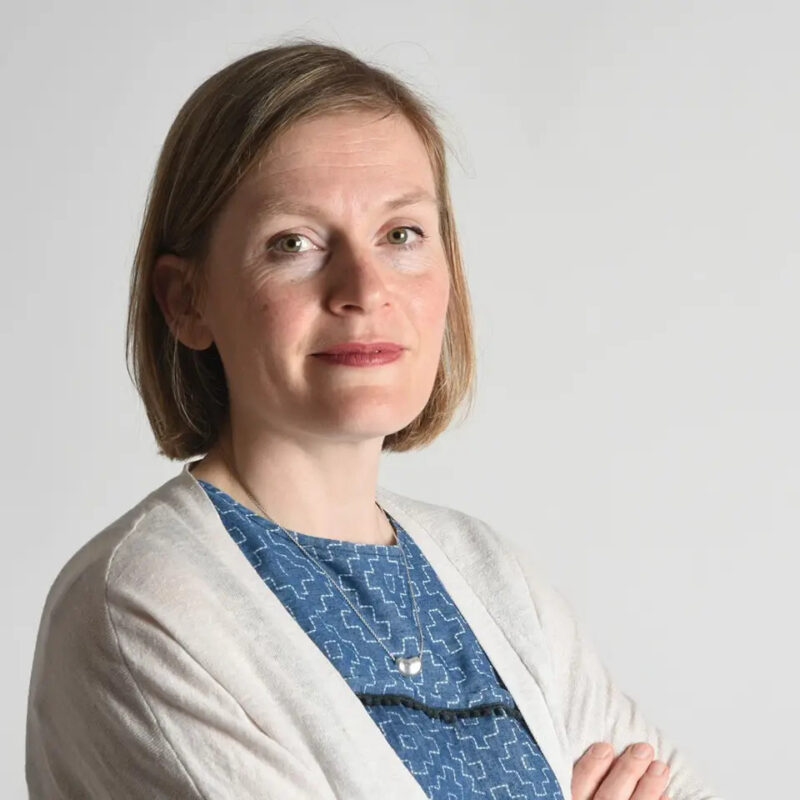
Professor Rosie McEachan
Director, Born in Bradford research program; Lead, UKRI Healthy Urban Places consortium; Honorary Chair, University of Bradford
In this episode
00:00 Welcome to season two 03:30 Born in Bradford and the Bradford Institute for Health Research 04:30 Professor McEachan's path 06:30 Inequality and prevention 09:30 What makes a birth cohort powerful 16:00 Building a representative cohort 18:30 Asking what communities and stakeholders need 20:30 Linking health and education: Glasses in Classes 24:30 Routine data linkage and its limits 27:30 Leadership, partners and impact 31:30 Earning trust in seldom heard communities 38:30 Green space and mental health 44:00 Evaluating the clean air zone 48:30 Accessing the data and what comes next
Select a timestamp to play the episode from that point.
Dr. McGavock: [00:00:00] Welcome back to the Emerging Scholar Podcast. I'm your host, Dr. Jon McGavock from the University of Manitoba, and I'm thrilled to have you back for season two. Last season, we took you on a journey through your first year of research training, covering everything from crafting great research questions to understanding the foundations of both quantitative and qualitative methods.
Dr. McGavock: We met incredible scholars, explored fundamental concepts, and built a roadmap to help you navigate your early research career. This season, we're going deeper. If season one was about laying the foundation, season two is about mastering the craft. We're taking those methods we introduced and really unpacking them, diving into the nuances, the challenges, and exciting new possibilities that each method has to offer.
Dr. McGavock: Throughout this season, you'll meet a remarkable team of both established and emerging scholars with expertise across a diverse array of approaches, from natural experiments that reveal causal insights into real-world [00:01:00] settings, to qualitative inquiry grounded in social justice, the complexities of implementation science, and yes, my personal favorite, causal inference.
Dr. McGavock: Each episode will introduce you to researchers who are pushing the boundaries, asking bold questions, and making novel and important scientific discoveries. First, we're celebrating Canadian research excellence, showcasing incredible work happening right here at home. Second, we're emphasizing the critical importance of patient engagement in shaping research that truly matters across a range of scientific methods.
Dr. McGavock: And finally, we're championing curiosity, the essential spark that drives all great science and keeps us asking what if and why. Whether you're designing your first research study, wrestling with methodological challenges, or simply passionate about rigorous and meaningful research, this season is for you.
Dr. McGavock: So let's dive in, stay curious, and continue building the skills that will shape your own scientific journey. Welcome back everyone. For the next episode of the Emerging Scholar Podcast, I'm delighted to welcome Professor Rosie McEachan, [00:02:00] director of the Born in Bradford Research Program, an internationally recognized people-powered initiative that follows the lives of over 15,000 families in Bradford, England, to understand how to keep families healthy and thriving.
Dr. McGavock: Professor McEachan is a proud Scottish Bradfordian and experienced applied health researcher whose work exemplifies what it means to bridge the gap between research and real-world impact. Her research interests span cohort studies, environmental determinants of health, air quality, green space, and the development and evaluation of complex interventions.
Dr. McGavock: What truly sets her work apart is her deep commitment to co-production, ensuring that communities aren't just research subjects, but active partners in shaping the research itself. Today we're doing a deep dive on cohorts, specifically birth cohorts and pregnancy cohorts. The Born in Bradford family pregnancy cohort stands out as an exemplary model of how to design, develop, and execute birth cohort studies that will lead to scientific breakthroughs that not only improve clinical practice guidelines for child and maternal health, but also public [00:03:00] policy.
Dr. McGavock: This interview spans so many of the things that I am passionate about, from trying to understand complex conditions, to the built environment, to engaging the community in research, and doing research for populations that are underserved, that experience some of the largest inequities, and bringing those discoveries into action, working with policymakers, not only in the health sector, but also in the built environment sector, in the municipal sector.
Dr. McGavock: Professor McEachan is a fascinating teacher and researcher. Her passion for this comes through the airwaves. I hope there are many things that you can take away from this interview with Dr. McEachan and your interest in the Born in Bradford study generally. Welcome everyone to The Emerging Scholar.
Dr. McGavock: We're here with Dr. Rosie McEachan. She's here with the Born in Bradford Cohort Study out of the
Dr. McEachan: Bradford Institute for Health Research. We're one of the only NHS-based research institutes in the country. So we're actually a hospital, and we set up the Born in Bradford [00:04:00] Cohort Study back in 2005, started recruiting sort of 2006, and I think being based within the hospital rather than the university has actually been crucial to our success in integrating with our sort of system partners across the city and actually making real change in the city and improving the health of families in Bradford.
Dr. McEachan: People always think we're a university, but we're not. Yes. But we do work really closely with the University of Bradford, of course, who are fantastic.
Dr. McGavock: That's awesome. And actually reading your 2012 paper on the cohort profile, published in IJE, which we'll link to, gives a really nice history of, like, how it all started and the unique aspects of this cohort, which we'll get into in a minute.
Dr. McGavock: But before we get started, what was your history like? What is your journey into this space as the... You're currently the scientific director for- Mm-hmm ... one of Europe's largest cohort studies.
Dr. McEachan: Yes, it is. So I'm a researcher by trade. I often refer to myself now as a jack of all trades, master of [00:05:00] none. Um, but I started my research career doing psychology And in particular, health psychology.
Dr. McEachan: What attracted me to that as a discipline is that it was all about trying to prevent ill health. So I trained in a particular type of health psychology, which is all about behaviors, behavior change, preventive interventions. I progressed into sort of that area of really complex public health interventions and thinking about how we can evaluate those interventions, and that's completely different to running a big, large-scale epidemiological cohort study.
Dr. McEachan: But what that meant is that when I came to start working in Born in Bradford, which was back in 2012, the first thing I started to talk about was, okay, we're collecting all this data, what are we doing with it? And I think that's what makes Born in Bradford quite a unique longitudinal birth cohort, is because it's not just about collecting the [00:06:00] data, it's about using that data to actually make change within the city and evaluate that change.
Dr. McGavock: A cohort study grounded in justice and equity. And-
Dr. McEachan: I mean, I don't know what it's like across the pond, but you know, where we are in the city of Bradford, you can travel 10 miles from the most deprived part of the city to the most affluent part of the city, and in those 10 miles there'll be a 10-year difference in life expectancy.
Dr. McGavock: It's the same- And
Dr. McEachan: it's not fair.
Dr. McGavock: You know? No, it's not fair. It's the same in every city in Canada. It's- Yeah ... in every city in the US. Michael Marmot, right, describes this. Right. You get on the tube, you get on the train. Yeah. Every mile you go outside of the inner city, you're getting an extra two or three years of life expectancy.
Dr. McEachan: What's really interesting is that how the health service in the UK is set up and funded, it's primarily to support people who are ill and people who need to go to the GP and who need to go to hospital, and we spend a lot of money treating [00:07:00] illness. A lot of that illness is entirely preventable. And so what we are trying to do is to shift that balance, to stop people from getting ill There's n- not anywhere like the same level of funding for these types of public health preventive interventions as there are for, "I'm sick now, and I'm in the hospital, and I'm in the system."
Dr. McEachan: Mm-hmm. And that really needs to change if we want to have a dent on those health inequalities that we see globally.
Dr. McGavock: 100%. We're gonna talk about this later, like you have really focused on studying the environment and environmental exposures as a, a key lever, uh, for some of this prevention. But also, there are unique people that get drawn into the complex questions and studying them in complex ways, right?
Dr. McGavock: So someone who wants to do an RCT, it's so easy. Deb and I were talking- So easy ... about this earlier. It's so easy to just be like, "I'm gonna randomize you to apple juice versus Pedialyte and see what happens." But to study this at this level takes so much time, so much effort, especially the way you engage with community members and, and [00:08:00] families.
Dr. McEachan: Yeah. It's really good observation that a lot of public health and sort of health-related research has followed at that very traditional RCT is the gold standard of evaluation type approach. In the real world, in complex systems where people talk to each other, and people live next to each other, and they travel, and they go to school, you can't evaluate public health interventions in the same way.
Dr. McEachan: Thinking about things like physical activity or healthy eating programs, they're very difficult to evaluate in that traditional way. So one of the things that we've been trying to do with the cohort is can we use this in a more creative way to help us use quasi-experimental methods or other types of methods that will allow us to evaluate these types of complex interventions.
Dr. McEachan: We've got some really nice examples of how we've done that in the city, particularly around pollution. We've been eval- using the health data that we collect over time to evaluate the impact of a clean air zone in the city. Mm-hmm. You know, and that we need to, as researchers, we need to build [00:09:00] this field up so that we can have a much more flexible set of tools to evaluate real world pragmatic interventions and move away from that RCT.
Dr. McEachan: I've done loads of RCTs in my lifetime. I'm not talking from ignorance here.
Dr. McGavock: Right. And so maybe this is a good starting point in that, like for you, how would you define what a cohort study is? And then in our world of, like I'm in pediatrics and you're in pediatrics, one of the really big areas where cohort studies, I think, are advancing our knowledge is this concept of either birth cohort studies, pregnancy cohort studies.
Dr. McGavock: The Born in Bradford cohort is a family-based cohort study. So maybe just start, if you could give us- Yeah ... your definition of a cohort study, and what is BiB, and how is BiB adding to this area of cohort research?
Dr. McEachan: So I'm sure at its very simple, most basic unit, a cohort study describing a longitudinal study where you enroll a group of participants into a project, you collect information on them, and you [00:10:00] repeatedly follow up that same population over time.
Dr. McEachan: Having that sort of longitudinal data collection is quite a powerful epidemiological tool because it allows us to control for the effects of what we might have done in the past and how they might interact with what we do in the future.
Dr. McGavock: Mm-hmm.
Dr. McEachan: Born in Bradford is a birth cohort study. They're even more powerful epidemiological tools, right?
Dr. McEachan: Because we know that a lot of our health is sort of genetically pre-programmed when moms are pregnant. So when moms are pregnant, the health of their baby is being written down. The patterns, the starting, and the building blocks are all getting laid down. So it's really important to understand how the health of the mom when she's pregnant and the environment that she finds herself in can influence the health of her baby.
Dr. McEachan: We can show those relationships between, for example, the mental health of moms when they were pregnant in their third trimester. [00:11:00] We can show how that is related to the mental health of children when they're age three. Which similarly, the amount of pollution that moms were exposed to when they're in their last trimester of pregnancy is related to multiple child health outcomes, you know, right up until children are sort of reaching eight or nine years old, so things like brain development, cognitive development, blood pressure.
Dr. McEachan: It's really important to have that sort of holistic picture- I think the importance of getting in there at pre-birth and following up over time means that you can s- then also start to find where are these critical windows of opportunity- Yeah ... where I can intervene and improve outcomes. Children are such an important group, because if we can get things right for children at the earliest possible stage, then we're setting them up with healthy life trajectories across the life course.
Dr. McEachan: It's not only gonna be better for the kids, the [00:12:00] families, healthier and happier, but it's also gonna impact on economic prosperity, aspirations, their ability to lead prosperous lives. So yeah, a really important time to try and understand as much as we can about what keeps people healthy and happy.
Dr. McGavock: Right.
Dr. McGavock: Now- And, and we know from different l- levels of research, like what you're exposed to in the womb has significant potential long-term health impacts. We know from James Heckman's work that supporting youth in those early years, right, a lifelong of benefits in terms of health outcomes, economic outcomes, that kind of thing.
Dr. McGavock: And-
Dr. McEachan: Indeed. It links to the Barker hypothesis- Go
Dr. McGavock: ahead ...
Dr. McEachan: the developmental origins of health and disease, and that- Yeah ... actually goes further. It's about preconception. You know, really, it's about the health of women, and the dads as well, but before they even get pregnant. And again, when you have a cohort that you follow up over time, so in Born in Bradford, we had 12,500 mums that we recruited in [00:13:00] pregnancy, over 13,500 kids.
Dr. McEachan: Well, actually, the oldest kids are 18 now.
Dr. McGavock: Wow.
Dr. McEachan: And in a few years, they're gonna be having kids of their own. Yeah. And again, so, so sort of that circle continues, and we will hopefully be able to continue to follow up those families as they start having children. So yeah, it's very exciting type of research to be involved in.
Dr. McGavock: Yeah. And so grounding Born in Bradford in the first question, were a series of complex questions. Outcomes of interest, like most of our birth cohort studies in peds are around what are the outcomes most common in kids. So for Born in Bradford- Yeah ... it was obesity, asthma, and allergy. Just like we're in Canada here, so we have a big cohort study called the CHILD Cohort.
Dr. McGavock: Those kids are now 15, 16. The data collection- Yeah ... happens right beside my lab, so I've got to watch these babies grow up, just walking down the hall, which is really cool. In contrast to an RCT, the value of this cohort is you can say, "Well, let's take a look at all of these factors." Some of them- Yeah ... we can't modify with an [00:14:00] RCT.
Dr. McGavock: I can't modify microplastics exposure- Yeah ... in women or, like, your microparticles or air pollution, for example. But if we can capture all that information early and then follow people longitudinally, which again, is really expensive, you get a lot of valuable information. And going back to season one, if we can apply causal methods, we can start to get at some causal inference in whether or not these exposures have these lifelong impacts, which we don't know yet
Dr. McEachan: I think you've hit the nail on the head in that complexity of all the influences and the exposure that interact to affect those outcomes.
Dr. McEachan: That's really important. And if we take it back to that health inequality angle again, we know there's that disadvantage for families who are living in deprived areas. In the research we've done in Bradford has shown you've got financial insecurity, you might have economic disadvantage, but actually those families are also living in the most polluted areas.
Dr. McEachan: They've got the least green space, they've got the most noise, least access to public transport. [00:15:00] They might have even less access to doctors- Mm-hmm ... who are able to help them. So you've got to explore all of that in order to see what are we gonna need to do to really make some changes here. And I think it has to move away from this idea of individual behavior change.
Dr. McEachan: Let's be a bit more mindful. We can't tell people just do more exercise or eat healthily if they're living in places where it's unsafe for their- Mm-hmm ... kids to get out on their bike or there's so many fast food outlets. And that's why I think that sort of policy change that we can try to advocate for by providing decision makers with the evidence about how the harms are totting up in terms of health outcomes and the burden on the health service are so important
Dr. McGavock: And the advantage of having the cohort study is you can study multiple levers at multiple levels, individual, familial, household, neighborhood- Indeed
Dr. McGavock: everything, and then go back to the policymakers.
Dr. McEachan: Yeah. That, that, and that's how I always sort of... Like a bit of an onion. Mm-hmm. You've got the genetics and the individual factors [00:16:00] at the very center, but the scope goes right out to the sort of public policy.
Dr. McGavock: And an advantage with the cohort you have is that external validity is high if you have the right sampling strategy for your cohort.
Dr. McGavock: So you can apply- Yes ... that in a public health standpoint.
Dr. McEachan: So I think that's an important caveat for cohort studies for people to be aware of. Your cohort study is only as good as the people you have enrolled in it. Mm-hmm. This is a very common limitation in population-based research, is that often the type of people that might sign up to a research study that takes a lot of time might be more affluent communities, or they might not represent the actuality of the communities that you serve.
Dr. McEachan: In Born in Bradford, we did a, a really good job, but our cohort is entirely representative of the community that were eligible at the time. So Bradford, I should say, is a absolutely fantastic city. I'm not from Bradford originally. I've lived and worked here for many years, and it is a vibrant, culturally diverse [00:17:00] place.
Dr. McEachan: The people, the partnerships, the way people work together here is fantastic. But Bradford, like many other urban inner city areas, we have problems with deprivation. We have families living in really difficult circumstances, and those types of families are often seldom heard in research. But because we were based within the NHS as part of a regular NHS antenatal provision in Bradford, we were able to contact all women who were el- eligible during a routine antenatal appointment.
Dr. McEachan: In Bradford, all women are offered a glucose tolerance test. That's because in Bradford we have a very high South Asian heritage community, and they are more likely to get gestational diabetes. So we offer this test as standard to all pregnant moms. Yeah. The moms who were- That's crazy ... coming to this appointment, they signed up to the project.
Dr. McEachan: Yeah. And that's unheard of. Uh, there's no other- Totally ... study that's been able to do that. That's an important sort of selling point of our cohort, is that we are able to include people that [00:18:00] are often excluded from research and make sure that their voices are heard and that research is Being done for issues that are important to them.
Dr. McGavock: Yeah. And so you're in a city in Bradford, Northern England, that has a large disparity. The infant mortality rate was something like nine out of 100,000 compared to five across the rest of the country. Instead of coming in saying, "Okay, we've got to intervene," we said, "Well, let's take a step back, engage with the community."
Dr. McGavock: These inequities are not random, right? These are o- often racialized, right? And so- Yeah ... you have a big Pakistani community there, and instead of just saying, "Hey, we're gonna study you," you invite them in and say, "Let's do this together."
Dr. McEachan: This has always been our approach, is to work in partnership with communities and, and with the stakeholders and with service providers.
Dr. McEachan: So it- we've always had that dialogue with both groups to say, "Okay, what is gonna be most helpful here?" One of the big problems you have when you've got a longitudinal or a cohort study is when you get researchers involved, they [00:19:00] want to ask everything. So when we're setting up these studies, we'll have researchers and we'll have a questionnaire that is, like, four hours long.
Dr. McEachan: So what we've always done is been like, right, what's important to our communities? What do they prioritize for their health and wellbeing, which may be completely different to what's been picked up in the formal processes, and what do our stakeholders need? What kind of decisions are they grappling with?
Dr. McEachan: How can we collect information that's gonna help them? So it's always been worked in that way, and that's made sure that the information we collect is useful, like people can use it, and we feed it back.
Dr. McGavock: I love that. The most challenging part of a scientific cohort study is inviting scientists to participate in it.
Dr. McEachan: Yeah. Well, I'm sure that a few scientists that maybe won't be as happy with me as they might have been before I took over.
Dr. McGavock: But it's true. We've all been in those meetings where like- Yeah ... we can measure all this, but who are your stakeholders actually when you think about people that are gonna use the data?
Dr. McEachan: When we started, young babies And we were very much working really closely with pediatrics within the hospital, our public health teams, and our health service providers. [00:20:00] We had great links 'cause we're networked into the NHS community. So it starts all about birth outcomes. But of course, with the cohort study, every year is different as your cohort grew up.
Dr. McEachan: As our children started to enter formal education, this was a big change point for us because we thought, where are the education providers- Right ... around the table here? We had, you know, with the amount of kids we had in our cohort, some of the primary schools in Bradford, around 90% of the kids would be Born in Bradford children.
Dr. McEachan: So at that point we started to engage with schools and build in where we'd previously looked at birth outcomes or growth typical outcome factors, we then started to look at school readiness and h- those interrelationships between health and education. And it was really interesting to us to see how siloed it was in education settings.
Dr. McEachan: So there's a school nurse service that goes into schools- Mm-hmm ... to deal with health factors, but they don't [00:21:00] speak to the education system. Yeah. So we had a study led by a colleague called Alison Bruce, who is an optometrist- Yeah ... called Glasses in Classes. What she found is that a lot of children when they were entering formal education had poor literacy And when she went to look at the health records of children in primary school, she found that a number of them had poor eyesight and they required the use of glasses.
Dr. McEachan: But the school didn't know this, and what they found was that children were forgetting the glasses or the glasses weren't making their way from home to school, and nobody knew that these kids were having a problem. So in that study, she developed a new intervention which was right for kids that need it.
Dr. McEachan: Reading test is standard for all kids, optometry test, and for those kids that need it, glasses will be kept in the school, in the classroom. And then of course, children can read better- Yeah ... educational attainment. And it seems so obvious, doesn't it? Yeah. But different agencies often don't work together, and sometimes you [00:22:00] need to have that outside perspective to think, hang on, this is crazy.
Dr. McEachan: Mm. Can we just do a bit better here?
Dr. McGavock: Principal's walking a visiting family through the school and he or she says, "This is our health office here. They take care of the kids, but I'm in charge of education, so..." Having them talk, and that's low-hanging fruit. If you were gonna create- Yeah ... a theoretical model for what are the main aspects of learning, and I guess having the research there allowed not only the health provider, like the optometrist, but then the school to be like, "Oh, this is low-hanging fruit."
Dr. McEachan: One of the things which has really helped us is our access to routinely collected data. When moms were pregnant, we asked them to consent for us to access their doctor's records, their hospital records, and things like education records, anything kept in a local authority. And that has allowed us to take that bird's eye view so we can connect what's in the health record with what's on the educational record.
Dr. McEachan: Unfortunately, that is actually quite a difficult thing to do in practice when you're just thinking about normal service provision. [00:23:00] This is why different agencies don't speak to each other-
Dr. McGavock: Right ...
Dr. McEachan: because they don't have the permissions to access the data. And I think one of the things we're really trying to push is Come on guys, you know, this all does need to be more connected.
Dr. McEachan: We can absolutely show the power of connected data within the sort of research firewall and the governance that we have here, and it's can be frustrating 'cause you think, "Well, if we could just get this rolled out to actual what's happening in the real world, it could be a game changer."
Dr. McGavock: So let's take a step back, 'cause I think that's a really important strength of the Born in Bradford study.
Dr. McGavock: When I was coming through my training, we know cohort studies like the Framingham Cohort Study. Yeah. Or in the US there are a number, where people at the beginning, they don't have the outcome, right? So in this case, the kids are being studied even before they're born, right? The outcome of obesity, asthma, allergy is not there yet.
Dr. McGavock: In the Framingham study, no one has cardiovascular disease yet. We're gonna follow them over time. However, the Framingham study, and then thinking about other pediatric cohorts, one right next door to you within the same island is the Born in [00:24:00] the 90s ALSPAC cohort. You have to bring all these families back into your research space, collect that data, height, weight, blood pressure, whatever else, fill out all these questionnaires.
Dr. McGavock: It's a huge task. It takes their time. It takes your time. One of the strengths of a value of a cohort study is keeping that same cohort. The more we lose, let's say, the sickest people or the lowest SES people, or the people who are exposed to the adverse exposures that we're interested in, the less valid the data are and the harder it is to study.
Dr. McGavock: But Born in Bradford is like we've got routinely collected data in the hospital, which is the only birth s- center in the region, so everyone who's delivering a baby is going there, 6,000 births a year. So you're able to get 12,000 people in a really short period of time to enroll- Yeah ... in your study. Then as they're coming back, nurses are visiting them in their house.
Dr. McGavock: We're gonna collect data there. Kids are going to school. We're gonna collect data there too. So that it limits the burden of it, and it keeps the families involved.
Dr. McEachan: It's been the key factor to Born in Bradford's success [00:25:00] has been the ability to link this routinely collected data from lots of different sources.
Dr. McEachan: The first thing you need to do is to have consent, clear consent from your participants that you want to do it. When we first started doing this back in sort of 2007 to 2011, it was a bit of a different world. We were a trusted research organization within the city. There's been lots of national scandals about how- Yeah
Dr. McEachan: data is used, and people now are a lot more nervous about sharing data and where data's going. That is a very practical challenge that I think research studies have to deal with. However, we were lucky. We were able to link to about 97% of the cohort We were able to use our networks in the city with our partners and stakeholders to get the approval to link the data across.
Dr. McEachan: Getting data controllers to give you permission to link that data is really difficult because as soon as you start to talk about data protection and [00:26:00] information governance, people get really scared. So it required a lot of really strong leadership in Bradford, and Bradford had that strong local leadership, which has meant that we've been able to do this in a way that no other cohort has managed.
Dr. McEachan: Within our local networks, we've got local authority, we've got the education, we've got hospitals, we've got the GP settings. We can all link that directly and try to get data from other sources as well. So the environmental stuff, that's a really good example. Because we know where people live, we can calculate measures, for example, of accessibility to green space.
Dr. McEachan: We can look at how polluted the places that they live are. And again, just sort of layering all these different data sources. If you've got routine data, you don't have that problem of attrition.
Dr. McGavock: Right.
Dr. McEachan: So it's a great resource. But there are limitations to routine data, as- Right ... your listeners will know who are-
Dr. McGavock: Yeah
Dr. McEachan: active medics, right? It's about the quality of how data is recorded. Mm-hmm. So routinely did collected data, particularly from GP records [00:27:00] and even hospital records can be really messy, so they can be quite difficult data sets to work with as well. So there's no one sort of golden bullet here.
Dr. McGavock: Right. Like I remember when my child was going to see their GP as a baby, and we were doing height and weight, or as an infant, and they were doing height, weight, and blood pressure, and I was thinking to myself, "Okay, this data could be used for research."
Dr. McGavock: I'm a researcher. I'm seeing it, I'm like, "Oh my God." This is so different from what we do in the lab. Yeah. I was just taking a look here at, there's a big cohort study in the US called ECHO. Mm-hmm. And what's really interesting, like the US spent a billion dollars to try to get their first big birth cohort study going.
Dr. McGavock: It was so hard to get all of those things and to get everyone on board, and really like champion this thing through that they ended up having to pool data from multiple cohorts. So when you talk about having stakeholders in Bradford that were really pushing for this, who were some of those people, and what were they doing to grease the wheels to make sure that this happened?
Dr. McEachan: So I have to [00:28:00] highlight the amazing chief investigator of Born in Bradford, Professor John Wright. This is his baby, and he, at the time, was the director of research at Bradford Teaching Hospitals, and a medic himself, a respiratory physician. And it was looking to see the level of need we have in the city, and let's stop talking about it.
Dr. McEachan: Let's, let's do something about it. So he and the trust was able to pull in the support from the trust, and at the same time, we knew that our local authority and public health teams were dealing with some very challenging statistics. So you mentioned the child mortality rates, which were very high, but also a lot of really difficult health issues within the city.
Dr. McEachan: The discussions were, how can we help you better plan and deliver the services? The problem was at that time, people didn't really know what the issues were or didn't have enough information about what we should be prioritizing or targeting. So the very practical focus of this cohort and being based within the NHS [00:29:00] was embedded right at the very start, and that's how we got our stakeholders involved.
Dr. McGavock: Hmm.
Dr. McEachan: And then over time, we spend a lot of time Speaking to communities and stakeholders and saying, "Look, we've got this data now. How can this help you? How can we help you?" And that we've just built those relationships up over 15 to 20 years, and people now have seen the benefit of what we can offer. Now we are fully integrated into the wider system in Bradford.
Dr. McEachan: The findings we produce have had an impact. We have helped our local authority get over 100 million pounds worth of investment into the city for preventive health interventions, whether it's a clean air zone or green space improvements or physical activity initiatives. Currently, we're doing a project in secondary schools, so our cohort are teenagers now.
Dr. McEachan: We go in and collect data from the whole school, in particular year groups, and end of every academic term, that data is fed back to schools so they can see, [00:30:00] crikey, you know, we've got these levels of mental ill health, or there seems to be a problem in this particular demographic group, or look how often kids are vaping or look at how often- Yeah, yeah
Dr. McEachan: they're on their screens. So stakeholders have seen that we can deliver useful stuff, so they become more engaged, and it's just that sort of virtuous circle really.
Dr. McGavock: And without the hard data, it's really hard to get governments and policymakers to move on clean air, to move on physical activity, to move on the built environment.
Dr. McGavock: They- There's a lot of blame and shame, like when you just look at the individual rather than the whole system
Dr. McEachan: Fundamentally, people want to have the numbers. Anything that we can provide that actually shows the economic impact that this ill health is having is much more powerful than anything else.
Dr. McGavock: Yeah. And so that's incredible that you can do that in a cohort study. And again, just to remind people, it's the value in being able to collect data on multiple levels so that when people ask questions, you can give them a complex answer with real level [00:31:00] data. But thinking about the, another main strength of the BiB study that we haven't talked about, if I look at...
Dr. McGavock: I worked with data in Ireland, Growing Up in Ireland study. There's a Millennium Cohort Study. There's a ALSPAC born, born in the '90s study, and the CHILD study in, here in Canada. We put up posters in hospitals and in GP offices, and we do radio ads or TV ads or back in the day, that's what we did, and now, you know, YouTube, Facebook, Instagram, whatever.
Dr. McGavock: Who shows up? Middle income, highly affluent, white, very low structural barriers to their health, very structural issues in terms of their life. They come in there, we try to study them. That's great. You know, we're getting information, but we're not getting information about where those inequities are. The BiB cohort, 69% of the BiB cohort is from a Pakistani community, which is very representative of the city of Bradford, which I didn't know.
Dr. McGavock: How did you do that? How did you... And this is another strength, right? So if we're gonna study [00:32:00] inequities, we need people who are signing up for it. In Canada, if we're looking at the most structurally oppressed groups like indigenous people, we talk to elders, stakeholders, community members, they all say, "We've been researched to death.
Dr. McGavock: This research- Mm ... gets collected and we're still sick, and inequities aren't changing." But it looks like you're making a huge impact there. So can you talk a little bit about- Yeah. How do you- How did you recruit that group, and how are you responding to their needs?
Dr. McEachan: You've just touched on something which I find really important, right, which is this idea of, this happens a lot with seldom heard communities, is that researchers think, "Ah, I have funding for a project.
Dr. McEachan: I'm gonna jump in. I'm gonna parachute in." This is what communities say to us. Yeah. Parachute. Yeah. "I'm gonna ask them about all of this thing," whip up their expectations, and then, oh, my research project just finishes and I just disappear, right? So that is a really big problem. How have we managed to get a diverse and representative cohort in Bradford?
Dr. McEachan: First thing to say is Bradford's very diverse. Our ethnic minority groups tend to cluster in the inner city parts of Bradford. [00:33:00] Whilst we have around a third of our population, according to the census, are of South Asian heritage, when you go to inner city Bradford, this can be anything between 50 to 80%.
Dr. McEachan: And our hospital is based slap bang in the middle. Mm. So that explains why we are so highly diverse. But what we did when we've tried to do our key follow-ups is we don't rely on communities coming to us. We go out into communities because we recognize that there's lots of structural barriers that mean that it's gonna be difficult for people to attend appointments.
Dr. McEachan: We are really successful community-based sweep when the kids were between 6 and 10 years old. Unfortunately, COVID stopped it, so we weren't able to finish it all. We probably overrepresented the more ethnic like diverse and deprived communities in that because we were so keen that they needed to have their voice.
Dr. McEachan: The other tactic that we have used is to do school-based recruitment for kids [00:34:00] because in a school you may have kids that are part of your cohort and you may have kids that aren't. Actually, the resource it takes to go in and collect data for, say, a whole class is the same for whether that's 10 kids you're looking at- Right
Dr. McEachan: or whether it's 30. What we did as kids were going through primary school is that we would just go in and measure all kids in the school. So we'd collect the information. The schools were saying to us, "We don't want to know just for the BiB kids what the issues are." Right. population. So we morphed from the original cohort into just being like a whole population-
Dr. McGavock: Right
Dr. McEachan: study. So we did it for primary school years. We collected data on, I think around 16,000 kids, so the BiB cohort. Now for our Age of Wonder adolescent project, which is in secondary schools, we've recruited 17,000 so far. Wow. Not quite as many of BiB. We're still working on upping the BiB numbers, but that is how you get a truly representative Follow up.
Dr. McEachan: The other thing from a research [00:35:00] perspective is we obviously have to have ethics approval for everything we do, but for surveys and low-risk measures, we rely on opt-out parental notification. Yeah. So we write a letter to parents. We say, "This is what we're doing. If you don't want us to do that, you let us know."
Dr. McEachan: And that again really helps to make sure that you're as representative as possible, so it's just stripping down all the barriers-
Dr. McGavock: Yeah ...
Dr. McEachan: that would stop somebody from being able to participate.
Dr. McGavock: So really frictionless. How do you create that trust with the community that you're not gonna be the helicopter in type of scientist that's gonna disappear with the data, advance their career, and then leave the community hanging?
Dr. McGavock: Yeah. Like, how do they trust you? Do you have examples of a study that helped inform what they're doing and gave them trust that you're actually there to support them as well?
Dr. McEachan: I mean, we beat the streets a lot, right? With Born in Bradford, we go out and make sure that we're representing ourselves at sort of big and prominent community events.
Dr. McEachan: [00:36:00] The kids that are part of the cohort, every year they get a birthday card. Yeah. So they know us 'cause they hear about us a lot. We have a little test for visitors to Bradford that come to visit us, that if they get a taxi, we get them to ask the taxi driver have they heard of Born in Bradford, and that is like our sort of little indicator of how well we're doing in terms of people knowing what we're all about.
Dr. McEachan: We've got, I would say, quite a well-trusted brand here. We have various outlets like the usual, the Facebooks, and the media and stuff, but actually just getting out into community events. When I first started and I was trying to get my grips with what is happening in BiB, I just used to spend most of my time visiting children's centers-
Dr. McGavock: Nice
Dr. McEachan: just talking to the BiB parents a- about the study. How can we demonstrate how their information that they're giving us is making change within the city? You know, we can do that by just making sure that information is getting passed back to them, but also we've got nice examples of more bespoke bits of work where we're doing much [00:37:00] more in-depth co-production work with communities.
Dr. McEachan: So we've just set up a co-production and peer research network, and that's where we've supported BCS communities to identify priorities. It's all about the built environment. You know, w- what would they like to see improved in their local areas? And we're taking that back to the stakeholders to say, "Right, okay, how can we support creating that, these plans?"
Dr. McEachan: But it just takes time and resource.
Dr. McGavock: Looking at like there's a James Lind Alliance to try to get patient partners involved in clinical trials, but rarely do you see that in cohort studies, and I think Born in Bradford's really advancing this, and I think it makes a huge difference because now you're tailoring your questionnaires to the needs of the community- Yeah
Dr. McGavock: that you're trying to serve.
Dr. McEachan: I mean, what we try to do is just completely turn the tables on how research is funded. You know, Born in Bradford is completely independently grant funded. We have to apply and compete for the peer review- Yeah ... for all the money that we get. And what I was just sick of is thinking, "Well, w- how are these funders deciding [00:38:00] what the priorities are?"
Dr. McGavock: Right.
Dr. McEachan: You know, how, how are they coming up with these topics? So, uh, really we're trying to turn the tables. And what we do is we go back to the funders and say, "Actually, this is what our communities want to see us do. How are you gonna help us fund that?" I think we're getting in the UK to a much better place now in terms of funding research.
Dr. McEachan: The funders are pretty much on board now with the idea of the co-production and the engagement, which is great to see.
Dr. McGavock: We're seeing the same thing in Canada. The more that your grant goes in where it's been co-produced, the more value it has. So maybe we can get into some of the main findings. So two things I want to focus on, like observational work that you've done with aspects of the built environment, so a lot of work on green space, mental health outcomes in moms and kids.
Dr. McGavock: Also, fast food outlets and obesity. Do you want to talk to us about some of the bigger findings that you've had? The environmental exposures or the e- how do you want to call it? The exposome.
Dr. McEachan: Yeah. And I think, yeah, I mean, for me, the, the focus on the environment is [00:39:00] so important 'cause I just see the opportunity there that if you can make changes to the places in which people live, you're gonna benefit the health of everybody.
Dr. McEachan: And if you target that investment in areas of most need, you're more likely to reduce those health inequalities. We were really lucky to be part of a couple of key EU projects in this area that really sort of helped us at the start think about what we should be looking at. One of the early bits of work we did was looking at the availability of green spaces in the city, and how that linked to both depression during pregnancy and early outcomes for children.
Dr. McEachan: We found really clear effects. When we looked at women who were living in the city, we found that those who were living in the greenest areas were around 25% less likely to report severe symptoms of depression or, or mental ill health. Wow. So it's a really stark- Huge ... difference. We, we showed the relationship between lack of access to green space and poorer birth weights for children, and also for [00:40:00] children's mental health when they were aged four to five.
Dr. McEachan: Now, that, that was all really important. In fact, the findings of that sort of program of research was used to get funding into the city as part of the Better Start Bradford Project to make green infrastructure improvements- Oh ... in some of the poorest wards in the city. I thought it was really important to sort of understand that qualitative aspect as well.
Dr. McEachan: A lot of the research that we can do about the effect of places on health uses GIS information, so satellite-based imagery. So it can tell you how much green space is there, but it can't tell you the quality of it.
Dr. McGavock: Okay, so let's pause there for a second. Okay. So yeah, that's how the data are collected, right?
Dr. McGavock: So the EU comes in, they want to study it. We use different geospatial mapping. We'll provide some links to that. So you have this beautiful map of your city, right? And you have a map of where the green space is, and you're like, "Do you live close to it?" "Yes, I do." And the epidemiology, if it just stops there, it's not that useful.
Dr. McGavock: And so- [00:41:00] Exactly ... what you guys did is incredible. So now let's hear that.
Dr. McEachan: We, we, we, we found these results, and so we went out and did a qualitative study. We went and spoke to women with young children aged like zero to three, to talk about their green spaces and what would make them more likely to use them, what did they think of it.
Dr. McEachan: And actually we found that a lot of women don't use those spaces 'cause they're scared to, they don't feel safe, or there's antisocial behavior. And so we took that then and we sort of changed the way in which we were looking at this as an issue. And one of the bits of research that we published in The Lancet Planetary Health, I think it was back in 2018-
Dr. McGavock: Yep
Dr. McEachan: it was saying, okay, right, fine, you've got the satellite measure- Mm-hmm ... but actually let's ask the cohort about what they think about the quality and how satisfied they are. And what we found is that actually there is that relationship between green space and children's mental health at age sort of four to five.
Dr. McEachan: But actually if you ask the mums are they satisfied with the spaces, that is the important indicator there. It's not [00:42:00] quantity, it's quality. And that is the type of richness. If you ask the right questions in your cohort, that's the type of richness that you can get. I think it's really important that you need to use the epidemiological stuff- Not in isolation.
Dr. McEachan: You need to have that triangulation from other methods and speaking to families as well. So we're continuing to do a lot of research on green space. Some of the early stuff we did, you know, it's maybe about 10 years ago now that we collected the data. Actually, what we're finding now is that protective effect of green space, particularly for people that are living in the most deprived areas, we're not seeing that anymore.
Dr. McEachan: I think there has been a lot of really difficult changes, cost of living crisis and COVID, that potentially means that some of the problems that our family's facing are getting too great. The other bit of analysis we've done really recently, it's stuck in peer review. We looked at multiple environmental risks for [00:43:00] children.
Dr. McEachan: I was interested in this idea of spatial inequality as health inequality. We counted the number of really high environmental stressors that children were living with around their area. It was extremely stark. We find our ethnic minority children are living in areas where they've got multiple really harmful environmental characteristics compared to the white British kids that hardly have any exposure to these.
Dr. McEachan: And we showed that the more burdens that you are experiencing, that impacts on greater healthcare use.
Dr. McGavock: Right
Dr. McEachan: Let's do something about it ...
Dr. McGavock: if you're like, let's just look at green space, do you live close to it? Mm-hmm. Well, do you feel safe there? Green space is protective if you've got everything else, right?
Dr. McGavock: Indeed. If everything else okay, but if you can't pay for rent, if you're food insecure, if you live underneath a, a major roadway and have all this noise pollution, significant economic strain on the community, all of those things, those are complex factors, [00:44:00] and we need- Yeah ... to be able to study those in 3D to get a better sense of what's happening.
Dr. McGavock: You've also done some really cool natural experiments where it looks like the city's responded to some of that earlier data about some of the environmental exposures. They've come up with policies, and now you're leveraging the BiB data to say, "Actually, let's study the impact." And it sounded like it was a clean air act or something along those
Dr. McEachan: lines.
Dr. McEachan: Yeah, clean air zone. So this is something that I've been really closely involved with for the past six years, and a really great project to work on. We know that pollution is one of the biggest contributors to ill health. Bradford, like many other cities in the UK, has high levels of pollution. Back in 2018, they got a ministerial direction, so basically the UK as a whole got taken to court.
Dr. McGavock: Oh, wow
Dr. McEachan: We had, to the European High Court because we had illegal levels of pollution. We were still in the European, uh, Union at that point. The judgment was, right, UK, you've got illegal levels of pollution. You need to do something about it. So the government identified a [00:45:00] number of areas, of which Bradford was one, and said, "Right, you guys need to sort this out."
Dr. McEachan: This is 2018.
Dr. McGavock: Yeah.
Dr. McEachan: You need to stick something in like a clean air zone to increase pollution in the quickest possible time. Now, I don't know what it's like in Canada, but in the UK, any type of intervention which affects- People's freedom to use their cars- ... or anything like that is very, very divisive.
Dr. McEachan: Yeah. And politicians get very, very scared. But because we'd been working with the council for so, such a long time on the harms of pollution, we were there with them the whole time. So we were saying, "Do you know what? This is a great opportunity for Bradford. Look at what pollution's doing to the health of children living in Bradford.
Dr. McEachan: Let's really go for this and see if we can maximize the impact on health." We did a lot of qualitative research to look at seldom heard communities. To cut a long story short, we all know that really what we need is to show the actual outcome of these types of interventions. Clean air zones work, like low emission zones.
Dr. McEachan: They try to limit the very highly [00:46:00] polluting vehicles that will be traveling through a city. It's not all cars, it's older cars that are disproportionately polluting the environment. Those cars will get charged a fee to travel within the city, and how they're meant to work is they're meant to try and encourage people to upgrade their vehicles- Right
Dr. McEachan: so they don't get charged, or just to stop people going into the zone. So that's the sort of basic premise behind it. We have been using the routine data that we collect in Bradford, and this is not just on the 12,500 cohort, this is actually for the entire population of Bradford. And we've been tracking the impact of implementing that policy on respiratory and cardiovascular health.
Dr. McEachan: We can do that because we are able to access data from the GP records and from the hospital records, get out those specific visits that are related to these conditions. It's a quasi experimental design that we're using. It's called interrupted time series analysis. Mm-hmm. So what we're doing is we're comparing trends in the period before [00:47:00] the policy was implemented with the period after it was implemented.
Dr. McEachan: And the biggest problem we've got with that design is 'cause we had the COVID pandemic-
Dr. McGavock: Oh,
Dr. McEachan: yeah ... right in the middle, so that's caused problems. Right. But again, this is real world evaluations. Yeah. Real world complexity. Our preliminary results showed that one year after the clean air zone was implemented, we were seeing signs of a drop in respiratory healthcare burden in the city.
Dr. McEachan: And that's really important. Even though these are interim findings, there's very little out there at the minute, and it's such a policy relevant topic. So it's been really rewarding to work on that project, but also really challenging as well because there's a lot of political concern. There's a lot of active groups that don't like the messages that you're seeing.
Dr. McEachan: There's a lot of pressure on all sides to go one way or the other. And what we have to say is, "Look, we're independent here. We're evaluating it. We might show it doesn't work." "We might show it's brilliant." Yeah, yeah.
Dr. McGavock: But
Dr. McEachan: we can't change that, so you kind [00:48:00] of just got to go all in really.
Dr. McGavock: Yeah. I have a story about that too, but just to remind the audience, like without the data that you're collecting as part of BiB, remind me, uh, you're doing spirometry, right?
Dr. McEachan: Not so much, just on, on sub-samples. Sub-samples. But it's quite difficult to do that with the kids.
Dr. McGavock: Well, they don't like it very much, but you could look at FEV1, routinely collected data in the clinic. You have self-reported information from the kids. So there's such this wealth of information that you have because you started this cohort study that when a policy comes into play, you get that high resolution assessment.
Dr. McGavock: It's not like a blunt instrument like, okay, how did we prevent death, right? Which is gonna be next to impossible to test, or hard endpoints like a cardiovascular disease endpoint, uh, which you're not gonna see in kids, right?
Dr. McEachan: Exactly.
Dr. McGavock: But with the value of the cohort study, you can go back and say, "Okay, well, what kind of resolution do we have?
Dr. McGavock: And let's try to capture that," which I think is- Yeah ... super powerful.
Dr. McEachan: They, they're really powerful. And in fact, we get a lot of queries from other parts of the UK about how do you set up [00:49:00] a cohort study. Yeah. Obviously you need a lot of money to set it up, but if you rely on routine data, you can set these things up very efficiently.
Dr. McEachan: So a spinoff of the Born in Bradford cohort is called the BaBi Network, Born and Bred In, right? And this is a routine data linkage cohort. Consent for data linkage for research is embedded into antenatal care. Wow. And that is now being implemented, I think, in 13 or 14 different cities Across the UK.
Dr. McGavock: Wow.
Dr. McEachan: So they're setting up their own cohorts so that hopefully in the future they can start to use that in the way that we've been able to use it in Bradford.
Dr. McGavock: For me, I think that is a huge value of having those cohorts, is we can answer research questions really quickly with high resolution. The way you're doing it, I think, is cutting edge in that stakeholders, community members, physicians, policymakers want that data, right?
Dr. McGavock: What questions should we be asking? If we implement a policy, is it actually working? So you're doing an [00:50:00] incredible job there. I know something very unique about the UK is you make this data available to anyone- Yes ... anywhere. So maybe just talk before we close out, like how would we get access to this? If I'm passionate about early life origins kind of questions, and I- Yeah
Dr. McGavock: think the BiB Cohort's gonna help me answer it.
Dr. McEachan: Yeah, great. So we- Where do I go to
Dr. McGavock: get access to this data?
Dr. McEachan: Just need to have a look on our website, which is www.borninbradford.nhs.uk. There's a How to Access Data page, and we try to make the process as simple as possible. We've got all of our data dictionaries on the website as well, and we welcome applications to use data from all over the world.
Dr. McEachan: We don't receive any core funding, so sometimes we have to make a little charge- Totally ... to cover the cost of the data team to pool that information. But we are really happy to receive those expressions from your listeners. Th- there's nothing more rewarding for me to know that the data that we've worked so hard to collect and that the communities have so kindly given us is gonna be used [00:51:00] for the greater good and used by researchers globally.
Dr. McEachan: Our communities are really proud of that as well.
Dr. McGavock: Oh, yeah. I can't imagine. And I- I've done this before, and for the trainees out there, it's usually a small grant. Like, it's not a ton of money, right? You can get funding. The richness of the data is incredible. The connection and the collaboration because- Yeah
Dr. McGavock: once you st- start working with Born in Bradford, maybe you collaborate with others, and it's a huge network that you work with. So, uh, way to go to you and the UK for making this data available.
Dr. McEachan: Please get in touch if you-
Dr. McGavock: Yes ... want to use it. Absolutely. Um, so we covered a lot. Is there anything else we missed?
Dr. McGavock: Anything you wanted to share about BiB, where it's going next, or just things that you're excited about within the cohort that our audience should know about?
Dr. McEachan: Yeah. BiB is continuing to go from strength to strength. Our oldest kids are turning 18, so we're just about to start planning for that. Transition between end of formal education and young adulthood, that's gonna be a tricky time and quite difficult to think about the best ways to engage participants.
Dr. McEachan: We've [00:52:00] grown. We're not just one cohort study anymore, Born in Bradford. We've actually got three cohort studies. We've got a younger cohort called Born in Bradford's Better Start. This is led by my colleague Josie Dickerson, and that's the world's first interventional birth cohort. Nice. That's specifically to look at the impact of early life interventions.
Dr. McEachan: And we've got routine data linkage cohorts and also a really wide portfolio of applied research as well, so trying to make those changes. W- we've evolved. Started from humble beginnings. We didn't have much research funding whatsoever. It was a bit of a wing and a prayer, but I think thanks to the, the communities and the hard work of the Born in Bradford team and the partnership with the stakeholders, we've built up something really special, and it's a privilege to work on the project.
Dr. McEachan: I, I really love it. Nice. If I've managed to convey some of the- ... passion and enthusiasm that we have for the project and the city.
Dr. McGavock: I think it's an amazing... As I did a deep dive, I knew it was a rich resource, but I didn't really know how rich it was. I look forward to having my [00:53:00] students approach you and start to look at some data.
Dr. McGavock: But going back to your comment about having data open access, I think what you've created is this sense in Bradford, at least from the outside, that as most of the Western world is pushing against research, right? And you see this in the US, and pushing against open data, because the community feels like they're a part of your research team, right?
Dr. McGavock: Bradford is innovative. Bradford's changing. We're using science to make lives better. When policies come in and people are asking for data, the community's like, "Absolutely. We're in," because they're part of your team, which I think is just absolutely incredible, which I think should be one of the major successes on your page is like-
Dr. McEachan: Oh, that's, that's really nice to hear.
Dr. McEachan: I think you're right. When we go out and ask communities about why they want to take part, they want to help. They're altruistic.
Dr. McGavock: Yeah.
Dr. McEachan: They want to do something that's gonna make a difference, and the most important thing for them is that they trust the people that are holding their data.
Dr. McGavock: And they don't need to be hired by the NHS to be involved in scientific discovery and improving the health of their community.
Dr. McGavock: They're just [00:54:00] there- Yeah ... and, and that's part of who they are, which I think is just amazing. So congratulations to you and your team. It's really inspiring, and hopefully it'll inspire more people to do something similar, so.
Dr. McEachan: Great. I hope so. Well, thank you very much.
Dr. McGavock: I have been in this game for almost two decades now, and I've seen multiple research projects thrive. Rarely have I seen a project like the Born in Bradford study, which I personally thought I knew a lot about, but through the eyes and experience of Dr. McEachan, learned that this is how we should be doing research in Canada.
Dr. McGavock: Large cohort studies designed by participants using every touchpoint that a child or a family has with almost any system. We try to do this here in Manitoba through the Manitoba Centre for Health Policy, but we do not do it in a systematic way. Large numbers of South Asian families living in Bradford have committed themselves to participate and engage in research.
Dr. McGavock: Even though those families are marginalized, experience some of the largest health inequities [00:55:00] in the UK, they believe in science. They believe that participating in science will not only improve their lives and the lives of their family, but improve the lives of many others. It's so refreshing to hear a scientist not only interested in publications, but also interested in making those publications turn into action.
Dr. McGavock: I could not believe the speed with which, number one, they developed a cohort, number two, they made discoveries, and number three, that they started to initiate policy in Bradford to change the environmental exposures that women and children were experiencing in their city. Absolutely fascinating. I hope there's many things that you take away from this, and one of them is if you're starting your research journey now, please reach out to Dr.
Dr. McGavock: McEachan and the Born in Bradford study because they are phenomenal collaborators that are interested in partnering with you on whatever emerging scholar journey you're taking for yourself. The Emerging Scholar Podcast was recorded in the UMFM studios located at the University of Manitoba in Winnipeg, Manitoba, Canada.
Dr. McGavock: This is Treaty 1 territory, the original homeland of the Anishinaabe, the Ininew, and [00:56:00] on the national homeland of the Red River Métis. Manitoba is also homeland to the Anishininew, the Dakota Oyate, and the Dene peoples. We acknowledge that our water is sourced from Shoal Lake 40 First Nation. As a settler scientist working in health research, I acknowledge TRC Call to Action Number 18, that health inequities between Indigenous and non-Indigenous people are the direct result of colonization.
Dr. McGavock: Winnipeg is the center for reconciliation in Canada, and where we are speaking from today is at the crossroads of Canada's history and Canada's future. We are three kilometers away from one of the most sacred meeting grounds for Indigenous people on the plains and within Turtle Island. We are also several kilometers away from one of the last residential schools in the province.
Dr. McGavock: We are working collectively on reconcili-action with youth, elders, and community leaders to heal from the trauma of colonization, past and present, honor the original treaties, and create a Canada that addresses and [00:57:00] eliminates the inequities and injustices of the past and present to create a future for Indigenous children to live and thrive.
Dr. McGavock: On behalf of the team at the Emerging Scholar Podcast, we want to thank Osani Balkaran for the great production for our opening and closing themes. We also want to thank UMFM 101.5, especially our executive producer, Jared McKetiak, for technical assistance and production on this project. We also want to thank all of our guests for the discussion and the insight that they've provided.
Dr. McGavock: Once again, thank you for listening. Be sure to subscribe to the Emerging Scholar Podcast on Apple Podcasts, Spotify, and umfm.com.
Professor Rosie McEachan directs Born in Bradford, a hospital based research program following more than 13,500 children and their families in one of England's most diverse and deprived cities. A health psychologist by training, she focuses on using cohort data to make and evaluate real change.
She explains what makes a birth cohort powerful, and how Born in Bradford reached a truly representative sample by recruiting pregnant women during a routine glucose tolerance test offered to everyone. With consent to link health, education and local authority records, the team avoids much of the attrition that weakens other cohorts, and now measures whole school populations rather than cohort members alone.
Professor McEachan describes how the cohort found that green space quality, not just quantity, matters for mothers' and children's mental health, how multiple environmental stressors cluster in ethnic minority neighbourhoods, and how the team is evaluating Bradford's clean air zone. She closes with how community trust was built and how researchers anywhere can apply to use the data.
The key ideas from this conversation, written up on Substack with links and a question to carry into your own work.
Read on Substack