A Framework for Building Better Research Questions with Dr. Megan Peters
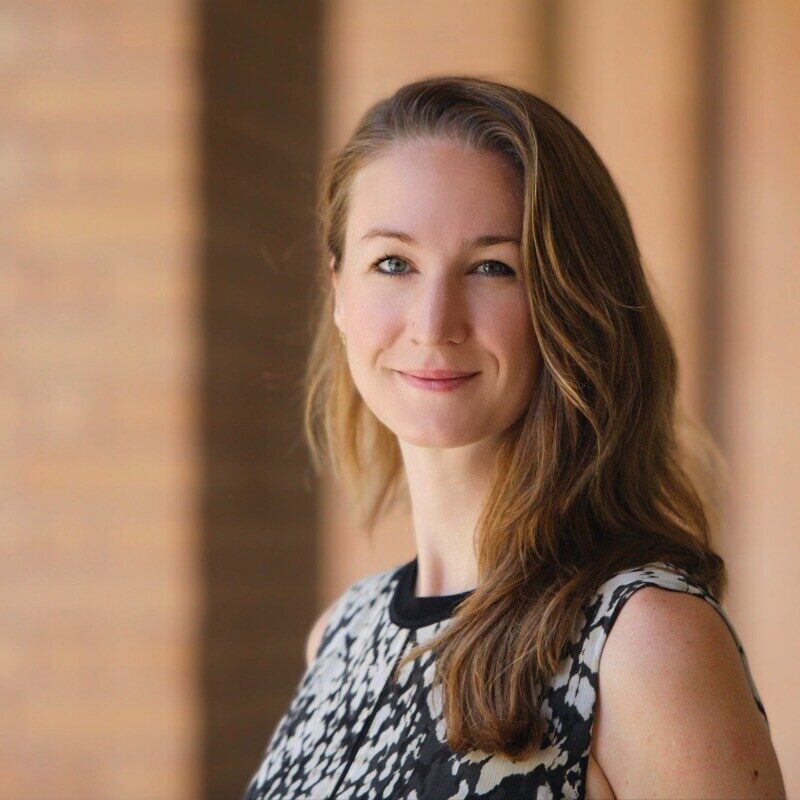
Dr. Megan Peters
Associate Professor of Cognitive Sciences, UC Irvine; Fellow, CIFAR Brain, Mind and Consciousness program
In this episode
00:00 Welcome to season two 03:30 Meet Dr. Megan Peters 06:00 Studying metacognition and consciousness 11:00 An interdisciplinary path into meta science 15:30 Depth, breadth and golden retrievers 19:00 Phase one: a self critical brainstorm 24:30 Phase two: building context and connection 31:30 Phase three: distilling the essence 35:30 Phase four and choosing your goals 39:00 Trap: the hypothesis requirement 43:00 Traps: sunk costs and "someone already did it" 48:00 Trap: the hammer and the nail 51:30 Protecting time to think 54:00 Neuromatch and final advice
Select a timestamp to play the episode from that point.
Dr. McGavock: [00:00:00] Welcome back to the Emerging Scholar Podcast. I'm your host, Dr. Jon McGavock from the University of Manitoba, and I'm thrilled to have you back for season two. Last season, we took you on a journey through your first year of research training, covering everything from crafting great research questions to understanding the foundations of both quantitative and qualitative methods.
Dr. McGavock: We met incredible scholars, explored fundamental concepts, and built a roadmap to help you navigate your early research career. This season, we're going deeper. If season one was about laying the foundation, season two is about mastering the craft. We're taking those methods we introduced and really unpacking them, diving into the nuances, the challenges, and exciting new possibilities that each method has to offer.
Dr. McGavock: Throughout this season, you'll meet a remarkable team of both established and emerging scholars with expertise across a diverse array of approaches, from natural experiments that reveal causal insights into real-world [00:01:00] settings, to qualitative inquiry grounded in social justice, the complexities of implementation science, and yes, my personal favorite, causal inference.
Dr. McGavock: Each episode will introduce you to researchers who are pushing the boundaries, asking bold questions, and making novel and important scientific discoveries. First, we're celebrating Canadian research excellence, showcasing incredible work happening right here at home. Second, we're emphasizing the critical importance of patient engagement in shaping research that truly matters across a range of scientific methods.
Dr. McGavock: And finally, we're championing curiosity, the essential spark that drives all great science and keeps us asking what if and why. Whether you're designing your first research study, wrestling with methodological challenges, or simply passionate about rigorous and meaningful research, this season is for you.
Dr. McGavock: So let's dive in, stay curious, and continue building the skills that will shape your own scientific journey Welcome everyone to episode one, season two of the Emerging Scholar Podcast. This is Jon McGavock from the Children's Hospital [00:02:00] Research Institute of Manitoba, and today we are thrilled to welcome Dr.
Dr. McGavock: Megan Peters, an associate professor in the Department of Cognitive Sciences at UC Irvine, and a fellow in the Canadian Institute for the Advancement of Research in the Brain, Mind, and Consciousness program. Dr. Peters leads the cognitive and neural computation lab, where her work sits at the fascinating intersection of neuroscience, psychology, and computational modeling.
Dr. McGavock: Why did we invite Dr. Peters today? Dr. Peters will kick off season two describing a paper she published in August of twenty twenty-five in the journal Nature Human Behaviour, titled How to Develop Good Research Questions. Why do we need a third episode on research questions? As we found out in season one, research questions are the foundation for your emerging scholar journey, and for every project that you design.
Dr. McGavock: Dr. Peters outlines the four steps in how to take an idea and formulate it into a testable research question, but more importantly, also helps us understand the four flaws that come with that, and [00:03:00] helps you, on your scientific journey, create a framework for how you take simple ideas, develop them into really clear research questions, and then from those questions, design really exciting research projects.
Dr. McGavock: This was an incredible interview. I was really fortunate that Dr. Peters agreed to do this. I hope you enjoy her approach to how to ask research questions as much as I did
Dr. McGavock: Welcome to the Emerging Scholar podcast. We have Dr. Megan Peters here from UC Irvine. Welcome, Dr. Peters.
Dr. Peters: Thank you so much for having me. I'm really pleased to be here.
Dr. McGavock: You're coming into season two to talk about a recent paper that you published in Nature Human Behaviour, but, uh, before we get into that, tell us a little bit about yourself and the work that you do at UC Irvine.
Dr. Peters: Absolutely. So at UC Irvine, I'm in the Department of Cognitive Sciences, but I also have a co-appointment in the Department of Logic and Philosophy of Science, and so a lot of what you [00:04:00] see in this paper is informed by the close ties between the scientific work that I do and the philosophical underpinnings and the philosophical bent that kind of colors the entire process.
Dr. Peters: In these two departments, my primary department is cog sci. I teach a few classes, but I also run a research group that we call the Cognitive and Neural Computation Lab. This is a really interdisciplinary group of researchers. Everybody from machine learning engineers and neuro AI folks all the way through to philosophers, essentially.
Dr. Peters: We've got psychophysics, modeling, everything in between. And the target of our study is that using all of these tools and techniques and approaches to asking questions, we try to reverse engineer the process of metacognition, or our ability to think about our own thoughts, our perceptions, our decisions, and what that process from a neural and computational and behavioral standpoint, what that process might have to do [00:05:00] with our subjective conscious experiences that we have of our environments and of ourselves.
Dr. Peters: So that's the primary purpose of the group that I run, is to try to reverse engineer that process, but I also wear a couple other hats that have informed both this paper and also all the rest of the work that I do. So I'm also a fellow in the Canadian Institute for Advanced Research program in brain, mind, and consciousness, and I am president, co-founder, and chair of the board at Neuromatch, which is a 501(c)(3) nonprofit in the United States, but with a global reach and perspective, where we've had over 40,000 people participate in various components of our programs.
Dr. Peters: We also used to run some conferences, and we have some accelerator programs and research initiatives as well. So I still do that. These are all the hats that I typically wear.
Dr. McGavock: When you talk about metacognition, I think this uniquely human aspect of who we are, trying to understand how we do that, and the [00:06:00] meta piece I think translates into what you just talked about, creating Neuromatch, which is the meta aspect of science.
Dr. McGavock: So what would be a big overarching research question that your research group is trying to tackle in the area of cognition?
Dr. Peters: I love that you brought the meta into the meta-science component as well. I think that's great, 'cause meta-science does play a big role in what we do, partially in large part maybe even because of the nature of the target of study, the metacognition consciousness bit.
Dr. Peters: So a big overarching question that we have is- How does your brain create the subjective experience that you have of yourself and the world? There's something that it's like to be you. The philosophers would call this qualia, or maybe trying to solve the hard problem of consciousness. We're gonna leave that problem over there for now, and we're not gonna touch that just yet.
Dr. Peters: We're gonna try to do some of the first baby steps towards answering that question. So can we measure and characterize subjective experiences through self-report, [00:07:00] and then discover the computations and neural correlates that go along with covariation in those subjective experiences?
Dr. McGavock: And if that metacognition goes wrong, is it bad?
Dr. McGavock: If we figure out how it works, then maybe we can fix it if it's gone the wrong way.
Dr. Peters: Yeah, absolutely. Metacognition is actually, you mentioned it might be a uniquely human trait. I don't think it is. No. And I think a lot of people would agree with me that sure, the volitional, purposeful engagement in introspection, like, oh, okay, think about what you're thinking about right now.
Dr. Peters: Right. That kind of thing? Sure. Like, that's very linguistic in some ways, or volitional or purposeful, but the constant evaluation of the quality of your perceptions, of your decisions, of your actions. Basically, I did a thing Did I get to my goal? Mm-hmm. Why didn't I get to my goal? How can I change my internal model of the world so that I don't make that mistake again?
Dr. Peters: These are things that absolutely non-human animals- Oh ... are going to [00:08:00] engage in all the time. They're gonna have to evaluate or have this internal representation of the world. Is that internal representation actually of the state of the world, or am I just making that up? That would be a really useful thing for a mouse- Totally
Dr. Peters: to know how to do. Paramount survival. Right, right. Essentially. And so when it goes wrong, if you mistake hallucination for reality, or you mistake a really bad decision for a good one, evolutionarily speaking, you might die.
Dr. McGavock: Yeah.
Dr. Peters: That would be bad, right? You mistake a percept of a friendly animal in the jungle, and you say, "Oh, that's definitely like food.
Dr. Peters: It's not gonna hurt me." It turns out, it's a predator. You were very confident in your misassessment. Now you're dead. So these are definitely things that when they go awry, there are major evolutionary consequences, but we can also see consequences of some of these errors even in the range of neurotypical through neurodivergent populations as well, that errors in reality monitoring, errors in metacognitive evaluation can manifest, [00:09:00] according to some theories, as explanations for hallucinations or explanations for delusions or those kinds of things that are arguably interfering with quality of life and everyday functioning.
Dr. Peters: And so reverse engineering these capacities might help us design interventions or new approaches to understanding those aspects of our nature. And then, of course, there's the AI reason- Right ... which is that AI just really is terrible at telling when it's wrong. Right, right. It's really bad. Yeah. From LLMs to self-driving cars, if you've ever ridden in a Waymo or a self-driving Tesla, like they don't behave like humans, and part of the reason that I think a lot of us in metacognition argue that these machines don't behave like humans is that they have no capacity, at least not anything like ours or anything like even a rat or a mouse, no capacity- Yeah
Dr. Peters: to tell when they're wrong, to [00:10:00] self-evaluate. Mm-hmm. And whether you think that building smarter artificial systems and eventually giving birth to Skynet is a good idea or not-
Dr. McGavock: Right. Yeah ...
Dr. Peters: we would probably want these systems to not just confidently spew lies that turn out to be correct and have no ability to really evaluate the correctness of those decisions.
Dr. Peters: So I think that there's a lot of reasons to reverse engineer this and understand it from a curiosity perspective, like it's great to understand our brains and our minds, but also from the perspective of therapeutic or clinically relevant intervention. And
Dr. McGavock: now it's saving us from AGI.
Dr. Peters: Maybe. Or making a machine- Yeah.
Dr. Peters: that will take over the world much more effectively and quickly.
Dr. McGavock: And so what I loved about reading your paper and then going through your CV is that you take a big perspective on the research process. And so I'll give a, a Canadian analogy. Wayne Gretzky was an outstanding hockey player, and I think if you ask Wayne, like, "How do you do that?"
Dr. McGavock: He's [00:11:00] like, "I just go and skate, and I know where the puck's gonna be, and I'm really good at it." And the really, really good coaches like Scotty Bowman were like, "I know how the whole system works, and I can put my finger on what to do here and what to do there." And you're one of those big picture thinkers, one of those meta scientists that thinks about the process all the way through, and this paper is the essence.
Dr. McGavock: Like, probably the most important part of that process is designing, developing, and framing a really, really good question that's gonna guide that whole scientific process. Which, for the trainees listening, if you don't get that right, th- you're on a four to six-year journey, right? So you better get it right at the start.
Dr. McGavock: But where did your interest in the meta aspect of science come from?
Dr. Peters: That's such a kind compliment. I really appreciate that. I think it really was born out of necessity in that the nature of ... Like, the thing that I've always wanted to study ever since I started to formulate something looking like a scientific question, which really began, if I do this retrospective hindsight is [00:12:00] 20/20 thing, I can look all the way back into high school or even earlier and say, I really wanted to understand subjective experience.
Dr. Peters: I really wanted to understand what it was like to experience the world as someone else. I built this ridiculous machine when I was, like- ... 13. Right. That allowed me to see as if I were a prey animal- Okay ... by using mirrors and, like, all sorts of stuff to change my field of view so that my eyes would basically point sideways instead of predator style straight ahead.
Dr. Peters: Oh, wow. And I came across photos of this machine recently, which was just crazy. Yeah. But, like, this has always been a part of what I wanted to do. Well- The problem with studying this type of thing, the scientific lens, is that by its definition it is private to me.
Dr. McGavock: Hmm.
Dr. Peters: It's not something where I can open up my own head and point a brain imaging device at it and say, "Look, I understand the subjective experience part."
Dr. Peters: I can find correlates of it, sure, but the nature of the thing that I'm studying is that it [00:13:00] is not objectively observable. It's not observable by anybody but me. That forces me to also then go read a lot of philosophy about this and not just philosophy of consciousness or philosophy of mind but philosophy of science, which is how do we go about trying to build a scientific enterprise to ask a particular type of question?
Dr. Peters: So I think that I was exposed to those kinds of ideas very early on. I actually took or designed a philosophy course in high school because it wasn't offered by my high school anymore, and I really wanted to do it anyway. I forced myself, or chose I suppose, to have my training be this interdisciplinary combination of, yeah, I had to take programming classes, I had to take math classes, I had to take the neuroscience classes, and linguistics, and psychology, and statistics, all that stuff.
Dr. Peters: Mm-hmm. But I also, because of the thing that I wanted to study, had to take philosophy. And not [00:14:00] just continental philosophy, which is very important, but also this meta-science level. Like, what are we even studying here anyway?
Dr. McGavock: Right.
Dr. Peters: And why? And why does it make sense to build a question that way and not this other way?
Dr. McGavock: Mm-hmm.
Dr. Peters: Is that allowed? Is that allowable? Why or why not? And I had a lot of really fantastic professors along the way who nurtured that excitement in me, and then all the way through starting undergrad, PhD, and then post-doc, I worked to surround myself with people who didn't want me to only focus on the math and the neuroscience and the behavioral part, and would allow me to go and have this theoretical component that would drive a lot of my question asking and answering.
Dr. Peters: During COVID, when several of us decided to launch the Neuromatch Academy for the first year, we decided in April to do it, and then by July we'd launched the thing and had thousands of enrolled students.
Dr. McGavock: Wow.
Dr. Peters: In building that, we'd spent a [00:15:00] lot of time doing process management and thinking about how would we educate this group of people in a way that will be true to the lessons we want to provide, but do it at scale, do it with clarity, do it in ways that will cross geopolitical boundaries and disciplinary boundaries, and be accessible to a wide audience.
Dr. Peters: So that forced that perspective as well, even more recently in my training, 'cause I consider myself still a trainee at heart.
Dr. McGavock: Oh, but man, does it go against so many things. So, you know, like your mentors are always like, "Focus, focus, focus." Like, you can't pick three things and study them, and then you're gonna go to philosophy.
Dr. McGavock: If you don't focus, you're done. And then the second one, we just interviewed this guy, Alex Hutchinson, who was talking about the pivot punishment, the pivot penalty, sorry, where if you're not in that field and everyone knows who you are, and then all of a sudden you're bringing in philosophy into your field, no one's gonna let you do that, and it's gonna be so hard to succeed.
Dr. McGavock: But you're [00:16:00] thriving in that. What advice would you give to a grad student who doesn't like the focus, focus, focus, and just stay really narrow and focus on one thing? Like, how were you successful in, in doing this?
Dr. Peters: I think there's no one right way to do science. I think we need to do... Well, okay, don't, like, completely make it up as you go along, right?
Dr. Peters: Like, you have to do good science in the sense that it needs to be reproducible, it needs to be rigorous, and all those things. But, like, in terms of the depth versus breadth-
Dr. McGavock: Yeah ...
Dr. Peters: it's really hard to do both But we need people who read widely as much as we need people who read deeply. And I think that being part of the CIFAR Brain, Mind, Consciousness program, also starting as a global scholar, which is an emerging scholars early career program that I participated in early in my faculty position, and then now I've been elevated to fellow, which is exciting- Yeah
Dr. Peters: I'm very grateful. Very exciting. But that program emphasized, celebrated radical interdisciplinarity. Love it. And they [00:17:00] said, "This is how we find the next big thing, is we get out of the trees and we look at the forest." And of course, you need people who really are down there in the weeds and who are focused and who read this niche and who know all of the nuances because without that, you're just gonna kind of flail around wildly.
Dr. McGavock: Yeah.
Dr. Peters: And- But you also need people who do have this, this kind of forest level versus trees level perspective. It's not that one is better than the other, they're just different. And I have recently been describing myself as, as a little bit of a golden retriever who gets distracted by balls and shiny objects and squirrels and, you know, that kind of thing.
Dr. Peters: It works with the nature of what I study. It allows me to find other people like me, but also find people who really thrive in that focus, focus, focus. Mm-hmm. And
Dr. McGavock: we need both. Yeah.
Dr. Peters: We have to have both, or the whole enterprise is gonna fall apart.
Dr. McGavock: I think a lot of people would wanna work in your department or have you as a collaborator.
Dr. McGavock: I love it. We just finished this interview with Alex Hutchinson, who has a PhD in physics from Oxford, but who's a [00:18:00] sports scientist, and he just published a book called The Explorer's Gene. There is no gene for what you just described, but exactly the benefit of that, the evolutionary need for that, of your ability to, like, not the golden retriever piece, right?
Dr. McGavock: But the ability- ... to be really passionate about different things and then figure out ways to find those passions. I'm grateful that you wrote this paper because in the area of meta-training of trainees, we did two interviews in season one about where do good questions come from. We had one that was coming from the patient perspective.
Dr. McGavock: You're at the bedside, someone asks a really good question. You're like, "Wow, that's great. I never thought of that." The other one was about natural experiments and the interdisciplinary nature of health economics. Bapu Jena talked about his process for coming up with a really good question. But you laid out the process, right?
Dr. McGavock: As a meta thinker, you actually laid out the process for how you take a good question and then turn it into reality, which would be the final product. [00:19:00] Most importantly, and I've never seen anyone do this, you gave the four traps to avoid, and I wanna go into that because that's the key. Avoiding those traps, I think, is the most important.
Dr. McGavock: And again, I feel like having your question be important Relevant and guide your scientific process is so important because I sit on grant review panels, I review papers all the time where you're just like, "This is the wrong question. You should've reframed this. You should've done a deeper dive on this."
Dr. McGavock: So I thank you for publishing this paper, and let's talk about phase one. So the self-critical brainstorm, letting your ideas flow freely, and you talk about doing it on a walk. So why is this important, the self-dialogue?
Dr. Peters: Oh, yeah. So I actually realized, this is a little bit of a self-congratulation here, but I realized that this, you know, go on a walk and talk to yourself thing, it turns out I didn't come up with that idea.
Dr. McGavock: Yeah.
Dr. Peters: Turns out other people do this- Yeah ... as well, including the late, great Daniel Dennett, and this is actually something that if you read his memoir, you'll run [00:20:00] into a page where he talks about this process that he engaged in. I don't claim to be approaching Dan's level of intellect or influence in any capacity, but it is kind of nice to know that I share this tiny little detail And that I'm on the right path.
Dr. Peters: So this idea of walking and talking, I really like it too because especially in 2025, we are accosted with information all the time.
Dr. McGavock: Yeah.
Dr. Peters: Your smartphone is constantly buzzing at you. It's in your pocket. We're both looking at probably three different, four different windows on our screens right now. Yeah.
Dr. Peters: So we're just accosted with all this information, and the temptation when you're trying to develop a good research question is to say, "Okay, I've got this kind of idea. Let me just go to Google and start Googling, and start collecting papers and putting them in piles and trying to sort them," and then I need to read them, and then I run into a citation in one paper that seems like it's gonna describe a particular methodology that might be particularly useful to me, so I'm gonna pause reading that first paper and find that citation, and then you get into [00:21:00] the equivalent of a Wikipedia hole.
Dr. Peters: It's really easy to do that, especially when you feel the pressure to develop and refine a targeted research question on a tight timeline- Yeah, that's- ... because we all have limited time ...
Dr. McGavock: that's the hardest part.
Dr. Peters: Right. So you're like, "I gotta get going on this. I gotta start collecting all the papers. I better make sure I don't miss something."
Dr. Peters: I think that's great, but that really needs to be phase two. Phase one needs to be you need to figure out for yourself what it is that you're even asking. The best way that I've found to do that is to actually get away from all the screens, to get away from the ability to go clicking on links and trying to read things and take notes on my iPad and all of that stuff, and to talk to myself out loud as I walk around.
Dr. Peters: And people, as I, I walk around in my neighborhood or something, people probably think I'm a crazy person. Yeah. But that's fine. And the reason to do it out loud is that it forces you to crystallize your language a little bit. But the reason to do it in the spoken word and not in writing is that I [00:22:00] also have this very deep tendency from my previous life as essentially a copy editor and English as a second language teacher and college counselor, to get really into the grammar and be really, like, excited about the beauty of the language itself- Oh
Dr. Peters: to my own detriment- Yeah ... because then I get, like, into polishing a sentence and then forget what I was doing. So by talking to myself and then recording myself talking so I don't completely lose it, it doesn't matter if I repeat the same idea five times trying to get it right. It doesn't matter if I stop myself mid-sentence and say, "Oh, wait, I forgot to say this thing."
Dr. Peters: It's all there if it's recorded. And then I can have the transcript, and I can either sort through it myself, or if we've got, you know, large language models now that get it, I don't know, 50, 60% right, where you say, like, here's a giant jumble of a brain dump. Yeah. You know, this is literally me just stream of consciousness-
Dr. McGavock: Very
Dr. Peters: cool
Dr. Peters: talking out loud to myself.
Dr. McGavock: Yep.
Dr. Peters: And then here's the major [00:23:00] bullets or something like that. And then you cross reference and you say like, "No, that's definitely not what I meant." You know, the LLM got it wrong again, fine. But it gives you this tool to go back and forth to refine your thinking, and you can't do it staring at a wall.
Dr. Peters: You can't do it on your sofa. You have to have something kind of streaming in through your eyes and your ears to tickle your brain a little bit and allow that creativity to flow. So I think it's really important to give yourself space to do that, and then to take advantage of these modern tools to capture what that actually is.
Dr. McGavock: Now, I do this when I run. Like, I try to focus. Sometimes you let your brain go and you're like, you're mad at someone or you're like thinking about the day and I'm just, nope, I gotta focus on the question or thing I'm trying to think about. I feel like nature m- makes it easier for me if I don't have cars and other stuff.
Dr. McGavock: So are you doing this in a park where you're talking out loud or you're walking down your, your-
Dr. Peters: Uh, I do it in my neighborhood right now. I live in this subdivision that's near UC Irvine that's all faculty and [00:24:00] staff. Oh. And so I'll sometimes run into the people in my department- Yeah ... when I'm doing this, and they're like, "Wow, you're definitely a crazy person."
Dr. Peters: Or I'll do this on some nice bike paths around here. So I'll hop on my bike and I'll do it there. Usually I walk because I like to not be so out of breath that I can not talk to myself.
Dr. McGavock: Right. You're recording into your earbuds while you're riding the bike?
Dr. Peters: Yeah, for the biking. But again, most of the time I'll just do this walking and I just use literally the free recording app- Wow
Dr. Peters: that came on my phone.
Dr. McGavock: I do this with my grad students. We walk and talk. So going through a thesis and we're just going back and forth. When my grad student talks out loud, you start to trip up on what you know or don't know or like you think you have the question, but you actually don't. So I totally agree, like having it out loud is super key.
Dr. McGavock: Phase two, building context and connection. So this is where we should be doing the Wikipedia dive. How do you do that in an efficient way? 'Cause with the volume of research we have right now is insane. What is your approach to making sure no one's done this before or done it the right way? [00:25:00]
Dr. Peters: Yeah. So once you feel like you are able to articulate to yourself in kind of a distilled way, like something about what the nature of the question is, right?
Dr. Peters: Like, you know, the logic of why you're wanting to ask this question. I noticed this thing, or someone said this, and you have like some sort of crystallized understanding of generally speaking, what is the nature of the question that you wanna be asking, then now you're allowed to open your laptop again.
Dr. Peters: And you wanna just start with trying to do like keyword searches on the topic. There's some useful tools out there like Research Rabbit that can actually help you see connected papers. Once you find like one paper where you're like, "Aha, this seems like a pretty good one. This one feels like it's onto something.
Dr. Peters: It's like in the right direction," then these tools, you can use that as a seed and you can say, "Find me not only the papers that this paper cites and the papers that cite it," which is how we used to do this, right? Yeah. You'd go backwards and forwards in time and just do that. But you can actually [00:26:00] use connected papers, which basically does that for you, builds you a connection graph of all of the papers in the citation matrix, essentially like several layers deep.
Dr. Peters: You can click on them and skim the abstracts. You start collecting them, putting them in piles and saying, "This one seems like it's tangentially related. This one's not related. This one is like core." You know, something like that. So you can start to do that. I think at this point it's really good to read abstracts and then flip the paper so you can look at the methods and the results in the graphs.
Dr. Peters: Yeah. And skip the intro and discussion for now. Yeah. So just kind of like, what did they do and what did they find? The introduction c- and discussion can be useful for finding other papers that are in this space, but I use it more like a data mining source than I do trying to read the author's interpretation of what they're doing and why.
Dr. Peters: With one exception, which is sometimes you [00:27:00] get in the intro and discussion a nicely formulated question, and you can circle that and mark it and that kind of thing. Go to the end of the intro- Yeah. ... and see what the main question was. If it's written well. Yeah. If it's written in the kind of correct style of this formulaic how to write good research papers kind of thing.
Dr. Peters: But don't limit yourself just to empirical papers here. So it's okay to read the reviews. That would be great. A big synthesis of the field that's recent that identifies like here's where the field is right now, and here's the open questions in the field. Those can be really beneficial as well- Mm-hmm ... for mining citations, but also for identifying this person thinks the open questions are X.
Dr. Peters: Does that line up with mine? If it does, great. If it doesn't, why not? Do all of this with an eye towards being- Bidirectional in the information flow. So it's not just you being a sponge and soaking up all of the information that's available to you in all of these [00:28:00] papers. Like, what did they do? What was their question, or what did it seem to be?
Dr. Peters: Do you feel like they answered their question? Why or why not? What would you have done differently?
Dr. McGavock: Yeah. That's
Dr. Peters: great. And just start doing that. And sometimes it's gonna be like they did this thing, and it's not really relevant, but they used this cool tool, so I'm gonna note that somewhere. Maybe that'll be useful later.
Dr. Peters: But I like the way they phrased their question. So it's okay to take these all apart and not say, "I wanna just do the same thing that someone else did." And you also mentioned something like you're gonna discover, oh, no, someone already did my- Yeah. Someone already tackled this ... my question. Yeah. Yep. So that's one of the traps that I, I identified and that I feel like I've run into even myself many times, where you do this deep dive and you're like, oh, someone already did it.
Dr. Peters: And inevitably it's in like 1987. But they never did it the exact way you're gonna do it. So there's always [00:29:00] a way to build on what's been done before.
Dr. McGavock: It's true. I love that, and I think, like, in the world of clinical health research, when I'm doing a systematic review with a meta-analysis and I'm publishing it, uh, very often I will say, "Here's what was missed," right?
Dr. McGavock: Like, we answered this question, but here's the things that we're missing, and then it's sort of like here are the nuggets for you to follow if you're interested. You talk about Obsidian. I'd never heard of Obsidian, to contextualize this. What is that and how do you use that?
Dr. Peters: Obsidian is a piece of software.
Dr. Peters: It's free. You can pay subscriptions to have it sync nicely across things, or you can embed your, it's called a vault, which is where all the stuff lives. You can embed that in a Google Drive and you can sync it that way for free. So like, it can be free software. And it can be basically anything from the equivalent of Apple Notes, where it's just a bunch of notes, and that's fine.
Dr. Peters: Or you can take it all the way into a mind map, into a zettelkasten. You can do this [00:30:00] by making links between notes, and you can make those explicit, like hyperlinks. You can also use hashtags to organize your life, and there are also about 10 quadrillion plugins that have been community developed that will do things like build on the built-in graph view that Obsidian has.
Dr. Peters: But you can also, like, hook LLMs into it and have them find various components of your entire brain dump mind map, that kind of thing. You can use it for project management. I know people who do that. It's kind of a one software to rule them all thing, and it can be really overwhelming at first, so I recommend just start by taking notes and using it as a way to keep track of things.
Dr. Peters: If you're already using Apple Notes or something like that to keep all your class notes, everything in, you can actually export that thing into Obsidian to get you started.
Dr. McGavock: Oh, nice.
Dr. Peters: And then this gives you the ability [00:31:00] to have everything in one place, cross-platform, which is very nice. It doesn't lock you into a particular software ecosystem either.
Dr. Peters: You can use it as flexibly as you want. You can embed screenshots, you can embed quotes, you can embed hyperlinks. It's all markdown language, so it's really easy to format stuff.
Dr. McGavock: What I love about this phase is it's purposeful literature review. Like, it's making connections for you. You're homing in on your question, but instead of just churning out, like, paper after paper after paper that's going down the same narrow path, and you're creating this really blocky, kind of boring literature review, right?
Dr. McGavock: You're creating the network that could become your theoretical framework. It's kind of bringing in different pieces that you've read into something that I think is hopefully gonna be that final product, right? How do you take that, what you got in Obsidian, and then hone in on a possible research question?
Dr. McGavock: So this is phase three. Mm-hmm. What I tell a lot of students is, pressure test this with your colleagues, right? After you've done that [00:32:00] mapping and you think you're getting close, now if you're a grad student, you don't know a lot, right? I mean, it's very hard to be deep into your own work, but I would say pressure test this with your colleagues.
Dr. McGavock: But for you, what does phase three look like?
Dr. Peters: Yeah. So phase three, distilling the essence, right? Yeah. Honing the research question. So usually these optimization procedures will start by kind of flailing around in space and trying to see if I do this, does it fit the data? If I do that, does it fit the data?
Dr. Peters: And so this is called a high temperature search. And then they say, "Okay, I've kind of figured out the lay of the land. I understand the landscapes, the topology of the space that I'm looking at. This area seems like a good way to go." Bringing in together all of the rest of the maps that I've built- Right
Dr. Peters: at a coarse level. So you've built this coarse grain level, and now you're gonna pick a region to zoom in on And now you're gonna refine. And so this would be going from the explore phase into the exploit phase, for those who see that kind of language. Yeah. This would go from the high [00:33:00] temperature search to the gradient descent and optimization component, right?
Dr. Peters: And we actually know that this is an optimal way to do this. This is, 'cause this is how we design our artificial systems to actually solve this problem. This is actually where Obsidian would excel, is that if you've got a note that goes with every paper that you've read, you might have actually links that you've made between them, ideally.
Dr. Peters: So as you're taking notes, ideally it's not just, "These people did this, and this is what they found," it's, "This makes me think of this other paper that I read." If you have, "This makes me think of this other paper that I read," you make that link explicit, and then you can see the whole map, and you can say, "Okay, here's this densely connected area.
Dr. Peters: All of these papers seem to go with each other for some reason." You can actually see it with your eyeballs if you use this kind of tool. You can also do this with a spreadsheet, too, if, you know, Obsidian is just overkill. You could also literally print all of the things out and just lay them out on your floor or your dining room table.
Dr. Peters: Yeah. [00:34:00] So, like, there's lots of ways to do this. Before Obsidian, when I was doing my first literature reviews, like even in graduate school, I actually did this with PowerPoint, where I would make a slide that was for each paper that I read. Oh. But then you can use the all slides view in PowerPoint, and you can move them around like little cards on a virtual table.
Dr. McGavock: Hmm.
Dr. Peters: And so I would move them around and basically be like, these kind of cluster and these kind of cluster. So s- the important thing is building a system where you can see more than one or two or three papers at once, where you can start to zoom out and see the connections. Then you'll see the space that feels like, and trust your gut, the ones that are really relevant.
Dr. Peters: And now we go read them again, but with a different goal. The goal now is to be exactly what did they do? Exactly what did they find? What alternative explanations can you think of for what they did find? Did they fail to run a control? Was there a different analysis or a different type of [00:35:00] data that you think that they should have collected?
Dr. Peters: And we're not gonna pick one just yet, but we're going to collect those critical components of these papers, and they can all go in those same cards as before, but now we're reading with a different purpose in mind. Instead of forest level, now we're getting into the trees.
Dr. McGavock: Right
Dr. Peters: And then that'll take us into phase four, which is now I've got 37 ideas.
Dr. Peters: I can narrow it to three and combine them into one, and that now is my research question.
Dr. McGavock: Nice. So in our first season, a couple of key sentences came out. One of them was, you know, having a clinical impact, like seeing the question that's gonna really advance the field, right? Or that's gonna be really relevant to the group that you're working with.
Dr. McGavock: Your own passion, like f- seeing that question where it's like, "Ooh, I am so interested in that, that I wanna go down that." And then one of the best came from Bob Wujec and he's like, "I want a question that's so simple that my aunt [00:36:00] would understand it. That no matter who I explain it to, they're like, 'Wow, that is a great question.'"
Dr. McGavock: So in your final product, do you have some other metric that you put in there where one of those things comes in where it's either impact or... Actually, a, a really good one that I like is it goes against what everyone else is thinking, right? The status- Yeah ... quo for your field, and you're like, "Actually, you know what?
Dr. McGavock: I think all these papers are showing something different, and I think there's a big hole in here." Are any of those part of your final product, where you're having to make a choice between the 37 or, you know, three or four?
Dr. Peters: That's a great question. This idea of finding the hole in the landscape is a fantastic goal.
Dr. Peters: It's the kind of thing you can do only if you've actually sampled the landscape. If you just start reading the papers, th- you're never gonna see that big picture. You're never gonna see that landscape. I think that's part of the set of criteria for saying, "These are the questions that I really wanna focus on."
Dr. Peters: I think that the goal of clinical impact or, "I can explain it to my [00:37:00] aunt," simplicity, clarity, or surprising-ness, right? It goes against what everybody is saying in the field. Yes,
Dr. McGavock: yes.
Dr. Peters: These are all- Components of what could be a good research question, but you don't have to have all of the ingredients at once.
Dr. Peters: There's also no correct answer about which one of those goals is better. There's this great paper by Gunnar Blohm, Paul Schrater, Kendrick Kay, and Konrad Kording that is something like diversity of goals in modeling or something like that, and I can go find a link and we can put it in links for your resources for this podcast if you have that.
Dr. Peters: Basically, they had this massive list of different goals in modeling. I like to expand this and think about it's goals in research or in science. Some of them are simplicity and beauty and symmetry and clinical impact. Some of them are explanation at a macro scale or explanation at a micro scale. What's really fun is that they identify all these goals and then they went and surveyed a bunch of [00:38:00] scientists, and there's just massive heterogeneity in how those scientists would prioritize each of those different goals.
Dr. Peters: I think that that's great to say, "You pick the goal that speaks to you or the set of goals that speaks to you," and as long as you're critically evaluating, does my question hit my own goals, then great. Right. Then you're fine.
Dr. McGavock: You don't have to be turning the whole field in a different direction, right?
Dr. Peters: It doesn't need to be a scientific revolution- No
Dr. Peters: in order for it to be- Right ... impactful. You know, maybe there's this missing piece, and there's this one protein that's behaving in a very specific way, and you think that if you twist this little knob or you try this one thing that no one has tried to your knowledge, then that will fill in a very tiny but very critical component of the story.
Dr. Peters: That's fine. No scientific revolution necessary. Seriously. I tell my trainees that the PhD or master's thesis is not the best thing that you're going to do. It might just be one of the first things- Yeah. ... that you do. Yeah. You've got a whole [00:39:00] career ahead of you, and this is like a demonstration that you now have the tools, skill, resource, and background to go out on your own and drive a research program or contribute in a lab space or have clinical impact, that kind of thing.
Dr. Peters: But it, it will very rarely be your crowning achievement.
Dr. McGavock: Mm-hmm. Except through the eyes of your parents.
Dr. Peters: Except through the eyes of my-
Dr. McGavock: They're gonna have it on their bookshelf. So I love the traps. So the first one, I was so surprised at this. A hypothesis requirement is a trap. So I always feel like I start with my question, then I'm gonna flip it to a hypothesis, but why is that a trap?
Dr. Peters: I think it's a trap to me, and this is the most contentious trap, which I think is why it's first. And this-- I got pushback on this too when I ran this by some friends. I think it's a trap because the way we define hypotheses or define what makes a good hypothesis is a little different across fields. So some people say it needs to be falsifiable.
Dr. Peters: Yeah. It needs to be against a placebo. Like, I have this [00:40:00] intervention that I think is going to have this particular impact or this particular effect. When we think about basic science rather than intervention translation clinical impact, sometimes it's like there's a complicated system and I have no idea how it works.
Dr. Peters: Your hypothesis might not look like a classic hypothesis that goes into a randomized placebo-controlled double-blinded trial. It might look more like, well, I think that the point of intervention for the system is this. So if I wiggle that, if I change that dose or I intervene on that, something will happen.
Dr. McGavock: Yep.
Dr. Peters: I don't know what that is.
Dr. McGavock: Yep.
Dr. Peters: So my hypothesis is really more like I wanna push on this and see what happens, and very cleanly and carefully and precisely describe what happens. But it's not a hypothesis that if I do this, then X will happen and Y will not happen. So that's why I think that this can be a trap, that we might get stuck in [00:41:00] Deciding that a question is not good and precise if it doesn't have this falsifiability to it.
Dr. Peters: Where sometimes a falsifiability might be like, yeah, if I wiggle this, I didn't see any measurable change. Maybe it's because I was off, that wasn't the right target for intervention. Maybe it's because I didn't have the right measures to identify that the system changed. Maybe it's 'cause I didn't push hard enough.
Dr. Peters: It's hard to interpret a null effect.
Dr. McGavock: Mm-hmm.
Dr. Peters: But nonetheless, I think that we shouldn't force ourselves into the kinds of hypotheses that would be amenable to, like, a randomized placebo controlled double-blind trial only.
Dr. McGavock: Totally. I, I totally agree. It was so actually refreshing to see that. And thinking about one of our interviews in season one on questions, one of the observations from this research group was we actually don't even have a tool to measure the thing we wanna measure.
Dr. McGavock: Like, no one's actually validated the tool, so maybe our first question is just let's make [00:42:00] a tool and see how well it captures the thing we wanna measure. And that's a great master's project, right? Getting that done first, and then you can go on.
Dr. Peters: Absolutely. I know this is the target of intervention, and I know that the outcome measure should change in this way, but we don't have a good precise way of characterizing that.
Dr. Peters: So I'm gonna just build the tool and push on something, and my hypothesis is I'm gonna be able to measure it precisely. And that's a totally reasonable research question, is, is this way of measuring it or is that way of measuring it better? Let's find out.
Dr. McGavock: I'm really interested in pediatric obesity and diabetes, and it's really complex stuff, and everyone shows these super squiggly spaghetti kinda diagrams on all the causal factors, right?
Dr. McGavock: It's all organized in different layers, but everyone focuses on one little thing, right? And- Uh-huh ... if you really wanna get at which levers here are the most important to push for a clinician or for a public health person, you've gotta tackle it a different way. And going in there, you're like, "I don't know if I have a hypothesis right now.
Dr. McGavock: I just wanna see how complex this system is, and maybe do some of [00:43:00] these things matter and more than others, or maybe some of these don't matter at all in different contexts."
Dr. Peters: Wanna measure it. Love it. You just wanna say, "Push on this and see what happens, or push on that and see what happens. And one of them might be bigger than the other one in its effect.
Dr. Peters: Let's find out." That's perfectly valid.
Dr. McGavock: The sunk cost fallacy and excessive attachment to your question, I see that all the time. Like, you picked your question, and now you gotta stick with it for the next five years
Dr. Peters: No, man, I have fallen into this trap so many times where I'm like, "No, I know that this is gonna work.
Dr. Peters: I know this is gonna work." And it's not the stubbornness of pushing on a research program where you've collected the data and you're like, "I know I can squeeze out something from this." You put all this work into refining your research question and saying, "Okay, now I'm ready to design an experiment or an intervention," or, "Now I'm ready to move forward.
Dr. Peters: I'm ready to say, 'Okay, green light. Let's go do the thing.'" As you're embarking on that stage, someone sends you a paper that... So this is kinda like traps two and three in- Combined, yeah ... in the same vein, right? Yeah. [00:44:00] Like someone sends you a paper that's like, the way that you phrased your question is enough to be problematic, or someone already did it, or something like that.
Dr. Peters: And then you wanna resist going back to the beginning and starting over because you're like, "Look at all this stuff that I did. Gotta- Look at all this stuff that I did, and I got here, and it's beautiful, and I really like it, and it's pretty, and I wanna hold it in my hands." Gotta keep going. And- Gotta keep going But I think that you don't have to go back to the beginning.
Dr. Peters: The nice thing about all this high temperature search and landscape building that you did for phases one and two is that you're really not going back to the beginning. You're going back to maybe somewhere in stage three.
Dr. McGavock: Yeah.
Dr. Peters: You're not going all the way back to the start. You say, "Okay, well maybe I need to go back to this set of questions that I refined in phase three and just pick a slightly different direction," and that's fine.
Dr. Peters: It's just really hard to abandon things that you find very pretty and that you built-
Dr. McGavock: Yeah ...
Dr. Peters: from scratch- Yeah, and it's- ... and they are very shiny.
Dr. McGavock: Yeah, [00:45:00] the vision I have in my head as you're speaking is thumbtacks and string and pictures of potential criminals up on a board.
Dr. Peters: I use that meme of- Oh, really?
Dr. Peters: Charlie from It's Always Sunny in Philadelphia-
Dr. McGavock: Okay ...
Dr. Peters: to describe my research program when I wanna be a little self-effacing. Right. I put that up and be like, "This is kind of my research program."
Dr. McGavock: You're like, well, you're like, "Oh, I went after this villain I knew as this villain, and then all you gotta do is just pull the villain off the wall, and there's still three or four others left."
Dr. McGavock: There's
Dr. Peters: still a whole map, right?
Dr. McGavock: There's a whole map. All
Dr. Peters: the evidence is still there. Yeah.
Dr. McGavock: Keep going. Keep going. And then if someone has published it, it's, "Oh, no, this is not my first idea," what do you, what do you give, what advice do you give to a grad student or a colleague? You know, they're like, "Oh, man, I spent all this time..."
Dr. McGavock: Do you just tell them to go back to the map and find something? Don't start from scratch.
Dr. Peters: Don't start from scratch. Yeah. But, like, how far back you have to go depends on, I mean, sometimes you really don't have to go back that far. You had, like, this set of a bunch of different ideas and interventions and analyses that you could do [00:46:00] from phase three, and in phase four you refined it.
Dr. Peters: It might be as simple as the way that you refined it allowed you to identify three possible targets and you picked one.
Dr. McGavock: Yeah, exactly. So
Dr. Peters: maybe just pick one other one. No one has done it exactly the same way. And you don't, of course, wanna change something just for the sake of changing it. But if you have any questions at all, any concerns at all about the way that they did it, the sample that they chose, the specific way that they deployed a particular intervention, or just a, in my field, in basic science, we do a lot of neuroimaging data analysis- Those software pipelines are so complex, and you have to make so many choices that it's a lot closer to cooking than it is to baking.
Dr. McGavock: Mm-hmm. Yeah.
Dr. Peters: Or you're like, "Ah, a little bit more salt here, or a little bit more tarragon there," you know, something like that. You know, and season to taste.
Dr. McGavock: Right.
Dr. Peters: So there's always gonna be a way for you to change something. And I suppose I should have put this in [00:47:00] there too, but like truly if someone really did it, replicate it.
Dr. McGavock: I agree. Like, if someone
Dr. Peters: did- I should have put this in the paper, like- Yeah ... if someone had exactly the same way of doing it. Right. But even if, even if you feel like it's perfect, I wouldn't change a thing.
Dr. McGavock: Mm-hmm.
Dr. Peters: So replicate it. Yeah. Good science should be replicable.
Dr. McGavock: Or sometimes it's too perfect.
Dr. Peters: Yeah, sometimes it's too
Dr. McGavock: perfect.
Dr. McGavock: And you're like, "Oh my God, I think we should redo this."
Dr. Peters: All of your P values are .049.
Dr. McGavock: The power pose. Actually- ... we tried to do this in one of our studies where we had a couple of different things where we were replicating their experiment. In some journals they were like, "Oh, that's so great. We actually replicated the fresh start effect."
Dr. McGavock: Other journals are like, "No, someone already published this. This is just a waste." And I was like, "That's such bad editorial." Those journals
Dr. Peters: are so wrong though.
Dr. McGavock: Oh, you're so wrong. Anyhow.
Dr. Peters: They're so wrong. Good science should be replicable. Totally agree. And if you can't replicate it from the methodology that's presented in the paper, then that methodology is not detailed enough to replicate it, and that's problematic too.
Dr. Peters: Fine.
Dr. McGavock: Replicate in a different population, and- Yeah ... it's transferable, which is [00:48:00] awesome. Hammer and nail trap. Oh, yeah. I have a, I have a different interpretation of this one, too, but what is your interpretation? So your area of expertise is an important tool. Gives you novel experience, but don't let it stifle the scope of your research.
Dr. Peters: Yeah. This is one also that borrowing from Neuromatch a little bit in our first day or two of the tutorials for our computational neuroscience course. Which is, let's say that I'm a machine learning engineer. I do a lot of model and fit it to data and predict the future kind of thing. I have large genomic data or large brain data, and I can fit these models and say, "I'm gonna predict A or B."
Dr. Peters: Doesn't mean that deep learning and AI can solve everything. Right? Sometimes a good old-fashioned, you know, experiment, double-blind, placebo-controlled randomized clinical trial is the correct tool.
Dr. McGavock: Right.
Dr. Peters: So it's not so much just your area of expertise, but it's like your toolkit. You don't wanna just say, "I can do this type of thing.
Dr. Peters: I know how to do this, and so therefore I'm gonna point [00:49:00] that tool at everything." Sometimes you have to say, "Wow, my tool is completely ill-equipped to do this. I've got a hammer and what I really need is a wrench." Right. "And so now I have to go learn how to build that." It's really tempting to be like, "I know how to do this, so I'm gonna do it to everything."
Dr. Peters: Sometimes a, a different tool is, is in order.
Dr. McGavock: And we-
Dr. Peters: How is your interpretation?
Dr. McGavock: I love it. Well, okay, so we do have a podcast coming up with a colleague of mine here at the University of Manitoba where we talk about not pigeonholing yourself. Mm. As a grad student, like, don't pigeon your- self with a method, right?
Dr. McGavock: Like- Yeah ... I only do randomized control trials. I only do this. You can't as- you can only answer so many questions with that, so I totally agree. Mine was, and I think this falls more in, like, the epi world, I don't know a lot about LLMs or LLM, you know, based research, let's say. But you come up with a question, and now for some residents, we'll go into, let's say, a large health administrative data set, right?
Dr. McGavock: The VA has huge [00:50:00] data sets. Scandinavian data sets are massive, right? And you can go in there and try to answer your question. But your question maybe is not answerable in some of those data sets. And so sometimes you're trying to hammer that question into data that you don't actually have. And so now it's like, okay, let's go back, and if we only have the data, then let's start with one of the other ones.
Dr. McGavock: Should we do a descriptive, right? Or should we do a non-hypothesis driven study 'cause we're, we're stuck with what we got right here, right? And so that does apply to some people. But I do think both things are really key. Like-
Dr. Peters: I really like that. I think, I think that's very much in line with, with my thinking.
Dr. Peters: My bias in writing this piece is that I typically ... Well, a lot of the work we do involves collecting new data. We don't work on existing data sets as much. For better or for worse, there's a lot of neuroimaging data sets out there, so if you are working on existing data, you are picking that existing data set probably because it can [00:51:00] answer the question that you think it can or you hope it can.
Dr. Peters: But I really like that the data that you have available could also be one of these hammers essentially. That it's not just the toolkit that you have. It's also, I have access to this massive database. You know? That database then becomes this hammer, and sometimes you won't be able to actually answer the question that you have with the data or the resources or the tools that you have available, so you have to go find new ones or maybe you have to change your question.
Dr. McGavock: Yeah.
Dr. Peters: The kind of square peg, round hole problem. It does go both ways- And- ... data and tools ...
Dr. McGavock: and if you've got that O- Obsidian map that you talked about, then it's easy to go back to that and say, "Okay, well, what else is in here? What other questions did come up in here that we saw that we could maybe answer with the tool that we do have?"
Dr. Peters: Yeah.
Dr. McGavock: So you really helped me refine the process, and as I'm working with grad students moving forward, I think we're gonna go through those four steps and then check ourselves all the time, like, on our four traps. Like I said at the [00:52:00] beginning, this is the most underappreciated aspect of doing the scientific process, which is you gotta have a great question.
Dr. McGavock: And it, it's not gonna be in the shower popping in your head.
Dr. Peters: That might be at the beginning of phase one. You're like, "This really bothers me." And that will set you running, but it's not gonna be the end of phase four popping into your head in the shower.
Dr. McGavock: The first step in here is reinforced by two things I've listened to recently.
Dr. McGavock: Michael Easter talks about the importance of boredom. Okay? And, and I'd get rid of your phone, get rid of all- Mm-hmm ... all of your things, and just have that thing floating in your head, right? Because on that walk, when it's bouncing around inside your head, who knows what's gonna come out in terms of- Yeah
Dr. McGavock: the amount of just spontaneous thinking. Like, what kind of creativity's gonna come out of that when you're not just Googling it, Google searching it, Wikipedia, PubMed, whatever. And then Cal Newport, also deep thinking how to do deep work, just talked about when you're doing these kind of things, some things are so important, you should just protect your brain for doing that thing.
Dr. McGavock: Yeah. Right? Like, [00:53:00] social media's off, laptop's off, you're in a good space. And then who knows what's gonna come out. And I think that's the art part of science, right? If you're thinking about it, it's really coming out of you, and it's this is your thing, and you can be really proud of it because that question was, like, your piece of art that you're contributing to the larger scientific field.
Dr. McGavock: So love the way that you framed this, and I'm grateful that the journal came to you and asked you to publish on this. They knew you had it in you, and you said you didn't even know that, like, it was formulated, but you realized, "Oh, yeah, I actually do something structured."
Dr. Peters: It, the process of writing this paper was very much pulling out and doing that self-reflection component of what do I do in order to formulate these questions, and what do I do in trying to help my trainees formulate questions for themselves, both in my lab and in the classroom.
Dr. Peters: And this is the process that we go through, but I had not actually written it all down until I wrote out this paper. Yeah. So now I've got a nice flowchart. Nice. I never had a flowchart before, so yeah, thanks to the journal for pushing me [00:54:00] into writing this thing, because it forced me to go through this process in crystallizing then the end result, which was how to write good research questions.
Dr. McGavock: And obviously that process is working because you are an extraordinarily successful scientist. Thanks. So before we close, we're gonna have some final times just to talk about either Neuromatch or other things you're working on now that you think trainees would be interested in, things that we should be reading, ar- areas we should be focusing on.
Dr. Peters: Yeah. One of them I mentioned before, which is this paper on the diversity or heterogeneity of goals in modeling, but I recommend that listeners of this podcast replace in your head the word modeling with just doing science in general. Yeah. And the other one is by the same group of researchers, minus Kendrick Kay, so it's Gunnar Blohm, Paul Schrater, and Konrad Kording, and they wrote this how to model guide in neuroscience.
Dr. Peters: But again, replace the model word with just kind of doing ... M- modeling is not just writing down some code to write a little generative [00:55:00] model or something like that. It's like how to model a system, right? How to understand its parts, its pieces, its causal structure. I will give you the links to both of those papers, and if you can send it out- Yep
Dr. Peters: to folks there. Put it in the show notes. Both of those and these folks, together with myself and a couple others, co-founded Neuromatch in 2020. I will take the opportunity to tell your listeners about it because it's a cheap or free resource that can be massively beneficial, I think, for a lot of people.
Dr. Peters: Mm-hmm. So we are a nonprofit organization that offers primarily summer school programming, like intensive workshops over the summer, but they're on Zoom. Synchronous with the idea that you get together with the same 15 people every day for three weeks, and we place you in these pods, a teaching assistant matched by your background, your interests, your level of education, and importantly, your time zone.
Dr. Peters: Mm-hmm. So that not everyone can be awake [00:56:00] at a normal time, and that's fine. We also do language pods, so if you want to be able to have discussions with your pod mates in a language other than English, you can specify that, and we can try to match you with folks so you can speak in your native language with your classmates.
Dr. Peters: And the course materials are all free open source. You could even go look at them right now if you wanted to. So they're all available. Just YouTube videos, some micro lectures followed by hands-on coding tutorials. There's some prerequisites that we recommend, and we have those resources available for people to catch up, like if you haven't done programming in a while.
Dr. Peters: You can also self-assess and say, "I'll try this pre-course material to see if I can remember that programming," and be like, "Oh, well, I really should go back and take another Coursera course or something to beef up those skills." But the idea is that these are late-stage undergraduate or graduate level educational programs in computational neuroscience, neuro AI, which is an emerging [00:57:00] field bl- that blends neuroscience and artificial intelligence, deep learning, which is more just pure AI or machine learning, and then we also have a computational climate science course that uses a lot of the same tools to tackle problems that we have on a global scale in terms of our climate and climate change.
Dr. Peters: These tools are available These lessons are available, and I like to describe them as a PhD in a box for each of the classes. It's three weeks' worth of material, like six hours a day. But- Yeah ... it's like a PhD in a box in a tasting menu format- Right ... where you go and you sample everything, and you get- Yeah
Dr. Peters: a flavor, and then you can say, "All right, this set of tools is the one that I wanna use for my research question," and then you can do a deeper dive. So it's actually akin to this entire meta-level process that we've been talking about today.
Dr. McGavock: Mm-hmm.
Dr. Peters: In sample the landscape, get the lay of the land, understand the whole space of what's a- like, what's available, [00:58:00] gain the vocabulary, gain the surface level understanding of the tools and techniques available to ask- Yeah
Dr. Peters: and answer those questions. And then pick a couple and home in on it. That's awesome. So that's what we offer. If you do it synchronous, we do ask that if you have grant money available from your PI or something, we ask- Yeah ... to have you pay some tuition fee that supports our teaching assistants and a little bit of staff time to run all the logistics.
Dr. Peters: But if you really can't pay, there are options available for a reduced fee as well. We also do some other stuff, like we have six-month mentored projects that you can do after the end of the school, so you can actually do a research project with a mentor and with people- Wow ... from your pod. We have an accelerator initiative in partnership with the Wellcome Trust, where we are doing a cross between mental health and AI.
Dr. Peters: And so you can join a team there and be part of that initiative as well. So there's a lot of stuff that we're doing in the background. The academies are one of the major thrusts of what we do.
Dr. McGavock: That's amazing. And [00:59:00] I'm gonna say it scares me to hear all of this if I was gonna go back and try to do this, but the value of what other people have called the adjacent possible.
Dr. McGavock: When you're in your niche all the time, and then you go somewhere else and you get these skills, all the sudden, like, this world opens up of like, wow, I didn't know I could bring this to my field. So strongly recommend if it's free or low cost, and it's three weeks, and you're a grad student resident, take a dive, take a risk.
Dr. Peters: And it also-- You shouldn't necessarily even go into it being like, "Oh, I need to bring these tools back into my home field." It might just be a change in your perspective. I know that that's out there. I don't know how to use it. Right. That's fine. I don't need to learn how to use it. I don't need to be an expert in that.
Dr. Peters: But I know that other people are working there, and so when I write my discussion section for my paper-
Dr. McGavock: Mm ...
Dr. Peters: I can go and reference some of those things and say, "Wouldn't it be great if someone took the data that I built here and did that to it? I'll leave that for future studies. Someone else can take that."
Dr. Peters: To practice allowing yourself the [01:00:00] space to see that long horizon of possibility will then also, I think, change the way that you shape your own research, even if you're not bringing those tools to bear specifically on your research questions.
Dr. McGavock: Oh, that's so great, and it resonates with CIFAR, right? Even if you understand it and you appreciate it, maybe you invite an expert in from that area, 'cause you're like, you know what?
Dr. McGavock: Yeah. Our group would be so much better if we had this perspective that I learned at this three-week intensive course.
Dr. Peters: Absolutely. Such a great point. We drag experts in kind of all the time where we say, "This is great, but I have no idea how to do this. I'm gonna go find someone who does. They can tell me whether I'm on the right track or not."
Dr. Peters: You brought in CIFAR, too. You know why they went with the Canadian Institute for Advanced Research as their- No ... acronym?
Dr. McGavock: No.
Dr. Peters: CIFAR. CIFAR. See further. Oh, right. CIFAR. Yeah. Right. I think that they are, they are into this kind of big perspective, and that's why I do feel at home as part of the Brain, Mind, Consciousness initiative there.
Dr. McGavock: Yeah, and l- I was in a meeting once where it's like you got someone's doing green fluorescent protein in [01:01:00] zebrafish, and the other person's doing astronomy, and the third person's doing AI, and-
Dr. Peters: Oh, it's so great ... right? I love that about it. It's so much fun to hang out with the material scientists and the astrophysicists and the folks from the fungal kingdom, and then the consciousness researchers- Yeah
Dr. Peters: and everything in between. Yeah. It's very inspiring- Yeah ... to be around.
Dr. McGavock: And you're like, who thought we should all be in the same room at the same time? This is great.
Dr. Peters: But it's great.
Dr. McGavock: Yeah. Good for you. Thank you so much. This was fantastic. It really allows us to follow a path from having sort of an idea to actually concretizing it and bringing it to science, and I hope our graduate students take advantage of it.
Dr. McGavock: And we'll have the paper in the link. We'll have those other papers in the link, and we'll put Neuromatch out there as well. Thank you.
Dr. Peters: Thank you for this opportunity. This has been really a lot of fun, and I'm really grateful for the opportunity to speak with you and your listeners. And so yeah, thanks for reaching out.
Dr. Peters: Great. It's been my pleasure.
Dr. McGavock: Yes, me too.
Dr. Peters: Again, for- All you from afar ... super engaging conversation. This has really been a real honor. Thank you for reaching out and for all your kind [01:02:00] words about this piece. I really appreciate it very much.
Dr. McGavock: My pleasure. Thanks for the work you do, and for making your contributions to our great field.
Dr. McGavock: That was fascinating. I have to say that at the beginning of the episode, I was way above my head in the concepts that Dr. Peters is a world expert in within the area of cognitive sciences. However, I did find it fascinating how someone in her space is able to integrate methods, scientific questions that bridge AI, computational biology, all the way to philosophy and the history of understanding cognition.
Dr. McGavock: However, as it pertains to my own research journey and my own emerging scholar journey, it was so nice to see someone go step by step through how they take an idea, how they use emerging tools, which back in my day, we would've either had stacks of papers or like she described, sort of [01:03:00] a PowerPoint of the different things that we had read that week, using different AI tools to help integrate those thoughts, and then really refine a research question that's meaningful.
Dr. McGavock: I'm going to use this with my own graduate students within our own lab to take our ideas, our insights from the real world, bring them into testable research questions that will serve as the foundation for future research studies. I hope that there are elements of this interview that you can take away and bring it to your own emerging scholar journey.
Dr. McGavock: We look forward to seeing you here next week for episode two.
Dr. McGavock: The Emerging Scholar podcast was recorded in the UMFM studios located at the University of Manitoba in Winnipeg, Manitoba, Canada. This is Treaty 1 territory, the original homeland of the Anishinaabe, the Ininew, and on the national homeland of the Red River Métis. Manitoba is also homeland to the Anishininew, the Dakota Oyate, and the Dene peoples.
Dr. McGavock: We acknowledge that our water is [01:04:00] sourced from Shoal Lake 40 First Nation. As a settler scientist working in health research, I acknowledge TRC Call to Action number 18, that health inequities between Indigenous and non-Indigenous people are the direct result of colonization. Winnipeg is the center for reconciliation in Canada, and where we are speaking from today is at the crossroads of Canada's history and Canada's future.
Dr. McGavock: We are three kilometers away from one of the most sacred meeting grounds for Indigenous people on the plains and within Turtle Island. We are also several kilometers away from one of the last residential schools in the province. We are working collectively on reconcili-action with youth, elders, and community leaders to heal from the trauma of colonization, past and present, honor the original treaties, and create a Canada that addresses and eliminates the inequities and injustices of the past and present to create a future for Indigenous children to live and thrive.
Dr. McGavock: On behalf of the team at the Emerging Scholar podcast, we want to thank [01:05:00] Osani Balkaran for the great production for our opening and closing themes. We also want to thank UMFM 101.5, especially our executive producer, Jared McKetiak, for technical assistance and production on this project. We also want to thank all of our guests for the discussion and the insight that they've provided.
Dr. McGavock: Once again, thank you for listening. Be sure to subscribe to the Emerging Scholar podcast on Apple Podcasts, Spotify, and umfm.com.
Season two opens with Dr. Megan Peters, a cognitive scientist at UC Irvine who studies metacognition and consciousness, a CIFAR fellow, and cofounder of Neuromatch. She joins Jon to discuss her 2025 Nature Human Behaviour paper on how to develop good research questions.
Dr. Peters describes her own interdisciplinary path and why science needs both deep specialists and broad thinkers. She then lays out her four phases: a self critical brainstorm, ideally talking out loud on a walk away from screens; building context by mapping the literature with tools like Research Rabbit and Obsidian; distilling the essence by zooming in on the most connected ideas; and settling on a final question.
She also explains four traps to avoid: forcing every question into a classic hypothesis, holding on too tightly to a question you have invested in, giving up when someone has already done it, and letting your favourite tool or dataset dictate the question.
The key ideas from this conversation, written up on Substack with links and a question to carry into your own work.
Read on Substack