Select a timestamp to play the episode from that point.
Dr. McGavock: [00:00:00] Welcome to the Emerging Scholar Podcast, season one. We hope you enjoy this series of great conversations with leading medical researchers that's designed for graduate students, medical trainees, residents, and fellows to help you on your journey towards your first scientific project. Welcome everyone to episode 14 of the Emerging Scholar Podcast.
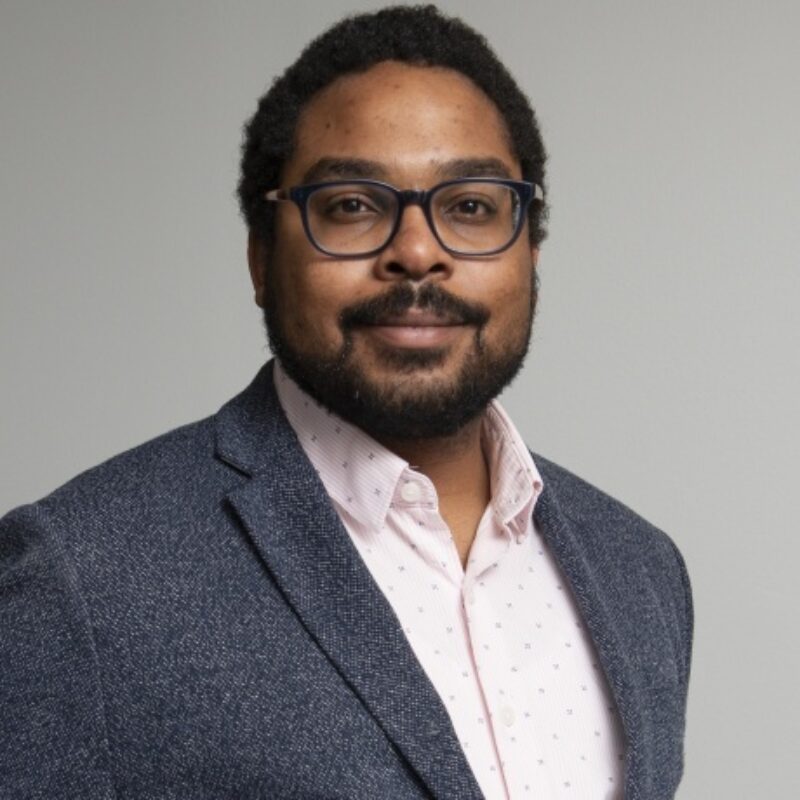
This is the final episode of this season. I was very privileged to have a chance to talk to Dr. Jonathan Jackson, who's the executive director of the Community Access Recruitment and Engagement Research Center at Massachusetts General Hospital and Harvard Medical School. His research institute investigates the impact of diversity and inclusion on the quality of human subjects research and leverages deep community entrenchment to build trust and overcome barriers to clinical trial participation.
Dr. Jackson gave an outstanding podcast [00:01:00] interview in the Serious Epi podcast, and we'll link to that here on the importance of equity and inclusion in the design and delivery of randomized controlled trials. Dr. Jackson also talks a great deal about the best way for institute like his and like yours to engage in the best way, in an equitable way, in a meaningful way with structurally oppressed, racially oppressed groups to participate in clinical research in a meaningful way, and how that impacts not only the external validity of that research, but how that impacts the overall quality of your research program.
This is a fascinating talk and just the tip of the iceberg in terms of what we can do as scientists and what you can do as an emerging scholar in terms of bringing equity inclusion into your own research practice. I hope you enjoy this as much as I did, and we will link to all of the other wonderful interviews and lectures that Dr.
Jackson has given at the end of this episode. Thank you very much for a wonderful season, and I hope you will come back for season two of the Emerging Scholar Podcast. Thank you[00:02:00]
All right. It is my pleasure to introduce Dr. Jonathan Jackson, who gave one of the best talks I think I've seen in 2022, but also probably one of the best podcast interviews I had heard in 2022. Jonathan, it is great to have you here. Could you, uh, maybe introduce yourself and give us some background on who you are and how you got into this space?
Dr. Jackson: Hi, Dr. McGavock. Thank you so much for having me on your podcast. Uh, my name is Jonathan Jackson. I am the executive director of the Community Access Recruitment and Engagement Research Center at Mass General Hospital and Harvard Medical School, and I am involved in the science of, uh, of equity, the science of how we get people involved in research and, uh, who gets to make those decisions.
So this has not always been my main line of research. It-- I started off as kind of a, a garden variety neuroscientist, uh, focused on aspects of white matter integrity and attentional control. But I realized very quickly that although I could understand with, with a really fine [00:03:00] grain what was going on in, in the brains of individuals, I didn't necessarily have that same insight for a, a representative population.
So I decided to kinda turn my attention on mechanisms and theory, uh, and apply it to the problem of equity, uh, which is kind of how we ended up where I am today. Um, excellent. And, uh, I will, I will turn listeners to, uh, a couple of your talks that are available on YouTube or on, on, uh, on different formats, uh, 'cause they are amazing in terms of describing, uh, some of the reasons why we should be getting into this.
Dr. McGavock: Um, if someone were to ask me though, I would've said, uh, we need diverse populations for, um, justice and equity, and I think that would've been my main argument. But, uh, as you so elegantly described it, um, in other podcasts, um, there are significant epidemiological and statistical reasons why. And so maybe you could walk us through some of the different reasons why we should be thinking about, uh, diversity and equity within clinical epidemiology generally.[00:04:00]
Dr. Jackson: Yeah, absolutely. I, I think we are all pretty much in alignment that, that, uh, there are social justice, uh, implications to having a representative or a non-representative population in our scientific studies and in our scientific research. Um, but the reason why I've been so excited and interested in, in my particular work, um, is, is recognizing that there are other reasons why this is important as well.
So when you, when you have, um, a, a population that you sample for your particular study, um, many of us know that there, there needs to be some ability to generalize that. So, um, thinking about the four fundamental validities, this, this is a, a major concept behind external validity. Um, but if you think about the other the other principle factors that underpin causal inference, especially in clinical research, uh, where you have, uh, where you need to be thoughtful about internal validity, statistical conclusion validity, and construct validity, uh, it turns out that having a, a, a population that is not representative, um, [00:05:00] has significant ramifications for those four, for, for all four of the fundamental validities.
So i- in other words, if we don't have a population that reflects the burden or reflects, uh, you know, the, the, the individuals who are most likely to, uh, to be at high risk for whatever it is that we're studying, um, then we may not be able to, to have high confidence in the quality of our science And this is where I think, um, you know, the work that I do is particularly, uh, useful and impactful, which is, y- you know, I think it helps scientists realize that, uh, that having, you know, diversity and equity and inclusion in research is, is not just a, a buzzword since 2020, um, but this is a way of supercharging the quality of our science, um, so that we are better positioned, uh, for, for the kind of scientific theory today.
And I think it also really puts, puts us in a, in a strong position to start thinking about, uh, precision and personalized mechanisms that's gonna empower the next generation of, uh, of, uh, clinical care and clinical research. So this is just a way of, of ensuring that our scientific, uh, [00:06:00] uh, conduct, that our scientific, uh, research has the kind of equity and rigor, um, that we need in order to, to make sure that we're having an impact.
Dr. McGavock: Yeah, that's fantastic. And one of the things about the internal validity concept that you described really nicely is that if we don't have good representation, we may develop the wrong theoretical frameworks for disease mechanisms. Yeah. I think you had a nice example for that, and maybe can you describe, uh, what a lack of representation means in terms of coming to conclusions maybe about mechanisms in the work that you do?
Dr. Jackson: Yes. My home area of research is really focused on, on Alzheimer's disease, which may be kind of the other end of the life spectrum from, uh, many of the people that, that might be listening to this. But I think that the, the lessons are still relevant and, and very similar in lots of ways. So there was a, a really great research paper that came out, I, I guess about three and a half years ago, in, in the Alzheimer's literature, that basically took a deep dive into one of our big data sets, uh, in Alzheimer's [00:07:00] disease, where we had about 6,000 individuals that we've collected all over the United States and Canada.
And, uh, what we realized is that if you look at those data sets and you try to identify and map out, uh, just something as simple as the racial disparity- Uh, in Alzheimer's disease, you ended up coming up with a conclusion that did not match any of the known scientific data. So what we saw in that dataset is that, uh, white individuals were much more likely to develop dementia relative to Black individuals, which is exactly, you know, it's diametrically opposed to everything that we know in, in Alzheimer's research.
And it turns out that the, the reason why you would come to that conclusion in this particular dataset is because the populations were coming from very different groups. They were coming from entirely different categories. So all of the white individuals were, were presenting from a memory clinic. Uh, all of the Black individuals were coming from community settings and churches.
So what you have is you have, uh, populations that truly can't be compared. So it's really a, a matter of, of apples and oranges almost. So this is one of those issues where we think that we are doing the right thing by trying [00:08:00] to be inclusive in terms of our recruitment, but inadvertently we introduce all kinds of unmeasured confoundings that, uh, affect not only our ability to generalize, but also affect, uh, the integrity of things related to internal validity, statistical conclusion validity in particular.
So that's one example. There are so many others that I could potentially highlight. Ultimately, there are these major problems when it comes to diversity and, and while we think of them as primarily a matter of, uh, selection, so you're selecting the right population to be part of your study, it turns out that there are also, um, huge considerations related to measurement, uh, measurement theory and measurement error that are also potentially problematic, uh, if you don't have the right representative sample included in your research from the very beginning.
Dr. McGavock: So lots and lots of problems for us to, to be thinking about more than just, uh, trying to have the, the right color faces, uh, in, in our clinical trials Unfortunately, it, it's just a, a much more complicated set of challenges than that. Yeah, and I think we saw that very clearly in the [00:09:00] early COVID trials where we were looking at, uh, the efficacy of vaccines.
Just in our own, like, small lab-based journal club when we tried to see to what degree does this first trial, the Pfizer trial, represent either our community or the US generally, you could see just huge gaps in who they recruited and what the effects were for different populations. And you kind of described that a little bit in your Trends in Molecular Medicine paper in 2021, but yeah, maybe describe some of the issues that, uh, we ran in, in terms of trying to interpret the data that came out of those early COVID trials, uh, because of that lack of representation.
Dr. Jackson: Uh, yeah. So thinking back to the, the early COVID trials, I remember following along with the, the recruitment, uh, related to those studies in real time, and I think one of the most fascinating talking points early on before they were thinking quite so carefully and quite so granularly about recruitment were the early reports of, of, of what they called diversity, uh, in those studies.
So obviously the, the early COVID trials were truly global efforts. They were recruiting in, in dozens [00:10:00] of countries. Tens and, and hundreds of thousands of participants, uh, were, were ultimately screened for these studies. One of the things that they initially bragged about was how many minorities, that was the term that they used at the time, how many minorities were participating in the study.
And what was interesting is that for these studies, anybody that was not Caucasian or white was considered to be a minority. You don't have to know very much about human populations to understand that globally speaking, Caucasians are a, a racial or ethnic minority. They're only about 16% of the population.
So thinking even in terms of who gets to be a minority and who doesn't get to be one is a really, really fascinating question as you try to extrapolate from, you know, dominant populations in the United States versus the dominant populations globally. From there, there were lots and lots of interesting questions that were not appropriately considered in the COVID trials, and I think that this is gonna be widely and, and well known to most of your audience.
But in addition to thinking about matters of generalization and again, like these principles of, of what is a minority even, there were lots of additional, uh, [00:11:00] challenges such as, uh, who is going to be, uh, likely to want to accept a vaccine? What does that translational approach look like as you move from efficacy research to effectiveness research?
Where do pop-up clinics need to be located? What kind of messaging do you need to do in order to mitigate concerns around trust and, and vaccine hesitancy? But even outside of these things, even moving away from a public health focus, uh, related to the COVID vaccine trial, there is a baseline problem related to efficacy, which is That as those early trials were reported, we simply did not have clarity on whether they worked on populations that are minoritized or marginalized here in the United States.
So for Black and African American populations, we simply did not know. We didn't have the confidence to say that the vaccine worked as well in them as it did in other populations. Uh, if you look at those, you know, the early data, the error bars were still just really, really huge. Even though nominally there was a good amount of diversity in the trials, especially once later recruitment took over in the phase three trials, we still could not say with [00:12:00] confidence that individuals that were at the highest risk received comparable rates of efficacy from the trial.
So whether we're talking about, uh, basic generalization, whether we're talking about the implications of implementation and design, whether we're talking about, um, even basic principles of measurement error in terms of understanding, uh, uh, sort of the, the problems with pulse oximeters early on in the pandemic as well.
We see that a lack of equity and a lack of consideration of inclusive design has, uh, not just singular problems, but layered knock-on effects in terms of understanding what disease pathology looks like, what risk looks like, what treatment looks like, and what recovery looks like for all of these individuals.
So all of that is, I think, a wide range of problems to consider in addition to thinking very broadly about long COVID, which, you know, we haven't even touched on yet. So in, in summary, we, we do have this problem of selection that I think many people recognize. There is just as significant concern when it comes to thinking about implementation and design of our research studies in order to uncover some of these problems, as well as, of course, uh, relating to internal and [00:13:00] construct validity around, uh, the measurement of the problems in the first place.
So, you know, all that said, we have a long way to go before we can really trust the science in a way that really reflects Uh, the burden and the risk, uh, of these different diseases and disorders that we're trying to study. And I think one of the flaws that we run into, and as a, a white individual that, uh, came into this area through a, a different kind of lens, is that we may say- Uh-
"Oh, well, let's aim for proportional representation. Let's try to get a, a sample that reflects the population." But in terms of having an adequate sample size to be able to do some of these analysis to look for effect modifiers or to, um, understand whether or not your treatment's working in a selected population, you can't rely just on proportional representation.
Because in a lot of these trials with low outcome rates, you're probably not gonna have enough of a sample size to analyze those things properly. Yeah, absolutely, and this is why I often push for the term representativeness when it comes to clinical research recruitment, and that's just because aiming [00:14:00] for diversity is really hard to operationalize.
And if you do aim for reflecting the US Census or reflecting the local demographics, you tend to miss out on some of the mechanisms that really might power the pathology of, of exactly what it is that you're trying to study. So instead of aiming for, you know, trying to match, uh, your state or your county's demographic, you should really power for specific mechanisms.
So if there is a group that is at disproportionate risk, they should be disproportionately represented in your research study because not only will you better understand how the disease works in that population, that population being at particular risk might help you understand the mechanics of the disease i- itself.
So this is one of those things where thinking about equity and thinking about inclusion is good for its own sake, but it's even better when it helps you, uh, recognize that it gives you a leg up on understanding some of the subtleties of disease, uh, pathophysiology. You know, like, equitable science is, is rigorous science and then vice versa.
Dr. McGavock: Yes. What I really learned a lot and, and really hit home was the importance of aiming for inclusivity rather than [00:15:00] diversity. So not necessarily- Absolutely ... and so maybe can you expand on that a little bit and, and how your group or other groups have expanded the inclusivity of getting into randomized controlled trials to make sure that the diversity at the end of the trial is close to where you want it to be?
Dr. Jackson: So I, I think there's a couple of points that I would want to make on that front. First, before I forget, I, I wanna recognize that we may be at a point in our evolution of the quality of science that the randomized control trial is one in many tools in terms of understanding how we can have an appreciable effect on the burden and the risk for various diseases and disorders.
But we may need to recognize that RCTs are not necessarily the only gold standard that may be available. We might wanna complement RCT designs with N of 1 design, with pragmatic trial designs in order to understand the full spectrum of efficacy, uh, to effectiveness research. But focusing on RCTs, just to kind of answer your question a little bit more directly, many researchers tend to lump in diversity, equity, and inclusion, or at least, uh, diversity and [00:16:00] inclusion as though it's one blanket term.
But it turns out as you try to extrapolate from a little diversity to a lot of diversity or a little inclusion to a lot of inclusion, you end up kind of introducing a tension between, uh, principles related to diversity, uh, versus, uh, uh, principles related to inclusion. So ultimately at, at its extreme, diversity would mean, you know, having one or having representation of, of one of what you would call every kind.
And, and in terms of every kind, there's not really a clear way of defining that. So you could say, you know, you have some representation of every racial or ethnic group that may be potentially affected or impacted by a particular disease. You might wanna include rurality, you might wanna include gender diversity, you might wanna include educational diversity, you might wanna include global diversity in terms of where people live.
Pretty quickly, you run into this problem of, well, how do I know when I've done enough, uh, in terms of diversity? And the answer is that, uh, you know, you, you've never done enough. There's always going to be a group that will be marginalized or a group that may not be included. And so those [00:17:00] kinds of principles run directly counter to core principles of exchangeability, uh, which really powers causal inference in our science It's not necessarily useful to think about recruitment in terms of just diversity because it's hard to operationalize that.
It's hard to find a stopping rule or a starting rule, uh, in terms of, of achieving recruitment that is diverse in our research. Instead, if you think about principles of inclusion, it's, it's, it's instead of thinking about everyone needs to be into my study, inclusion is really focused on this principle that anyone can be part of a study, and making sure that you have identified and really mitigated, uh, barriers that make it disproportionately hard for certain populations to participate.
So here, instead of worrying about, uh, whether you have enough brown faces in your research or whether you have adequately, um, uh, included individuals who are unhoused, you have really taken a look at, at different populations that may have disproportionate kinds of barriers from participation and working on really eradicating those from your research [00:18:00] design.
So that way, no matter what the diversity ultimately looks like in your study, you can feel reasonably confident that you have created a, a truly inclusive design so that you can, I think, much more confidently, uh, apply basic causal inference theory, which again, is really powered on the basis of exchangeability, which is, uh, you know, any individual in your study could be swapped out with any other eligible individual, and you'd find the same result.
Uh, with the, with our current, uh, focus on diversity, um, rather than inclusion, we can't necessarily trust that. And even before we cared about, uh, these principles of diversity, we couldn't necessarily trust that Those principles of exchangeability. Uh, with the focus on inclusive design, uh, you can really trust that much more than you can than with these relatively short-sighted efforts to focus on diversity, and certainly, uh, in the years before that.
So there's, uh, again, a lot that we need to focus on, a lot that we need to think about. But if I could offer one piece of advice, really to focus on inclusion rather than diversity, because that will, that will take you, guys, much, much further, uh, than thinking, uh, in these short-sighted terms about [00:19:00] whatever diversity means for you or for your group.
Dr. McGavock: That's excellent. And one thing that, um, I think really hit home with me was the importance of having an inclusive framework for who joins your research team when you're designing your study at the outset. And within the research institute that you're leading right now- Mm-hmm ... um, you've done some-- you've taken some incredible participatory approaches to formulate your team, bring together a diverse group of community members, I guess, to understand what are the barriers to inclusivity.
And the other thing that I found really important was this ability of a team to move away from this bias that participants of color, like whether it's indigenous participants in Canada or Black participants, uh, potential participants in the US, they're distrustful of the institutions, and that it's the fault of the individual, and that we have to just convince the individual that somehow it's their fault for not trusting us, versus we need to create- Yeah a trustful environment for them to come in and say, "Oh, yeah, I believe these people who are doing this research." So what have you done within [00:20:00] your own research institute to try to improve that trustworthiness of the institution that's doing the science, but also the inclusivity of the people doing the work?
Dr. Jackson: So my team at the CARE Research Center has really focused on, you know, a couple of things that I think have made a huge difference in terms of our ability to engage and recruit representative populations in, in research studies. I would say the first thing that we do is, um... this is gonna probably sound a little counterintuitive to, to many of your listeners, but the first thing that we do is we kind of chuck out this idea of trust, because trust is hard to win, and it's easily lost.
Trust is non-transferable, as many of us who have done clinical research studies have seen, where even if you're not recruiting a marginalized population, if you've got a really charismatic, uh, research coordinator or research assistant on your team, and then that superstar, she goes off to medical school, then recruitment that you're-- for your study collapses because they know that person, but they don't know anyone else on the study team.
That's a really, really clear case of trust not being particularly transferable. And so because trust is such a fragile and brittle concept, you know, because we as researchers [00:21:00] often operate from this perspective- That we are entitled to trust rather than being trustworthy. Um, in many of my research center studies, we don't really think a lot about trust except as a secondary outcome.
What we focus on instead is basic principles of empowerment. And the reason why is because if you empower a, a class of individuals or even a small number of individuals with respect to clinical research, then they don't need to trust you because they can engage with you on equal terms, and they can also choose not to engage with you on equal terms.
They can opt in and opt out according to their own whim and according to their own set of priorities. And what we've found is that this thinking about empowerment rather than trust is a much more sustainable way, uh, of trying to engage and encourage the pr- the participation of marginalized and minoritized individuals from all stripes, from all over in lots and lots of different ways.
And so what's great about thinking about empowerment is that you can use empowerment tools to encourage a recruitment into a study or even partnership on a study or even, you know, uh, you can also use that to spur on community-led [00:22:00] research. So there's lots and lots of advantages to thinking about empowerment over principles of trust.
So let me give you just a couple of examples. So a researcher in my center decided to build a, an entire theory of change framework around principles of, of building empowerment within the Black community here in Boston. And what she found over a period of a year is that by building literacy in terms of what research is and what healthcare looks like, she was able to build this very detailed logic model with an evaluation component that really showed this community of Black stakeholders exactly how to engage with researchers.
So it wasn't just engaging as part of a community advisory board, but really leveraging community principles of how to define priorities, how to optimize engagement, under what terms engagement was acceptable, and most importantly, uh, how to approach this particular community in terms of well-defined, specified tactics for successful and, and sustainable recruitment.
What we were able to do is that over the period of a year, we actually created a [00:23:00] very detailed blueprint that is generalizable. So it will work for a study on Alzheimer's disease, it'll work on a study for pediatric cancer, it'll work on a study for cardiology. What's great is it's relatively flexible, it's domain general, and we've actually been able to apply it to studies that are running in community health centers, studies that are running in our large academic medical center.
We've used it for our studies on Alzheimer's disease and Parkinson's. What's great is it not only worked once, it keeps working over time, and the best part about it is that it is community-owned and self-sustaining. So we don't have to continually inject money into it. We don't have to reinvent the wheel.
We did this process once. We put in kind of the time and the effort, and it's paying dividends that serves the community of Black individuals, but it also serves a huge wide variety of researchers from all over the translational spectrum for a number of disease areas. Really remarkable is that we have asked very nominally about principles of trust.
Instead, we have focused on building power and building capacity In this community, and it, it has been a, a really transformative effort. So that said, [00:24:00] there are lots of other examples that I could potentially highlight, but again, it really comes to recognizing for any particular study that there are multiple stakeholders that need to be approached and engaged.
And then obviously the more that you can empower that diverse set of stakeholders, so it's not just about researchers and patients, but any sort of intermediaries. So whether we're talking about faith leaders, referring clinicians or physicians, study staff, you know, even nurses that may be providing clinical care, and recognizing that all of these are potential gatekeepers.
Ensuring that there is-- there's some value add for them, ensuring that they are fully empowered to participate is the easiest way to ensure that you get the diversity and representativeness that you're looking for in your study. Uh, we have demonstrated this across a wide variety of sectors. It's pretty easy to do.
Dr. McGavock: It just takes a little bit more planning than we're used to. I would love to see that logic model and that framework- Yeah, absolutely ... of empowerment. Um, can you maybe talk about at what levels was the empowerment most important in terms of overall functioning of that logic model? So was it at the level of the participant?
Dr. Jackson: Was it at the level of [00:25:00] the community champion or certain community stakeholders? Where did people feel like leveraging empowerment, uh, had its biggest effect? Yeah. So, so it, it, it's hard. It's, it's hard to do because it's not a typical part of our research design process. But it turns out that empowerment for different stakeholders is really important at different times.
So if you are trying to empower, say, faith leaders around your study, um, it turns out that that's important when it comes to generating awareness about a particular study. If you're going to be empowering referring clinicians, that's super important when it comes to aspects of direct recruitment and enrollment.
It's also really important when it comes to long-term retention for a study. So it, it really depends what part of the study that you're really thinking about and what part of the study is potentially your bottleneck in terms of, of being able to com- So when you empower different stakeholder groups, if you can empower everybody, uh, then your study runs really, really smoothly.
But focusing particularly on where the bottleneck might be occurring, whether it's in raising awareness, whether it's aging [00:26:00] in your population- Mm-hmm ... whether it's in facilitating re- you know, direct recruitment, maybe it's in the kind of reviewing your screening criteria and making sure that it makes sense for a particular population, or even thinking more carefully about long-term retention, uh, if you've got a longitudinal design or a cohort study that you're trying to run.
You know, empowerment of individuals at different a- um, really improves the different kinds of capacities for your research study. Obviously, if you can em- empower, um, participants, it turns out that that doesn't necessarily help you when it comes to first advertising a study. It does help when it comes to engaging a study and, and really en- engaging participants and retaining them for the long term.
So I think we are all sort of incentivized to think about empowerment, um, directly from this perspective of the people who are participating in our study. The more broadly we can think about that, uh, the easier it is to try to strive for raising awareness and building engagement at the early parts of a, of a kind of design and implementation of a particular study protocol.
So turns out that there's no silver bullet. There's no, like, one group that you need to make sure is, is fully empowered. The more that you work on this, the more thoughtfully you [00:27:00] can consider this. The more broadly you conceive and construe of empowerment, the more likely you are to be practicing, you know, long-term sustainability, uh, processes that will make individual protocols as well as clusters of protocols much smoother and much easier to complete enrollment for.
Dr. McGavock: That is fantastic, and I agree that it's no- not a one-size-fits-all This last question or comment, uh, comes from my experience when I was at UT Southwestern in Dallas and watching, uh, the Dallas, uh, Barbershop Hypertension Control Study. Are- you f- uh, are you familiar with that clinical trial? Yeah. I, I think many researchers, uh, know, know of the Barbershop Study and/or have potentially tried to replicate it in their own studies.
Dr. Jackson: So I, I think this is a very well-known, uh, phenomenon. And so I... Yeah, I'd love to hear more, um, about your impressions of that study. But when the study was just coming out, I think the original idea was coming out of a researcher, and it was, you know, clinician-led. All of these really strict criteria that, uh, the clinician felt like were really important or the clinical team felt was really [00:28:00] important- Mm-hmm
Dr. McGavock: when they tried to implement it, there were research coordinators, there were sort of community liaison people that were ch- engaging with the barbershop, and then there were the barbers who were kind of the main power holders, right, in, in terms of the trial. And for me, what I saw was not necessarily empowerment, but it was creating the space and just reducing the power inequities, right, in terms of the decision-making at every level, and trusting the lived experience of people who are in community and just saying, "Okay."
Rather than saying, "Let's empower individuals," let's just let go a little bit here and create some space so that we can take this information and bring it into the trial and make it work. Um, so it was almost like a disempowerment of the, of the institution that was the critical thing in terms of getting it off the ground.
Dr. Jackson: Yeah. And so actually I, I, I think that is a really great example of what empowerment actually looks like. So, so empowerment is, is not necessarily the same as capacity building. Sometimes empowerment is really just this phenomenon of passing the microphone, of [00:29:00] recognizing where the locus of power is and facilitating that, uh, to kind of do its own thing.
In the case of Barbershop Study, there was a, I think an important recognition that the barbers themselves were kind of running this space that was not really well-facilitated, um, to have thoughtful conversations around health and, and wellness. And so, you know, that is a classic example of recognizing where the power is and just designing the study around that.
And in order for that to be successful, principal investigators and, and even health systems need to give up some of their power in order to facilitate a kind of a flexible design for something along those lines. But I think that the, the, the bigger picture though is that is recognizing that in the case of the Barbershop Study, uh, this is a really, really successful intervention.
I guarantee you that there have been a dozen attempts to replicate it in different cities around different disease areas that have all failed, um, spectacularly. And, and many of these individuals may not have centered the power [00:30:00] structure in the same way that, uh, that was done in Dallas. However, even if they did, there is an important con- you know, set of considerations to recognize, which is to say that the power dynamics in Dallas and in Dallas area barbershops May not be the same as they are in Los Angeles, even if you're still dealing with a Black and African community.
Um, it may not be the same in Boston or Toronto. We have to recognize that some of the reasons why these things work is because an intervention is, is bespoke, that is fully customized and tailored to reflect the, kind of the social graph, the multiplicity of social networks, um, that are, um, operating in a very complex way within a particular environment.
So w- without a clear science of, of how that social graph is operating and how it recognizes and reinforces different kinds of power structures, uh, we don't necessarily, uh, fully understand the mechanics Or why something like the Dallas Barbershop Study was so effective. Uh, we know that it was effective.
We have maybe some hints [00:31:00] o- of the things that were particularly effective for that particular design, but maybe it was the disease area, maybe it was the way it was structured, maybe it was something about the PIs, maybe it was something about the faith leaders who were potentially involved, um, even peripherally on the side.
Right. Um, but ultimately the onus of the- is, is on us as scientists to really understand a very, very precise, uh, data elements and mechanisms, uh, that drive success, uh, for something along those lines. We can't just sort of adopt it wholesale and hope that it translates to other communities, to other populations, to other disease areas, uh, without much more careful consideration of why it worked.
So I would say, you know, there are great examples of this. You know, there are really cool examples of leveraging, uh, rideshare services like Uber or Lyft to, to have conversations around health as well. But we don't yet fully know why they work so well. Uh, we have some theories, but until we can come up with, like, a true comparative effectiveness platform around the science of engagement and recruitment, especially for marginalized populations, it's still going to be just a little bit of a black box for us.
Dr. McGavock: Right. So [00:32:00] the, the scalability wasn't necessarily there, and there's lots to learn about, uh, what true empowerment and, uh, institutional disempowerment kind of looks like, or institutional equity I guess looks like. Yeah. Um, okay, that's fantastic. And I think we're close to wrapping up. Is there anything that I missed or any resources that you'd like to point residents towards who are getting into this space and are really interested in incorporating it into their own research?
Dr. Jackson: I think the last thing I wanted to sort of say is, is that oftentimes when I, um, speak to individuals, I, I do free consultations. People are welcome to look me up and I'm, I'm happy to help. But usually people are just looking, uh, uh, quick answers when it comes to trying to squeeze equity within their current designs, whether they are looking to try to improve community engagement, uh, community-based participatory research, uh, diversified recruitment.
Th- there's this sentiment, I think, among many researchers and maybe even the public that there is a right way. There is, there is, like, one or two correct ways to get this right. But what I think people need to recognize [00:33:00] is that this is going to evolve in the same way that any other scientific discipline, uh, evolves, in that there may be a common set of best practices, you know, commonly identified mistakes to avoid, but ultimately that this is going to grow and change and what may be best practice, you know, what might be a, like, a hot area of research that, that we're all converging upon, it may flicker and fade.
You know, there might be something that's really hot in 2023 that doesn't work at all in 2033 and vice versa. Um, and so I- I think that we need to become collectively much more comfortable with embracing this as a science rather than as a social aspiration. Mm. Uh, which means that it will be operationalized, it will evolve, there will be mechanics, and there will be ways of, you know, ultimately trying to compare, figure out, um, best practices.
I- if we can all become just, like, a, just a little bit more vulnerable and comfortable with that principle, then I think it'll make it much easier to kind of take root and start to center some of these data principles, uh, in our own research design. [00:34:00] That's excellent, and it may be a huge opportunity for up-and-coming researchers to build the science in this space.
Absolutely. Absolutely. I, I think that, uh, that's, that's actually something that I'm working on now, is that I think that there will be... Uh, this is, this is ultimately, like, a frontier science. Uh, and I think that there are, are names, uh, to be made and prizes to be won, uh, for the next generation of scholars to start to map out this area for the rest of us.
Maybe, uh, your shop in Boston is a great place for someone to explore a fellowship and, uh, and explore their own interests in, in this space. Yeah. Absolutely. We're, we're always looking for graduate students and post-docs, uh, and even faculty members who are interested in and looking for this. Um, so, so please look me up, Jonathan Jackson at the CARE Research Center.
Dr. McGavock: Would love to talk with any of you, um, who might be interested in, in pursuing this further. And we'll put links to your most recent papers and your, uh, your research center's webpage, and anything else that you think we should put on there. Just send it our way and we'll have it, uh, attached to this podcast.
So thank you very much, uh- Oh, of course. Thank you ... Dr. Jackson. That [00:35:00] was fantastic. Um, it was a pleasure, uh, finally getting to talk to you and, uh, and go into this a little more deeply. And, um, I look forward to, uh, running into you in the future and, uh, seeing where your research institute and, uh, where your work goes.
Dr. Jackson: Yeah. Thank you so much, Dr. McGavock. This was a pleasure. I, I, I'm sorry that we have missed each other so many times over the last few months, but, you know, here's hoping that we can finally, uh, make that connection happen. Thank you so much, Jon. All right. Take care. That was our conversation with Dr. Jonathan Jackson on equity and inclusion in the design and delivery of randomized control trials and other clinical epidemiological studies.
Dr. McGavock: An extremely thought-provoking conversation and a great way for us to conclude season one of "The Emerging Scholar" podcast. Stay tuned for season two coming in 2025, where we'll talk about different trial designs and a deeper dive on different methods in qualitative and quantitative research that will help you advance your research career.
In the meantime, spread the great knowledge you've acquired here and tell your [00:36:00] friends and colleagues about us and about this new and exciting podcast. Thanks for listening. See you in season two. "The Emerging Scholar" podcast was recorded in the UMFM studios located at the University of Manitoba in Winnipeg, Manitoba, Canada.
This is Treaty 1 territory, the original homeland of the Anishinaabe, the Ininew, and on the national homeland of the Red River Métis. Manitoba is also homeland to the Anishininew, the Dakota Oyate, and the Dene peoples. We acknowledge that our water is sourced from Shoal Lake 40 First Nation. As a settler scientist working in health research, I acknowledge TRC Call to Action number 18 that health inequities between Indigenous and non-Indigenous people are the direct result of colonization.
Winnipeg is the center for reconciliation in Canada, and where we are speaking from today is at the crossroads of Canada's history and Canada's future. We are three kilometers away from one of the most sacred meeting grounds for Indigenous people on the plains and within Turtle [00:37:00] Island. We are also several kilometers away from one of the last residential schools in the province.
We are working collectively on reconcili-action with youth, elders, and community leaders to heal from the trauma of colonization, past and present, honor the original treaties, and create a Canada that addresses and eliminates the inequities and injustices of the past and present to create a future for Indigenous children to live and thrive.
On behalf of the team at "The Emerging Scholar" podcast, we want to thank Osani Balkaran for the great production for our opening and closing themes. We also want to thank UMFM 101.5, especially co-producer Jared McKetiak for technical assistance and production on this project. We also want to thank all of our guests for the discussion and the insight that they've provided.
Once again, thank you for listening. Be sure to subscribe to "The Emerging Scholar" podcast on Apple Podcasts, Spotify, and [00:38:00] umfm.com.