Descriptive Epidemiology with Dr. Matthew Fox
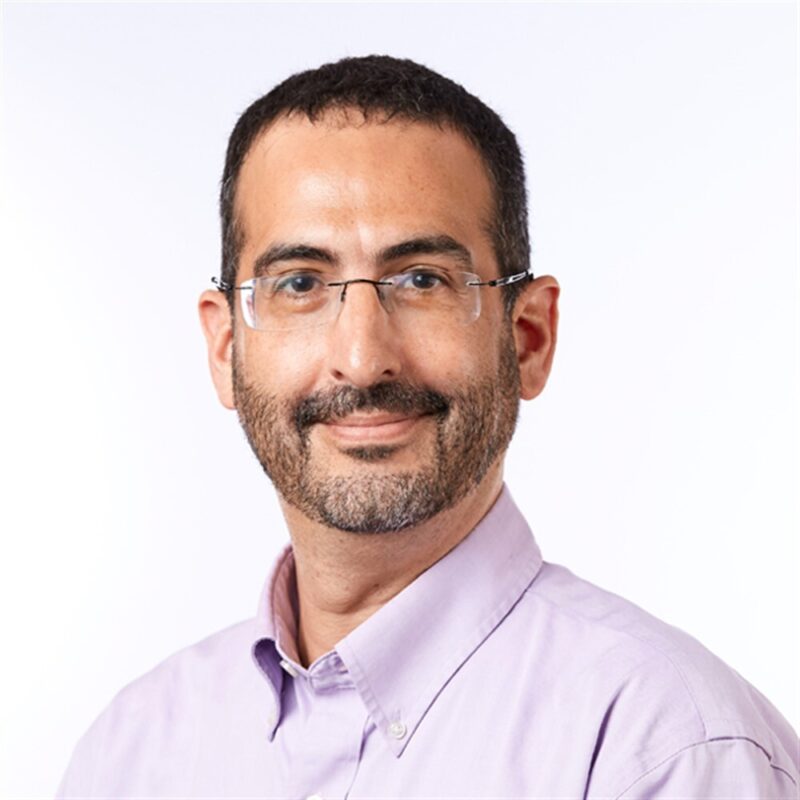
Dr. Matthew Fox
Professor, Departments of Epidemiology and Global Health, Boston University
In this episode
00:00 Welcome and introduction 02:00 Why descriptive epidemiology matters 04:00 Defining descriptive epidemiology 06:30 Framing a descriptive question 12:30 One variable, three kinds of question 17:30 Why adjusting can erase real differences 19:30 Building a theoretical framework 25:30 Race, stratification and history 31:00 When description should lead to action 35:00 Selection and information bias 45:30 Final advice
Select a timestamp to play the episode from that point.
Dr. McGavock: [00:00:00] Welcome to the Emerging Scholar Podcast Season 1. We hope you enjoy this series of great conversations with leading medical researchers that's designed for graduate students, medical trainees, residents, and fellows to help you on your journey towards your first scientific project. Welcome everyone to episode seven of the Emerging Scholar Podcast. Today we are talking with Dr. Matt Fox, a professor in the departments of epidemiology and global health at Boston University. His research interests include the treatment outcomes in HIV treatment programs, infectious disease epidemiology, and in epidemiologic methods.
Dr. Fox is also the co-host of one of my favorite podcasts, the Serious Epi Podcast, with one of our previous interviewees, Dr. Hailey Banack. And the reason we brought Matt in today is because of a paper that he published back in 2022 with, [00:01:00] uh, Jess Edwards and Katie Lesko on a framework for descriptive epidemiology.
The next three episodes are gonna focus on an introduction to three different types of epidemiological designs that you may want to consider for your first scientific project. The paper that Dr. Fox and I are gonna talk about today gives you the lay of the land for how to get started on a descriptive epi project, what it can do, what it can't, and the things that you'd consider for doing descriptive epi in a very good way.
This was new information for me and someone who hasn't done descriptive epi bef- before, uh, really got me excited about the topic and led to a few research projects in my own lab, uh, that focused on, uh, describing trends in, in various conditions, uh, across different populations. And so, uh, I was grateful actually for this interview because it really shaped the way that I went.
I hope you enjoy this as much as I did.
Okay. Uh, welcome everyone to the, uh, next edition of, uh, the Emerging Scholar. It's my pleasure to introduce Dr. Matt Fox from [00:02:00] Boston University. Um, and I'll hand it over to you, Matt, to describe, uh, who you are. And, uh, today we're gonna talk about concept of descriptive epi, so maybe also add in, uh, what brought you to this and, and why are you interested in increasing our knowledge and our use of descriptive epidemiology.
Dr. Fox: Yeah. So, uh, I'm from Boston University, as you said. I am a Boston University lifer, it seems. So I was... Did my graduate training and PhD there. Uh, and I work largely in the field of HIV and, uh, epidemiologic methods. Do... You know, I do a lot of work that would definitely not be in the realm of descriptive epidemiology, so I do a fair bit of work that is causal inference type epidemiology, and I do most of my teaching around causal inference epi.
And in the process of doing that, I started to recognize that a lot of the work that I do is causal epi, but I certainly have done a number of descriptive epi papers. And what I started to notice was a lot of the descriptive epi work that I was doing turned out to be [00:03:00] much more important in influencing policy and having a real impact on what was happening than a lot of the causal work that we were doing.
And it made me start to realize that actually descriptive epidemiology is really important. And if I didn't think that before, COVID really kind of drove that home. So if you think about, other than the trial work around the vaccines and a lot of the evaluations of some of the policy changes, descriptive epidemiology was what really saved lives.
Being able to identify where COVID was happening, where resources were needed, where we could target it, where we could target interventions, and that was just critical And it suddenly, you know, started to occur to me that we don't always give descriptive epidemiology its due. I mean, we kind of think of it as something that you just kind of put together your table one in your paper and you're done.
You know, it's more complex than that. It really felt like we needed to spend some more time focusing on descriptive epi.
Dr. McGavock: Mm-hmm. Or it's, uh, paragraph one in a book chapter, and we just say the governments do this, right?
Dr. Fox: The, it's like the first lecture in your epi methods, and then you never come [00:04:00] back to it.
Dr. McGavock: So we're gonna maybe go through this great paper that, uh, you wrote with some co-authors, which maybe you can acknowledge in a minute, last year in the American Journal of Epi. And you start off by saying there is no definition for descriptive epidemiology. But in your mind, if you were gonna teach it, how would you describe what descriptive epidemiology is?
Dr. Fox: So just to acknowledge that my, my co-authors who, you know, I, I was the first author in that paper, but I will fully acknowledge that, um, a lot of the ideas, and probably most of them, came from them. It was, uh, Shanita Sealy-Jefferson, Ellie Murray, and Katie Lesko. And then there was a second paper that we did that Katie Lesko is the lead on with, with Jess Edwards, and that one is also worth a read.
Descriptive epidemiology, I, I, I don't know that, you know, having a precise definition is probably critical, but when I think of descriptive epidemiology, I think of describing states of health or states of disease, depending on how you wanna think about it, in terms of key variables that we can use to identify populations at highest risk.
So typically, we think of [00:05:00] person, place, and time, but person obviously has lots of ways that we could characterize that in terms of age, sex, race, you know, characteristics that are critical for identifying where we wanna target resources. So really anything that we can do to accurately describe where disease is occurring, or if we're talking about infectious diseases, where transmission is occurring in terms of person, place, and time.
Dr. McGavock: Okay. So I thought maybe we'd go through, like, an example here. For this podcast, we're gonna talk about three, I guess, classifications of epidemiology. So we'd have descriptive epi, predictive epi, and then causal epi. Are you okay with those three compartments?
Dr. Fox: I'm very okay with that, and in fact, I always think it's interesting that if you read a lot of textbooks, the definition of epidemiology typically focuses on descriptive and causal, and really doesn't actually include predictive at all.
So typically, you know, the definitions are distribution and determinants of diseases in human populations. Distribution is really descriptive, determinants is causal, but predictive actually kind of gets left out. [00:06:00]
Dr. McGavock: Well, we're gonna do a podcast with Laura Rosella on predictive epi, as, uh, she's one of the experts in that area, and I think AI may change the way that the textbooks are written about predictive epi.
Would you agree?
Dr. Fox: I'm not comfortable talking about AI because I fear that anything I say will be used against me when the bots take over. I don't want to say anything.
Dr. McGavock: All right. Well, let's throw an example here about, uh, in the broad area that I'm kind of interested in, which would be around poverty or socioeconomic status-
Dr. Fox: Mm-hmm
Dr. McGavock: and type 2 diabetes around adolescents. So a descriptive question may be what is the distribution of income between adolescents living with type 2 diabetes in Canada compared to adolescents not living with type 2 diabetes? Is that a fair question within a, a descriptive epi context, or how would you reframe it?
Dr. Fox: Yeah, no, it certainly would be, although, you know, much in the way that we tend to think of causal questions in terms of exposure first and then [00:07:00] outcome second, the outcome being the consequence of the exposure. To me, it makes more sense to frame questions in terms of the distribution factor first. So thinking really more in terms of what is the distribution of diabetes by socioeconomic status, to me, you know, is a, is a way to think about it because ultimately I think the goal is to then use socioeconomic status to identify ways we can target resources towards those in most need if we find that those with lower or higher socioeconomic status have different or more burden of disease.
So I would typically do it that way, but I don't see the way that you framed it as being incorrect. I just think probably a little bit easier to analogize to things that I think people are more used to when they think about, you know, causal questions.
Dr. McGavock: Okay. So I think what I did is I tried to frame the distribution of the exposure, but you're saying the distribution of the outcome is an easier way to, to go.
Dr. Fox: Yeah. Again, I, I don't think there's anything wrong with the way you framed it. I think it's more about i- if the ultimate goal of, of descriptive epidemiology [00:08:00] is to give us information that allows us to take action to improve the lives of, you know, people with different health states, then ultimately we want to know, you know, what is the distribution of that outcome within levels of some other factor that identifies where we can target resources to improve the situation.
Dr. McGavock: Right. And so instead of jumping right to does poverty cause diabetes?
Dr. Fox: Well, exactly. And, and, you know, descriptive epidemiology can be used in a number of different ways. So it can be used to start to think about causes. If we see that, you know, socioeconomic status is associated with diabetes, not, not causally yet, we haven't, you know, done any adjustment, but we just descriptively notice that, then we might just start to generate hypotheses about, you know, the causes of diabetes and, and why it is related to socioeconomic status.
But we don't have to. If we have interventions that we know are effective at preventing [00:09:00] diabetes or treating diabetes, then just knowing that diabetes differs by socioeconomic status allows us to say, okay, we can now shift resources in whatever that intervention we have to those who are in most need, and we can identify them by their characteristics.
Dr. McGavock: Now, I would also argue, and I'd love to hear your thoughts on this, that it may also inform how we design our prevention or our treatment strategies if we know that the variation in diabetes is different across socioeconomic classes.
Dr. Fox: So can you, can you say a little bit more? So how, in that, in that example, how would might we design the interventions differently?
Dr. McGavock: Well, let's say we're going to educate children at risk for diabetes to make better choices around food and to spend more of their time engaging in physical activity. Would be sort of a common Western approach, right? Versus our prevention strategy must acknowledge that there are structural factors that are influencing adolescents [00:10:00] living with diabetes, and that should maybe be incorporated in our framework for how we would prevent or treat diabetes.
Dr. Fox: Absolutely. Yeah. So we could use the information about the distribution to tell us about ways in which we think the interventions that we would need to be tailored to the populations that we think are in most need. And if you think about it in terms of causal inference, I think really effectively what we're saying is that the intervention that we would target, probably the effect varies by the same factors that we're using to describe the population.
And so absolutely, we would want to target resources to the populations in most need, but we'd want to target those resources in a way that they are most likely to be effective.
Dr. McGavock: Mm-hmm. For that target population.
Dr. Fox: Yeah.
Dr. McGavock: Right. So I think the first step was asking the right question, but before we do that, I just wanted to build on what you just said.
You don't necessarily have to jump from descriptive epi to causal epi, but one of the values of causal epi might be to actually help [00:11:00] inform your causal framework. And if you can identify using a good question, some things that will inform that causal framework if done the right way, it can really enhance that causal question or that causal study down the road.
Would you agree?
Dr. Fox: I would absolutely agree. And I, I would emphasize the point that you made first, which is we don't have to go from descriptive to causal. We could stop at descriptive if we had effective interventions already and we were using the descriptive to identify. But you're absolutely right that we could use the descriptive also to move in towards a causal framework, and having good descriptive information is going to help us ask good questions and target that causal inference question in a way that makes the most sense.
Dr. McGavock: Actually, yeah, if we wanted to just stop there and say we have this question, we think that, uh, the distribution of diabetes is different in a lower socioeconomic class than a higher socioeconomic class, that by itself is important because that [00:12:00] could inform a whole, uh, whack of public health messaging and public health resources.
And then I think about, well, then we could start asking questions about minimum income, and does minimum income have something to do with or have the potential impact on diabetes prevention or diabetes treatment rather than jumping right some of the other common causes or common prevention strategies that we invest in.
Dr. Fox: Yeah. No, I think that's absolutely right. So I mean, I suppose to back up a little bit. I mean, you mentioned asking a good question. I think, you know, descriptive epidemiology often part of the problem is we often default to descriptive epidemiology when we want to do something causal, but we feel like we can't get all the way there, so we just sort of back up and, and call it descriptive when in fact it probably really isn't descriptive because we've done enough manipulation of the data that it really isn't describing anything real.
So the key thing with a descriptive epidemiology is to start with a clear question. What is it that you want to accomplish with this research? What is the [00:13:00] population that you want to describe and, and the outcome you want to describe in terms of person, place, and time? And then set out a set of methods to answer that question.
The way I like to think about it is, you know, is to get back to your point is, so the example that you often hear in, in epidemiology is, you know, you could find a bunch of people and ask them if they carried a, a lighter in their pocket. And you could use that, that information in a number of different ways.
So you could say, "Based on having a lighter in your pocket, I am gonna target resources towards people who have lighters in their pocket for, uh, our smoking cessation campaigns." Right? I'm just gonna use it as a marker of somebody who is likely to be a smoker. I don't think that carrying a, a lighter is a cause of lung cancer, but I-- it's related to smoking, and therefore I can use it as a way to target my resources and describe a population.
I could also think about a causal question, you know, what is the effect of carrying a lighter in your pocket on the risk of developing lung cancer? If I did a really good study, I would collect [00:14:00] information also on smoking, and adjust for smoking, and I'd find it does nothing. Carrying a, you know, lighter isn't, isn't harmful at all.
And then finally, I could do a predictive, you know, analysis. I could use the information on having a lighter to predict who is likely to develop lung cancer in the future. So I can use the same piece of information in three different ways. But if my goal is ultimately a descriptive question, then the methods that I use have to be very different than the methods I use for a predictive or a causal question.
Dr. McGavock: Right. And in, in one of your podcasts, uh, someone mentioned the most, uh, ubiquitous bias is asking the wrong question.
Dr. Fox: Yeah, I think that would have been, uh, Daniel Westreich, who's I think has very rightly has a, a strong focus on that. I do think if you read a lot of the epidemiologic literature, it is unclear which of those three categories the study is attempting to be.
And I find this is common with students. They do an analysis first, and then you say, "Okay, what's the question?" And, you know, in their thinking, they, they, they think it's a, it's a clear [00:15:00] question, but when you actually ask them to describe it, it's less clear. And so starting with the question is always really important because that helps you, A, define what the methods are, but B, it helps you define whether or not it's an important question that's worth putting resources into answering in the first place.
Dr. McGavock: So to give a trainee kind of a framework for asking a good question, would you start with like a PICO model or how would you start the process or the back and forth about honing in on the right question?
Dr. Fox: Uh, it's a good question because it, it, you know, I don't know that I have a specific framework for that so much as I think the first thing to do is figure out which of those three categories you want to be in, right?
So people typically know what, you know, disease or exposure they're interested in studying Right? And they're often, they often know both. So then the question becomes, what is the question that you want to answer related to that exposure and outcome? Is it you just want to be able to identify where the outcome is occurring using [00:16:00] the exposure as information?
Well, then you're probably in the descriptive world. Do you want to be able to use it to predict what's gonna happen in the future? Then you're in the predictive world. And if, do you want to identify whether or not that exposure is causing that outcome, then you're in the causal world. And the methods for those three approaches are all very different.
So identifying the, the question before deciding on the methods is always critical.
Dr. McGavock: Yeah. And actually, I'm just thinking about some of the resources we give to trainees, and that, that should be the first question.
Dr. Fox: I think so much of the reason that we don't do things clearly in epidemiology has absolutely to do with the way in which we train people.
We don't really spend... I- if we're teaching epidemiology well, we do spend time telling students that you've got to ask a good question, but we don't spend a lot of time in teaching them how to ask a good question, the distinction between the types of questions. And even to the extent that we do, it's, you know, one part of one session, and then we move on, and we spend most of our time focused on the methods.
Well, that sends the very clear message to students that [00:17:00] methods are what matters. Methods do matter, but if you don't have a good question, no amount of fancy methods is gonna get you a good answer.
Dr. McGavock: Yeah. Or I think as you've said, you dive into the methods, you get an answer. The answer is actually not the answer to the question you were asking.
Dr. Fox: Exactly. We ca- have, have data, can do analysis. What's the question- Right ... is the way, you know, we, we, we would frame that, is, you know, if you jump right into an a- doing an analysis You often don't know what the question is, and then when you get the results, it's unclear what those results mean. To relate that back to sort of the, the, the area in between descriptive and, and causal, I find that people, epidemiologists in general, will often do an analysis, realize thinking that they probably wanna do something causal, recognize they probably don't have some critical confounder information to be able to adjust for, so they'll say, "Okay.
Well, we'll just call this descriptive." But the problem with that is when you're doing descriptive [00:18:00] epidemiology, you don't want to adjust for things unless you have a very clear rationale for why you're adjusting. If the goal is to be able to identify where to target resources, then if I adjust my analysis, so go to your example, we're interested in using socioeconomic status to identify diabetes.
If I adjust for age, then I'm really now in the world of a population that doesn't really exist in the real world. It's a, an adjusted population that is allowing me to make comparisons, but I may be removing part of what makes socioeconomic status useful for identifying where to target resources, and I'll get the wrong answer.
So really thinking through, you know, what's my goal helps me identify the methods to help me get a good answer.
Dr. McGavock: Mm-hmm, or race, like if you adjusted for race, for example.
Dr. Fox: I think race is a really important one. I think we often, uh, adjust away differences either if we're looking at race as the variable we're using as the descriptor Or if we're [00:19:00] using something else and we adjust for race, we are adjusting away some of the effect, and then we end up missing the information that would lead us to develop causal hypotheses or to accurately target resources.
We essentially explain away things that are real differences in the real world that we actually should be paying attention to and using as our motivation to take action.
Dr. McGavock: Exactly. Building on that, the other concept you, um, highlight in this paper is the importance of creating a theoretical framework around your question, which that and the inclusion of, I would call it, some more social epi constructs in your theory were two of the things that I was really excited to hear and that I hadn't thought of before.
When you say create a theoretical framework or a model for your descriptive question, can you explain what you mean and maybe walk us through what are some of the variables or what are some of the ways that you would create that framework?
Dr. Fox: Yeah. So having a theoretical framework I think is essential for [00:20:00] all epidemiology.
I mean, I think that theory is something that we spend very little time on in epidemiology. We focus on methods, and we do that at the expense of really thinking through the theoretical constructs that would lead us to ever believe there should be an uneven distribution of out- or reasons why an exposure should have a causal effect.
Now let me be clear. I mean, we can do analyses with no theoretical framework underpinning them, get the right answer, and have no understanding of why our exposure causes our outcome or for descriptive why the outcome is unevenly distributed across populations and still get really useful information.
But given that we live in the real world where we know we have lots of biases, we've got sample size limitations that lead us to random error problems, we can be easily fooled into thinking there are relationships that aren't actually either causal or accurate measurements of the differences in distributions of outcomes across [00:21:00] populations.
And so that's where having a, a theoretical framework that predicts what we think is gonna happen to be able to compare to the results, right? So when we think about causal epidemiology, that's often, you know, with a lot of things that we're doing, that's either a, a model for why the exposure should cause the outcome.
It seems like when we're talking about much of epidemiology, the things that we're interested in is people propose the stress hypothesis or, you know, something related to that that explains just about everything. Stress or inflammation seem to be the reasons for just about everything. Or there could be beha- you know, behavioral theories that explain why we think a certain exposure should lead to an outcome.
The same is true for descriptive epidemiology. We should have a, a theory for why the distribution of a particular outcome should be uneven across factors that we expect. We can, exploratory analyses, right? We can, we can look for differences across populations with no framework whatsoever. But ultimately, given that we live in a world [00:22:00] where, you know, the data we're generating for descriptive epidemiology is never gonna be perfect, we'd like to have a theory that predicts those distributions that we can compare to what we're actually observing.
And then ultimately, if we wanna move into the causal inference world, helps us start to generate the hypotheses for why there is that uneven distribution. Another thing I always want to point out is, you know, one person's exposure is another person's outcome. So if we're thinking about descriptive epidemiology, identifying the uneven dis- distribution of an outcome is useful, but, you know, we can then back up and say, "Okay, now that we've learned that the outcome is unevenly distributed with relation to markers of person, place, and time," now we can start to back up and say, "Okay, why?
Why are they unevenly distributed in terms of person, place, and time?" And, you know, that's, you know, starting to get into the, the social epi constructs of the, the underlying causes of disease that we want to focus on. And so having a framework to hang that all on is really critical for [00:23:00] ensuring that we are not fooling ourselves into believing something that isn't true.
Dr. McGavock: That's excellent, and I totally agree with that. Does it also allow you to know what to do with covariates and confounding, or which covariates or which confounding, or what kind of database should you be looking for?
Dr. Fox: So I think the answer to that is yes, though I would, I'd probably caution a little bit if, you know, if we're, if, if we're talking about epidemiology in general, I would certainly say yes.
But if we're talking specifically about descriptive epidemiology, I wouldn't say there is such thing as confounding. Confounding is a fundamentally causal concept. It, it's a, an association of variables that exists in, in the world, exists in the population whether or not we ever choose to do a study. It, it, it creates a bias that prevents us from observing a causal effect.
If we're not interested in cause and effect, then we don't have confounders per se, but we do have other factors that might explain the distribution. And if, you know, we're really [00:24:00] interested in describing the differences in two populations in terms of an outcome, so go back to your example of diabetes and socioeconomic status, there might be a rationale for adjusting for the age distribution between my populations in order to be able to say, "I want to understand what is the distribution of diabetes by socioeconomic status after we account for age."
In other words, I really want to know sort of what's left over. We can do that. I'm sort of now in the in-between world. I could still probably make a case for why that's descriptive, but I have to be cautious, right? Because it's, there isn't really now a real population that I can go and target with my resources.
That has the exposure, socioeconomic status, adjusted for the age distribution. So I have to be really clear on why I want to adjust for age distribution if I'm going to do that. And I think the answer to that is often I'm doing that because I want to start to [00:25:00] develop causal hypotheses. So it's moving me in the direction of causation, but I'm not in the world of actually being able to do causal inference.
And that's perfectly reasonable as long as I'm clear in what my data now tell me.
Dr. McGavock: Okay. Uh, I love that, and that really clears things up for me. When I think about that question, I would have said something like race. So if we're in the US, let's say Black adolescents are more likely to have diabetes, so that could cause diabetes for structural reasons.
But Black adolescents are also m- more likely to live on the lower socioeconomic status, uh, in lower socioeconomic status neighborhoods, again, for structural reasons. So would we then do stratification analyses and, uh... Or how would we deal with race in this, in this context then?
Dr. Fox: Well, I, so I, I'd probe a little further.
Why do we want to deal with race in the sense of some kind of adjustment? What is it that you're concerned about that would make you want to [00:26:00] do some kind of adjustment?
Dr. McGavock: Allocation of resources to try to identify, you know, is it socioeconomic status or is it some other structural factor that, that's clustering with race, for example?
Dr. Fox: Yeah. So if I want to actually be able to target resources Then I need to know where the distribution of the outcome is highest. So if the variable that gives me the best information is race, if I adjust for socioeconomic status, then essentially what I'm saying is if the socioeconomic status distribution in, in Black adolescents were the same as it were in whatever your comparison group is, this is what that distribution of diabetes would be.
You could do that, but now I'm, I'm not really in the real world where I can figure out how to target resources. I could, however, look at combinations of those variables. So I could stratify my data by both race and socioeconomic status [00:27:00] and see if there are subsets of those two populations where the distribution is highest, and then target my resources there.
But adjusting to me doesn't really make sense because I don't wanna explain anything away. I don't wanna move into a, a hypothetical world where if things had been different. I wanna live in the real world to be able to say, "This is the best marker that I have to identify those at most risk. Now we're gonna go and, you know, implement our, our intervention program for that subset of the population."
Dr. McGavock: And I would say you might miss an important, let's say, historical and structural factor if you don't include that in your framework and in your methods later on, right? So if we just adjust, we lose it, but if we stratify, we may capture a difference that's meaningful. And in your paper you talked about the importance of including history and, I wanna say social epi, right, in constructing your framework to identify some of those factors.
And for me, this fits in, but can you [00:28:00] explain a little more about why we should be considering some of these historical factors in our descriptive epi questions?
Dr. Fox: I wanna preface this with I'm not trained as a, a social epidemiologist, so I would strongly encourage, which you probably already have, talk to other social epidemiologists on this program, and I know you've got interest there as well.
But, uh, what I would say is if we don't understand the fundamental causes, not just of the outcomes that we're interested in, the health states that we're interested, but also, you know, what is the cause of the distribution of the exposures that leads to those outcomes, if we don't have a good understanding for why things are the way they are, then we're unlikely to ever be able to really identify the real ways to intervene to improve the situation.
Now I, you know, I, I will fully admit now we're sort of in between causal and, and descriptive because we are talking now about really trying to change the fundamental underlying causes of disease, so we're talking about causes. But we can identify them through that [00:29:00] descriptive epi method. So having that understanding of the historical context, if we focus too narrowly, and I mean, I think this is probably my critique of all epidemiology, is that we focus very much on the most proximal causes of disease.
We identify causes of disease that have relative risks in the neighborhood of, you know, one point one, one point two, one point three, and then, you know, even if we can manage to do something about them, we see very little change in health states. It's because we've ignored the fact that health is driven by so much more than these very narrowly targeted exposures.
You know, we have to go back to the fundamental underlying causes of disease, which are social in nature. And so understanding that as our way for identifying where to intervene, how to intervene, is ultimately gonna be critical for actually having epidemiology matter.
Dr. McGavock: I totally agree. And in the Canadian context, where this really resonated with me is that [00:30:00] as Canada is trying to deal with the truths of its past and its colonial past and what we've done to indigenous people, and that the inequities in health between indigenous and non-indigenous people in Canada are driven by what leaders in the area have called cultural genocide.
There are a series of recommendations for non-indigenous people in Canada to try to address these. And for the research world here and for the clinical world, the 19th recommendation in these, these 94 calls to action is to describe inequities and to then describe where those inequities are highest or where they're lowest and how they change over time.
And so we have a framework from indigenous leaders to actually do this kind of work because right now we're kind of ignoring it. And for us, and what I really liked about that is when you're developing your framework, it almost forces you to understand maybe some of the historical factors that either in the US, well, people of color generally, right, but indigenous people have had to live with.
And so I think in [00:31:00] the Canadian context, we should always be thinking about those historical factors and including as much as we can data around race and indigeneity in our frameworks and in our methods as well.
Dr. Fox: Yeah, that absolutely resonates. I guess one thing I would say is I do always worry a little bit that descriptive epidemiology...
I, I suppose you could say this about epidemiology in general, but descriptive epidemiology in some points can be used in lieu of taking the action that we actually need to take. There are many things where we may not have a perfectly precise estimate of the distribution by these factors that we think are critical for describing them, but we, we know the inequities exist, and if we, you know, spend all of our time focused on getting better and better estimates of that distribution rather than actually taking action to alleviate the inequities, then we're really using research as an excuse not to take action, and that ob- obviously is a, an abuse of, of research.
We don't wanna do research for the sake of doing research. We wanna do research to answer questions that we really don't know [00:32:00] the answer to so that we can do better. I mean, that's, that's why I think descriptive epidemiology was so critical During COVID was because it was completely new. We had models that predicted exactly where the burden of disease was gonna be highest, but we did actually need to demonstrate that in order to be able to target those resources as best we could.
I'm not arguing that we did a good job of that, 'cause we didn't, but, you know, there was a case where I think descriptive epidemiology was useful. In other cases, we don't need the 10th or 20th study telling us that COVID is unevenly distributed by race and, and age. You know, at that point, we need to intervene.
We need to do something about it.
Dr. McGavock: Right. And, uh, you gave a great example in that paper of, uh, we know that, uh, people of color are probably more likely to be frontline workers, and so we should be diverting resources for PPE. But then there's another example of we didn't act on that.
Dr. Fox: Exactly. And that example is of another one where I think it becomes fairly obvious that you don't want to adjust.
So if [00:33:00] you said, "We wanna do a descriptive paper where we l- look at the distribution of COVID by race, but we're gonna adjust for whether or not somebody is a frontline worker," well, if we know that ... So if we know that the distribution of frontline workers differs by race, then if we adjust for being a frontline worker, we're gonna adjust away the distribution as measured by race.
Whereas if we stratified by those two factors together, we would presumably see, and I, I don't know the literature well enough, but I presume what we would observe is those Black and Hispanic frontline workers would probably have the highest rate of COVID, and we don't wanna adjust that away because if we did, that would make it appear that the Black and Hispanics had lower risk of developing COVID than they did, and we wouldn't target our resources towards supporting those, those communities.
Dr. McGavock: Mm-hmm. Yeah, that's excellent, and it brings up a whole other topic of if you're living in the ivory tower and you don't recognize this , having people with lived experience from the community [00:34:00] as part of your research team, which is a recommendation coming from different groups when we're talking about addressing racial inequities, is to have them sitting around the table and identifying some of these factors to help you understand how to design your methods so that you don't miss important things like that.
Dr. Fox: Exactly. I, I think that's critical for all of epidemiology is having people who, you know, have expertise in understanding the facets of the research that you don't understand is critical. So having people who understand social epidemiology is critical for doing really good descriptive epidemiology in the same way that having an impact on, you know, let's say, uh, diabetes, so you're saying you need people who understand the biology, but you also need to under- you need people who understand the behavioral aspects, the cultural aspects, all of the things that come together to produce health.
And if we only look at one small piece of that pie- Ultimately, the impact we're gonna have is gonna be minimal.
Dr. McGavock: Right. So just coming t-to a close here with descriptive epi, [00:35:00] you appropriately say that bias and error are still part of your study design, right? You still have to be concerned about that. So can you explain a little bit more about what are some of the threats, some of the biases, some of the errors that could be there, and how we should look out for them?
Dr. Fox: Yeah. So I think this is going back to what we said in the beginning. I think some of the disservice that we do in the way we teach descriptive epidemiology is that we, you know, we sort of say it's just breaking down your data by age and sex and race and time and things like that, or location, and we don't really give anyone any guidance on the potential ways that that could go wrong.
So the typical ways that we teach bias to students is we think about confounding selection bias and information bias, and those make sense in the context of causal epidemiology. When it comes to descriptive epidemiology, similar biases apply with the exception of we talked about the confounding bias.
Confounding is only a bias when we're talking about causation. But we do, as we said, there are times when we might want to adjust our data for particular [00:36:00] factors to sort of look at how much the distribution differs after we explain away a certain factor, but then we have to be clear in what we mean. So if we leave confounding aside, 'cause that's not really an issue for descriptive epidemiology, the two main sources of bias we have to think about are selection bias and information bias.
So with selection bias, if we are doing a descriptive study, we are trying to accurately describe the situation with respect to disease in terms of person, place, and time. If the information that we are getting, those who participate in our study, or if it's a surveillance system, those who are getting into the surveillance system differ from the full population of people that we wanna actually draw inferences to, then our inferences will be wrong.
You know, our, our ability to identify who is most at risk for a particular outcome will be biased if the people who enter our study are not a representative sample of the population that we wanna generalize to. When we're doing causal epidemiology, I mean, obviously there, there are different views on this, but, you know, you can do a very [00:37:00] good unbiased epidemiologic study with internal validity that is not representative of the general population of the United States.
Then we have to think carefully about who it doesn't generalize to, but we can do that. Whereas with descriptive epidemiology, we really do need a representative sample of the population That we want to take action in, otherwise our population suffers from that selection bias and we can't draw good inferences.
The last one is information bias. If we cannot measure the information well, we will describe things poorly. If we get bad information on the distribution of, you know, age, sex, location, whatever it is, uh, then we're gonna target our resources incorrectly, or if we can't measure the outcome very well, then we're gonna target resources poorly.
So during COVID, you know, we had, particularly in the beginning of the epidemic, we had good information on the, the age and sex and, you know, distributions and race distributions of the populations, but we didn't know where COVID was because [00:38:00] we didn't have a good test for it. So the people who were getting tested, uh, often were Getting tested because they had, you know, access to resources.
So the socioeconomic status of those populations in our studies differed, so you had potential selection bias, but you also had potential information bias because the tests weren't all that great in the beginning. And so getting those two things right is critical for being able to describe the population well, to be able to target those resources accurately.
Dr. McGavock: Right. And I think we also had really severe selection bias at the beginning when we were saying mortality rates were 10% and we were just focusing on this one group of individuals that had been tested, but they'd only been tested 'cause they'd had severe symptoms, for example, and we weren't testing the entire population.
Dr. Fox: There's no doubt that was true. And then if you also remember early on, there were people who tried to get good information on those factors by doing something that, you know, was more population-based, but they ended up recruiting, like, through, I think it was, like, through Facebook. Well, if you [00:39:00] recruit through Facebook, you're gonna get a sample of people with a different distribution of, of socioeconomic status than, than those who are not on Facebook, and you're gonna You know, your distribution is gonna change in that way, and so you're not gonna get the right answer to effectively identify what the, in this case, the case fatality rate is for COVID. But it would also apply to trying to identify where COVID was circulating, so identifying it in place.
Dr. McGavock: Right. I think about all these large, well-funded cohort studies, right?
So, you know, Framingham or... I, I was in Dallas at UT Southwestern, so we had the Dallas Heart Study. And if you would've done prevalence of COVID or, you know, COVID-related morbidity in each of those studies, you would've had wildly different results. You could not do descriptive epi, I don't think, in any of those cohorts, unless your goal was just to describe people in that cohort.
Dr. Fox: Well, exactly. Uh, as you say, you could find big differences between those two cohorts, and you could find that distributions of disease in those two cohorts didn't [00:40:00] represent the populations of the cities from which they were recruited. Now, I mean, much like the work that's being done in causal inference around transportability and generalizability, how do we think about who our estimates apply to, we can do some work in descriptive epidemiology around re-weighting our samples to more accurately describe a different population.
For the example that you gave, you know, if you've got a cohort study like the Framingham Cohort Study, you know, that population, initially anyway, was designed to s- look like the population of Framingham, Massachusetts. Right down the road from me. But over time, that would probably change because, you know, the people who are willing to be in, in a study are probably not perfectly representative of the entire population of a town.
And with COVID, that population was designed to represent a particular age range, so you're gonna miss the much older and much younger. But we do have the ability to say, okay, if we can identify the key factors that describe our [00:41:00] population, we could potentially re-weight the data from, say, the Framingham Heart Study to look more like the population of Framingham and get a more accurate estimate.
But I would suspect it would still be hard to do because we don't truly understand what are the factors that cause people to decide to participate in studies. So I think we have to be pretty careful there.
Dr. McGavock: Mm-hmm. And you wouldn't have the ability to re-weight to represent the United States, for example, and so your generalizability can only go so far, right?
Or your transferability can only go so far, depending on how that cohort was recruited.
Dr. Fox: I think the answer to that is, in theory, you could. In reality, you probably couldn't, right? Because if we know what drives the key factors that we want to describe in terms of, you know, description of a population, and if we believe that the people who are in our study are representative of those subpopulations, so the reason we get the answer wrong isn't because the white population in my study is a good representation of the white people in the town that I'm [00:42:00] trying to generalize to, but they are distributed differently than they might be in a, in my study compared to the town.
You know, I could do some re-weighting there. My guess is, though, the real issue is that they're not gonna be representative of the population in the town, and then there's gonna be variation from town to town, like you say, such that I really can't get a good re-weighting to really look like the population of the United States.
So I think, in theory, if you had perfect information and knew what all the drivers were- You could do it, but I don't see how that ever would be practical, particularly since often we're doing descriptive epidemiology 'cause we don't know what the drivers are. Right. We're, we're trying to identify what those drivers are.
So I would agree with you.
Dr. McGavock: I was left with this question after reading the paper about two, I guess, areas. So one, is the, is the direction of your descriptive epi to be focused on generalizability? Or if you're thinking about theory development and you think that this descriptive epi may become a causal question, [00:43:00] are you less worried about generalizability and more worried about just the target population that you were focusing on and then, and then moving down the road?
So where would you say we should be thinking when we're designing our question around generalizability or around the future causal question?
Dr. Fox: Yeah. I think the answer is never say always, but more often than not, it's gonna be around generalizability. Because, uh, with descriptive epidemiology, we wanna be able to identify what's happening in a particular population at a particular point in time.
And we want to be able to say that accurately, what's happening. Obviously, as we said, it does give us clues to what might be causing that outcome. But the main goal there isn't to be able to identify the causes because if we really want to identify causes, we would have to start dealing with the confounding problem, and things might change dramatically, right?
We m- like, go back to the example of the carrying a, a lighter in your pocket. If we had no idea whether or not that was [00:44:00] causal, as you said, we could do a descriptive study, and we would find that rates of lung cancer vastly differed by whether or not you carried a lighter. But ultimately, as we worked further along, we might use that as to develop a hypothesis that carrying a lighter causes lung cancer, and we do our studies, we'd find out we're wrong, right?
So more important is getting the generalizability right, I would say, unless we're really using the descriptive epidemiology as hypothesis generation. And then I would argue it's not even really descript-- I mean, it is descriptive epidemiology, but what it really is is an exploratory causal analysis, right?
We're just hypothesis generating, but we're doing it in a way that's trying to get at causal relationships. So I think those are different things. I could see a blurring of the lines, but I think they're different things.
Dr. McGavock: So then it's really important then for the trainees to think about how the data that you either, you know, you're probably gonna go look for it rather than collect it yourself.
But whether you're gonna go get it or collect it should be closer to the population, should be [00:45:00] as limited in terms of selection bias as possible so that your descriptive question is gonna be answered the right way.
Dr. Fox: Exactly. We, we need those populations to be able to be representative of the underlying population that we want to describe in order to be able to draw valid inferences that will help us to that ultimate goal of improving the health of populations.
Dr. McGavock: All right. That was excellent. So was there anything we missed, Matt, about descriptive epi that we should be, uh, teaching trainees or talking trainees about?
Dr. Fox: Not that we missed. I would just go back and emphasize, if you wanna do descriptive epidemiology, and I really, really think descriptive epidemiology is undervalued, and it's so important.
If you wanna do good descriptive epidemiology, start with a clear question, and then design your study to be able to answer that question just as you would with any study. Make sure you've got methods that are appropriate to the question. So if you're gonna adjust for something, have a really good answer to the question that I'm gonna ask you, which is, "Why are you adjusting for that?
What benefit does that possibly serve?" There are sometimes good [00:46:00] answers to that, but more often than not, there isn't. And so really think through what's a good question, and then how do I answer it.
Dr. McGavock: Excellent. So you have this great paper in AJE. The accompanying paper where Katie Lesko is the primary author is actually kind of like a STROBE statement or a how to report your descriptive epi.
Dr. Fox: It's more of a framework, but I, I can see how you're going there. But it- I would sort of describe it as more of a framework for descriptive epi, but yeah.
Dr. McGavock: Framework for how to design your descriptive epi, is that how you describe it?
Dr. Fox: Yeah, how to sort of think through the key things that you're gonna need to in order to be able to design a good descriptive epi study.
Dr. McGavock: Yeah, and so those two papers are great, and, uh, we're gonna link them obviously to this. Any other papers you think, uh, someone should read before, uh, diving into a descriptive epi project?
Dr. Fox: Not any specific paper, so much as I would just look at some of the descriptive epi work, you know, that gets published, and critique it for yourself.
Say, "Okay, if I'm looking at this as a representation of the population, where are the areas where I think there [00:47:00] is potential for things to have gone wrong here?" So that I can use that as a way to think about, okay, so how do I, when I design my study, what are the things that I should be thinking about?
'Cause I can tell you selection bias, information bias, good study question all I want. Until you've actually, you know, looked at a, a study and said, "Oh, okay, now I see it. Now I see the problem here," it's hard to, to think about it in the abstract. So really just practice being able to identify where you see problems in other papers will help you get better.
Dr. McGavock: Right. Try to find the papers that maybe have made the mistakes, and then compare that to papers that have done a really good job with it and say, "Okay, I'm... This is where we should be going."
Dr. Fox: Exactly.
Dr. McGavock: Excellent. All right, well, uh, thank you so much for, uh, making time with us today. We really appreciate it. A big plug out for your own podcast.
Dr. Fox: Yeah, so, uh, Serious Epidemiology is the podcast that I do with Hailey Banack, where we talk about a lot of different epi methods, concepts. And the last season and the current season, we are focused on the fourth edition of Modern Epidemiology, so trying to help students [00:48:00] understand some of the key concepts from that textbook, which is integral for advanced epi methods.
Dr. McGavock: I think it's outstanding, and I would recommend it highly to, uh, to all trainees interested in doing this kind of work. So, uh, excellent job. Can't wait for the next episode.
Dr. Fox: Thank you very much, and thanks for having me.
Dr. McGavock: All right, thank you very much, Matt, and we will talk to you later. That was an excellent in-depth conversation with Dr.
Matthew Fox on descriptive epidemiology. Be sure to join us for episode eight, the next in our epidemiology series, where we'll be joined by Dr. Laura Rosella to discuss predictive epidemiology. Thanks for listening. The Emerging Scholar Podcast was recorded in the UMFM studios located at the University of Manitoba in Winnipeg, Manitoba, Canada.
This is Treaty 1 territory, the original homeland of the Anishinaabe, the Ininew, and on the national homeland of the Red River Métis. Manitoba is also homeland to the Anishininew, the Dakota Oyate, and the Dene peoples. We acknowledge that our [00:49:00] water is sourced from Shoal Lake 40 First Nation. As a settler scientist working in health research, I acknowledge TRC Call to Action number 18, that health inequities between Indigenous and non-Indigenous people are the direct result of colonization.
Winnipeg is the center for reconciliation in Canada, and where we are speaking from today is at the crossroads of Canada's history and Canada's future. We are three kilometers away from one of the most sacred meeting grounds for Indigenous people on the plains and within Turtle Island. We are also several kilometers away from one of the last residential schools in the province.
We are working collectively on reconcili-action with youth, elders, and community leaders to heal from the trauma of colonization, past and present, honor the original treaties, and create a Canada that addresses and eliminates the inequities and injustices of the past and present to create a future for Indigenous children to live and thrive.
On behalf of the team at the Emerging Scholar Podcast, we [00:50:00] wanna thank Osani Balkaran for the great production for our opening and closing themes. We also wanna thank UMFM 101.5, especially co-producer Jared McKetiak, for technical assistance and production on this project. We also wanna thank all of our guests for the discussion and the insight that they've provided.
Once again, thank you for listening. Be sure to subscribe to the Emerging Scholar Podcast on Apple Podcasts, Spotify, and umfm.com.
Dr. Matthew Fox is a professor of epidemiology and global health at Boston University and cohost of the SERious Epi podcast. This episode opens a three part series on descriptive, predictive and causal epidemiology, built around his paper A Framework for Descriptive Epidemiology.
Dr. Fox explains why descriptive work is undervalued, even though it often shapes policy more than causal studies do, as it did during COVID. Using the example of diabetes and socioeconomic status, he shows how to frame a descriptive question, why the same variable can be used to describe, predict or explain, and why adjusting for factors like age or race can erase the very differences you need to see.
He and Jon also discuss building a theoretical framework, the social and historical roots of health inequities, including Canada's TRC Calls to Action, and the selection and information biases that matter most when you are trying to describe a population accurately.
The key ideas from this conversation, written up on Substack with links and a question to carry into your own work.
Read on Substack