Select a timestamp to play the episode from that point.
Dr. McGavock: [00:00:00] Welcome to the Emerging Scholar Podcast Season One. We hope you enjoy this series of great conversations with leading medical researchers that's designed for graduate students, medical trainees, residents, and fellows to help you on your journey towards your first scientific project.
Welcome to episode six of the Emerging Scholar Podcast.
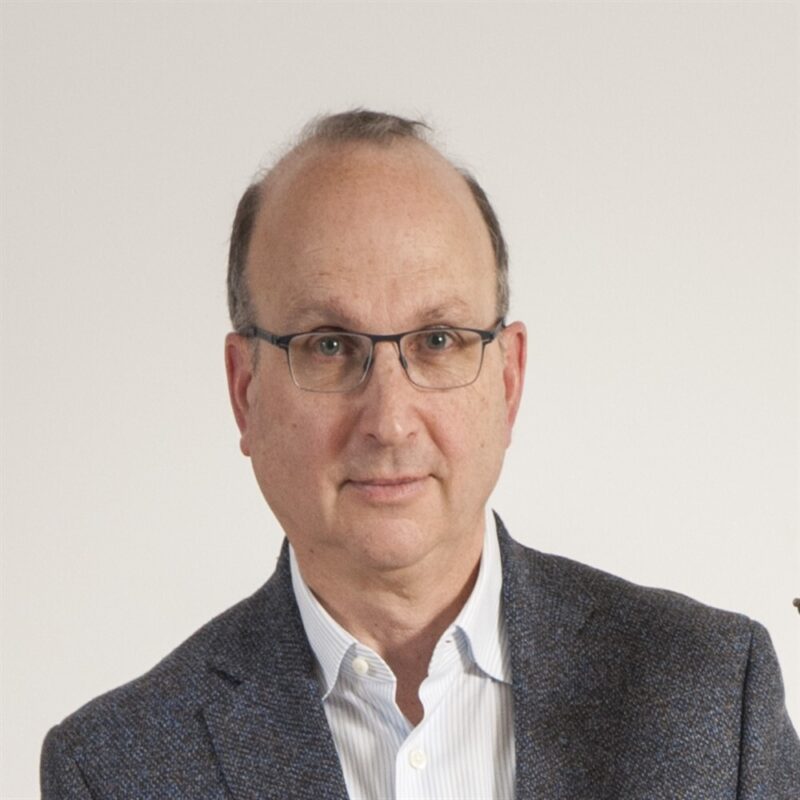
Today we're going to be talking with Dr. Norman Rosenblum, who's a pediatric nephrologist and clinician scientist within the Division of Nephrology at SickKids Hospital within the University of Toronto. Dr. Rosenblum is Professor of Pediatrics and a practicing pediatric nephrologist. He's a past recipient of a Tier One CRC Chair in Developmental Nephrology.
Dr. Rosenblum was named the Scientific Director of the Canadian Institutes of Health Research Institute for Nutrition, Metabolism, and Diabetes back in 2018. He also founded the Canadian Child Health Clinician [00:01:00] Scientist Program, CCHCSP, and served as the Associate Dean and Physician Scientist in Training in the Faculty of Medicine at the University of Toronto from 2008 to 2017.
The reason we brought Dr. Rosenblum on today is that he is widely known as an expert in mentoring. Uh, as the head of CCHCSP back in the day, uh, he developed a framework for how to, uh, partner up with a mentor, how to create that mentoring relationship, and how to foster a mentoring relationship that's gonna help you throughout your entire journey as an emerging scholar and towards an independent and senior scholar.
And so today we're gonna talk about Dr. Rosenblum's journey. Uh, he helped me not only in my journey to find a mentor and be mentored in my own career, but also to help me as a mentor on how to support residents and how to support graduate students. There's a lot to learn here. Uh, I hope you enjoy it as much as I did All right. Well, it's my great honor to have Dr. Norm Rosenblum from SickKids here with us today. Uh, Norm's an [00:02:00] accomplished clinician scientist, an accomplished leader, an accomplished administrator. He's created one of the largest and most successful training programs for clinician scientists in the country.
Norm, can you give us a, a sense of your journey and how you got to this point, and maybe even talk to us a little bit about your residency experience as a resident in Boston?
Dr. Rosenblum: Well, Jon, it's a pleasure to be with you, and especially with you, 'cause I've admired your work for so long. Congratulations on all that, and for your leadership and ingenuity, uh, and contribution.
My voyage, to try to be succinct, I've had a passion for medicine which has completely consumed me since I think I'm about four years old. People ask me in my medical school interview, "What is it with medicine and you? Why do you love it so much?" And I said, "I have no idea." I think the real answer is I don't know, but it's inside of me.
I'm just fascinated by the whole thing. I've been reading these kinds of books and entertained by anything related since I'm a very young child. I had an uncle who was a [00:03:00] cardiologist and hematologist, and he gave me a gift, and I think it was for my fourth or fifth birthday. It was a real stethoscope that he had made to size for me, and it came in the mail- Wow to Glace Bay, Nova Scotia, where I live. And I was completely excited by this and carried it around all the time. Sometimes it's not clear where things come from, but, uh, I think it was I've always been a sort of- I want to understand how things work kind of guy. For some reason, the human body and its workings was very fascinating to me, and that carried me through, in many ways, my early education.
I, you know, sort of continually referenced that. And even though I was interested in other things in my life, th- that was really the motivation for a continuous attention to going to medical school. You know, in my day, you could apply after two years to, uh, go to medical school, and I did because I was completely obsessed with the idea of going to medical school.
Yeah. At the same time, I was national president of a youth [00:04:00] organization in Canada with 2,000 members. It was called Canadian Young Judaea. It's a organization within the Jewish community. It was a very large organization, multilateral, many different responsibilities. Well, I didn't get in, and it was probably because I had a little too many things on my mind.
Even in those days, this is a long time ago, you had to be right up there with your grades or else, uh, you weren't gonna compete. But I had that third year in undergraduate when it was a very different kind of education. I was able to focus on some courses that weren't so didactic. They were much more seminar, and developmental biology was one of them, and I had one of the greatest conceptual experiences with a professor then.
And I also got into some summer research here in Toronto actually for two summers in a row around this. And the point is, sometimes things happen that seem very disruptive and dismaying but, in retrospect, it might have been one of the best things that ever happened to me . Uh, anyway, I applied after third year, and I got in early, and [00:05:00] all went fine.
Okay. And then you got excited about the kidney. I got very excited about developmental biology and biology and started to thinking about research. Then I got into medical school, which I found to be quite boring to, to be honest, in the first two years, but that's where I met the kidney And, uh, in second year and I, I became really interested in nephrology.
And the more I did it, and I had some wonderful experiences in medical school and tutoring. And here's where mentorship comes up because in second year I was noticed by a internist named Alan Cohen, who sort of saw that I was really interested in the kidney. And he said, you know, "Let's talk." And this is in a class of ninety-six people where, you know, somebody just says, "I wanna talk to this guy."
And I think we as mentors have all been in this position where we just notice the lights are on in somebody and we say, "Well, you wanna have a cup of coffee and talk about..." And he did. And then he said, "How would you like it if I highlighted a patient every week and you could go see that [00:06:00] patient, and then we talk about it?"
And I'm like, "Wow." And, uh, so I did this every week with him and, uh, it was extremely interesting. And then I did a summer, uh, in which I worked in a part-time in a kidney clinic and so my interest became more deeply ingrained. And this was really set me on my path thinking I was going to become a nephrologist and a internist actually.
But late in medical school after having already applied and been accepted into internal medicine, I realized I didn't wanna be an internist. There were cultural differences between internal medicine and pediatrics where I realized in my heart I was much more suited to work with kids and families than the internal medicine arena.
I went to the-- Uh, I was doing this at Dalhousie where I was a student. I went to the chair of medicine and I said, "I made a terrible mistake. I think I really wanna do pediatrics. I love internal medicine, uh, and I would be happy to do a lot of internal medicine, but I, I'm trying to work [00:07:00] this out." And he and the chair of pediatrics, uh, Richard Goldbloom, got together and they offered me a, uh, a rotation that I could construct for a year of whatever rotations I wanted to do within reason.
And I split it, my favorite attendings in medicine and my favorite attendings in pediatrics, and I had the time of my life. And then I did my first research project in m- in the field of medicine with Dick Goldbloom and it was on, um, uh, the diagnostic approach to chronic abdominal pain which was a very common problem And, uh, you know, I was in the basement reviewing charts, uh, you know, going back decades in the old way that you did this kind of thing.
Yeah. And, uh, because I had, uh, thought that I see a lot of tests being done in patients that I don't think they're necessary, and they're all to exclude stuff. And, uh, Dick Goldbloom was very curious individual, very supportive of people who were curious, and was very helpful. And then I presented the findings, which were basically the only reason [00:08:00] to do a test is because the history indicates it should be done, and that's when you'll find something that you could act upon and is likely to be important.
Otherwise, complete waste of money, resources, and time. And I presented this at Grand Rounds, and I got considerable pushback from the attending staff. And Alan Goldbloom, who was Dick Goldbloom's son, who was a, a very excellent consultant pediatrician, stood up and really stood up for me. This taught me a big lesson, is one, you really need to bring that critical eye and apply it in a data-driven way.
It's worthwhile to do that, and you're gonna face some backlash when you go against people's truths. It's also a nice way to start a research project or a question is to say, "I don't really believe the... in the way we're doing it
Dr. McGavock: currently."
Dr. Rosenblum: Yeah. Yeah. See, I'm inherently a bit of a skeptic. I don't really believe things until I really believe them.
And at face value, I don't believe very much. And I think that's why I like research so much, because it's, you're working along that curve, you know, until it levels off in an asymptotic fashion [00:09:00] to try to find the truth, which you realize you may never really realize, but you're trying to get close to it.
So that's very exciting. Anyway, so then I was very fortunate to be accepted to the residency program at the Boston Children's Hospital. You see, the culture there is very much-- And I remember the first dinner. They have a dinner for the incoming interns, and all these famous people were there. And they all got up and they looked at us, twenty-eight, twenty-eight of us and said, "You are the future leaders of pediatrics.
We thank you for coming here. Here's what we're gonna try to do to facilitate your ambitions." And I'm like, "Wow." They care They really care. And my experience was it was a very exciting place to work, very exciting institution, and they really did care. And so I had a very exciting residency. I was chief resident, which was a very good investment of a year, and then I trained in nephrology there and then a long research fellowship and, and [00:10:00] then finally recruited to SickKids, where I've been for it'll be thirty years in July, where I've had a very s- very exciting and very satisfying career.
The developmental biology became the centerpiece of everything I've done for the last thirty years. So you reach back. You know, so that's why I said it might've been one of the most pivotal experiences, that third year in undergraduate, because my conceptual interests were nurtured, and then they sort of lay fallow for a bit, and then I realized them again in my research fellowship and realized how I could apply that in the problems of kidney disease in children that I became so interested in.
So that's really been a centerpiece of what I've done. And then the last piece, which is a second very important piece for me, is the mentorship career capacity development piece. You know, where does that come from? In essence, it comes from the fact that I've had maybe four or five people in my life who, for some reason I cannot account for, have taken a serious interest in what's happened to me, helped to guide me and support me, and I said-- and I've seen-- and I [00:11:00] trained in an institution that did that in an institutional way, and I realized without those things, who knows what might have happened.
And then I looked around And I said, "These things are lacking in the space that I was really most interested in," which is the development of clinicians and scientists, and I'm not talking about just physicians, but across the board. I saw a huge gap in Canada back in the late '90s, and I decided I was gonna do something about that, and that's been, you know, a preoccupation of mine ever since.
Dr. McGavock: It's been an amazing accomplishment. I was reading an interview with you where you talked about being a, a successful career clinician scientist requires you to have passion for doing research, a love of the subject that you're doing, obviously know-how, how to do the research in that space- Mm-hmm ... and then determination to overcome all those rejections.
Mm. As a trainee looking for a mentor, which one of those four things or, or how do mentors foster those four elements of a successful-
Dr. Rosenblum: Yeah ...
Dr. McGavock: research, a successful- Yeah ... research [00:12:00] career?
Dr. Rosenblum: You know, this brings me to sort of thinking about my approach to mentorship. Now, you know, in the mentorship literature there's a lot of papers written about what the topics of conversation should be, and, and there can be quite a long list actually.
How do I do this? How do I do that? How do I move from A to B to C to D? My approach is a little more compact at the beginning. I say, "Tell me who you are." Think about making a video, 60 seconds only. Who are you? What do you care about that you can say that has nothing to do with your resume? I wanna know that.
I want people to be thinking about that. I like to talk about that with trainees, I don't care what level you're at, because you're a human being, and I think in essence... You know, I think about myself. I was a young child, infected for some reason with medicine. I was innately a curious kind of guy. You know, I didn't know how to use my curiosity.
You think about what's driving you actually, and then what do you value and what do you want to accomplish? And [00:13:00] then what are you willing to do to get there, and what questions do you have? And this becomes the, uh, mentee-driven agenda for what one can spend a lot of time talking about.
Dr. McGavock: I really like that point because I do feel like it should be a mentee-driven agenda.
Yeah. Um, when I think about mentoring students, I feel like they have a destination they wanna get to, like they're hiking in the mountains, they know they wanna get to the top. Mm-hmm. They wanna ask someone who's been there, "Okay, what is the best way to get there?" Um- Yeah ... but I don't think they want a Sherpa, and I don't think a mentor should be a Sherpa that says- Yeah, yeah "Here, give me all your stuff. I'll carry you to the top."
Dr. Rosenblum: Yeah.
Dr. McGavock: The mentor should be saying, "I think this is the best way," knowing who you are. Yes. Almost personalized mentorship, if you will.
Dr. Rosenblum: Or at the same time asking, I view myself as more a person to ask questions to facilitate their thinking and at times pointing them to more specific coaching [00:14:00] that could be of benefit from experts.
For example, if you really wanna climb that mountain, as someone who is afraid of heights, I may not be the best person to guide you, but I know people or could find people with you who really are able. We all have these gaps. I mean, none of us, uh, know everything that is for sure. So I think there's a real difference between short-term coaching issues and broader mentorship issues.
I try to keep that very clearly in mind as I'm, uh, working with mentees.
Dr. McGavock: And so if I were to look to you as a mentor, I would say you have a lot of passion, you love this. You know, let's say I, I wanted to create a mentorship program myself, you have know-how and you have determination, right? So I would look to you to say- Mm-hmm I, I wanna follow a little bit in your path, but I have something else I wanna do. Yeah. But for someone who's coming in for the first time and you're a resident and you don't know, uh, which attending- [00:15:00] Yeah ... you wanna work with, a lot of them have passion. Yeah. Uh, what are some of the guideposts that you would suggest that residents, uh, follow-
Dr. Rosenblum: Yeah, yeah
Dr. McGavock: to, to
Dr. Rosenblum: select
Dr. McGavock: the right mentor?
Dr. Rosenblum: Uh, it's a great question. A- and I think at the beginning, one wants to be somewhat experiential and experimental. I see myself years ago being in, uh, that exact position. I was a naive young man. I had no idea what I was talking about or what I was doing. Zero. I was simply an interested, reasonably smart, but not brilliant guy.
So I needed some experience, and I needed to have the ambition to get that experience and to work at that experience. You know, my first, I lived in, uh, Halifax at the time. I applied to work in the medical genetics summer research program at the University of Toronto back in the '70s, and I got to work with Lou Siminovitch, who was one of the kingpins of medical science in this country.
He was working in the field of somatic cell genetics. Very new in its time. Very new, [00:16:00] very cutting edge. Very exciting 12-week experience. So you say to yourself, "Okay, I realize I'm naive, I'm young, I'm ambitious, but I don't really know what I'm doing." So the mentor says, "That's the substrate. Fire in the belly, there's nothing to replace that.
Now let me help you think about who you might want to experiment with and work with who's a good mentor, who will pay attention, give you some resources, have some people around you that are interesting and that you could learn from as well, some who are your age, not just a bunch of old people, and perhaps in a setting you're not used to.
That'll be a bit eye-opening. Let's set something up or facilitate getting something set up so you can start to do something, because in the doing, you will learn. You will learn a lot."
Dr. McGavock: In doing, uh, the work, so- Research ... in doing the research, right. So-
Dr. Rosenblum: Yeah ...
Dr. McGavock: I think one of the mistakes some people make is seeing the, the preeminent scientist in that field and saying, "If I work with them, that's gonna help my CV."
Mm. But they may [00:17:00] not be the best mentor because- Right ... they may be self-involved. So you talked about someone your age or someone else- Yeah ... so almost a, like a circle of mentorship.
Dr. Rosenblum: Yeah. Well, you know, so in, in, i- I remember in that particular situation, which was one of my first, I actually worked with a post-doc in that lab who was great.
He was, uh... I mean, this is really where the day-to-day mentorship came from, and guidance. It was a much more hands-off relationship with Dr. Siminovitch- Understandably. He was head of a department. He was a Canadian, uh, international leader. I mean, I didn't get a lot of time with him, but it was interesting nonetheless, and important in some ways.
And then the next summer I worked with a much more junior professor who I had a lot more personal relationship with, in the same department actually. So different situations. Um, you get different things from different people, and I think it's hard to grasp that until it's really happening and you're building your circle.
And you [00:18:00] see, I will get different things from different people, and you learn, as I began to learn, there are certain conversations I wanna have with so-and-so, and I can't have them with s- the other person because it's just not gonna happen. But I can still have some conversation with a more senior person, and I kinda make good on the time I get.
And so you learn these things. And, uh, and so you start to learn how to... You know, people talk in work about managing up. So you learn your environment and you learn how to manage the people you work with and the senior people you speak to, and you're not just passive, receiving, but you learn how to manage those relationships.
I think that's very important. I, I realized I began to learn these skills slowly but steadily as I got older. So
Dr. McGavock: learning who you are,
Dr. Rosenblum: right? Yeah. And how you deal with your environment and the complexity of relationships that undoubtedly you're going to have to manage during your education and training.
Dr. McGavock: Just to [00:19:00] build on what you said there, having conversations without accountability- Mm ... having the safe place to discuss things, what are some of those things that a resident should be thinking about having-
Dr. Rosenblum: Yeah ...
Dr. McGavock: discussions about-
Dr. Rosenblum: Yeah ... that
Dr. McGavock: you don't wanna share with your big senior mentor but-
Dr. Rosenblum: Yeah ... maybe
Dr. McGavock: someone who's at the same
Dr. Rosenblum: level as you?
So the great value of mentorship should be and can be absolute confidentiality. So when I say to mentees I've had, I say, "If we have these conversations," 'cause we have to decide, do we have these conversations? We have an introductory meeting. I say, "You may decide, 'Nah, I don't really think I wanna talk to him.'"
Yeah. So, and that's fine. I will not be upset. I say, "But if we do, the door is closed, and it's zipper lips. It's as if I never met you, unless you ask me to help you with something and I reach out. No one will ever know that this occurred. You can count on me. You can take it to the bank, and I'm good like that.
Like, I know how to shut my mouth." And that's very important, which means I'm not your evaluator, I'm [00:20:00] not your program director, I have no real other relationship with you, and you will learn you can count on me. Hard to find. But I think that's critical. And I lay it all out like in those terms, as starkly as that, and say, "I feel that's my obligation to you, as long as you want it."
Dr. McGavock: That's a critical piece. So you want someone to advance your career, give you the know-how, someone to know thyself through those safe- Yeah ... critical conversations. Anything else they should be looking for in terms of developing themselves as a, as a future researcher?
Dr. Rosenblum: Well, you know, step one is to start to get a feel for, you know, because if you're really naive coming in 'cause you had referred to sort of the pediatric resident without much experience, and so you give yourself s- some time to experience stuff, and then you, you know, you start thinking about Time goes on, you start thinking about, "Do I wanna taste this meal to a greater extent? I, I had a little hors d'oeuvre, but am I interested in a bigger [00:21:00] piece for the entrée?" And then you say, "Well, I'm not really sure what the end game looks like." Uh, I think people f- really feel that, like they're not sure.
So then I say to them, "Do you have to be?" My answer is you're in a good space if you don't have to be sure, which means are you willing to learn for the sake of learning and possibly using it in a very specific way for your career, but realizing it may not happen that way, and I'll just have learned, and somehow it won't make me a worse person.
You know, I realize that can go against the grain of this sort of path that people get put on where everything's gotta be predictable, and I know exactly what it's gonna mean and what it's going to amount to. And I say, "Can we lean away from that point of view?" And I also realize that people have obligations in their lives.
So, you know, lives are complex, and residents often even have families by this point. So they say, "Well, you know, Norm, I don't have all the time in the world to play [00:22:00] around at this point." But the good news is that, uh, you're paid during training, and you may not be a, a millionaire from these awards, but they can be somewhat sustainable.
In order to snip off another bigger piece of the meal and say, "Hmm, do I like this? Is this interesting to me?" And then say, "What are the consequences of how I'm feeling?" But I think without the doing, you're left wondering. But it, it requires the inquisitive mind to wanna go there. Because I think if you're of the mindset, "Well, I'm not really sure.
I don't really ... " Well, then it may not be worth it, you know? Yeah. So a
Dr. McGavock: mentor needs to foster that curiosity, foster that energy, but also not be a cookie cutter-
Dr. Rosenblum: No ... put
Dr. McGavock: you in a mold and say, "You have to follow. This is the pathway I took. This is the pathway you're gonna
Dr. Rosenblum: take- Oh, yeah ... and
Dr. McGavock: this is the way it is."
Yeah. You need
Dr. Rosenblum: to learn
Dr. McGavock: that for yourself.
Dr. Rosenblum: You're right, Jon. Uh, mentorship is not clonality. You know, my life is my life. My life has nothing to do with somebody who's 25 years old now. I grew up at a different time in our history. What's new in science is completely different. [00:23:00] When I talk to people now about this voyage I had in developmental genetics in the kidney, I'm saying, "It's not clear to me you should want to do that in the same way because things are different now.
People are really focused on translation and there are new opportunities, and I'm not sure this is the, the path that I would choose in 2023 compared to 1991." Yeah. Yeah So don't... This is not about looking at some kind of stamp and saying, "I wanna be like Queen Elizabeth," because it's a new day. Mm. I'm a new person, so let's work with that, not some picture of somebody else.
Dr. McGavock: Yeah, and figure out exactly who you are. Yeah.
Dr. Rosenblum: So back in, uh, CCHCSP was how many years ago now? Well, the idea was born in, uh, mid-2000, and the first funding occurred in 2002.
Dr. McGavock: Okay. So 23, 21, 23 years ago- Yeah ... you wanted to create an environment that fostered these elements in large [00:24:00] groups of young clinician scientists- Yeah and you wanted to create a network where they could feel safe- Yes ... and inspired and, and foster passion amongst one another. What were things that you knew were critical to creating the CCHCSP, which is, uh, the Canadian Clinician Child Health- Yeah ... Scientist Program? Yeah, what did you, what did you say, "We have to include this, this, and this"?
Yeah. And why, why did you choose those things?
Dr. Rosenblum: Well, the first thing was I had to be able to persuade my colleagues in different sectors that I had identified and was vocalizing on a critical gap which would be recognized as important. As always, if the idea is not entertaining, you can forget it, because what you're calling on people to do is to really start to put out in different ways, and people are just not gonna do that if it's not that interesting and important.
Mm-hmm. So was the gap a lack of mentorship on the- No ... on the part of faculty? What was the gap? Well, we had a gap in the pathway that was [00:25:00] available, the attendant re- resources required, and the integrations required within the child health community to support the development of clinician scientists in this country.
We still have it, by the way.
Dr. McGavock: Yeah.
Dr. Rosenblum: But specifically in the child health arena, which is, you know, my main care. And so I had to be very clear on being able to articulate the argument. It's like the first three lines of your grant, you either get it said so people say, "Yeah," or, "Good luck with that." You'll get a high three, but you won't be funded, and that's the way I look at it.
So I had to really think it out and be able to persuade, and luckily, I had some training in that, and I had... I was running the Clinician Scientist program at SickKids, which became multidisciplinary for the first time when I led it, so, you know, these values were there. Right.
Dr. McGavock: And what was-
Dr. Rosenblum: And- ... your
Dr. McGavock: vision for that pathway?
Where, where
Dr. Rosenblum: did you see that pathway going? Oh, so one, because of my training as a pediatrician, I [00:26:00] was totally committed to the idea that it had to be multidisciplinary. Mm. Okay. Because, you know, if you ask Norm, "How did you learn about nutrition in children?" I didn't learn it from other doctors, by the way.
I learned it from nutritionists. "How did you learn about development in children?" Well, I learned it from some developmental pediatricians, but I learned a lot from occupational and physical therapists, you see. And here it comes. Where did I learn how to talk to patients and about the social context of their lives?
Social workers. This was part of my DNA. For the goodness of children, we cannot be physician-centric. So this became a very strong point for me and my leadership at SickKids, and then I brought this to my vision for what the CCHCSP could be. Now, one of parts of the argument has to be what is the current environment and what are the opportunities?
Because if you're in a situation where you're in a sort of paucity of opportunity for all kinds of reasons, you're banging your head against the wall But at that time, [00:27:00] the CIHR was just created, and if you listen to the narrative at that time, it was much more interdisciplinary, much more multidisciplinary, worrying about capacity.
Lots of language around this that I heard people talking about. And I said, "Ah, I can take my vision and I can start to marry to what I think could be an opportunity." And then CIHR announced that they were gonna fund these STIHR programs, Strategic Training Initiatives in Health Research, and I said, "Ah, that's it."
Then I was very fortunate to be associate chair for research for the Department of Pediatrics at that time in my career, and my chair, Hugh O'Brodovich, who I had a very close relationship with, and the head of the research institute at SickKids, they both agreed with me on these ideas, and in their own ways were articulating many things that were in concert.
And so I had partners, you see, locally. They said, "You know, this is a great area of work for you. You have a [00:28:00] talent in this area," they saw. "You have the enthusiasm, the passion, but maybe even the capability to take this." So they said, "Do it, and we'll support you." You know, it means a lot to hear that from people you work for.
Dr. McGavock: Mm-hmm.
Dr. Rosenblum: You know, it means a lot. Mm-hmm. So for trainees, surround yourself by people who say- Yeah, yeah ... "We see this in you even though you may not, but we support you." And then, then I had to gather the nation, and so I got some money. You know, I had this meeting, which was extremely interesting, with people from...
'Cause we have 16, uh, child health centers in this country, academic child health centers, and then this was gonna be multidisciplinary. So we had a big meeting of leaders across these disciplines, and of course everybody looked at me and said, "Ah, this is very nice, but it'll never happen."
Dr. McGavock: Well,
Dr. Rosenblum: and there are a bunch of reasons why it'll never happen.
One, you're from Toronto, and you're from SickKids, and you only care about yourselves. So that's not gonna happen. Number two, he's a doctor. They don't care about people who aren't doctors. Mm-hmm. Even if he is a pediatrician. [00:29:00] Mm-hmm. Third, he's a basic scientist. They don't have any idea about science beyond mice and cells, so forget that.
He'll never be able to embrace the full breadth. So there are about four or five different assumptions that people had as to why this thing would never take off, and my job was to create the environment where we could have a serious discussion And I could articulate these arguments and invite people into the discussion where they could see themselves within it.
And the good news is, you know, and we don't have time for all the details and not the interest either, but I can tell you I could write a little monograph on my experience what taught me for the rest of my life about building coalitions. In the end, we must all decide. I remember one of the most important meetings where it was late at night, there was a lot of people around the table, very smart leaders, and I finally said-- And lots of discussion, "Well, is it worth it?
Is there enough money?" You know, blah, blah, blah. Every reason why [00:30:00] we shouldn't decide. I finally said, it was about 10 o'clock at night, "Okay, we're done. I'm going to bed. Tomorrow morning at eight o'clock, we are meeting again, and I'm going to ask you one by one, yes or no. Because this is gonna be it, folks, and I'm gonna ask you a question now to sleep on.
When you go home and you say, 'We said no,' are you gonna be able to look yourself in the mirror?" Now you decide that and come back and tell me tomorrow morning at 8:00 what you've decided. Mm-hmm. Or look at all the trainees in your department and then- No, it was a multidimensional ask. I said, "Because you're gonna have to answer to people that we have this opportunity, and for every reason that we've articulated, we decided no, no, no, no, instead of, yes, we can.
Yes, we can. We will, despite the issues." And they came back and they said, "Yes." And off we went.
Dr. McGavock: And 23 years later, uh, I was involved in a STIHR way [00:31:00] back in the day, and I-
Dr. Rosenblum: Yeah ...
Dr. McGavock: I would, I would bet this is probably the only one standing that's still getting funding and still has its original roots, um, and its original aim, so.
Dr. Rosenblum: It's one of the few. You know, now it's been transformed under the leadership of Su- Susan Samuel et al into a new program called ENRICH, but it has the very roots of CCHCSP. It's been transformed in its own time, which I think is extremely important message of both program development, is we all live in our own time, and things need to be renewed in their own time.
And I think the current leaders have done a fine job of that, and they've been able to get people to be excited about funding them in their own time. And so CCHCSP has been transformed. That's good news. You know, I'm just so proud of everything that we did together-
Dr. McGavock: Mm-hmm ...
Dr. Rosenblum: over that time. And the people that trained, many of them are leaders now in the child health community, and that's amazing for a guy like me to see because in the end, you know, I used to [00:32:00] have fights with my...
fights, arguments with my fellow, uh, leaders 'cause they would ask, "Well, what's the outcome?" And I would say, "There's not many outcomes I'm really interested in because I think in 10 years what people are gonna ask us is how many child health research leaders has this program trained, and what's the evidence that they're leaders?"
And CCHCSP did this in spades. It's so clear. There are so many people, I see them, and they, not only because of CCHCSP, but certainly enabled by CCHCSP, took this path. The proof is in the pudding, as they say, and so that's been phenomenal.
Dr. McGavock: Yeah. I, uh... well, I was sitting on a grant panel once and someone said, "I think 90% of the people reviewing these grants went through CCHCSP."
Dr. Rosenblum: Yeah. So I think- I know ... that
Dr. McGavock: means
Dr. Rosenblum: they're leaders-
Dr. McGavock: I've had- ... right?
Dr. Rosenblum: It's really amazing. People have called me up who have been on those panels and said, "Norm, just for your interest- Yeah ... you'd be amazed who's here." Yeah. "Because I want you to know, these people went through this program. You must be very pleased about this."
So anyway. Well,
Dr. McGavock: and, and [00:33:00] I think just to close out too, you know, and, and creating these new platforms for research, for a trainee or a resident coming in, you're often feeling like you're alone with one mentor- Yeah ... and one project. Yeah. But being part of that group and being part of that network, so maybe one of the closing, uh, pieces- Yeah of advice for trainees would be find the network, find the team, be part of something bigger.
Dr. Rosenblum: You know, Jon, I agree, but I, I think that this happens in a sort of sequential way that some people get involved in, particularly in v- people involved in clinical research get involved in larger networks, uh, quite quickly.
But other people who are like, I, I was in a pretty small microcosm of people for a while because I was more in a laboratory environment, and so it started, grew more slowly. But I think engaging people, whatever they're doing, in a community of researchers has the effect, no matter whether it's a strong effect on their particular research or not, but it gives them a sense of possibility.[00:34:00]
One of the things that I've learned from trainees, they want to understand what the end game can look like. Is there one end game, or is there a multiplicity of possibilities? But if they only see, well, the only end game seems to be I work in so-and-so's lab, and they're the end game, a clone of them, that's pretty limiting, actually.
And that's one of the great benefits in, in CCHV, uh, CSP, we had this, a rising researcher program, we called it in the old days, where we brought in people just like this, residents and others, and they just could be part of it and come to the annual meeting and get a sense that the world is much bigger than the little world that you're working in.
And that's good for you to see and talk to people and see those possibilities. And I think that's very important in a career development sequence for people, as you say. And, and for institutions to support that is very important.
Dr. McGavock: Yeah. I don't think I realized it till just now, but almost every critical moment in my career, I [00:35:00] was involved in one of those networks.
Dr. Rosenblum: Yeah.
Dr. McGavock: I was involved in a STIHR. Mm-hmm. I was involved in an NIH program. Mm-hmm. I went to an American Heart 10-day session, and all of those things just opened my eyes because for so long, you're focused just- Yeah ... on your work, and you're by yourself, and, and it feels daunting.
Dr. Rosenblum: Exactly right. And then, and you have to process all, all that with time, and that's where your closer associates, and this can be peer mentoring.
Often, the most important decisions are made through the peers you've met. You know, when I was in Boston, I didn't spend most of my time talking to the people who wrote textbooks. I wr- Right ... I spent most of my time with my fellow residents, who, by the way, were, um, many of them were amazing people. I learned a great deal from them.
And you worked all hours with them, of course. And the same is true in this. You meet people at different levels, and you have ongoing or intermittent conversation with them, which becomes a guiding force as you make your own decisions.
Dr. McGavock: This has been great, Norm, and, uh, I think we're, we're getting close to the end here.
Yeah.
Dr. Rosenblum: But if
Dr. McGavock: you were to give, uh, one or two really important pieces of advice to [00:36:00] trainees in pediatrics, what would that advice be?
Dr. Rosenblum: Contribute and then start to engage in a way that you can realize your dreams and the kind of contribution you want to make. I think you owe that to yourself, and I think you owe it to our nation that has provided the resources and the community that we have in Canada, which we're all quite mindful of the quality of.
We have, notwithstanding our blemishes, and there are many, but we live in a country that we can be proud and pleased that we live here versus somewhere else. And one of my great satisfactions is that beyond the papers I've written, which are likely to be soon forgotten, I think, for example, in the CCHCSP, that's probably been a way that I gave back after having been reared and raised in Canada in a way that I can be pleased about.
And being a scientific director at CIHR has been really a job to contribute to our community versus my own personal [00:37:00] program. And, and it gives one tremendous emotional and, and intellectual satisfaction to find those spaces, whatever they be. Don't be afraid, I would say to them, to go after it.
Dr. McGavock: Well, thank you for your generosity today, but for your generosity to the scientific community in Canada, your leadership all the way through, and, uh, for supporting so many exceptional clinician scientists that are mentoring thousands of residents, uh, every year, or hundreds of residents every year.
So- Yeah ... thanks so much, Norm. I'm really- Yeah ... grateful. I can't thank you enough. And if people get a chance to see Norm at SickKids, uh, stop by, say hi, and shake his hand and say thank you. So, um- Yeah. Jon,
Dr. Rosenblum: thanks so much for the invitations. Always a great pleasure to chat with you, and certainly today as well.
Dr. McGavock: All right. Uh, that's wonderful. Thanks a lot, Norm. And- Bye-bye ... bye. That was our in-depth conversation with Dr. Norm Rosenblum on how to foster a great mentoring relationship, an essential skill that'll help you move through your early career as an emerging scholar. Be sure to join us for episode seven, where Dr.
[00:38:00] Matthew Fox will talk to us about descriptive epidemiology. This will be the first in three episodes focused on different types of epi and how you can use them in your next research project. Thanks for listening. The Emerging Scholar podcast was recorded in the UMFM studios located at the University of Manitoba in Winnipeg, Manitoba, Canada.
This is Treaty One territory, the original homeland of the Anishinaabe, the Ininew, and on the national homeland of the Red River Métis. Manitoba is also homeland to the Anishininew, the Dakota Oyate, and the Dene peoples. We acknowledge that our water is sourced from Shoal Lake 40 First Nation. As a settler scientist working in health research, I acknowledge TRC Call to Action Number 18, that health inequities between Indigenous and non-Indigenous people are the direct result of colonization.
Winnipeg is the center for reconciliation in Canada, and where we are speaking from today is at the crossroads of Canada's history and Canada's future. We are [00:39:00] three kilometers away from one of the most sacred meeting grounds for Indigenous people on the plains and within Turtle Island. We are also several kilometers away from one of the last residential schools in the province.
We are working collectively on reconcili-action with youth, elders, and community leaders to heal from the trauma of colonization, past and present, honor the original treaties, and create a Canada that addresses and eliminates the inequities and injustices of the past and present to create a future for Indigenous children to live and thrive.
On behalf of the team at the Emerging Scholar Podcast, we want to thank Osani Balkaran for the great production for our opening and closing themes. We also want to thank UMFM 101.5, especially co-producer Jared McKetiak for technical assistance and production on this project. We also want to thank all of our guests for the discussion and the insight that they've provided.
Once again, thank you for listening. Be sure to subscribe to the Emerging Scholar Podcast [00:40:00] on Apple Podcasts, Spotify, and umfm.com.