Developing Really Great Questions with Dr. Peter Rosenbaum
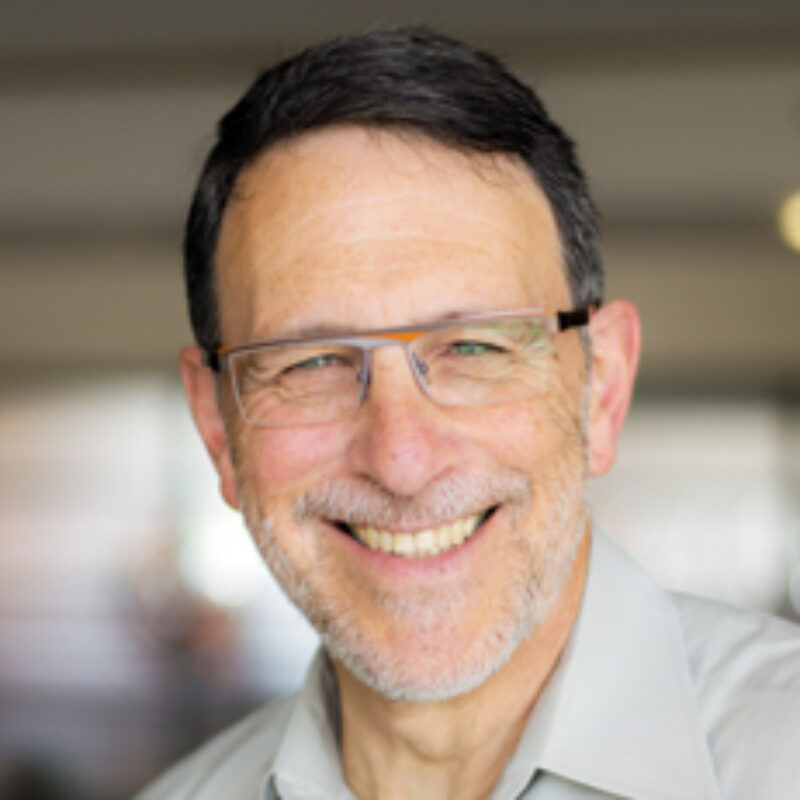
Dr. Peter Rosenbaum
Professor and Clinician Scientist, Department of Pediatrics, McMaster University
In this episode
00:00 Welcome and introduction 02:00 Start with modesty and the literature 04:00 Rethinking handicap and building the GMFCS 07:00 Reliability, validity and choosing a measure 10:00 What's your hunch? Quality of life as an example 13:00 A school buddy program and a surprise finding 16:00 Challenging the status quo on the ward 19:00 The project within the program 21:00 Advice for mentors 24:00 Parents as research partners
Select a timestamp to play the episode from that point.
Dr. McGavock: [00:00:00] Welcome to the Emerging Scholar Podcast, season one. We hope you enjoy this series of great conversations with leading medical researchers that's designed for graduate students, medical trainees, residents, and fellows to help you on your journey towards your first scientific project. Welcome everyone to the Emerging Scholar Podcast, episode one with Dr. Peter Rosenbaum. Dr. Peter Rosenbaum is a professor and clinician scientist in the Department of Pediatrics at, uh, McMaster University. He's also an associate member in the Department of Clinical Epidemiology and Biostatistics, and held the inaugural Tier 1 Canada Research Chair in the faculty, and he co-founded the award-winning CanChild Centre for Childhood Disability Research.
Dr. Rosenbaum is with us today because, one, he inspired me as I was working with pediatric residents on how we help you develop [00:01:00] really good questions that you can get by just paying attention at the bedside. But also, he's known internationally as an outstanding mentor, and so I chose him specifically to start off our podcast because he really helped me in my journey in mentoring trainees, mentoring pediatric residents, and supporting us in how do you get excited and how do you get started on developing a really important clinical research question.
Now over to Dr. Rosenbaum How do you take that nugget? Like you said once, you, you get a good clinical nugget, right? Yeah. And then you have to bring it into an actual question, right? So what I think happens, in my experience, maybe we'll talk about it, is a resident is on a rounds and they meet a very energetic, exciting young, uh, clinician, maybe a clinician scientist, who says, "Oh, I've got a great idea for a study."
But they themselves may not be a researcher, and so now you have to take this observation that they have and turn it into a research project. [00:02:00] With you having secured, you know, 400 grants and published 500 papers and trained 100 residents, right? I'm sure you've seen these nuggets. Some of them go really well, and some of them don't.
And so maybe just talk about that, that process, and I'll maybe ask you about your own experience, some, some good ideas that went well and some others that didn't go well and, and, and maybe just some of the principles you have around, um, designing research studies.
Dr. Rosenbaum: I suppose to, to start, um, I mean, one has to be modest.
If, if this sounds like a good idea, it's possible that other people also have had this good idea.
Dr. McGavock: And
Dr. Rosenbaum: so, you know, um, what we need to do, first of all, is see how people have thought about this before, whether there's any literature on it. Um, and, and dig around because, you know, one of the, one of the irritating things is this is the first such and such.
I never ever say that because you're gonna be embarrassed 100% of the time and made to look like an [00:03:00] ass. This may be important, and it may be early, and it may be not so early, but if it's a good idea, you can develop it. So the first thing to do is to say, uh, I suppose, is to find out what makes this interesting, and has anybody thought about it?
What do we know about it already?
Dr. McGavock: Right.
Dr. Rosenbaum: Because we never start from zero, and that's another idea that, that requires some modesty. Uh, understanding what's gone before and what may be different now. Even if this has been thought about before, what's different now? So I recorded a talk earlier today about the language we use, and this is off that specific topic, but we used to talk about handicapped, and now we talk about disabled, and handicapped meant you were, you were skunked, you were socially inept, and so on.
And now we talk about disability as a social construct, where your abilities are not matched by the capacity of the environments to support you. So we need to think about what's the current context of what we're talking about before we jump [00:04:00] into it, and then ask ourselves, why, why is this im- why might this be important, and how might it be important, and is this the place to start?
Dr. McGavock: Right.
Dr. Rosenbaum: It might be a great idea, but this isn't the place to start.
Dr. McGavock: Right. And so you are a developmental pediatrician.
Dr. Rosenbaum: Yes.
Dr. McGavock: You've been around, uh, for a few years.
Dr. Rosenbaum: A few, yeah.
Dr. McGavock: A few. Uh, can you think back to your first, the first time you asked a question as a clinician scientist? And when you say important, what was important for you about that question?
Dr. Rosenbaum: Um, well, what-- I'll give two examples. One, the first one was that I've been doing the neonatal follow-up clinic with one of my colleagues forever, and we used to be irritated by the fact that people would report so-called major and minor handicaps. So if you had hydrocephalus, you had a major handicap, and if you had, um, a bit of clumsiness, you had a minor handicap.
And that irritated the hell out of me. And we started to think, and this is in the '70s, we started to think about how we could describe things functionally. So if you have hydrocephalus, and you're going to school, and you're doing fine, uh, do you [00:05:00] have a handicap at all? And what we weren't recognizing at the time is we were entirely, we, the whole field, was entirely focusing on the within the person problem instead of the consequences, the functional impact of that issue.
We subsequently, much later, uh, translated this into thinking about, uh, cerebral palsy and people talking about people, children with cerebral palsy having mild, moderate, or severe impairment. And we said, "That's cr- that's sucks," basically, uh to put it, not to put too fine a term on it. Yeah. Uh, and that w- because nobody...
First of all, those are value-laden words. Like I'm saying to you, you know, "Mr. Smith, this could be worse," and that deserves a kick in the shins. Uh, and by the way, what do I mean by mild or moderate or severe? Those have never been defined, and we don't know anything about the inter-rater reliability of those terms.
So we created a functional classification system called the Gross Motor Function Classification System, classifying function, [00:06:00] and if you can do this, you're at this level or above. And this five-level system has been, is used all over the world, has been cited in the literature way over 10,000 times, and is the standard way to describe functioning, not severity.
It is not a value-laden word. So that's one example. Uh, another example, uh, r- from early in my experience was, um, the exposure to the fact that children typically developing, um, primary school children exposed to classmates with impairments, uh, seemed to have positive attitudes, and we wanted to go about studying that.
Well, we did, and we did a series of studies, and one of my colleagues, a well-known Canadian pediatrician, uh, actually got his PhD doing this work. Um, but we took a two-year detour to develop ways of measuring the things we were interested in, and that's been, uh, the subtext of my whole career, is developing the tools to [00:07:00] do the things we wanna do So this is a great idea, but we can't start here because we don't have the tools to do it.
Another example.
Dr. McGavock: That's great. And I think in both cases, and from what I know about your work, it's very person-centered.
Dr. Rosenbaum: Yeah.
Dr. McGavock: And it's addressing gaps in care. So if I'm a resident and I'm working in this space, how do you find that idea or that nugget, if you will, to say, "I can't believe we're just classifying these patients as mild, moderate, and severe, and that we don't have some actual validated tool to do this"?
Where, where- Yeah ... how do, how do residents get that idea?
Dr. Rosenbaum: Residents only get that idea if in the course of discussions on rounds and at, uh, in clinical rounds and at academic rounds, people are talking about this measure has reliability and validity. Do you know what that means? And lots of people don't.
They know the words, but they don't, they can't s- tell you that the synonym of reliability is consistency and the synonym of validity [00:08:00] is accuracy or vali- or, or, or, ah, truth or whatever. Um, so we need to teach. We n- those, those ideas need to be part of the culture of the community, not just for research, but for everything, so that people understand when they're being challenged to, how are you gonna measure this?
Um, they at least think about looking at the reliability and the validity and the content of the measure they're thinking of using. Another example. Uh, I wanna measure quality of life. I get an email like this once a month at least. We're me- we're doing a study, we wanna measure quality of life. What tool should we use?
And the 100%, uh, answer always back is WTQ, what's the question? Uh, because depending on what you're asking, you may wanna use this tool or that tool or another tool. What irritates the hell out of me is when people say, "Well, we're gonna use the," uh, I shouldn't be too rude, so I'll just say, uh, "We're gonna use the [00:09:00] ABC tool."
And I'm gonna say, I say, "Why?" And they say, "Because everybody uses it." And I say, "Yes, but look in the literature and you'll see that it's actually a pretty crappy tool. And the fact that everybody uses it doesn't make it the right tool." Exactly. So again, people need to understand, not to be researchers, but to be, and I've been saying this for years, to be, um- A consumer of the literature.
You read the literature on q- on quality of life, and they showed that the quality of life of kids with disabilities is poorer than the quality of life of kids without disabilities. But depending on which tool you use, it may be true or not true. And we published a paper some years ago that ran two different focuses of quality-of-life measures in a population of two hundred and fifteen adolescents with CP.
And in one situation, one kind of measure, every one of the areas w- was less functional than, and, and poorer so-called quality of [00:10:00] life than the typically developing people. And in the other one, the, uh, level of severity of, of functional ab- ability did not discriminate. Just because you're in a wheelchair and I can walk doesn't mean your quality of life is better than mine, depending on what kind of quality of life we're talking about.
Dr. McGavock: Right. So option one, you do a systematic review where you try to compare, you know, the, the cumulative differences between the groups using each tool. And then the other one, which I find probably the most fascinating for trainees, is to go down that rabbit hole of the references Right? So if it's the quality of life tool ABC and everyone's referencing it, go all the way back to 1972 to the original paper to see, well, how good of a tool did this actually perform?
Dr. Rosenbaum: Well, uh, an- another way to look at it, uh, would be to say, um, w- what is it you wanna know? What, what do you... N- never mind your hypothesis. Hypotheses are f- are for, are for fancy conversation, but we're having a [00:11:00] beer. What's your hunch? What's
Dr. McGavock: your hunch?
Dr. Rosenbaum: I like that. What do you... You know, why, why do you think this might be different from that?
Or why do you think this might be happening? And try to lay out your thinking, one's thinking about the issue, so that you can then explore the elements of that thinking. So in this, in this example with the measures, um, what do people mean by quality of life? Well, there's existential quality of life, like how your life is, and there's my judgment of your life 'cause you're sitting there and you're in a wheelchair and, um, you have hearing aids, and my judgment of you is that your quality of life can't possibly be as good as mine from the outside.
But in fact, there's evidence to show that people with objective evidence of impairments can report very good quality of life. And as one of my colleagues used to say, if it is the case that the presence of an impairment leads to poorer quality of life, and the absence of impairment, uh, is, is associated with [00:12:00] good quality of life, then how come everybody who's able-bodied doesn't report 100% perfect quality of life?
Because there's more to quality of life than just our judgment from a medical point of view about what you can do and can't do.
Dr. McGavock: A- and do you think that for the resident, it's being a keen observer of your patients as they come in and trying to understand maybe from their point of view or just from the diversity of the patients coming in, that there's something that hasn't been answered yet?
Dr. Rosenbaum: Um, absolutely. But again, the re- if the resident sees, and the talk I, I recorded is for an editorial I did recently on context, uh, if, if I show you a picture of a kid in a wheelchair, if all you see is the wheelchair, then your whole approach to that child and their predicament is, "Oh my goodness, isn't it sad?"
Uh, now this picture shows a, a really lovely four-year-old with a big smile. He's sitting crookedly in a power wheelchair, and the, at the bottom of the picture is a little, uh, blackboard that says, "First day of junior kindergarten." [00:13:00] So what do you see?
Dr. McGavock: Right.
Dr. Rosenbaum: Half full, half empty.
Dr. McGavock: Yeah.
Dr. Rosenbaum: Um, but we need to teach that.
We can't just assume that people will see that because attitudes and beliefs about things are pervasive in the community at large, and health professionals may be in some ways worse at some of this than other people. If a parent tells you everything's going well, you roll your eyes and say, "Yeah, well, they're not realistic."
Dr. McGavock: Right. They don't wanna talk about it. I wanna hold onto that 'cause I wanna talk about mentoring in a minute, and I feel like it's really important to have someone like you as a mentor in that space, taking those nuggets or trying to challenge those nuggets, um, and developing those into questions. But you talked about kids who are, have more social interaction tend to do better.
Dr. Rosenbaum: Yeah.
Dr. McGavock: Where did that observation come from, and can you tell me a little bit more about that study?
Dr. Rosenbaum: Um, well, it came from a parent who told me that her son was in grade one, and in her, in his class was a boy who was, as her son described him, crumpled [00:14:00] Um, cripples. But this, the boy came home and said, "There's a boy in my class who's crumpled, and he walks with crunches."
And the mother thought this was very funny. Um, the, the child who was reporting this was a child I was seeing. In fact, I don't remember why, but it turns out that I knew the boy who was crumpled, who happened to be, just by absolute coincidence, a child I was seeing with, uh, sacral agenesis. And, uh, the, the mother was interested in how her son was responding positively to this boy.
And later in the year, this same boy came home and told his mom that this boy, uh, had taken several steps on his own a- across the class, and everybody had jumped up and cheered.
Dr. McGavock: Right.
Dr. Rosenbaum: In other words, this experience was very positive. Now p- in parallel with that, there was a, a primary school, uh, right near our cerebral palsy center, uh, that had an integrated class, and they had been running a social buddy program and [00:15:00] had impressions that the buddy program was helpful.
So we went and said, "Can we study this?" And, uh, this was in the days when you could actually talk to the people on the school board and get permission. So we did a couple of clinical trials in which we paired able-bodied and disabled kids in, for social activities, and we had a, a control group who were b- buddies in the second term.
So everybody who volunteered to be a buddy could be a buddy, and we showed big changes in attitudes after the buddy program. We also, interestingly enough, found big changes in parents' attitudes, and we had done nothing with the parents. We had not intervened with, in any way with the parents. We had not, uh, done anything other than ask the parents to sign a consent form.
But the kids were bringing home the experience. So there's, there's a, a serendipitous observation. And so in addition to, you know, going down the mainstream of the, of the study, one also keeps their, your ears open w- for anything else you wanna tell [00:16:00] me.
Dr. McGavock: Who decided to do the measurement of the parents?
Dr. Rosenbaum: Uh, we did.
It was a, just a throwaway idea.
Dr. McGavock: Sometimes those are the best.
Dr. Rosenbaum: Yeah.
Dr. McGavock: You never know what you're gonna get
Dr. Rosenbaum: Yeah. That was, and we had to develop a measure for that. Now we already had developed a measure, and this was in the early '80s, and that measure is still being widely used around the world. We had developed this measure called CATCH, uh, and then we said, "Well, we should have a measure for parents," so it was PATCH for parents as opposed to C for children.
Um, and we just did it for fun.
Dr. McGavock: Wow.
Dr. Rosenbaum: And published several papers about this experience.
Dr. McGavock: So, and, and it's fa- it's fascinating kind of seeing the growth of the work that you've done because I think it's always challenged kind of the base rate in saying, "Oh no, we need a better measure. We need to have a more patient or parent or family-focused tool to capture what we're seeing in the clinic."
But the one thing when I think about residents, if they're challenging the senior person on the ward who's saying, "Okay, [00:17:00] there are three criteria- Yeah ... and this is what they are." Yes. And the resident might be saying, "Wait, uh, I don't know. I- it looks a lot different to me." W- how do you do that?
Dr. Rosenbaum: Well, I think the, for the, from the resident, for the resident, uh, they need to find somebody who they can chat with about this idea and see if they can get some, some support and some, perhaps some mentoring.
They need to explore the issues a bit, and then they need to use their best clinical skill, person- personal skills to go to the person who's being, uh, bombastic. And I remember many of them 'cause I trained under many of them, uh, and say, "I wonder if we could explore this a bit." But, you know, I remember one of my, one of my attendings telling me that children's feet were five degrees, uh, externally rotated and that anything else was abnormal.
I mean, that's the kind of orthodoxies we grew up with, that there was normal and abnormal. Now what I'm hoping is happening now is a general sense of much more openness to var- to respecting variation, [00:18:00] EDI, you know, blah, blah, blah. And if that also allows people to say, "Can we look at this? Can we look at this across?
Can we look at the variation? Can we explain the variation? Is variation always abnormal?" Um, so there's a mindset there, and I think we've got, you, you know, hopefully young people are much more open to this in general- So without, without being rude to the attending, they can, um, they can say, "Can we look at this?"
Dr. McGavock: I agree. I think young people are definitely more amenable to challenging the status quo, uh, and I think that's a really big strength. But it does take a certain kind of mentor to bring that out. And so do you have... So let's say a resident comes in with an observation like this, they're challenging the status quo, or they have a clinical kind of nugget, and you talked about you gotta go for a beer or go for a coffee and kind of try to hone in on a hypothesis or hone in on, on maybe your model, your like, your theoretical framework for why that's happening.
Do you have a set of [00:19:00] principles when you're taking a clinical nugget or an observation and trying to bring it down into a study that residents might learn from?
Dr. Rosenbaum: Well, bring- bringing it into a study is hard because w- one has to, uh, formulate a specific question, and I, I'll, I'll send you a little thing I wrote several years ago about the yin and the yang of research, and it's a variation of, of talks I've given about the, the tensions that exist between asking the really important question and asking the feasible question.
Asking a question that's big enough but not too big, and, uh, big enough but not too small. Uh, like, why w- how is knowing that gonna help us? Or are you out of your mind? You just described your PhD and your postdoc. Um, so there's a, there's a lot of, of pitting and patting and marking with P that c- that needs to be done to formulate a research question so that it is answerable.
And in this context, I always talk about the project within the program. So you've got a great idea. You're gonna do this study. What are you gonna do next? Well, what [00:20:00] the hell are you talking about, Peter? We haven't even the started this. I know, but when you've done this, you're gonna find this or that or something else.
What might you do next?
Dr. McGavock: Right.
Dr. Rosenbaum: And so get... And that helps people to think like researchers. But thinking clinically is often convergent. We're trying to make the diagnosis. We're trying to find the right, the right treatment and so on. Thinking like a researcher is, is much more expansive to start with and then tries to bring in the relevant elements, recognizing that we can't do everything at once.
But if we're thinking programmatically, we can start here, and we can then go to the next thing.
Dr. McGavock: So a tip for a, a mentor, a clinical mentor might be to bring the project, bring the question down to something feasible.
Dr. Rosenbaum: Absolutely.
Dr. McGavock: But understand where the, the bigger picture is- Yeah ... and, and how that's gonna fit in.
Dr. Rosenbaum: Somebo- somebody who I, I, I heard this in Australia a few years ago, and it's something I really like is ask three questions: What? So what? Now what? Like, what [00:21:00] are you gonna do? Why should, why, you know, how, how might that be important, and what would you do with that information?
Dr. McGavock: That's perfect.
Dr. Rosenbaum: And increasingly, the, the, the so what, uh, or the now what includes sharing the information.
Dr. McGavock: Which I think you're also outstanding at.
Dr. Rosenbaum: So, you know, there's a whole ... I mean, and these are, these are things that we've learned over a, over a lifetime, but that I think other people shouldn't need to spend 50 years learning.
Dr. McGavock: Right.
Dr. Rosenbaum: Just what it's taken me.
Dr. McGavock: Well, I think we're trying to get some of that wisdom now, and I think that is perfect.
Uh, what, so what, now what. Yeah. Um, that might even be the name of this podcast actually. Um, other tips that you would give to mentors, 'cause I think people do struggle with trying to support a resident- Yeah ... uh, who has to finish this scholarly project. It has to be feasible. They do wanna make an important impact.
Um, not everyone has the time to support mentors, but what are some of the things that you've seen in your career where that mentor-mentee relationship has really gone well?
Dr. Rosenbaum: [00:22:00] Well, I think you have to be on the same page. Uh, and if you're not on the same page, it's okay to say, I mean, hell, most of us didn't marry all the people we dated.
Yeah. That's great. So it's, it's okay to say, you know, "I, I'm, I don't think I'm the right mentor for you," and I've had that with PhD students. You know, this, this, we're just on different pages, and, you know, that's fine. Um, I think being modest about the objectives, recognizing that anything you're gonna do, multiply by two 'cause that's how long it'll take.
For residents, often a scholarly r- uh, review o- or a scoping review of a topic would be ... is a very good place to start. What do we already know about the topic, uh, and what are the next pieces to know? One of my friends once said to me, well, I, when I finished rounds, she said, "Well, you've just described the whole a- the ev- you've just described, you've given all the answers."
I said, "All we did was scratch the surface."
Dr. McGavock: Right.
Dr. Rosenbaum: You know, there's always more to learn. Can we do this better? Can we do it differently? D- who, for whom does it work? You know, there's, I mean, there's a [00:23:00] million questions, and then you get into the feasibility. You know, you wanna, you wanna do such and such and so and so, but you need special equipment which you, to which you don't have access.
Then that's not a good question for you right now. Maybe it's a postdoc question or a specialty f- fellowship question. So it's really building a whole lot of realistic elements together.
Dr. McGavock: And a, a good mentor needs to put that realistic bend, right, and, and make sure it stays within a- Yeah ... a manageable timeframe.
Dr. Rosenbaum: Without, without putting out the flame. I mean- Right ... these are great ideas, but, you know, here's a good place to start, and if you start here and if you can accumulate some information, some, some pilot data, for example, you're gonna be in a much stronger place to propose the next steps I was reviewing grants a, a few days ago and, um, a coup- one of them is, is a superb study pi- with lots of pilot data and they're doing the next step.
And another one is a really, what sounds like an interesting idea, and [00:24:00] they have no evidence of feasibility. Guess which one's going to be- Right ... more interesting?
Dr. McGavock: Right. And I like the idea of, of, uh, fanning the flame, you know? Making sure you don't extinguish that flame so that once you've established that feasibility, moving on to the next- Yeah project, that resident is excited. And I'm just gonna end with one last question you talked about is parents as scientists. Because a parent with a child with any kind of chronic condition knows way more about that child than that physician does, uh, with all due respect, sir. But can you talk about using i- incorporating parents as co-researchers into projects, and what should residents think about that?
Dr. Rosenbaum: We, we do that in all our s- all, all our clinical studies do that. Uh, and the best encapsulation of what you said is a seven-word phrase said to me by a parent, which then became the focus of an editorial and a podcast that she and I did together. The seven words were, "You have textbooks, we have storybooks."
Dr. McGavock: Oh, beautiful.
Dr. Rosenbaum: Absolutely. Yeah. I mean, I wish I'd said that.
Dr. McGavock: Yeah. Well, we'll- Um- ... we'll definitely put those links up for the [00:25:00] residents so they can-
Dr. Rosenbaum: Yeah ... take a look at that. I'll, I'll send you the, the bits and pieces. Um, but, y- you know, so if we're going to study clinical things, we need to know what's important to families.
Um, and it turns out that lots of things that we can see are problematic Or might be problematic are not what the family's there for. So we need to find out from them and from individual parents, but also you can do this with focus groups. And when you get parents together, we do this with every study we do.
Um, we, we're interested in such and such and so and so. What does it look like? What would it look like if, if, if we were doing it with you, if you were advising us? And we have two, three CIHR-funded studies, all of which have parents as named co-investigators. And these are not parents with a PhD who have a kid who limps.
These are community parents who are thoughtful, articulate, and, and often but not always English-speaking, um, but who have real ability to capture what the issues are as they experience [00:26:00] them, as their kids experience them. And boy, when you then go and recruit families to be in these studies, the families say, "Wow, this sounds really L- l- you're asking good questions." We say, "Well, that's because the parents told us to ask these questions."
Dr. McGavock: Exactly. Yeah. And so maybe that's, uh, something for trainees to think about, right? Yeah. If you're gonna work with a clinician, are they already engaged with families and-
Dr. Rosenbaum: And in what ways?
Dr. McGavock: Right. In the right ways.
Dr. Rosenbaum: Yeah. '
Dr. McGavock: Cause that's a great place for nuggets, but also I think it probably enhances their clinical skills as well, spending time with families.
Dr. Rosenbaum: I would hope so. Yeah. I mean, learning, I mean, the, the most important organ I have is my ears. Uh, and if we can get people to listen, first of all, then we'll hear what the predicaments are, what the issues are as parents experience them, and that will then lead us to identify at least opportunities to explore things.
Now, w- w- you know, one corny example, uh, not so corny anymore, was using, uh, uh, telemedicine. And, you know, we were not allowed, before the pandemic, we were not allowed to see families on Zoom, and then suddenly we had [00:27:00] to. Well, it turns out that I can see a family in their own environment, um, and they don't have to travel an hour, an hour and a half with their twins who have cerebral palsy to come to see me in my space, having driven an hour, an hour and a half, then trying to find a parking space, which is a source of, of mental illnesses in itself.
Um, and then being seen in my clinic with m- my, the lights and the smells and the sounds and so on of two tired preschool kids. So, you know, there's an example of things that parents will tell us, you know, we could do differently.
Dr. McGavock: Right.
Dr. Rosenbaum: Do we have to examine every kid? Well, if you're gonna look at a fundus or palpate an abdomen or measure blood pressure, the answer is yes.
There's a lot of other things we can do, including assessing kids with cerebral palsy Virtually. So- Mm-hmm ... you know, that's a, that requires some imagination, and it requires an opportunity to explore it.
Dr. McGavock: Mm-hmm.
Dr. Rosenbaum: Not to say we're gonna change the policy, but to explore it.
Dr. McGavock: Right.
Dr. Rosenbaum: And if parents, if parents say things like that to us, and we can then, you know, [00:28:00] ex- explore these things systematically, uh, we can get a lot of interesting information.
Dr. McGavock: Yeah, and that's a great place to start, uh, a scholarly project and a scholarly career.
Dr. Rosenbaum: Um-
Dr. McGavock: Yeah,
Dr. Rosenbaum: for sure ...
Dr. McGavock: and so with that, I, I know you've gotta run to your next meeting. I really wanna thank you for your time today. Uh, it was wonderful. Yeah, I'll
Dr. Rosenbaum: send you, I'll send you a couple of things that, uh, y- you might, you might find interesting or want to, want to include.
Dr. McGavock: Absolutely, and, and we'll put that in our, on our website on our, uh, list of, uh, resources for, for, uh, residents. So thank you very much. Enjoy the rest of your time. Thank
Dr. Rosenbaum: you.
Dr. McGavock: Can't wait to see you- Thanks ... in person again.
Dr. Rosenbaum: Good to see you. Bye-bye.
Dr. McGavock: Take care. Bye.
That was our conversation with Dr. Peter Rosenbaum about how you can translate clinical nuggets into great research questions. Be sure to join us for episode two, where Dr. Bapu Jena talks about designing research questions that involve real-world natural experiments. Thanks for listening The Emerging Scholar podcast was [00:29:00] recorded in the UMFM studios located at the University of Manitoba in Winnipeg, Manitoba, Canada. This is Treaty One territory, the original homeland of the Anishinaabe, the Ininew, and on the national homeland of the Red River Métis. Manitoba is also homeland to the Anishininew, the Dakota Oyate, and the Dene peoples.
We acknowledge that our water is sourced from Shoal Lake 40 First Nation. As a settler scientist working in health research, I acknowledge TRC Call to Action Number 18, that health inequities between Indigenous and non-Indigenous people are the direct result of colonization. Winnipeg is the center for reconciliation in Canada, and where we are speaking from today is at the crossroads of Canada's history and Canada's future.
We are three kilometers away from one of the most sacred meeting grounds for Indigenous people on the plains and within Turtle Island. We are also several kilometers away from one of the last residential schools in the province. We are working collectively on reconcili-action with youth, [00:30:00] elders, and community leaders to heal from the trauma of colonization, past and present, honor the original treaties, and create a Canada that addresses and eliminates the inequities and injustices of the past and present to create a future for Indigenous children to live and thrive.
On behalf of the team at the Emerging Scholar Podcast, we want to thank Osani Balkaran for the great production for our opening and closing themes. We also want to thank UMFM 101.5, especially co-producer Jared McKetiak for technical assistance and production on this project. We also want to thank all of our guests for the discussion and the insight that they've provided.
Once again, thank you for listening. Be sure to subscribe to the Emerging Scholar Podcast on Apple Podcasts, Spotify, and umfm.com.
In our debut episode, Jon sits down with Dr. Peter Rosenbaum, professor of pediatrics at McMaster University and cofounder of the CanChild Centre for Childhood Disability Research, to talk about where great research questions come from.
Dr. Rosenbaum shares how his own questions grew out of frustrations in clinic, from replacing the vague labels mild, moderate and severe with the Gross Motor Function Classification System, now used worldwide, to a school buddy program that changed how children, and even their parents, saw classmates with disabilities. Along the way he explains why modesty and a close look at the literature come first, why the right measurement tool matters, and how to shrink a big idea into a feasible first project.
He closes with advice for mentors and trainees, including why parents belong on the research team. In the words of one parent: "You have textbooks, we have storybooks."
The key ideas from this conversation, written up on Substack with links and a question to carry into your own work.
Read on Substack