A Conversation with Dr. Elissa Abrams
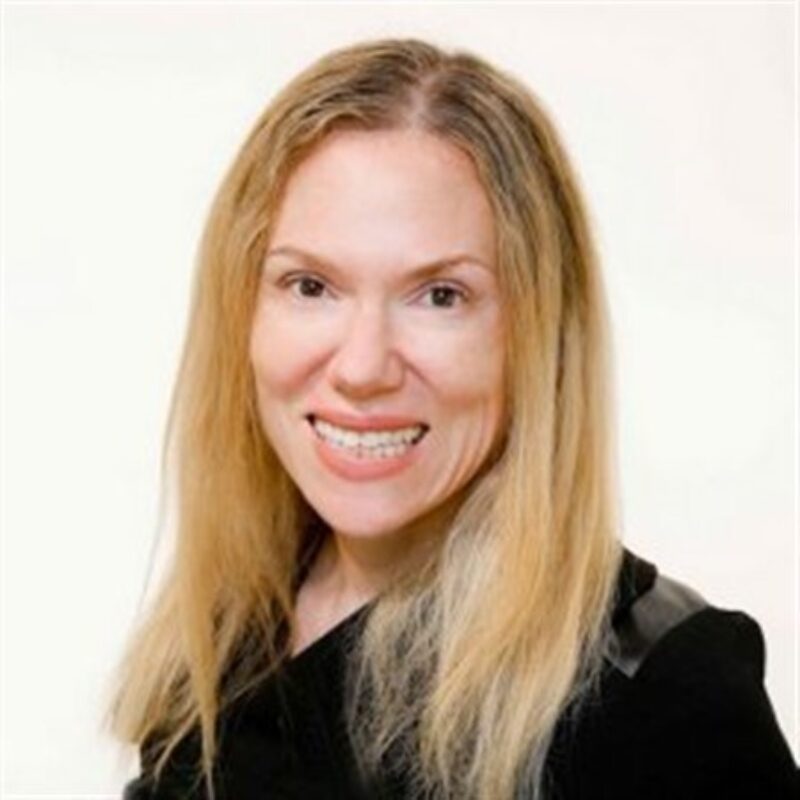
Dr. Elissa Abrams
Professor, Section of Pediatric Allergy and Clinical Immunology, University of Manitoba; Senior Medical Advisor, Public Health Agency of Canada
In this episode
00:00 Welcome and introduction 02:30 From fine arts to pediatric allergy 04:30 A path into public health 07:00 Allergic reactions to COVID vaccines 09:00 Over labelling and food allergy testing 12:30 Penicillin allergy labels 16:30 Why food allergies get over labelled 18:30 Peanut allergy in Israel and the UK 22:00 The LEAP trial 25:00 Feed early and feed often 29:30 Evidence, risk and family choices 33:00 Beyond the hygiene hypothesis 35:30 Plain language asthma care maps 37:00 Global Burden of Disease and guideline work 44:00 Advice for trainees
Select a timestamp to play the episode from that point.
Dr. McGavock: [00:00:00] Welcome to the Emerging Scholar Podcast. We hope you enjoy this series of great conversations with leading medical researchers that's designed for graduate students, medical trainees, residents, and fellows to help you on your journey towards your first scientific project. Welcome everyone to the Emerging Scholar Podcast.
This is our final teaser for season two of... And it's a interview we did in the fall of 2025 with Dr. Elissa Abrams, who's a colleague of mine here at the University of Manitoba, Department of Pediatrics and Child Health. And we invited Dr. Abrams to join us today for a few reasons. She is one of Canada's leaders in the area of pediatric allergy and asthma.
She sits on a number of clinical practice guideline groups, international guideline groups, and her passion is in academic medicine, advancing [00:01:00] science, improving the health of children. She's also fascinated by scientific communication. This is an area that we don't often talk about in our academic journeys and our journeys as an emerging scholar, so we thought we would bring Dr.
Abrams in both as a mentor and role model to show trainees and future pediatricians what life could be like as an academic, as a clinician, and also as a scientific communicator. Enjoy this episode Welcome everyone to the Emerging Scholar Podcast. We have another exciting guest for you today in a new area for the Emerging Scholar. We've tested out different themes, and this theme here is about pediatricians I mostly admire. And we have a pediatrician here in Winnipeg whose work is global, it's reaching, it's super exciting.
One of the best gra- rounds I think I've ever seen, Elissa, was from you, so it's my honor to have Dr. Elissa Abrams with us today from the University of Manitoba [00:02:00] Department of Pediatrics and Child Health. Welcome.
Dr. Abrams: Thanks so much for having me.
Dr. McGavock: So Elissa, you and I met, I don't know if you remember this, but my lab was right beside Alan Becker's lab.
Yeah. As I was starting my career, and I think you were doing your clinical fellowship with Dr. Becker, who at the time was the leading figure in pediatric allergy, pediatric asthma, was the president of every organization that we can think of, and on guidelines and doing r- RCTs. Your work kind of collided with that, which is really exciting.
So I don't know much about your own journey, so could you just tell us a little bit about how you got to where you are today?
Dr. Abrams: Absolutely. I, when I think about how I got to where I end up, I actually think back. Do you know this Einstein quote, "I have no special talent. I'm only passionately curious"?
Dr. McGavock: Yes.
Dr. Abrams: It's a great quote, and it really resonates in terms of my journey because actually I started out in fine and liberal arts. Hmm. I got a scholarship in undergraduate for my passion to and contribution to the fine arts, and medicine was [00:03:00] nowhere on my radar, nor was, in particular, allergy and clinical immunology.
I only became interested in medicine in my third year of undergraduate. My grandfather was diagnosed with cancer, ultimately succumbed to cancer. But in my experience with that, I realized how much of science is actually art, and conversely, I was realizing in undergrad learning the arts, how much of art is actually science.
You know, music, for example, is very scientific, is very mathematical. Mm-hmm. So I became very interested in medicine. And then when I was pursuing pediatrics, my last rotation was actually with Dr. Alan Becker, who we just talked about, in allergy. And we were seeing a child with asthma, and we were talking together about different types of asthma and different treatments for asthma, and I realized how much of asthma therapy is actually art.
And that's been- Hmm ... finally what sort of got me interested in pediatric allergy specifically.
Dr. McGavock: That's really cool. And I think Alan's also a huge proponent of the liberal arts for- Yeah. ... [00:04:00] undergrad education, right? I, I w- why do you think that's important?
Dr. Abrams: I think it's important for a few reasons. Number one, it certainly made me a better communicator.
Dr. McGavock: Mm.
Dr. Abrams: For example, in undergrad and in high school, I spent a lot of time in drama. Okay. It's made me better able to communicate. Number two, it inspired my interest in particular in knowledge translation because I didn't come from a scientific background. And finally, a lot of art is very mathematical. It requires a lot of critical thinking.
So the background in the arts allowed me to critically think, but perhaps in a bit of a different way than some of my colleagues did, which brought a unique perspective to the table.
Dr. McGavock: That's awesome. And I think that maybe contributes to your unique perspective as a professional as well. So we know you as a clinician who's giving grand rounds and treating kids with pediatric allergy.
We also know you as a researcher within the Children's Hospital, publishing papers, contributing to science, writing grants. But more [00:05:00] recently, you've entered into the field of public health, and I think this is something that we don't often talk about a lot as a career trajectory, which is working for the public in the sphere of public health.
And I think what you talked about earlier is really important, is communicating knowledge, communicating evidence, both to your colleagues and to the general public. So could you tell us a little bit about what got you into the public health sphere?
Dr. Abrams: Absolutely. It's a funny story because it also started with the arts.
My career in public health actually started with a book. Oh. So we rent a cottage in Willow Island every summer, and the owners of the cottage are prolific readers. And every summer I sort of look forward to reading a book on their bookshelf. I just happened to pick up this book called Epic Measures by Jeremy Smith, and this book is about the creation of the Global Burden of Disease unit by Dr.
Christopher Murray. Mm. The Global Burden of Disease unit, its foundation was really not just to look at years of life lost due to illness, but [00:06:00] years of life reduced because of reduced quality of life due to illness. And this really got me interested in thinking about public health. At the time, I was the head of the allergy section for the Canadian Pediatric Society, and I was working in the community, but I had some free time, and I started to toss around the idea of doing a master's in public health.
I ultimately started my master's in public health in 2018. We all know what happened in 2019 with the beginning of the COVID-19 pandemic, and I joined Public Health Agency of Canada at that time, initially to help with the COVID-19 pandemic, but I have remained there to this day. And it really resonates with me as A lesson that if you have time for education, if you have financial capacity for education, even if you don't know where the education will lead you, it's always worth pursuing it because you just never know where your life will end up as a result of it.
Dr. McGavock: Yeah. I've been to a lot of cabins. I've been to a lot of homes where I've seen a lot of libraries. I don't think I've ever seen a book about the global burden of [00:07:00] disease in anyone's cabin or library, so that's a unique place for - Yes ... and a chance book to read. But then the pandemic must have been the most amazing, also sad, but one of the most amazing experiences to really apply those skills in public health.
What were some of the messages? You know, we have our own experience on the outside, but for you on the inside, what were some of the messages you were really keen to get out? What were some of the things that you feel like we were really missing during the pandemic working on the public health side?
Dr. Abrams: So one of the things I was able to work on that was really interesting was looking at allergic reactions following vaccination.
So at the beginning of the pandemic when the vaccines rolled out, there were a bunch of reported allergic reactions initially in the UK, and then more globally following the vaccine. And if you look at rates of vaccine anaphylaxis, that's actually uncommon. Mm-hmm. Vaccine anaphylaxis usually you think of as more one in a million rate.
Dr. McGavock: Mm-hmm.
Dr. Abrams: Mm-hmm. So we started to think, are these really [00:08:00] allergic reactions? And something my colleagues and I were able to work on that was really fun was looking at rates of allergic reactions if people were revaccinated. Oh. So before COVID, people were never revaccinated if they reacted to a vaccine. It was sort of, you've reacted, you're allergic, stay away.
Hmm. And during COVID, because of the broader implications of vaccination, we started to look at revaccination, and what was really interesting was that over 90% of people who were revaccinated didn't react on the second dose.
Dr. McGavock: Uh-huh.
Dr. Abrams: And so in fact, those initial purported reactions were not in fact anaphylactic or true allergic reactions.
And then Canada, as a result, was one of the first countries in the world to change their recommendations and say, "If you've had an allergic reaction following a vaccine, it's not automatically a contraindication to being revaccinated." Once again, speaking to the art in medicine, right? Yeah, yeah, yeah.
There's a lot of gray. Yeah. Often you think you know something, but in fact you don't.
Dr. McGavock: Mm-hmm, and that actually presents a really cool methodological... I don't know if it's a natural experiment, but it gave you guys an opportunity, [00:09:00] right? There aren't many other- Yes ... instances or conditions or situations where you're gonna say, "A family's really interested in revaccinating."
Exactly. Even though they had what they thought was a reaction, they're still gonna go do it, and you're like, "Well, let's take advantage of that and see if we can answer this question." So that's incredible. One of the things that you and I were talking about earlier is your other passion in this public health sphere is over-labeling.
So can you tell us a little bit about what over-labeling is and your passion for that?
Dr. Abrams: Absolutely. There's two examples that I have. The first is looking at food allergies. So I'll give you an example. A family will come into my office and say, "My child has eczema. I wanna prevent food allergy. Can you please test all the common allergens so that we know if the child's allergic before we feed?"
Dr. McGavock: Hmm.
Dr. Abrams: The evidence here has really evolved over the past 10 to 15 years showing why that could be harmful. The first and most important reason, which is often [00:10:00] misunderstood, is that allergy testing isn't perfect and there's up to a 40% false positive rate on allergy testing. So I can test an infant for peanut allergy, just say, when they've never eaten peanut.
The test can come back positive.
Dr. McGavock: Wow.
Dr. Abrams: That child can stay away from peanut, and actually paradoxically increase the chance- Hmm ... that they'll become allergic through avoidance when they were never allergic in the first place. So one of my big passions is only testing when a child has to be tested.
Dr. McGavock: Mm-hmm.
Dr. Abrams: Because over-testing, even though it seems like it has the potential to be comforting, doesn't do much good. It can do a lot of harm.
Dr. McGavock: Okay. So how do you communicate that to a parent? 'Cause they're coming in- So this is- ... thinking, "I'm gonna be the greatest parent of all time." Yes. "I'm gonna get my kid tested."
Dr. Abrams: I know.
Yes. And it is a conversation, and it really does involve shared decision-making. Mm-hmm. Because if the family won't feed in the absence of testing, you're still better off testing than avoiding the food. So it's not that I will never screen or I will never test, but it is a conversation. So I'll say, "If I test without eating, there is a chance we're gonna falsely call your child allergic [00:11:00] just because of a test.
Our tests aren't perfect in allergy."
Dr. McGavock: Right.
Dr. Abrams: And are you comfortable feeding at home in the absence of a test? If the answer is no, I won't feed, it's still worth the test. If the answer is yes, we talk about how to feed, when to feed, what to do if a reaction occurs, and to call me if there's any issue. Mm-hmm.
Most of the time children do really well if they're fed early in life. There's never been a fatality on first ingestion of a food in infancy, so it is safe to do.
Dr. McGavock: Right. So that, that first, uh, scoop of peanut butter-
Dr. Abrams: First scoop of peanut butter ...
Dr. McGavock: is like- Yeah ... uh, I remember you giving grand rounds where it was like, parents are parking in the children's emerge-
Dr. Abrams: Yes
Dr. McGavock: uh, just outside in the parking lot with all of these potential allergens and just feeding the kid one spoon at a time and then saying, "Well, if anything happens, we can just go right through that door." Right. But I guess from a parent's standpoint, they wanna hear from you as an expert that it's gonna be okay.
And so-
Dr. Abrams: Yes, of course. A- and in fact, during the pandemic, we were approached through the Canadian Pediatric Society about that exact question because we had put out the recommendations to say feed [00:12:00] early, feed often.
Dr. McGavock: Mm-hmm.
Dr. Abrams: And during COVID, they came to us and said, "You know, can we really still recommend this during the pandemic?
We don't want children ending up in the emergency room or the hospital unnecessarily." So we actually really dug deep into the literature, and in fact we can confidently say that we think feeding in infancy is safe. In general, infant reactions tend to be milder, especially with first feeding. So going back to that example of sitting outside the parking lot, families will sometimes feel more comfortable doing that, but it's not necessary.
We're actually trying to de-medicalize feeding, going back to the way our grandparents would've fed our parents. You know? Yeah. Just sit them in the high chair and feed them.
Dr. McGavock: Yeah. And I think we'll talk about the LEAP study in a minute.
Dr. Abrams: Yes. Sure.
Dr. McGavock: Um, 'cause that for me was really important. But you said earlier there's a lot of over-labeling around food allergy.
Dr. Abrams: Mm-hmm.
Dr. McGavock: In addition to that, you published a paper a little while ago on beta-lactam-
Dr. Abrams: Yes ...
Dr. McGavock: allergy. So maybe do you wanna talk about that, and then transition maybe to- Sure ... to food allergy and what does that- Sure ... over-labeling look like?
Dr. Abrams: Sure. So when I [00:13:00] first started in practice, we were seeing a lot of children come in with this story of they were given amoxicillin, they had this nondescript rash, they were labeled as penicillin or amoxicillin allergic, and basically just avoiding the antibiotic.
There started to emerge all kinds of evidence that this could be really harmful. So it increases the risk of harsher antibiotics that maybe don't work as well, that have more side effects, and also increases the chance of antibiotic resistance. So we did this study initially in my practice, where we looked at children who had been labeled with penicillin allergy, amoxicillin allergy more specifically.
We looked at several hundred children. Of those that were labeled allergic, guess how many actually were?
Dr. McGavock: So they were labeled by their physicians as allergic.
Dr. Abrams: Yes Uh- Based on the history of a reaction. I don't know. Take a guess.
Dr. McGavock: 50/50.
Dr. Abrams: Okay. No. Less than 1%- Whoa ... were truly allergic. And so this is what's really great in allergy is that every once in a while, you have this area where the tools are simple, the risk is [00:14:00] low, and the benefit is enormous.
Dr. McGavock: Wow.
Dr. Abrams: So what we've now evolved to is if the history sounds like this child is not really allergic, the chance of a serious reaction is low, just give them a dose of amoxicillin in your office. Watch them for an hour. If they don't react, they can take amoxicillin in the future. And I'm now lucky enough to be part of a national study looking at this, and we're continuing to see that most of these children can use the safe, easy antibiotic in the future.
Dr. McGavock: So I have a nine-year-old, but this is a little bit foreign to me. So the... I don't wanna throw your colleagues under the bus.
Dr. Abrams: Okay.
Dr. McGavock: So a child gets penicillin or whatever, right?
Dr. Abrams: Mm-hmm.
Dr. McGavock: The parent says they reacted to it or- Yes ... and then- Yes ... so they go to their pediatrician. The pediatrician s- uh, without, I guess, doing a deep dive to see whether or not that's true, and maybe the parent's fears are heightened by health influencers or whatever on social media, so they're really nervous.
So they say, "My child had a reaction. I don't think we should do this again." And then the [00:15:00] pediatrician, how do you communicate this to your colleagues to say, "Let's just double-check just to make sure what the parent told you is actually accurate, and it's not something different that could lead to them being over-labeled"?
Dr. Abrams: Yes. And that's interesting because it's not that it's not real. It's just that it's not allergic. So if we go back to the example of the reactions following COVID vaccines, were real reactions. People were short of breath. They were nauseous. They were flushed. It can look allergic, but a lot of what can look allergic is not truly allergy.
So for example, if you have a child that's sick and they're put on an antibiotic, it's really common to get a rash. The rash can look allergic- Mm-hmm ... and it can be labeled allergic, but the rash may just be the underlying virus, or maybe some combination of the virus and being put on an antibiotic as opposed to a true allergy.
And that's why it's sometimes important to think beyond the initial story because it's real. It happened. Right. But it, that doesn't necessarily mean that it's a true allergy or that it requires a lifetime of [00:16:00] avoidance.
Dr. McGavock: Right. Uh, there are bigger consequences.
Dr. Abrams: There can be.
Dr. McGavock: Right.
Dr. Abrams: Absolutely.
Dr. McGavock: Right. So I guess in the food allergy world, you also said that- Mm we have a lot of over-labeling as well. Can you give us some examples? And then we'll do a little deep dive into the LEAP trial, which I just found absolutely fascinating. But, uh, that, that would be peanut allergy. Um- Yes ... but which ones do you see most often, and why are we over-labeling in the food world?
Dr. Abrams: I think it's a combination of factors that are resulting in potential over-labeling.
The first goes back to what we just talked about. So for example, an infant is fed a food, a little bit gets on the surface of their skin. The skin does get red. Mm-hmm. It does get swollen. It can really appear as if it's an allergic reaction. Mm-hmm. But it can just be contact hives or contact irritation as opposed to a true allergy That's one of the big reasons.
Another reason I think perhaps is there's just a hesitation to feed. So it's not [00:17:00] necessarily over-labeling, but I think we can be contributing to the problem of this rising, what we'd previously called an epidemic in food allergy, just through avoidance. And we're still trying to teach this feed early, feed often theory to families and to clinicians.
Dr. McGavock: So maybe on the side of the parents, they have a heightened concern and they're looking for it, so then they come back to their pediatrician, said, "We fed our child eggs for the first time, fed our child peanut butter for the first time, and it looked like they had a rash or they had another symptom that we think makes them allergic."
And then do they ask for follow-up testing? Are they getting referred to your clinic to confirm that, or is it just they're being labeled?
Dr. Abrams: Absolutely. They're being referred, in my experience, and tested formally. And it's not even necessarily that there's heightened anxiety. The, the reaction there is real.
We're seeing lots of eczema. 20% of infants have eczema. So lots of kids can get rashy or what Alan Becker would've called blotchy, splotchy when they eat foods. Is that a true allergy, or [00:18:00] is that just irritation on the surface of the skin?
Dr. McGavock: The over-labeling comes from the parents labeling their kids, and then they're not getting follow-up testing in your clinic to rule it out, right?
Because-
Dr. Abrams: Mm, they, the over-labeling can be that. It can also be the false positive on allergy testing. Okay. So if you do panel testing, for example, if a child comes into your practice and they had a possible reaction to peanut, and now they're avoiding peanut, tree nut, milk, egg, seafood, legumes, if they are tested to 20 foods, some foods are gonna come up positive even if they're not allergic, and that does have the potential to over-label them.
Dr. McGavock: Okay. And then I guess this goes into our next question around equipoise, and maybe this- Yes ... is where the LEAP study comes in. Do we wanna take the team through the LEAP study- Sure ... first and then get into it, or the LEAP trial? I wanna go back to the 2008 observation, the international observation- Yeah around peanut allergy and what they found in Israel. So maybe- Yes ... can you start us there and then into the trial?
Dr. Abrams: Sure. [00:19:00] So the whole field of allergy prevention really started with a conversation between two allergists, one in Israel and one in the UK. And the allergist in the UK was saying, "You know, we're seeing so much peanut allergy now."
There had been a 20% increase in peanut allergy over a 10-year period. The allergist in Israel said, "We don't really see peanut allergy here." And so they decided to formally study it, and in fact, that bore out in the literature. When they formally studied it- They found that there was a tenfold higher rate of peanut allergy in the UK compared to Israel.
Dr. McGavock: And this is confirmed, right? This is not- Yes ... over-labeling. This is-
Dr. Abrams: No, this is not over-labeling. This is confirmed ... using
Dr. McGavock: the same methods to diagnose.
Dr. Abrams: Yeah. Yeah. Same method in your observational study.
Dr. McGavock: Something's- Yes ... happening in one of the two
Dr. Abrams: countries. Something... Exactly. Right. And so what was happening, a peanut puff called Bamba is what was happening.
So in the UK, the recommendation was stay away from peanut until a child is two to three years of age. In Israel, there is a peanut puff called Bamba that is a not [00:20:00] choking hazard. It dissolves in the mouth. It is everywhere. It's like the Cheerios of Israel. Okay. So you can find it at any grocery store, any gas station, and infants were munching happily on these peanut products early and regularly in infancy.
So they hypothesized at the time that maybe the reason there was this big increase in the UK and they weren't seeing it in Israel, was that peanut was being eaten early and regularly in Israel, and that led to the LEAP study.
Dr. McGavock: Which- Could potentially scare the daylights out of anyone. So we have this observation, this cultural- Yeah food in Israel that we- Yes ... think is the benefit. But now we also have parents who are terrified of an- Yes ... anaphylactic reaction. And-
Dr. Abrams: Yes. We caused that by saying stay away ...
Dr. McGavock: which is super interesting, right? I guess that's the, the difference, and, and I hope we get into this later, is that there's evidence, there's equipoise, and then there's clinical practice.
And the- Yes ... clinical practice didn't have the evidence to say avoidance is the key.
Dr. Abrams: It was based on this hypothetical theory that if you allowed the gut to mature-
Dr. McGavock: Mm-hmm ...
Dr. Abrams: the gut would be less [00:21:00] likely to react. We didn't have evidence in those days. That was before my time, but there wasn't evidence in those days.
Mm-hmm. So it was a theoretical basis of how you became allergic, and it just didn't pan out in the real world.
Dr. McGavock: Do we know where that original gut feeling, pun intended, came from- ... the experts?
Dr. Abrams: It was a hypothetical sort of pathophysiology, and if you think- Mm-hmm ... about it, it sort of makes sense. You know, the gut is leaky when you're little.
Give it time to mature. If it's more mature, if your immune system is more mature, you shouldn't react. At the time, we didn't realize what we now think to be the case, which is that you become allergic through the surface of your skin.
Dr. McGavock: Right.
Dr. Abrams: And that, in fact, avoidance increases your risk because your body isn't exposed through your gut, which is used to seeing food, but through your skin, which is not used to seeing food.
Dr. McGavock: Right. And this goes back to one of our interviews with Gordon Guyatt, where a lot of the clinical practice guidelines were good old boys around the table, sitting around a table, GOBSAT, rather than clinical evidence. So we have this observation. The observation- Yeah ... of differences in the UK and Israel isn't [00:22:00] enough to change clinical practice.
We need a large scale RCT. Mm. So what was the LEAP trial and, uh-
Dr. Abrams: Sure ...
Dr. McGavock: how did they do it- Sure ... and then what did they find?
Dr. Abrams: Sure. So you know, my parents would say everyone knows where they were when Nixon resigned, or I would say everyone knows- The shuttle.
Dr. McGavock: The shuttle ...
Dr. Abrams: where they were. Yeah. Yeah. So in allergy, really truly, everyone knows where they were when the LEAP study results came out.
So the LEAP study was the Learning Early About Peanut Study. What they did was they randomized infants who were at high risk of food allergy, either because they had moderate to severe eczema or they already had an egg allergy, into a group that were fed peanut early and regularly in infancy, or a group that completely avoided peanut until they were five years of age.
And they looked at whether there was a preventative benefit with feeding early in life compared to complete avoidance, and in fact, there was. There was about an 80% reduction in peanut allergy with feeding early and regularly compared to avoidance.
Dr. McGavock: It was huge, and just reading the paper again last night [00:23:00] Even in the highest risk kids, right?
Mm-hmm. Um, and then pathophysiologically, they also demonstrated the mechanism.
Dr. Abrams: Yes. Yes.
Dr. McGavock: Which was it's priming your immune system, right?
Dr. Abrams: Exactly, and if you think about the surface of the skin, especially in children with eczema, you know, those allergy cells live right under the surface of the skin. If the gut isn't seeing it and telling the rest of the body, "This is okay.
You're tolerant to it," and your skin sees it, especially irritated, inflamed skin, you can see how you can start to mount an allergic response to it.
Dr. McGavock: Now, great clinical evidence. Uh, we would all agree this is what should be in the clinical practice guidelines.
Dr. Abrams: Yes.
Dr. McGavock: However, some things are sticky. Like our concern right now about vaccines and autism.
Mm-hmm. It's a sticky topic, and- This I feel like would have been really sticky. So this was published in 2015. Mm-hmm. Follow-up study just came out this year, so the kids are- Yes ... still protected, right- Yes ... in their teens. Mm-hmm. So this is another one of these amazing clinical trials where you do [00:24:00] something early in life, and you get the protection decades later.
Super rare, very important. Now you have to change the mindset of two different groups. Mm-hmm. Parents who are maybe terrified- Mm-hmm ... of introducing peanuts, and two, your own colleagues who lived through the era of avoidance.
Dr. Abrams: Yes.
Dr. McGavock: And so you sitting on clinical practice guidelines, or as we'll talk about in a minute, on the global burden of disease unit, what was that like trying to convince your colleagues that, okay, now we have to totally shift away from what we've been telling you, especially pediatricians, right, who are on the front line.
You gotta change everything, and not just a little bit. You have to like totally reverse all the messaging that you've been promoting for the last- Yes ... 10 years.
Dr. Abrams: It was definitely a process, but I will say it speaks to the beauty of science. The goal of science is to continue to learn and to continue to grow, and to be able to say, "We've made a mistake.
We need to do things differently." Mm-hmm. And that's okay. We acknowledge uncertainty. We acknowledge where we've gone wrong. Mm-hmm. And we now have really good [00:25:00] evidence to go in a different way. All international guidance now points the same way and says, "Feed early, feed often." It's actually a rare jewel in medicine where everyone agrees.
Yeah. All international guidance completely agrees on this. They disagree a little bit on how early, how often, which foods, but every single international guideline on food allergy prevention does say feed early. And I would say we've done a good job with the feed early part. So there was a study that came out of Australia that's now showing that most infants in Australia are eating peanut early.
Dr. McGavock: Hmm.
Dr. Abrams: Where we maybe have some work to do is on the feed regularly. So what I still see is, oh, I fed peanut, I was told to feed it early. I did, but I didn't keep it in the diet. And I was lucky enough in Canada to be an author on, I believe, one of the only guidance statements in the world to focus specifically on regularity, that it's not just enough to feed early.
You have to keep it in the diet. A colleague of mine once said it's like the immune system is like your brain learning math. [00:26:00] You can't look at a math problem once and then feel like you understand math. Yeah. You have to continue to revisit it, and your immune system is the same way. It's not enough to feed peanut once or peanut product once if you're an infant.
Your body really has to continue to be exposed to it, or else it will forget that it ever tolerized it. And in fact, in Canada, we're now saying, look, if you're, for example, vegan and you're not gonna eat egg or milk at home, don't bother feeding it to the baby to check it off a list. Unless it's part of your diet, there's no point in really feeding it- Hmm because you do have to keep it in the diet for your body to remember not to start reacting to it. '
Dr. McGavock: Cause that was a big part of the trial. The trial was not- Yes ... a single dose, right? It was- Yes ... one group avoid it. Yes. And the other group- Yes They have a great line in the methods that you can tell a reviewer put it in there was, "We couldn't find a placebo."
There was a question about- Yes ... why didn't you do a placebo-controlled- Yes ... trial where it's like- Yes ... give everyone peanuts and one doesn't. But they're like, "W- we couldn't find a placebo for what's it called, Bamba?"
Dr. Abrams: Yes.
Dr. McGavock: But the key there was, the [00:27:00] message to the parent was, you have to c- do this on a regular basis, right?
So if you're gonna implement this into guidelines, which you as a, an evidence-based consumer and clinical practice guidelines designer says, "No, no, no, you can't. You gotta send the message to the parents, whatever we did in the clinical trial is what you need to do in real life."
Dr. Abrams: Absolutely. Maybe.
Dr. McGavock: Maybe.
Dr. Abrams: Maybe.
Dr. McGavock: It might change.
Dr. Abrams: Right? Because sometimes clinical trials don't apply to the patient in front of you, and that speaks to where, you know, science ends and real world begins. Low-risk infant who doesn't have eczema, who doesn't have a family history of food allergy may not need to eat peanut at four to six months of age, or peanut products, the same way that a child with moderate to severe eczema.
And you know, there was an interesting study out of Australia recently that showed that even though infants are all eating peanut, they're not seeing rates of peanut allergy drop. They have in the US. It made the news recently. There was a big study out of the US that showed it. They haven't seen it in Australia yet.
So that really [00:28:00] speaks to, you know, do we have enough with one study? Even if all the evidence points in the same way, will that apply- Mm-hmm ... to every child? Going back to the art of children with asthma. If you look at asthma, not every child with asthma will respond the same way to the same medications.
Right. And not every child with asthma will have the same life trajectory. It really goes back to that child in front of you.
Dr. McGavock: And it's understanding that absolute risk. We just wrote a blog post about what's the difference between absolute and relative risk looking at- Mm-hmm ... exposure to radiation from medical imaging.
And the headlines will say, "One in 10 pediatric cancers are linked to imaging," which is an insane statistic, but when you look at the absolute risk, it's one in 25,000, one in 100,000 depending on the exposure that you're getting. So it's very low. A- and this, in that clinical trial, in the larger population, not in the high-risk population, there was only 90, but in the larger trial, it was 600, the absolute risk for a true allergy at the end of the trial was relatively low, right?
So even in the [00:29:00] unexposed group, your child's absolute risk isn't something that you should be worried about. But again, that stickiness of the message is- Well, if I don't do this, my child's gonna get it for sure. Uh-
Dr. Abrams: Right. And it's certainly excellent evidence that feeding early has a role. We certainly have no evidence that avoidance plays any part.
What we don't know, though, is whether this will work for everybody, and we certainly don't want families feeling as if they, quote-unquote, did something wrong- Right ... if their child still develops a food allergy, because there's a lot that plays into an individual child's risk. Mm-hmm. And it's really not as straightforward as just feed early.
There's certainly a lot more that plays into it.
Dr. McGavock: Yeah, so what would be the absolute risk? What's the current prevalence rate of food allergy in kids under five? Or peanut allergy, let's say. Yes.
Dr. Abrams: So this is a great question, and it actually reminds me of a study that speaks to many of the things that we've talked about.
So they took younger siblings of peanut allergic children, so confirmed peanut allergic children in the older sibling. This was a study done out of Quebec. It's [00:30:00] one of my favorite studies of all time. They took highly motivated families. They brought them into the office. They did double blind skin testing.
Okay? So these children went through two rounds of skin testing If the child tested positive or negative to peanut, no matter what, they still fed the child peanut in the office. So the parents were willing to accept the risk no matter what the skin test result.
Dr. McGavock: Wow.
Dr. Abrams: 95% tolerated. So in a higher risk group, about 5% were positive and were told to avoid.
95%, these highly motivated families, older child is peanut allergic. They said to the family, "Go home. Keep feeding peanut regularly." Fast-forward two and a half years, what do you think they found?
Dr. McGavock: Rates were still low.
Dr. Abrams: Yeah. Most families were not feeding regularly. Oh, they weren't? And the biggest risk for development of peanut allergy over that time period was irregular feeding.
But another really interesting part of this, and this really speaks to shared decision-making and talking to every [00:31:00] family as its own entity, because everyone will bring different values and preferences into a clinical visit-
Dr. McGavock: Mm-hmm ...
Dr. Abrams: was they said to these families, "What if I had just said to you, 'Feed peanut without testing'?"
And in fact, that's our guideline recommendation. I'm part of it. You don't need testing before you feed. We've talked about this.
Dr. McGavock: Mm-hmm.
Dr. Abrams: Most of the families either said, "Great, we'd continue to avoid it," or, "Great, we'd seek a second opinion." Most families were just not comfortable feeding. Wow. Wow. So even though we've talked about the harms of over-screening, et cetera, et cetera, it once again really does speak to the preferences and the goals of the family in that visit.
Because for some families, unless you test, they aren't gonna be comfortable.
Dr. McGavock: And that's really important part of clinical practice guidelines- Mm-hmm ... is the patient values and preferences. Yes. And right now, the sticky part of this whole issue is still, "I don't wanna put my child at risk."
Dr. Abrams: Of course. Right?
And no parent does. I don't either.
Dr. McGavock: But they're taking a larger risk by maybe avoiding.
Dr. Abrams: Perhaps, yes.
Dr. McGavock: Right? Because they don't- Yes ... want that [00:32:00] acute reaction to, "I did this, and then something, then my child got sick, and it's because of the introduction," right? Yes. They're still stuck in this concept of avoidance is the key, right?
Dr. Abrams: Although I think we've made inroads there, I really feel here anyway, in the families that I see, they are getting the message feed early, and what we're now working on is the feed often or don't bother.
Dr. McGavock: Right. And that's ... I do remember putting the first spoonful of peanut butter into my child's mouth.
As you know, my wife's a pediatric surgeon, so we were less worried, like we knew we could do something, but it was terrifying. But also reading the trial results and saying, "It's our responsibility." Like, it came out, like, the year he was born kind of thing, so it was kind of on us to keep that going. We had the evidence and we wanted to apply it.
Now, the other area that falls in the same scientific concerns or these dichotomous messages that we're getting from the public and then from the science was around the hygiene hypothesis. [00:33:00] Mm-hmm. And, and now you have an interest in the household environment and the structural and- Absolutely socioeconomic factors. So the hygiene hypothesis, again, Alan Becker I think was, was a key player in there. Do you wanna just tell us a little bit about what we believed at one point and then what the RCT told us later?
Dr. Abrams: So the hygiene hypothesis is it goes back to, I think it was published in Time Magazine, that picture of the child playing in the mud, and that we're basically, as a society, there's reasons why we're very clean, but the cleanliness, the lack of vitamin D, antibiotic use, all of these things are contributing to an increased risk of allergy.
And we did see that over... Early in my career in particular, we were seeing skyrocketing rates of allergic disease in general. And in fact, when I first started training, I was very focused on more traditional environmental determinants. So for example, we test for indoor allergens, and pets, and molds, and pollens.
And I would say to a family [00:34:00] of a child with asthma, "Well, these aeroallergens influence your child's risk, and this is how, and this is what you can do." And certainly we still do tests for aeroallergens, but as you alluded to, my own work, and broadly within our field, we really have shifted. And for me, the influence was my master's in public health.
I focused on social determinants in health literacy. Mm. But we've really focused much more broadly, is that allergens and environmental exposures really sit within a much more complex web of structural inequities. And we've realized that context determines health opportunities. So I now am much more aware that there's other factors that will contribute to two children, both of whom are dust mite allergic, and both of whom have asthma.
Their trajectories are going to be very different because of housing, income, food access, transportation, health system, all of those other things, health literacy, that interplay, and that there are many other factors in a child's world that influence their ability to be healthy. [00:35:00] My own career has shifted that way, and I think within allergy, we have shifted as a specialty that way as well.
Dr. McGavock: And how have you taken that shift into your clinical practice? So when you're sitting there with a family, or even, like, I would say you're one of the experts nationally too, so people are coming to you for advice on what they should be telling parents. So how are you taking that message and translating it into the one-on-one face-to-face with a parent?
And question two, I wanna know, what did you call it, an asthma map thing? An
Dr. Abrams: asthma care map.
Dr. McGavock: Sure. Asthma care mapping. I wanna hear about that, too.
Dr. Abrams: Okay. I'll talk to you about airs- asthma care mapping first, because it actually speaks to your first question. Okay. So an asthma care map is, your child has asthma.
When they're healthy, take these medicines. If they're coughing, use this as a reliever. If their asthma is worse, sort of like not green zone, but yellow zone, this is what you do. And then if their asthma is red zone, this is what you do. But when I looked at this in my master's, what we found is that most asthma action plans were [00:36:00] written well above a grade six level.
Oh. And so in fact, many families who are getting these asthma action plans, or receiving asthma action plans, and don't even understand what they mean. So as actually part of creation of an asthma care map that is written at below a grade six level, there are now many. But that's an example of what you can do in your practice, making sure that the information you provide families is written in a way that can be understood, that doesn't incorporate jargon.
Yeah. Right. That is written in a clear way. That you provide them an opportunity to ask questions. That you ask about whether they have insurance to cover their medications. So for example, I have some samples of medication that is always kept in my office, and if families don't have access, often we can provide the medication to a family.
Yeah. That's another example of- Nice ... something that we've tried to incorporate into our practice. It's an ongoing process, though, and I think it needs to be continually thought about individually, but also at a broader level, too.
Dr. McGavock: Nice. And then I guess to transition into, [00:37:00] like, that equipoise at the bedside to the Global Burden of Disease unit.
Yes. So writing guidelines for your colleagues and developing the next best evidence for us, or generating that global evidence that kind of informs what we do. I get these emails, you know, once a week from The Lancet, yeah, another report. I've been on guidelines myself, guideline development. What's it like on the inside?
You're one of the only pediatric allergists in this unit. Which topics are you involved in, and, and what's it like working with these experts and, and creating guidelines?
Dr. Abrams: Sure. So I'll speak to Global Burden of Disease first, but then if I can, I'll also speak to the Joint Task Force, 'cause we do a lot of guidance, too.
The really cool thing about the Global Burden of Disease is the lesson that it's always worth taking a risk. Anybody can theoretically join the Global Burden of Disease unit. They have to accept you, but anybody can apply, and I just applied. I was lucky enough to be included, but there's 18,000 people internationally that are part of the Global Burden of Disease unit.
It's a huge international [00:38:00] unit. They look at all kinds of burden. They look at burden related to dental caries, for example. They look at everything, and then they send out manuscripts, and if you contribute enough to the individual manuscript, you may or may not be included as an author. But the really cool thing about Global Burden of Disease is that it's purpose-driven, not esteem-driven, similar to public health.
So when it's published, it's published as Global Burden of Disease Unit. Right. The goal is to make the world a better place. The goal isn't individual esteem.
Dr. McGavock: Are they identifying areas where we have a major knowledge gap? How do they specify the questions that should be addressed within, like in the respiratory world?
A lot of the work that I see right now is low and middle income versus higher income. Certain groups don't have enough data. We need clinical practice guidelines for this area. How are they choosing the topic items, and what's it like when you're having those kind of discussions?
Dr. Abrams: So they've published on so many topics, it's almost innumerable, and they're really looking [00:39:00] broadly, and this is much beyond my pay grade.
This goes to sort of the inner team, but what reduces quality of life? So for example, they found that lower back pain and dental issues, even in low-, middle-income countries, are a much bigger burden than you would anticipate. Mm. It goes back to, and we see this in the joint task force too, when we're looking at allergy guidance, is trying to move the specialty, the field of medicine forward to really look at truly what causes burden.
So I'll give you an example. This isn't global burden of disease, but we see this in allergy.
Dr. McGavock: Mm-hmm.
Dr. Abrams: So when you, if I ask you, what's the burden in food allergy, what would your response be?
Dr. McGavock: From a parent standpoint?
Dr. Abrams: Yeah
Dr. McGavock: Missing school
Dr. Abrams: Okay. Missing school. And what I often hear in practice is death, you know, the risk of death due to an allergic reaction.
If
Dr. McGavock: you- That's the
Dr. Abrams: burden That's the burden. Yeah. Families are very nervous. There is a risk of anaphylaxis. Anaphylaxis can cause fatalities. We see it in the news. It's [00:40:00] heartbreaking- Mm-hmm ... when it occurs. It's often unexpected, it's awful, and it can happen, and that places a huge burden on families. But the actual risk of death due to anaphylaxis is something like one in 10 million.
Dr. McGavock: Yeah. That's why I would've said that- It's, yes ... parents are more, like, proximal in terms of their concerns. Like, I don't wanna send my kid to school because they're gonna get exposed to whatever, but I also don't want them to miss school. But you're saying that- Right ... even though it's a super low risk, the burden from parents is still- It's,
Dr. Abrams: it's huge, and it causes a significant impact on quality of life.
That's where immunotherapy came in, is to improve quality of life because it reduces the risk of an allergic reaction- Hmm ... because of accidental exposures.
Dr. McGavock: Wow.
Dr. Abrams: So when you're looking at food allergy, you have to understand the burden from the patient-family perspective, but also know what the true risk is, and really address the core issues, what the family, the child-
Dr. McGavock: Mm-hmm
Dr. Abrams: are concerned about, the school are concerned about.
Dr. McGavock: Wow, that's interesting. So then, like, on your knowledge translation journey too- Mm-hmm ... how does the joint task force then try to reduce that burden [00:41:00] for a risk that is exceedingly low?
Dr. Abrams: Yeah, this is a great question. So the joint task force is, it's a group of 12 of us.
We're elected to represent the American College and the American Academy of Allergy, and we participate in and facilitate ultimately all the guidance that's endorsed by those two societies. So there's a few Canadians, most are American. We have an eight-year term. We meet several times a year, and we get big groups together to write the allergy guidance that ultimately is endorsed within the US and within Canada-
Dr. McGavock: Mm-hmm
Dr. Abrams: as well. As we sit around the table, often we do come to either the question of how do we translate actual risk or how do we translate uncertainty, which is something else that we've talked about.
Dr. McGavock: Mm-hmm.
Dr. Abrams: And I'm increasingly realizing that both of these concepts, I used to think of them almost as flaws in our system.
Why don't we understand real risk and uncertainty? We shouldn't have any uncertainty. And now I'm learning to appreciate, relish, almost celebrate them because these- [00:42:00] Concepts are part of the process that drive science forward. What's really important in guideline development, and we've worked a lot in the joint task force to do this, is to say, "Look, here's what we know.
Here's how you can make a good decision in that space." But always recognizing, going back to food introduction, that even though we have excellent evidence, high certainty evidence, from many studies, observational and randomized control trials, that show that feeding early in high-risk babies in particular has a role in prevention, that may not work for every single family sitting in front of you, and it still ultimately always comes down to shared decision-making.
Dr. McGavock: Awesome. Uh, Gordon Guyatt said that was the most important piece and the thing that was missing from a lot of the guidelines.
Dr. Abrams: Yes.
Dr. McGavock: Do people with lived experience sit on the joint task force? How do you get the voice of the family into your decision-making? Great
Dr. Abrams: question. They don't sit on the joint task force.
It's 12 of us were physicians and epidemiologists, but they are always part of the guidance. So we recently had an atopic dermatitis guidance come out. I [00:43:00] shouldn't say always. S- recently, as of the past few years, they are now.
Dr. McGavock: Mm-hmm.
Dr. Abrams: It had patient partners and patient advocacy organizations that participated, and it certainly made the guidance much better and much more translatable.
Dr. McGavock: It must be really exciting to sit on that panel with 12 of the experts to-
Dr. Abrams: It's wonderful ...
Dr. McGavock: to go through the science- Yes ... and, like we said at the start, the art of it, the science of it. And also, I think we've moved in this area Only recently, I think, really putting the patients first, like really thinking about-
Dr. Abrams: Absolutely
Dr. McGavock: like how are the families gonna respond to these guidelines, not just how are my colleagues gonna respond to them.
Dr. Abrams: At the end of the day, the research means nothing if it doesn't apply to the family sitting in front of you.
Dr. McGavock: Right.
Dr. Abrams: And that's part of what I love about knowledge translation, is that it tries to help take that research and apply it to a family.
Mm-hmm. But a randomized control trial can be the most rigorous, wonderful, high sample size, show a huge effect. It's meaningless unless it's understood and applied within the families in your practice.
Dr. McGavock: That is [00:44:00] absolutely perfect, and I don't wanna put words in your mouth, but is that the advice that you would give to Let's say we have some residents here who are just thinking- Yeah ... "Whoa, this is amazing. Like, I've always wanted to do allergy or immunology. I wanna be a pediatric allergist just like Dr. Abrams." What advice would you give them? Uh, I think that, for sure, should be one of the take-homes from this interview, but- Sure what else would you say?
Dr. Abrams: I have a few pieces of advice that I've learned a- along the way. The first is always take risks. So when I started, I graduated right after having premature twins. Hmm. And so I went into the community because at the time it was just the most feasible thing. And I really felt when I chose the community practice, ugh, I wonder if I will be able to be as academic as I wanted to be because I'm working in the community.
But I was interested in knowledge translation. I started emailing people from my Gmail account. I emailed the CMAJ, and I said, "I wanna write an article about food allergy prevention." I wrote the head of the section at Mount [00:45:00] Sinai in New York and said, "I wanna write an article with you." It's worth taking risks.
If you work hard and you're motivated, people will work with you. And CMAJ wrote me back to my Gmail and said, "Yes, submit an article. We'll see. It'll go through peer review." It was ultimately published. It was my first big article. It spurred a lot of my interest in KT, knowledge translation. Nice. So always take risk.
Find mentors. Find people that are right for you, where you look at them and you say, "Oh, I wanna do what they did." Mentors will also mentor you if you're motivated and interested.
Dr. McGavock: Besides Al- Yeah ... Alan Becker, do you wanna give a shout-out to any key mentors that you've had along the way?
Dr. Abrams: Oh, I have so many.
I would say Scott Sicherer, if I could. He is still at Mount Sinai. And I remember I emailed him from my Gmail at night and said, "I'd like to write an article on food allergy diagnosis and management with you." And I got an email back in the morning from him- Wow ... saying, "Thank you for your email. It would be an honor to work with you."
Wow. I had done [00:46:00] nothing at that time. Right. He is still a mentor of mine, fast-forward 13 years. So that would be one. But we're very lucky in the field of allergy. It's a wonderful group of people, and I have many colleagues who have become close friends. It's a wonderful, wonderful group.
Dr. McGavock: So what are some of the other points that you'd give to mentors, trainees?
Dr. Abrams: I- sure. I have two more. The first is that adage, you know, you see those pictures of those skiers, and it says, "All who wander are not lost." I used to have a poster of that in my office.
Dr. McGavock: I have one in my office, yeah.
Dr. Abrams: I love that saying because it's true. My dad used to say, "Do things that you love because your career will find you."
And it's really true. Trust your journey. If you like art, go into art. If you start medicine and you're not sure where you wanna go, that's fine. If you wanna do extra training in something that seems like it has no real relevance to your current career, wonderful. Do the training. You just never know where your life will take you.
If you follow what you love, the career will find you.
Dr. McGavock: Nice.
Dr. Abrams: I would say that. And then finally, and this speaks to broader principles in life, it's that saying [00:47:00] about the jar with the big rocks and the little rocks. And if you have a jar, you always put your big rocks in first because the little rocks will fit if the big rocks go in first.
If you put the little rocks in first, the big rocks won't. When you start to get busy, you can forget those big rocks in your life, your family, your friends, other things that you're passionate about. You will be a better physician, you'll be a better researcher, you'll be better in public health and anything else that you wanna do in your career if you remember what really matters to you at the end of the day.
Dr. McGavock: And so for you, your big rocks are your family-
Dr. Abrams: Yes ...
Dr. McGavock: your wellbeing.
Dr. Abrams: My wellbeing. I play piano.
Dr. McGavock: Oh, nice.
Dr. Abrams: I take hip hop dance once a week on Monday nights. Nice.
Dr. McGavock: Nice. Nice.
Dr. Abrams: So always- Great ... remember the other things that you love, and you don't have to give those up to have a wonderful career. In fact, they will enhance your career, and they'll make you happier in your career.
Dr. McGavock: Beautiful. I think that is a perfect way to close this out. Thank you for all the amazing work you do, Elissa, for the province, for the country in terms of this really important work, and for dedicating yourself to the knowledge [00:48:00] translation piece, to training your colleagues and educating your colleagues, educating families, so that we can take all this great science and put it into action.
Keep up the great work, and I look forward to seeing you walking through the halls of the Children's Hospital sometime soon.
Dr. Abrams: Sounds good. Thanks so much for having me. Awesome.
Dr. McGavock: Thank you.
That was a fascinating interview with Dr. Elissa Abrams. There were many things that I knew about Dr. Abrams going in, but there were also many things that I had no idea about. I know her mostly through her work within peanut allergy. However, the work she had done with COVID, her reasons for joining the Public Health Agency of Canada, the work she's doing right now on over-labeling was absolutely fascinating to me.
We can see here as emerging scholars ourselves how much low-hanging fruit there is in improving the health of populations by asking really simple [00:49:00] questions. And a simple question might be, are we over-diagnosing? Are we over-indicating? Are we over-labeling families at risk for allergies that may not be there?
And doing a deeper dive into this led to a huge discovery on her part, and that changes guidelines almost immediately. And so I hope you enjoyed this, and I hope this serves as an example for you as an emerging scholar in the different avenues that you can take in your journey in academic medicine, but also in scientific communication And with that, we ask that you stay tuned for season two of The Emerging Scholar Podcast.
Here at UMFM, we will be dropping the first episode with Dr. Megan Peters from UC Irvine on the fascinating topic of how to take a research question and turn it into a research project. Whether you're designing your first research study, wrestling with methodological challenges, or simply passionate about rigorous and [00:50:00] meaningful research, this season is for you.
So let's dive in, stay curious, and continue building the skills that will shape your own scientific journey. The Emerging Scholar Podcast was recorded in the UMFM studios located at the University of Manitoba in Winnipeg, Manitoba, Canada. This is Treaty 1 territory, the original homeland of the Anishinaabe, the Ininew, and on the national homeland of the Red River Métis.
Manitoba is also homeland to the Anishininew, the Dakota Oyate, and the Dene peoples. We acknowledge that our water is sourced from Shoal Lake 40 First Nation. As a settler scientist working in health research, I acknowledge TRC Call to Action Number 18, that health inequities between Indigenous and non-Indigenous people are the direct result of colonization.
Winnipeg is the center for reconciliation in Canada, and where we are speaking from today is at the crossroads of Canada's history and Canada's future. We are three kilometers away from one of the most sacred meeting grounds for Indigenous people on the [00:51:00] plains and within Turtle Island. We are also several kilometers away from one of the last residential schools in the province.
We are working collectively on reconcili-action with youth, elders, and community leaders to heal from the trauma of colonization, past and present, honor the original treaties, and create a Canada that addresses and eliminates the inequities and injustices of the past and present to create a future for Indigenous children to live and thrive.
On behalf of the team at The Emerging Scholar Podcast, we want to thank Osani Balkaran for the great production for our opening and closing themes. We also want to thank UMFM 101.5, especially our executive producer, Jared McKetiak, for technical assistance and production on this project. We also want to thank all of our guests for the discussion and the insight that they've provided.
Once again, thank you for listening. Be sure to subscribe to The Emerging Scholar Podcast on Apple Podcasts, Spotify, and [00:52:00] umfm.com.
Dr. Elissa Abrams is a pediatric allergist and clinical immunologist at the University of Manitoba, a senior medical advisor with the Public Health Agency of Canada, and a member of the Joint Task Force on Practice Parameters. In this bonus episode, she traces her path from the fine arts to medicine, and from community practice to national and international guidelines.
She explains how revaccination data during COVID showed that most suspected vaccine allergies were not true allergies, and how her own work found that fewer than 1% of children labelled allergic to amoxicillin actually were. She and Jon walk through the story of peanut allergy prevention, from differences between Israel and the UK to the LEAP trial, and why the message is now feed early and feed often.
Dr. Abrams also discusses the social determinants behind allergy and asthma, writing care plans families can actually understand, balancing evidence with shared decision making in guidelines, and her advice to take risks, find mentors and keep the big rocks in your life first.
The key ideas from this conversation, written up on Substack with links and a question to carry into your own work.
Read on Substack