A Conversation with Dr. Alex Hutchinson
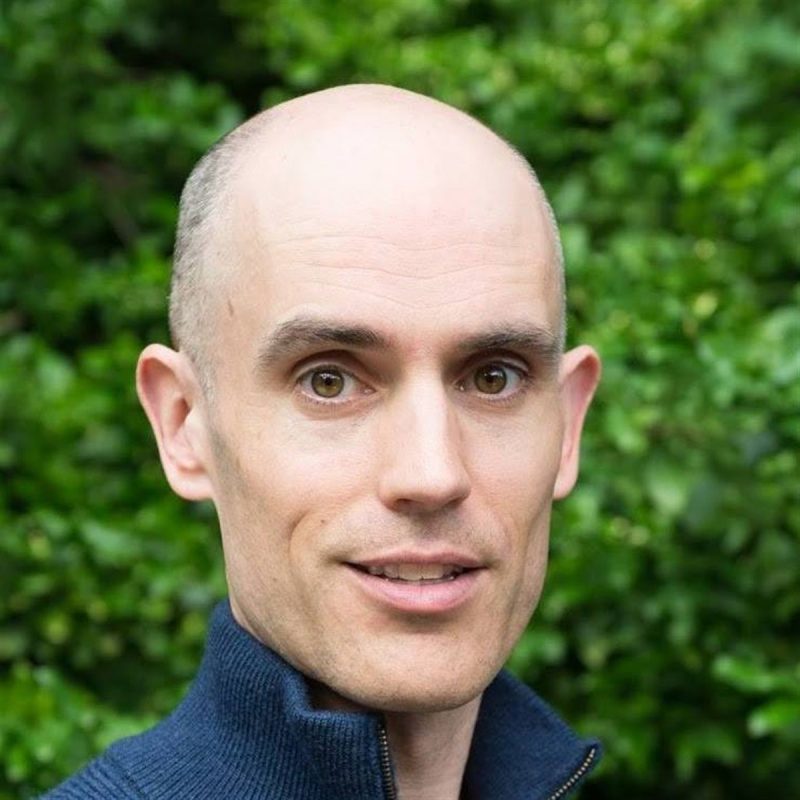
Dr. Alex Hutchinson
Award-winning science journalist and author; Contributing Editor, Outside magazine
In this episode
00:00 Welcome and introduction 02:00 From physics to science journalism 04:30 The advantage of being an outsider 06:30 The explore and exploit dilemma 09:00 Can medicine learn from sports science? 14:30 Rethinking risk 17:00 Evidence, values and wellness influencers 20:30 Marginal gains and placebo 24:30 Super shoes: what a real effect looks like 27:00 Wearables, big data and AI 33:30 The multi armed bandit 38:30 Intuition in coaching 42:00 Children as natural explorers 47:00 Why exploring is worth it
Select a timestamp to play the episode from that point.
Dr. McGavock: [00:00:00] Welcome to the Emerging Scholar Podcast. We hope you enjoy this series of great conversations with leading medical researchers that's designed for graduate students, medical trainees, residents, and fellows to help you on your journey towards your first scientific project. Welcome back, everyone, to the Emerging Scholar Podcast.
Dr. McGavock: This is a teaser episode with someone I greatly admire that I've been wanting to interview for several years now, Dr. Alex Hutchinson. Alex Hutchinson is a scientist, a journalist, a New York Times best-selling author of the book Endure. His most recent book, The Explorer's Gene, is something that we're talking about.
Dr. McGavock: And the purpose of this episode was to introduce the concept of the adjacent possible. Where do two fields come together to enlighten the [00:01:00] field that we currently work in? I felt like Alex's experience, expertise in endurance sport, his knowledge of coaching and training and integrating the latest science into how to optimize behavior, how to optimize performance, is something that we could really learn in the field of medicine.
Dr. McGavock: And so this wide-ranging episode that is grounded a lot in Alex's most recent book, The Explorer's Gene. We'll talk about endurance sport, multiple aspects of behavior change, how we should make decisions when we're faced with a, a really interesting problem, is something that I think we should bring in, into medical school, into the teaching how to tackle science.
Dr. McGavock: It was a real pleasure to interview Alex. Uh, he's a brilliant scientist. He can take really complex topics and break them down into really simple ideas and then apply them in, in a really important way. So I hope you enjoy this. I absolutely enjoyed this interview. And, uh, we look forward to seeing you back for season two in January.
Dr. McGavock: Uh, welcome to the Emerging Scholar Podcast. It is great to have with me a [00:02:00] co-competitor, another lover of running, and another scientist, Dr. Alex Hutchinson. When's the last time you've been called Doctor?
Dr. Hutchinson: I insist that my kids call me Doctor.
Dr. McGavock: I love it. Um, Alex, where I know you from is before I even knew you.
Dr. McGavock: When I was at McGill as a master's student, I was walking into the Currie Gym every day, and up on the, up on the track and field scoreboard there was a record for the 1500 meters. Now, it's 340-something, I believe
Dr. Hutchinson: The, uh, the indoor record was just 3:52 actually 3:52.
Dr. McGavock: All right
Dr. Hutchinson: And it is long gone, I will say.
Dr. Hutchinson: There's fast young people with very fast shoes- Shoes ... I have to say, who've, who've come through re- recently.
Dr. McGavock: All shoes. My buddy Kip would say that, uh, I probably... You know, in two years from now I'll be saying it was 3:35. The story just grows.
Dr. Hutchinson: You know, the classic, the older we get, the faster we were. And, uh, yeah, sooner or later I'll have been world-class in the past.
Dr. McGavock: A- absolutely. So that was my introduction to you, but how would you introduce yourself to our audience, which are, uh, medical trainees, people working in pediatrics, people working in clinical medicine?
Dr. Hutchinson: Yeah. So I'm a journalist, uh, who writes [00:03:00] about, let's say sports and performance and health science. And so my background is, so I did a PhD in physics.
Dr. Hutchinson: Uh, worked as a p- did a postdoc, and then pivoted to journalism in my late 20s. Initially was this kind of anything to pay the bills kind of journalist, but gradually sort of realized that I had two areas of deep expertise, one of which was endurance sports, because I was a, like you, I was a competitive runner- Yeah
Dr. Hutchinson: for, for many years and sti- still am in my humble way. Yeah. Um- We're gonna toe
Dr. McGavock: the line together in London, hopefully in, uh,
Dr. Hutchinson: November. That, that's right. Yeah. It'll be a no holds barred, uh- ... match in Masters Cross Country. Skinny
Dr. McGavock: old
Dr. Hutchinson: men. But it, uh... Yeah. So I had this running background and I had a science background as a physicist, which of course doesn't tell you anything about running, but I realized I could kind of take this scientific approach and try and write about physiology and psychology and performance research, and that brought it out to a sort of...
Dr. Hutchinson: Like, I write a column for The Globe and Mail on health, uh, science research more generally. Really coming at it from the perspective of, like, coaches know a lot of things. I wanna know what scientists know about how to train, how to exercise, how to eat, and, and sometimes [00:04:00] that's a very narrow flashlight compared to, uh, in a, in a large area of darkness and confusion.
Dr. Hutchinson: But, but so anyway, yeah, all of which is to say I'm a journalist who tries to bring an evidence-based approach to questions of health and, uh, sport and performance.
Dr. McGavock: That's awesome. And I, and I think not coming at it as an exercise physiologist is a benefit, and coming at it sort of as an athlete and a scientist, but not an exercise physiologist.
Dr. McGavock: Do you know what I'm saying?
Dr. Hutchinson: Yeah. W- w- what I will say is, so I, I guess I started, I would say around 2007, 2008 is when I started writing about studies in exercise science. Uh, at that point, you know, as an ex-athlete, I hadn't actually realized that this world of sports science out there. I, I... Maybe I would've decided to study it if I'd known, but I didn't.
Dr. Hutchinson: Totally. And so at that point, it actually felt a little bit like a superpower that I didn't care who was right and who was wrong. So there were some very big controversies in the field about things like hydration. You know, can you drink too much? Should you drink as much as you possibly can? What should you drink?
Dr. Hutchinson: And tho- some of those controversies still, you know, echo to this day. But- Everyone who [00:05:00] had come through studying as researchers in those fields, they studied with someone who studied with someone who invented the theory. It's very tribal in a way that people... It's very hard to avoid. And so for, let's say 10 years, I was writing about all these different controversies which people felt very strongly about, and I, I think I had a, an advantage in that I didn't have a stake in it.
Dr. Hutchinson: I wasn't betraying anybody if, if I suggested that maybe, you know, the conventional wisdom was wrong. Now, I've been writing about it for so long that now I've taken positions. I've- ... I've, you know, made friends and things like that. Yeah. So I don't feel as unentangled as I used to. I know a lot more, so that helps me.
Dr. Hutchinson: But, um, there is something really powerful about being an outsider in a field where you're not subject to the constraints, uh, of, you know, prior entanglements.
Dr. McGavock: Absolutely. We just finished, uh, doing an interview with Gordon Guyatt, and he talked about how medical decisions are made, and he said, "It used to be the GOBSAT rule.
Dr. McGavock: Good old boys sitting around a table." And, uh, when I was in X Phys, that's totally... The first question is, "Who'd you train with?" Like, "Who was [00:06:00] your advisor?" 'Cause then I knew what you thought, and it was kinda like- Yeah ... ooh. But to break out of that, you kinda need to be an outsider, or you need to think differently.
Dr. McGavock: And the purpose of this podcast is for us to explore, in the Emerging Scholar, something that I was really drawn into, called, uh, the adjacent possible, right? I wanna bring this to residents, I wanna bring this to trainees, where can we learn from a different field? Can we take the way that they're learning, the way that they're advancing their field, and bring it into medicine?
Dr. McGavock: And in this case, I feel like it's sports science. And in your new book called The Explorer's Gene, uh, you have this concept of explore-exploit, which is in a field of science that I have never been drawn into for some reason. So explore-exploit was brand new to me, and I feel like it relates to this. And I, for me, uh, I'll talk about my thesis in a minute, but we really wanna learn from what sports science is doing right now, and how can that inform what we're doing in medicine.
Dr. McGavock: Can you tell us a little bit about, uh, the concept of explore-exploit? Maybe a little bit of a summary of what your book was about.
Dr. Hutchinson: To start, the explore-exploit dilemma is this sort of meta choice that occurs [00:07:00] throughout our lives on scales from small to large, and it is y- you're faced with the decision of there are two possibilities.
Dr. Hutchinson: Should I go with two or more possibilities? And should I stick on the path that I'm already on where I already know a lot of stuff, or should I branch off onto this other pathway where I actually don't know what the outcome is gonna be, and it could be better and it could be worse? Should I exploit my current knowledge or should I explore to get new knowledge?
Dr. Hutchinson: And the, the classic in the... And this, this is actually, it crosses fields. It's, there's a lot of decision theory in computer science about this. Uh, there's also, like, ecology, like how do bees decide when to move on from one flower patch to the next one? Like, we've got a little bit of nectar still here, but I wonder if way over there there's a lot more nectar.
Dr. Hutchinson: Mm-hmm. Uh, it's, it's big in the sort of management science. That's where the terminology actually comes from. It's like, should we be pumping money into marketing our current product or should we be spending money on blue sky research? You know, R&D. And that's, you know, societally too. Like, how much should funding agencies be funding existing pathways versus basic knowledge?
Dr. Hutchinson: The classic sort of example in these, if you read a paper in, on the explore-exploit dilemma, it always [00:08:00] starts with, like, you're in a restaurant. Yeah. You've been to this restaurant before The hamburger was good. Should you order the hamburger again or should you try the special? Like, maybe the meatloaf is actually gonna be mind-blowing, but maybe it's gonna be terrible.
Dr. Hutchinson: You have no way of knowing. And we're all kind of familiar with this feeling of, like, you try the new thing, someone else at the table gets the thing you were thinking of getting that you got last time, and then you spend the whole meal being like, "Oh my God, I can't believe I didn't get that burger. It looks so good.
Dr. Hutchinson: Why did I get this stupid meatloaf?"
Dr. McGavock: Right.
Dr. Hutchinson: So what my book is about more broadly is, like, why do we want to explore? What do we get out of it? Wh- when, when is it a good idea and when is it not? And I... It started for me as a kind of, as a career dilemma. Like, I, after spending 10 years writing about endurance very narrowly, I was like, "I kinda wanna write about something different, but why do I wanna write something...
Dr. Hutchinson: about something different? Well, so what's drawing me there? And then also, what are the pros and cons if I switch fields, if I write about something new? Should I just stick with what I've been doing? It's going well. I can maybe push that. That's the smart, you know, exploit my current position, or should I explore because I might find [00:09:00] something even better, more interesting?
Dr. Hutchinson: You know, in practical terms, I might find a bigger audience, sell more books," you know, all this kind of thing. So as I wrestled with a real-life explore-exploit dilemma, I got interested in what's underneath the surface. What, what are the wheels that are turning in my head and, and are they turning correctly?
Dr. McGavock: And so what drew me to this after reading the book was it's about decisions. This explore-exploit is about decisions, and the life of a physician and the life of a sports scientist are about decisions. So the sports scientist, for me, it's coaching, and I think coaches have to make a ton of decisions every single day about their athletes to advance their training, to keep them healthy, to keep them safe in preparation for this final event.
Dr. McGavock: Physicians have to make day-to-day decisions with every patient that are grounded in an evidence base, right? And so we're all about systematic reviews, meta-analyses, evidence-based guidelines. You're gonna make decisions that are not your gut feeling but are grounded in this. However, when they're grounded in that, you're not really exploring, and you're, like, missing this opportunity to, like, change the life of a patient [00:10:00] if you can understand a little bit more.
Dr. McGavock: And I also think that if you're grounded only in the evidence base, you're missing an opportunity to explore. You're being force-fed the knowledge. You're clicking on UpToDate, and you're like, "I'm gonna make the call that UpToDate says," and then where's that learning for you? And I don't think that's as exciting.
Dr. McGavock: Compared to a sports scientist who is like, "I gotta advance, I gotta advance, I gotta advance." And so my thesis for this conversation was that when I was an exercise scientist, I was working with this guy, Paulo Saldanha. I don't know if you know Paulo. He's a- Yeah ... he's a coach for Israel Premier Tech. But he was a grad student, and we did Race Across America.
Dr. McGavock: That was his master's thesis. He rode his bike from LA to Savannah, Georgia, nonstop. The clock didn't stop. So in the Tour de France, for people who don't know cycling, you ride for 200 kilometers, you stop the clock. The next day, you start again, and it's your cumulative time added up from each of those 200-kilometer days.
Dr. McGavock: In this one, the clock started and they're like, "We'll see you in Savannah. If you sleep, you're losing time. If you stop to fix your bike, you're losing time." And Paulo was, like, unbelievable at trying everything to get his athletes to be better or getting himself to be better. Like, he was constantly [00:11:00] critical, but making these incremental changes.
Dr. McGavock: And what he said to me once, he's like, "We're so far ahead of you guys. Your science isn't informing what I do. I'm doing this, and then you're coming back and doing the studies to try to figure out, like, well, how did that actually work?" But it was his scientific method was more of this explore, explore, explore, explore, and then find it, and then go after it.
Dr. McGavock: And I'm like, "Ooh, it's amazing. I wonder is there a parallel in medicine, and how could we actually take that and, and bring it into medicine?" So your thoughts on my thesis. Am I off? Does it resonate?
Dr. Hutchinson: The thesis resonates. There's, of course... It can be framed in a lot of different ways. Like, if you say, "Are there people in medicine who are taking this exploratory approach?"
Dr. Hutchinson: It's like, yes, they are, and, you know, they're on the internet everywhere. A- and they're not doctors, or at least they're doctors of their diplomas came in the mail. So it's like, it's like the thing about, you know, you gotta keep an open mind but not so open that your brains don't fall out. And it's like the whole evidence-based medicine movement is in part a reaction against people who had really drunk the full Kool-Aid of the sports science method, which is we'll try everything, we'll [00:12:00] try anything.
Dr. Hutchinson: And so, you know, not, not to go too far down this road- Yeah ... but what I will say is the role of the mind and the placebo, and so how do you know if something's working? Here's a big difference- Hmm ... in sports science. In a lot of cases, not all cases, but in the endurance sports that I'm familiar with or in timed sports, you can measure whether someone has gotten better.
Dr. Hutchinson: Now, you may not be doing a, a double-blind, placebo-controlled study, but ultimately, if you get .5% better, this guy is performing better. Therefore, I'm gonna keep doing... Now, you've probably changed six variables, so you don't know which one it is. But in health, it's like I'm gonna change these six variables, and whether or not you live, you know, three months more two decades from now, no one's ever gonna find out.
Dr. Hutchinson: There's no accountability. There's no check. Not that I'm gonna dump all over your thesis. Oh, yeah, yeah. The, the, the two things that I think we need to unpack are how do you know whether something is working, and what is a meaningful change? Because in elite sport, helping me go .5% faster is life-changing.
Dr. McGavock: Mm-hmm.
Dr. Hutchinson: In medicine, reducing my pain by 0.5% is not only we can't measure it reliably, but it's [00:13:00] not clear that it actually ma- matters in the same way. So the outcomes I think that there's a lot of overlap in the outcomes, but there's a few places where the, the outcomes and the way we measure them might diverge.
Dr. McGavock: So yeah, let me try to couch it. So Siddhartha Mukherjee wrote this great book called The Emperor of All Maladies.
Dr. Hutchinson: On cancer, right, yeah.
Dr. McGavock: On cancer. And so the early cancer trials were exactly explore. Sloan Kettering was working with pediatric cancer patients, right? And right now these patients are dying, and they're dying fast, and it is horrible.
Dr. McGavock: And he's coming in and he's like, "We have to advance knowledge right now, and so we are going after it." Almost like- The story of how Lance Armstrong was being treated at the time, right? Like, they were exploring everything because the outcome was measurable, right? It was like, "These kids are dying, and there's-" Yeah,
Dr. Hutchinson: in 18 months, not in 40 years from now.
Dr. McGavock: Exactly, like inside the lifetime of a grant. And I think as scientists we're always like, "Oh, well, how are you gonna do this in life- in a grant?" So obviously, that's one of them. But, like, in my world of, like, diabetes or, um, pediatric obesity or w- obesity or [00:14:00] generally, like, measuring blood pressure, measuring blood sugars, measuring body weight, like, I think we- we could take some of that, like, really passionate, like, go after this and do some things, and then we'll measure that and see how you change your behavior or, you know, you change something.
Dr. McGavock: So obviously we're not, you know, we're not using insane medications and, and going to the extent that these physicians went to because the outcome was inevitable, right? So they could explore as much as they wanted to, and the kids could get really sick, which is really sad. But also, if they made a breakthrough, it was gonna be remarkable.
Dr. McGavock: So those are two extremes, but, uh, yeah, where do you see that? In terms of, like, behavioral medicine, like, where could we go with this?
Dr. Hutchinson: Yeah. Let me bring in a, a paper that I just, actually just saw in the last week or two, which was from researchers at the École Nationale du Cirque, which I didn't know existed.
Dr. Hutchinson: There's a national circus school in Montreal- Oh ... that's kind of associated with, uh, Cirque du Soleil.
Dr. McGavock: Wow.
Dr. Hutchinson: And they wrote this big manifesto in the Journal of Sports Medicine on reframing what we think of as risk. Reframing risk as a neutral thing, that risk isn't always [00:15:00] bad, it's just, it's a statement of uncertainty of outcome.
Dr. Hutchinson: And so i- in their context, what they were saying is, like, even, like, tying it into this current debate about how kids should be brought up, for example, but and they're, they're thinking about circus acts. But w- if you think about, like, kids, letting a kid play on an unsafe playground structure, there is a short-term risk that they're gonna fall off and bonk their head, and sometimes they, they might even kill themselves or whatever.
Dr. Hutchinson: But we now know that there's a long-term risk that if they don't play in risky ways, that they're gonna grow up super anxious and have mental health problems, and that encountering risk, they can scaffold the, the risk up. If they encounter small risks, they give them tools that then allow them to manage greater risks as life goes on.
Dr. Hutchinson: So anyway, all of which they're saying is, we need to think carefully about the risks. And so there's maybe an argument to be made that in the evidence-based medicine approach, we're over-weighting the risks of negative outcomes in trials or in treatment, and under-weighting the benefit that would accrue more generally if we were willing to try more things to deviate from up to date, [00:16:00] to say, you know, like, "Yeah, there, there is actually a chance that, that this might produce a negative effect."
Dr. Hutchinson: But given the overall negative prognosis, uh, you- given what's likely to happen to you in the long term, maybe it's worth taking a chance. And, and, you know, I'm speaking generally here, not in any partic- of any particular condition. Yeah. But this idea we've become very risk-averse, and partly that's in response to people doing stupid or unscrupulous things.
Dr. Hutchinson: But if you're too risk-averse, you're constraining progress.
Dr. McGavock: Right, and if sports scientists were too risk-averse, they wouldn't be able to advance their athletes in a meaningful way, and the athletes themselves would be so disappointed in their coach. If their coach was like, "Look, I'm not trying anything that goes outside of these boundaries."
Dr. McGavock: And where actually this ties in really nicely with Gordon Guyatt's, uh, interview that we did last, last week or a couple weeks ago, is you have the evidence, but then you have patient values and preferences, and that is where I think you can do a lot of this movement, is by talking to patients and saying, "Look, here's what the guidelines say.
Dr. McGavock: Here's what your options are. Here's where I wanna get you. Here's where I think we can go. Where do we want to explore this together?" Instead of just making it like, [00:17:00] bang. So that's where I think you should be. But I totally agree about the risk, and I wanna bring it back to the kids, 'cause we both have young kids, and I am all in explore, explore, explore mode with my kids.
Dr. Hutchinson: Yeah. Le- let me just pick up on that point about values, 'cause I think that's an important one. So let's talk tech health bros on the internet. All right. Pe- Peter Attia, let's say.
Dr. McGavock: Yeah.
Dr. Hutchinson: Let's, let's talk two, Andrew Huberman, if... I, I'm remember getting the name right, and Peter Attia. Those guys have huge, huge followings advocating stuff that is not within, let's say, the clinical guidelines.
Dr. McGavock: Right.
Dr. Hutchinson: You know, taking drugs off-label. So when I look at those people- One's an MD ... and I wanna be a little careful what I
Dr. McGavock: say here, so I-
Dr. Hutchinson: One's an M- one- one's an MD, the other one's not. Yeah. One's an MD. One's a, one's a, one's not. Yeah. And the non-MD guy, in my opinion Doesn't understand necessarily what he's talking about No Uh, is, i- is, is basically on the make.
Dr. Hutchinson: He's selling a bunch of stuff. Yeah. Anything he, he can partner with and sell, he'll sell. I look at that guy, and that to me, that guy's an example of the dangers of deviating from evidence-based medicine, that you get a bunch of hucksters, [00:18:00] and if they're charismatic enough, they can sell a bunch of crap- Mm-hmm
Dr. Hutchinson: to a huge fraction of the population, and then every doctor in the country has to deal with people coming in with their photocopied sheets saying, you know, "Huberman says I should take X, Y, and Z. Gimme, gimme, gimme." I look at someone like Peter Attia, and my sense is... And look, I, I haven't done a deep dive into either of these guys, but I read Peter Attia's book.
Dr. Hutchinson: A- and my sense was here's a guy who I think understands the nature of the evidence and where the gaps in the evidence are.
Dr. McGavock: Mm-hmm.
Dr. Hutchinson: And he looks at it and says, "I'm gonna take metformin 'cause I think it's gonna extend my life." And then two years later he's like, "Oh, now there's data that says metformin actually in- interferes with the benefits of exercise, so I'm gonna stop taking metformin."
Dr. Hutchinson: Yeah. And so part of me is feeling smug and is like, "Well, yeah, that's why you don't take random l- drugs off-label " "... to ha- because we don't know yet what they're gonna do." Right. But the other part of me says, okay, I think where I differ with Attia is mostly on values, not on the evidence. I differ with Huberman on the evidence.
Dr. Hutchinson: I don't think he's reading the evidence correctly. I differ with Attia on values, and that's fine. [00:19:00] It's... I'm not saying his values are wrong. I'm just saying he is willing to take risks and explore, even with his, with his own health and with his patients' health in a way that I may be, like, a little uncomfortable with 'cause I'm risk-averse.
Dr. Hutchinson: You're a little more conservative, yeah. But he's not... Ideally, I would hope that he's having these conversations with his patients and saying, "This is not yet proven, but I think there's enough suggestive evidence about rapamycin," or whatever the things he's doing, "that we can give it a try." Right. And, you know, given that you only get one life, there's a risk that it might actually have a negative effect, but there's also a risk that you're gonna die, like, either way, so let, let's roll the dice.
Dr. Hutchinson: And so I think from what I gather, involving patients in their decisions, understanding their values is an important part of this. Already so- uh, you know, a big theme in, in medicine and medical research for sure. It's worth treating it as sincere when people are like, "Yeah, I, I would like to roll the dice.
Dr. Hutchinson: I see what the odds are under the status quo. I'd like to try exploring some of the other options that we don't yet know for sure will work."
Dr. McGavock: I would love to be a patient of Peter's and- How much
Dr. Hutchinson: money do you have?
Dr. McGavock: I don't have that kind of cash. What I think is interesting is he will say, just listening to him, would be, [00:20:00] "Here's the risk on you and on me for doing this."
Dr. McGavock: And he doesn't take crazy risks, like based on I'm not his patient, but it's like, "We're gonna go at this like we're going to the Olympics together," right? Like, "We're gonna go after everything, and I'm never gonna put you at risk. You and I, let's make this decision. What are your values? How much risk do you wanna take?
Dr. McGavock: And let's explore what works best for you," because we know it's like even the most well-studied medications have variation in the response, and each person's gonna have- Yeah ... their own thing and their own risk tolerance, right? So it's exploring that, and I think that's really exciting.
Dr. Hutchinson: And it's, yeah, and it, and it very m- is very much akin to the sort of so British cycling got really famous in the 2010 era for its marginal gains philosophy, that- Yeah
Dr. Hutchinson: we're gonna try everything, and if you add up enough 0.4%, you're actually gonna, you know, become world beaters. And they did become world beaters. And there's a lot of debate as to whether that's because they added up the marginal gains or because they doped. Right. You know, so, so it's like this is, this is the sort of maybe the, the, the underbelly- Yeah
Dr. Hutchinson: we always have to keep in mind, where it's like sports science, it's constant [00:21:00] progress, but it's like you can't always be sure that what you see is, is what, is what you think you're seeing.
Dr. McGavock: Mm-hmm.
Dr. Hutchinson: The other thing about, I, I think it's maybe worth mentioning about this marginal gains approach, about we're gonna try everything, and each of those things on its own might seem negligible, but if you're trying all the things, you're gonna get some substantial benefit.
Dr. Hutchinson: There are studies in sports science that are like, "Okay, caffeine should give you, you know, 1 to 2%, and beta-alanine should give you 1 to 2%, and something else should give you 1 to 2%. So let's try them all together. We should be able to get, like, 3 to 6%." Mm-hmm. Then you try them all together, and you get 1 to 2%.
Dr. McGavock: Mm-hmm.
Dr. Hutchinson: And so the sort of one takeaway is that all these things, the physiology on an average population is negligible, the physiological effect, and most of it is belief effects, placebo effects, uh, which is- Right ... comes back to, like, why did we build this evidence-based scaffolding? It's because actually, when you, you, if you scratch deep enough, you're like, "I'm actually not sure that caffeine is..."
Dr. Hutchinson: You know, when [00:22:00] you're taking your caffeine pill or drinking your coffee before a race, how much of that is the caffeine, and how much of that is, like, that you know you took the caffeine?
Dr. McGavock: But on the other side, cyclists are now... So I totally agree with the incremental gains approach, and I think that's where I find it exciting that if we could apply this to medicine somehow and work with patients, and I, I wanna explore, like, where is it different?
Dr. McGavock: Like, obviously elite sport is way different than working with a patient, but I mean, there are some comparables. Like, I think the Venn diagram does kinda overlap a little bit, even if- Yeah ... it's tiny. Yeah. Right now, if someone would've told me in my ex-phys training, or someone would've told you when you were trying to get to the Olympics that if you're going for a two-hour run, every hour you have to eat the equivalent- Yeah
Dr. McGavock: of a baguette, or, "Jon, you're gonna go for a three-hour ride instead of a two-hour run, and you gotta consume, like, a plate of pasta every hour," I'd be like-
Dr. Hutchinson: Yeah ... "
Dr. McGavock: No chance." Like, that is, no way that's gonna work, right? But someone, and it's been the part of the incremental gains thing where they're like, "Okay, let's try it.
Dr. McGavock: Let's try it." Now, I would say on the ketone side, it maybe it didn't turn out as much, although I don't know the science behind that. But a couple years ago, everyone was drinking [00:23:00] ketones all the time. I don't see it as promoted as much, right? It's kinda like, "Let's throw all of these things in." And then more recently we hear about this Norwegian training model or this, uh, that Ingebrigtsen's been promoting that, uh, Mari-
Dr. Hutchinson: Yeah, double thresholds.
Dr. McGavock: It's- The double thresholds, Marius Bakken, right? Like, so people are doing this, and when you and I were training, it was, uh, Sepp Kof was revolutionizing training, right? So the people are on the limits trying to, like, push it, and then sometimes it just takes off, right? And you're like, "This actually worked really well," and other times it's probably a placebo.
Dr. Hutchinson: Yeah. You know, there's certainly a cyclical effect in things like training techniques, which in a sense, I think in a lot of cases some of the issues in medicine look more like, have the complexity of, like, how do you train for a marathon rather than the complexity of should you take a caffeine pill before- Mm-hmm
Dr. Hutchinson: a race. Mm-hmm. So you're, there's a lot of interacting factors and variables that are hard to isolate. But yeah, I mean, it's, it, there's a question of individual variation, I think is an important thing, that when I'm talking about, you know, it was only 1% to 2%, well, it's like, well, that means some people were 5% and some people were 0%.
Dr. Hutchinson: And so if you can figure out, if you can start [00:24:00] to reliably pick up who's responding to a given thing, and the, the whole responders and non-responders thing. I mean, Jon, you and I talked about this-
Dr. McGavock: Yeah ...
Dr. Hutchinson: however many years it was ago at, uh, the- CSEP ... it was at the CSEP conference. I think it's really important, and I think it's poorly understood from a statistical basis that you can't just do a study and say, "This guy got 5% and this guy got 0%, therefore this guy should do it and this guy shouldn't," 'cause if you do the study again, chances are you're gonna, you're not gonna get the same results.
Dr. McGavock: But-
Dr. Hutchinson: But
Dr. McGavock: we don't do that. Like, even with statins, you know, you'd say statins is, like, the gold standard example of, like, everyone should be on this medication, right? But there's huge responses inter- interindividually. And the one thing that I think a sports scientist must be seeing, and I would love to have, like, Paulo here or, like, Stellingwerff to be like, when you see the whole curve shift on your whole team or on all your athletes, right?
Dr. McGavock: And you're like, "Okay, this is a 2% gain overall for my team, but the low end of that curve is, like, zero or, like, 1% or .2%, and on the high end it's five," I'm like, "Okay, we're going with that one." You know what I mean?
Dr. Hutchinson: A good example from sports recently is super shoes, these shoes with carbon fiber plates, [00:25:00] where they were introduced by Nike around 2017, and justifiably, there was a lot of skepticism.
Dr. Hutchinson: "Oh, sure, Nike has a shoe that's gonna make everyone magically faster. How do we know? Oh, Nike funded a study. Oh, convenient." Right. Yeah. "Oh, okay. That's great." And even, like, t- two or three years later, people were still like, "Yeah, no, it's just a placebo effect. It's just the people are training better. It's just this."
Dr. Hutchinson: Are you kidding me? Every single record in every single e- endurance running event has been shattered. We've gone from, like, in the United States, here's a good example, they had, like, five high school kids break four minutes over the course of history, and now there's, like... Last night I watched a race live where there were five high school kids who had already broken four minutes- Four in a race
Dr. Hutchinson: and they lost to another kid who broke four minutes for the first time. So all of which is to say, I looked at the ketone evidence, and it's pretty convincing, but in the crucible of elite sport where they're measuring everything and where tiny margins count, it's fallen out of favor. It seems to be that whether it's individual variation or, you know, negative gastrointestinal effects, [00:26:00] or for whatever reason, they're just not finding it.
Dr. Hutchinson: It's, the juice is not worth the squeeze. And you start to get a little bit, I don't know if I'm pronouncing this word right, nihilistic. Nothing really works. Nothing stays good. Everything looks like it works for the first two years, and then when you overcome the problem of, like, desk drawer studies that were not published, you realize actually it doesn't work in practice.
Dr. Hutchinson: Yeah. The antidote to that is super shoes, 'cause it's like, no, it works. They've done lab studies, and at, the real world stuff conforms, and it's exactly like you said. Some people might be getting 0.5%. Some people are getting 6%. The whole curve has shifted in running. And so we know that things work, and we know that when things do work, the effects are really clear.
Dr. Hutchinson: Like, when you're- Mm-hmm ... getting a couple of percent, you're no longer having these arguments of, like, "Uh, I don't know whether it really works." You have to be in denial to believe the super shoes didn't work, and to me that's a litmus test that I then apply to other things where someone's claiming that whether it's baking soda or ketones or electric brain stimulation- Yeah,
Dr. McGavock: yeah
Dr. Hutchinson: it's like, okay, but it's not... Why are we having to go search for the effect, when [00:27:00] with super shoes it's, like, jumping all over your face?
Dr. McGavock: So just to draw some parallels, which is my next challenge for medicine, is if you have a patient coming back six months later and you're measuring their blood pressure, you just have one, you know, or you say, "Now we have CGMs," which are g- which are great, and you could download your CGM data and everyone could take a look at it, and you could say, "Oh, your time and range is like," you know.
Dr. McGavock: You know, the more we get real world wearable data, the better off we're gonna be. So I, I'm thinking about cycling too. Could we be taking advantage of wearable data, AI? I was listening to a, a bike race where they were talking about, uh, UAE Emirates, where the scientists on the team are like, "We're putting all the wearables together, and we're feeding it into AI, and I can predict when a guy's gonna get sick and when they're not."
Dr. McGavock: And I know what to do Wow And right, so they're like the other thing now, and, and I know this is challenging, but getting as much data as you possibly can from your patient or from your participant in in your thing to say, "Hey, let's feed this back and see what can I learn from this?" Because right now, I think [00:28:00] in the world of just evidence-based medicine, without patient values and preferences, and without that other data, it's too much of a sledgehammer.
Dr. McGavock: Like, you're only working on, like, one thing. I don't think that's enough.
Dr. Hutchinson: The whole big data thing is, is a very interesting can of worms. I feel like my position is probably evolving on this. I have long been a kind of data skeptic, that it's like, so in the training world that what I would say is including thing- I know I've tried CGMs for a couple months and stuff, and you know, all the activity data, sleep data, heart rate variability.
Dr. Hutchinson: Yeah. You collect all this data, and all of it, if you're really good and really careful and really sophisticated, it's about as good as, you know, filling out a five-point Likert scale- ... of like how do you feel this morning?
Dr. McGavock: Yeah.
Dr. Hutchinson: It's roughly that good. And so my take is like, life is stressful enough. You don't need seven computers telling you that you're not feeling good if you can just wake up and be like, "Yeah, my throat's a little scratchy."
Dr. Hutchinson: But we may be coming to an inflection point in our abilities to analyze data in a convenient and accessible way that you don't have to have a scientific staff of eight dedicated to, you know, your every bowel movement. You can [00:29:00] just, the AI or, or whatever the case may be might be able to do it. Now, AI in medicine, that's a whole separate can of worms.
Dr. Hutchinson: How comfortable are you with a black box telling you whether to- Mm-hmm ... that we- that you don't really know how it c- came to that conclusion. But I do think having more data, and, and I think, like, going back to, like, the Peter Attia's, like, thesis of, and it's not an original thesis, it's a, you know, a familiar one, that we should be trying to prevent disease rather than treat it, right?
Dr. Hutchinson: Yeah, yeah. Like, this is not a, this is not a new thought- Yeah ... obviously, but- No,
Dr. McGavock: we, we buy into that 100%.
Dr. Hutchinson: Yeah. Yeah. I mean, for sure. We're all in. Like, as should every reasonable person. You know, I, I took my CGM data and then I'm like, "Actually, my blood sugar's a little higher than I would think it would be for an endurance athlete."
Dr. Hutchinson: Mm-hmm. You know, I go to my doctor a- and they're just sort of rolling on the floor laughing like, "You're fine." Yeah, yeah. "Your picture's perfect." Yeah. It's like, no, but I don't wanna be healthy now, I wanna be healthy in 20 years. Right. And I think the trend is, for someone who exercises as much as me and eats pretty healthily, I don't think I should be anywhere close to any threshold- Mm
Dr. Hutchinson: of pre-diabetes. You know, I, I got myself referred to an endocrinologist, and the, the answer there was like, "Dude, you're fine. Relax." I mean, I did a, a [00:30:00] glucose tolerance test. They're taking, like, what? Two, two data points- Yeah ... two hours apart or whatever, but I'm watching on the CGM, and I'm like, "Okay, but I can see my actual curve in between those two hours and, and I don't like what I see compared to, like, when you look at CGM data."
Dr. Hutchinson: All of which is to say it's like more data gives you more information. The medical system isn't designed to deal with that information at this point, and, you know, there's resource constraints, too. Like- Totally ... they don't have time to sit down and coach every single person through the intricacies of their CGM data.
Dr. Hutchinson: In a sports science world, we're gonna sit down and we're gonna look at all the data we have and we're gonna say, "All right, relative to the general population, you're fine, but given your specific situation, there's something that we should investigate here-" Mm-hmm "... and we should figure exactly what this data means."
Dr. Hutchinson: I would like to have that approach in my health as well as in my performance.
Dr. McGavock: Okay, so going back to the complexity and then adding this in, and I totally agree, like, I don't wanna put CGMs on everyone, I don't wanna put heart rate variability on everyone. Although friends of mine have, with their Apple Watch, got the reading.
Dr. McGavock: They're saying like, "You know what? You got atrial fib right now. Like, you should go check it." Oh,
Dr. Hutchinson: wow.
Dr. McGavock: Yeah, [00:31:00] yeah. It's crazy. Like, some of it is useful, right? I don't think medicine's ready for it. I think Attia and the Attia-adjacent people where you can afford that are probably ready for that. I think as AI comes in, and yeah, we don't know, it's amazing that they don't know what the neural network does.
Dr. McGavock: Like, that is mind-boggling to me. But it can potentially generate these, you know, these insights into variables that we don't see, right? That sports scientists are on the cusp of. Um-
Dr. Hutchinson: We know there has to be patterns in the data, and the fact that I can't pick up the patterns doesn't mean that the patterns aren't there.
Dr. Hutchinson: And we're maybe entering an era where those patterns that are not discernible to reasonable human analysis will come out. Obviously, there's patterns between what you do in training and what you do around, during the day and your health or your performance. It's just that, yeah, it's gonna take a, a step forward to be able to find those patterns and to act on them.
Dr. McGavock: And having a pro athlete, you got a very different, uh, participant that, uh, you're working with, with different incentives and, uh, different-
Dr. Hutchinson: Well, that's another thing I wanted to say- Reward systems.
Dr. McGavock: Yeah,
Dr. Hutchinson: yeah ... which is that with a pro athlete, you tell them to [00:32:00] do something, they're doing it. So you tell them all the stuff that you know works-
Dr. McGavock: Mm-hmm
Dr. Hutchinson: and they're already doing it, and then you're gonna try and figure out whether there's a cherry on top that's worth trying. I don't wanna, like, talk down to our species here, but-
Dr. McGavock: Unless
Dr. Hutchinson: you play- You know ...
Dr. McGavock: unless you play for the Mavericks, though. Maybe not. Yeah, yeah, okay. Maybe not-
Dr. Hutchinson: So there- Maybe not
Dr. McGavock: everyone.
Dr. Hutchinson: There are exceptions. But in the context of- type 2 diabetes. It's like often, you slap me down here if I'm being u- unfair, but often there are things that we know work, like lifestyle changes that we know would be extremely helpful, but that are hard for people to implement in the real world. And so, but that are like the building blocks that you would like to be starting with in terms of exercise and diet- Mm-hmm
Dr. Hutchinson: and general, you know, lifestyle. That before looking, exploring radical new things, you would like to say like, "Start moving more. Start..." I don't know. Like, the, I realize this conversation- No, no ... you, you-
Dr. McGavock: You know what, K? So I'll, I know, I know where you're going with this, but that is an example that is really, really resonates with me because, so what we would say, like, "Come on, [00:33:00] just go do it."
Dr. McGavock: Yeah. If you just went up and did it, it would be fine. Now, a lot of the patients, a lot of research participants we see here are living in extreme poverty, are suffering from tons of things. There's an explore option. Like, for me, that's explore, right? Like, forget about giving that guy a CGM. Like, how do we- Yeah
Dr. McGavock: get that guy an extra $1,000 a month in his- Great ... in his bank account, right? Like, there's a great explore option where you're like, "I'm thinking all you need to do is exercise, but what are our other options?" And let's like, "What do you need, and how can I get there," right? So for me, that's a, a perfect example.
Dr. McGavock: We got a guideline, but the guideline doesn't resonate with that, that person's values and preferences.
Dr. Hutchinson: Right. Yeah. That's a great point, that you can do all the double-blinded trials you want, but if, if you're dealing with a human being that is not in the situation that the, that those subjects were in, if you're not willing to consider how else can we get this person to the destination, then you're not, you- you're not gonna be able to help them.
Dr. McGavock: In your book, you talk about the multi-armed bandit. Is that right, the right term, multi-armed bandit?
Dr. Hutchinson: That's right, the multi-armed bandit. The multi- In, in analogy to one-armed bandits, which are slot [00:34:00] machines, the multi-armed bandit is the scenario where you walk into a casino, and there's just a whole bunch of slot machines.
Dr. Hutchinson: Mm-hmm. And you don't know anything about them. Yeah. But you know that they each have different outcomes. And, and so you have to... This is back to the explore ex- This is how you study the explore-exploit d- Yeah ... di- dilemma in, in-
Dr. McGavock: So can
Dr. Hutchinson: you
Dr. McGavock: explain that to me? What is that? What is this concept? What is this experiment?
Dr. McGavock: What do we learn from this?
Dr. Hutchinson: So basically, it's, the underlying assumption is that all these decisions we were talking about earlier, ordering in a restaurant, deciding whether to propose to your partner, deciding whether to switch careers, deciding whe- you know, you're choosing between options where you have different levels of knowledge, different payoffs, but also we have different knowledge about what that payoff is gonna be.
Dr. Hutchinson: So let's just do a two-armed bandit scenario- Okay ... for, for illustration here. Yeah. 'Cause, you know, okay, the, the audience here, these are research people. You're not gonna be afraid of a little-
Dr. McGavock: We can
Dr. Hutchinson: handle a little
Dr. McGavock: complexity, yeah ... of
Dr. Hutchinson: some numbers. Yeah, yeah. Yeah, no, no, it's, uh, you'd be surprised how much complexity gets stripped out when you try to explain these in a general p- uh, interest magazine.
Dr. Hutchinson: But so-
Dr. McGavock: Coming
Dr. Hutchinson: from
Dr. McGavock: a guy with a PhD in physics ...
Dr. Hutchinson: even, like, any numbers are scary in, in some [00:35:00] contexts. Right. Okay. But so you've got two slot machines. You, you don't know anything about them except you know they have different payoff odds. So one of them might pay off 80% of the time, one of them might pay off 20% of the time, or it might be 50/50, or it might be 40/60.
Dr. Hutchinson: You have no idea. And you have 100 coins in your pocket. So how should you spend those coins? And so intuitively we can see that the right answer is you should explore both machines. You should take, like, 10 coins in one machine, 10 coins in the other machine, and then you're gonna get a sense that, uh, this one pays off s- about six out of 10 times, this one pays off about four ti- times out of 10.
Dr. Hutchinson: But it's, like, 60% plus or minus 20% is your, you know, whatever. Mm-hmm. Mm-hmm. You've got a, a range of uncertainty or a 95% confidence interval or whatever And so, and the other one is f- you know, 40 plus or minus 20. And so at what point do you say, "All right, this is the horse I'm gonna ride," and then just put the rest of your money into, uh
Dr. Hutchinson: Look, you're not gonna, you're not gonna do one coin in each and one of them wins and one of them doesn't. You're like, "This is the one I'm staying with," because that would be stupid. But also you're not gonna spend 90 of your coins figuring out which one is best. The exploration phase is you're, you're trying [00:36:00] both, you're trying both, or if it's a multi-armed bandit, like at all the machines.
Dr. Hutchinson: Eventually you're gonna get to the exploit phase where you just say, "Well, this is probably the best one and I'm gonna put my- the rest of my money in it." So this is a way of exploring how people make decisions, explore, exploit decisions under different contexts. So you can change, for example, the time horizon.
Dr. Hutchinson: How many coins do you have? Which is kinda like, how many years of life do you have left? And people tend to explore more when they have more time left, which makes sense in this gambling scenario. It makes sense in a medical scenario. It's like, you know what? You're 97 years old and you have 11 chronic diseases, maybe we're not gonna try radical new therapies on this, on this particular one, 'cause even if we beat it, the benefit is gonna be not great.
Dr. Hutchinson: If you're a child cancer patient, we're gonna try anything and everything- Exactly ... 'cause the potential gain if we figure anything out is huge.
Dr. McGavock: So we're going after it. Experiment,
Dr. Hutchinson: experiment, experiment. In the multi-armed bandit scenario, like there's a lot of other things you can do. For example, you can say, "Okay, the payoffs on each of these machines don't stay stable."
Dr. Hutchinson: This is what's called a restless [00:37:00] bandit scenario. So they, they kinda drift up and down. So you might figure out this one's the best one, but 20 turns later its return might have decreased. And so the more restless the bandit is, the greater the value exploration has. Mm-hmm. And so you think about that in the context of real world decisions, it's like the more uncertainty or upheaval there is, the more it makes sense to be exploratory and try new things rather than just to stick with one, one disease.
Dr. Hutchinson: So in medicine, I, I don't know what the analogy to that would be, but I'm sure there are things where your treatment decision is being affected by circumstances that are changing versus this disease always shows up in the same way and we know what to do about it. We don't need to keep exploring new things.
Dr. Hutchinson: Whether we're successful or not, unlikely that exploring is gonna be of value.
Dr. McGavock: Well, I think, well, I'll try a little bit and my peds endo colleagues will slap me afterwards, but you're diagnosed with type 1 diabetes and you're 10 and you're talking to the parents, right? And you're like, "Look, we're gonna be together for eight or nine years.
Dr. McGavock: I know the medicine, but I don't know your child, and we gotta learn together." And the child who's living with type 1 that's, they have a CGM or they don't, or they're gonna play [00:38:00] soccer this year or they're not, or they're gonna try a pump or they're gonna try a looping, right? We're gonna go through all these.
Dr. McGavock: When your child hits puberty, it's gonna change. When they go to camp, it's gonna change, right? So like the peds endo needs to feel it almost, right? And actually, you know who feels it the best, I think, are the parents
Dr. Hutchinson: Interesting.
Dr. McGavock: Uh, the mom. I'm gonna say the mom. Sorry, we're both dads, but, like, moms just get it.
Dr. McGavock: They're just like, "You know, something's wrong with my kid. I can feel it. I know my kid." Like, they have that data- Yeah ... 'cause they're watching. And so for me, a big part of this, and I think what sports scientists are when they're doing the multi-armed bandit, their eyes are, like, wide open. And I wanna bring it back to, you talk about in your book about how kids, like, we're almost, like, born to do this, where a sports scientist is looking at all these variables and they're seeing patterns emerge, and they're like, "Okay, when we're on a big, long, hilly stage, we gotta do it this way.
Dr. McGavock: But if we're on a flat stage and it's cooler, whatever, we're gonna do it this way." And I don't know why, but I just know. And I'm sure you've seen that, too, like in your own training or whatever. Yeah.
Dr. Hutchinson: But- For sure. I mean, th- there's a role for intuition where... And maybe [00:39:00] that I, I watched House, the show- Yeah
Dr. Hutchinson: uh, w- with great interest, and it's like a century ago, the role of clinical intuition was kind of celebrated. You know, great diagnosticians. And these days, people like me, who are all about evidence base, have maybe kind of pushed that aside in medicine. But in sports, it's, it's definitely still valued. So I had a coach in my running career.
Dr. Hutchinson: I trained with, I don't know, five or six different coaches, and one of them was completely, like, a non-science guy, a guy named Matt Centrowitz, whose kid ended up to-
Dr. McGavock: Yeah,
Dr. Hutchinson: yeah ... short circuit the end of the story, but whose kid ended up winning the Olympics, you know- Yeah ... a decade after I trained with, with the dad.
Dr. Hutchinson: And this guy was just totally all about intuition. So he would say, "Alex, just go out and do a fartlek tomorrow." And I'd say, "How long?" "Well, what... You know, whatever feels right." "And how hard should the hard sections be?" "Well, they should be hard." I'm like, "Whatever feels right." You know, you know, "How long should they be?"
Dr. Hutchinson: "You know, whatever feels right." "How long should the recovery be?" "Until you're recovered." And I'd be like, "Dude, you're, like, blowing my, my mind up. Here I was a ph- a physics guy." Yeah. I want precision. I want precision. "You need to tell me numbers. You need to tell me-" Yeah. "... at least give me, [00:40:00] like..." And he would be like...
Dr. Hutchinson: W- I'd show up at a workout, and we're doing something, you know, hard, and I was like, "Oh, you told me to go hard yesterday." And he's like, "Well, you idiot." And I was like, "But you told me to." So it was just this world of complete contradictions, but-
Dr. McGavock: Was this to get you to learn your own-
Dr. Hutchinson: No, but this was just his approach to life.
Dr. Hutchinson: Oh, that's just his approach. Okay. It's intuitive. Right. So, so one day a couple of his runners had qualified for the NCAA 1500. The last workout before they were gonna head to NCAAs, he called them over to have a little pep talk about tactics. 1500s are famously tactical. You're... It's a chess match. You're watching each other.
Dr. Hutchinson: You don't wanna make a move too soon, but you don't wanna miss the move. You wanna be in good position. So he called them over, and he called me over, too, 'cause I was running 1500s at the time, and he's like, "Guys, 1500 qualifying round is like-" When you walk into a bar and you just feel in the atmosphere, you know there's gonna be a fight.
Dr. Hutchinson: You don't know who's gonna have a fight, you don't know where it's gonna come from, but you can tell- You don't know who's gonna throw the first punch ... th- there's some tension, and what you need to do is you need to look around, you need to be ready. You need to feel when the fight's gonna happen, and right before someone else is about to throw the first punch, bang, you throw it.
Dr. Hutchinson: You get them. You [00:41:00] guys know what I mean? And I was like, "No, I've never even seen a bar fight. I have no idea what you're talking about. Like, give me data. Tell me, like-" I love it ... "how many meters, um, after the start am I supposed to start sprinting, and how fast?" Yeah. But he was like, it, it was intuitive. Blow his ass off.
Dr. Hutchinson: And, you know, I, I gradually got to respect that. I, it's not how my mind works, but it was successful, and so his, his kid, Matt Jr., won the Olympics in one of the greatest tactical races- Yeah ... that has ever been seen. But- One of
Dr. McGavock: the great- greatest ... i-
Dr. Hutchinson: in exactly the format that he described, where there was like, there was tension was building, and every time someone o- else was about to throw a punch, Centro Jr.
Dr. Hutchinson: would, would throw a punch. G- he would anticipate everything. So this kind of intuition I think is super, super, like, valuable, and it's valued in sports, so coaches like Centro are valued not because they went to exercise physiology school, but because they've learned to pick up the cues that indicate when someone's ready, when someone's not, in training- Mm-hmm
Dr. Hutchinson: to look at someone in a workout- Mm-hmm ... and say, "You need a break." Why? Is it your HRV is off? No, it's because I've watched you running. I feel that you need a break 'cause I've watched you run enough. Yeah, how do you bring that back [00:42:00] into medicine? I mean, it's, it's in medicine and h- but it's, it's not in the journals, put it that way.
Dr. McGavock: Right. It's kind of like- It's not an
Dr. Hutchinson: UpToDate ...
Dr. McGavock: you're within the guidelines, you're in UpToDate, but then you gotta still learn. Like, you gotta do that. And so maybe my last, like, try to circle this back is like In your book, you talk about kids are like born for this. And I love this one story. This young boy gets lost in the woods and has to find his way home.
Dr. McGavock: And the RCMP ask two scientists, like, "How far do kids actually go?" All the published science is like, "Well, they go 500 meters." The two scientists don't believe it, so they follow the kids around. And two things that blew my mind was first, the kids never go in a straight line, which neither does my child, right?
Dr. McGavock: But often their angles would suggest that they were like backtracking to go see other things. And the joy for the kids were like, "I'm just trying to get as much data into my head as possible, and this journey, this exploration, is just giving me data and data and data." So it's in us to be explorers, and how do we maximize that in our jobs was where I was going.
Dr. Hutchinson: Do you agree? I do love that story. I also love the detail where the scientists call the RCMP back and they're like, "Yeah, we don't have a ton of [00:43:00] information yet. Like we..." And the RCMP's like, "Don't, don't worry. We're, we're calling in a psychic this afternoon." "So, so w- he'll help us take care of it." Like, oh, okay.
Dr. Hutchinson: Yeah. The psychic's gonna give them more information. But yeah, so I do think one of the things that sticks in my mind and from that literature about kids and, and exploration, it's like they have an intuition for what are the choices that are gonna teach them about the world, where there's potential to find patterns.
Dr. Hutchinson: So eight-month-old babies, you show them a sequence of, of shapes or toys or whatever it is. If the sequence is totally predictable, there's nothing to learn. Like it's just the same thing over and over again. Nothing to learn for them. You can track their gaze to see if they're interested. So they look away 'cause it's boring if it's just the same thing over and over again.
Dr. Hutchinson: Mm-hmm. If you give them a random sequence of shapes, they will also look away 'cause that's boring. There's no order to discern. Mm-hmm. But if you give them a sequence which there is some sort of pattern but it's not obvious, they'll be interested 'cause they're like, "There's a pattern to learn here." Mm-hmm.
Dr. Hutchinson: So we're talking eight-month-old babies are sensitive to where in the world there's the potential of a pattern that can teach them something, what they can help them make sense of the world.
Dr. McGavock: Unreal.
Dr. Hutchinson: So I talked to some scientists who study play, like [00:44:00] theorists of play, and they're like, "Yeah, you know, the idea of play is matched to the idea of exploring.
Dr. Hutchinson: Exploring, we're going out and looking for things we don't know about in order to get that satisfaction of finding patterns, of resolving uncertainty. Play is kind of creating the rules to be able to feel that satisfaction of, uh, resolving uncertainty and finding patterns." Kids are good at it. Adults, we live in a world that is full of pressures on us that are, is telling us, "Don't, don't just, don't just follow your intuition.
Dr. Hutchinson: Follow the rules. Do what you need to do to pay the rent to your boss or whatever." Uh, please your patient, uh, whatever the case may be.
Dr. McGavock: Yeah. Pass this test.
Dr. Hutchinson: And so it's ... Yeah, exactly. Pass this test for sure is like the dominant paradigm in our, in our world. And so when I ask play researchers like, "Should, so should we be telling adults to play more?"
Dr. Hutchinson: You know, their answer is, "Play isn't something you tell people to do. Play is supposed to be self-motivated." But for adults, they need to learn to give themselves a little bit of space to ask themselves, "What am I interested in? What makes me curious? What was the paper I read or the, the experience I've had with a patient that made me think, 'Huh, that's weird.
Dr. Hutchinson: I wonder if there's [00:45:00] something there.'" Yeah. And then to follow that, to tug on that, "Well, let's find out. Is this something that happens more often? Is this unique?" It's not like you can just sort of whip yourself into being more curious. It's a more question of trying to tune back into that voice that we all were better at listening to when we were younger.
Dr. McGavock: Before I transition to sort of the last question, um, we were in Norway, and, uh, we were visiting friends from Winnipeg, and their kids were in like kindergarten and grade three, and they were only there for a year, and they picked up the language. And Norway is, it's the mecca. Like sport, activity, equity- Youth development.
Dr. McGavock: Youth development. Yeah, yeah. Like, their support systems for all this are just in- unreal, right? We asked the, the oldest daughter, we're like, after they came back to Winnipeg, we're like, "Why?" Like, "What'd you think?" "Oh, I can't wait to go back." Like, "What was better?" "I just had freedom. Like, I could walk to school-" Oh
Dr. McGavock: by myself for three kilometers." The kindergarten had their own cabin in the woods, where the kids had like tools, and it was like, "We're going to the cabin today," and everyone walked up to the cabin and were just like, "We're playing." Right? And they just randomly explored their area, and you could have a saw, and you could have a knife, and, [00:46:00] you know, it's just like nuts.
Dr. McGavock: And then they came back
Dr. Hutchinson: to- It's, it's terrifying but amazing.
Dr. McGavock: It is terrifying, but they came back and they're like, "I hate this. I need to go back." Sure enough, the parents move back because they want their kids to explore.
Dr. Hutchinson: Yeah. No kidding.
Dr. McGavock: Oh, yeah. And in this day and age with, uh, the, you know, the current climate, it's kind of like, oof, they're benefiting a lot, right?
Dr. Hutchinson: And I think there's a good analogy between bringing up kids and medicine in that it's easy to get paralyzed by the fear of what could go wrong. Like I, you know, my kids started biking to school. I'm watching out the window. They, you know, the first day they biked to school this spring, okay, we just had like a half an hour lecture harangue about traffic rules.
Dr. Hutchinson: Oh, yeah. And it's like- Yeah ... I'm watching out the window as they bike on the wrong side of the road through a stop sign. I'm like- Yeah ... "You just broke the two most important rules seven seconds after you took off." So look- Yeah ... I get scared, but I know it's, they should've been biking to school by, on their own like four years ago.
Dr. Hutchinson: Yeah. And, and so it's the right thing to do, but it does require accepting responsibility for the risk that things might go wrong.
Dr. McGavock: And I think we, in post-secondary education, like we, the more [00:47:00] you listen, the more you follow the rules, the more you don't explore, like the further you get. Like the thing about Paulo as a sports scientist and an athlete- What is good about his approach is he's a scientist in the field running million experiments all the time and being like, "I got it, I got it, I got it," right?
Dr. McGavock: And he's got his own kind of data set there, and I think that's what good teams do, is they bring in those sports scientists who are learning in the field using that. And I'm like, "I wonder if we could bring more of that to medicine." Anyways, so our kids, we need to foster that explorer all the way through our lives so that it's not like you're programming play into your phone.
Dr. McGavock: Like, "Oh, it's 2:00. Let's go. Let's go play with my buddies." Um, but it's gotta be something that we, we do and then we foster in our own jobs, our own careers, whatever, so that we're exploring all the time and we're... I think you love your job more when you're, when you're
Dr. Hutchinson: job figures something out. Yeah. So l- look, the, the big picture takeaway from the research I did for my book was, like, why do we explore?
Dr. Hutchinson: There's two ways of answering that. One is that it's, like, a utilitarian answer of, like, that's how you discover good things. But the one that ends up carrying more weight for me is, like, it's more fun. Yeah. [00:48:00] It's, like, it's really s- fun and satisfying to f- follow your instincts and your interests. So that's, to me, that's, as much as...
Dr. Hutchinson: L- Look, if, if I was a doctor where utilitarian success was, like, saving lives, then maybe I'd feel differently. But for me- 100% ... it's like the more powerful answer is, like, it's satisfying. It's really more fun when I take a chance and, and try and follow my interests.
Dr. McGavock: And it sounds like you did. I think, uh, it seems like you really enjoyed writing that book.
Dr. McGavock: It seems like you really enjoyed everything that went into the process of pivoting away from sports science and, and bringing it into a totally different field.
Dr. Hutchinson: I'll, I'll moderate that answer and just say I'm glad I did, but it wasn't always easy. It was super hard, and that's the, that's the truth for exploration, is that it often comes with challenges.
Dr. Hutchinson: And this decision to write about exploring came with a lot of challenges, but I have zero regrets about doing it, and it's more satisfying than it would've been to just keep chugging along the same track.
Dr. McGavock: Just like that hike that you did with your kids in Newfoundland.
Dr. Hutchinson: Yeah. In 50 years, my kids will l- love that in retrospect, I hope.
Dr. McGavock: They will really appreciate it. That was awesome. Thank you so much for that conversation, Alex. [00:49:00] Uh, was there anything we missed? Anything I, I left on the table that you wanna get out there about- No ...
Dr. Hutchinson: uh, Explorer? This was a, a, a ton of fun and, and really thought-provoking, and I think we could talk for another three hours on it, and we, we still wouldn't come to the, the final conclusions, but hopefully it sparks some thoughts for people and prompts some, uh, decisions to explore.
Dr. McGavock: Yeah. This concept of the adjacent possible, so, uh, you know, I'm gonna explore this a little bit more and try to bring people in like yourself that are kinda pushing the way we think. And I thought your book was, like, absolutely outstanding in terms of getting me to think differently, pushing me to, to pivot more and to explore more in my career and with my family.
Dr. McGavock: So really grateful that you wrote it. It really inspired me. And thanks for making time. I know you're a super busy person, and grateful that, uh, you made this time today to share your excellent work.
Dr. Hutchinson: Thanks so much, Jon, and I'll, I'll see you on the start line in London.
Dr. McGavock: Wow, what an exciting interview. Alex is probably one of the most knowledgeable people across multiple areas that, uh, I've had the pleasure of working [00:50:00] with. His most recent book is a pivot from his first book on Endure. He talks about cutting-edge insights from behavioral psychology, neuroscience, and his own personal journey as someone who's explored different areas.
Dr. McGavock: He's pivoted in his own way, and I think a lot of what we learned and a lot of what we discussed, and I know I was really trying to push the application of sports science methods into the application of clinical epidemiology or clinical science, but, uh, Alex was really good at keeping me in, keeping me in line.
Dr. McGavock: That said, I think, uh, there's a lot to take away from this, and I hope you really enjoy this, this new version of The Emerging Scholar, where we try to explore the adjacent possible. Alex will be the first in a series of amazing speakers, amazing scientists, uh, from different fields that'll help us broaden our understanding of what we're doing and, uh, explore different ways, uh, for how we can do it.
Dr. McGavock: So look forward to seeing you back for season two. The Emerging Scholar podcast was recorded in the UMFM studios located at the University of Manitoba in Winnipeg, Manitoba, [00:51:00] Canada. This is Treaty 1 territory, the original homeland of the Anishinaabe, the Ininew, and on the national homeland of the Red River Métis.
Dr. McGavock: Manitoba is also homeland to the Anishininew, the Dakota Oyate, and the Dene peoples. We acknowledge that our water is sourced from Shoal Lake 40 First Nation. As a settler scientist working in health research, I acknowledge TRC Call to Action number 18, that health inequities between Indigenous and non-Indigenous people are the direct result of colonization.
Dr. McGavock: Winnipeg is the center for reconciliation in Canada, and where we are speaking from today is at the crossroads of Canada's history and Canada's future. We are three kilometers away from one of the most sacred meeting grounds for Indigenous people on the plains and within Turtle Island. We are also several kilometers away from one of the last residential schools in the province.
Dr. McGavock: We are working collectively on reconcili-action with youth, elders, and community leaders to heal from the trauma of colonization, [00:52:00] past and present, honor the original treaties, and create a Canada that addresses and eliminates the inequities and injustices of the past and present to create a future for Indigenous children to live and thrive.
Dr. McGavock: On behalf of the team at The Emerging Scholar podcast, we want to thank Osani Balkaran for the great production for our opening and closing themes. We also want to thank UMFM 101.5, especially co-producer Jared McKetiak for technical assistance and production on this project. We also want to thank all of our guests for the discussion and the insight that they've provided.
Dr. McGavock: Once again, thank you for listening. Be sure to subscribe to The Emerging Scholar podcast on Apple Podcasts, Spotify, and umfm.com.
Dr. Alex Hutchinson is a physicist turned science journalist, a former elite runner, and author of Endure and The Explorer's Gene. In this bonus episode, Jon introduces the idea of the adjacent possible: what can medicine learn from a neighbouring field like sports science?
They dig into the explore and exploit dilemma, the choice between sticking with what you know and trying something new, using examples from restaurants to slot machines to career changes. Alex pushes back on Jon's thesis in useful ways, explaining why sport can measure small gains that medicine often cannot, how placebo and tribal thinking cloud evidence, and why patient values matter when deciding how much risk to take.
The conversation also covers super shoes as a test for real effects, the promise and limits of wearables and AI, the role of intuition in coaching, how children naturally explore to find patterns, and why exploring is worth it even when it is hard.
The key ideas from this conversation, written up on Substack with links and a question to carry into your own work.
Read on Substack